Honoré Daumier portree

100 kulubumatamatum Honoré Daumier maali, galeriiselektsioon

Uuendatud oktoober 2026 · järjestatud meie populaarsusindeksi järgi (otsingud, külastused ja tellimused igale teosele) · 355 teost Honoré Daumier meie kataloogis

Lühidalt

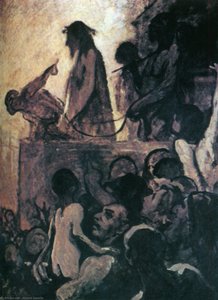
Kõigist Honoré Daumier jäetud originaalteostest on kõige kuulsam Honoré Daumier Me tahame Barabbast (Ecce Homo) (1852), mis kuulub Museum Folkwang kogele linnas Essen. Järgnevad sellest The Third-class Carriage (1860) ja Unknown, maybe Hippolyte Lucien-Joseph Lucas (1807-1878), a Journalist, maybe P.Mendez de Vigo (1790-1860) a Spanish General, but Most Probably the Count Pelet de la Lozere (1785-1871), a Politician (1833). Meie kataloogist löytyb 355 teost kunstnikult Honoré Daumier; galeriist on säilitatud 100 maailmas kõige imetlustunud teost, millest iga on esitatud koos kuupäeva, museumi ja oma luguga.

1808 – 1879, Marseille Realism Enamama teoseid: Musée d'Orsay

Honoré Daumier top 10 maalist: galeriis valitud teosed

1
Honoré Daumier Me tahame Barabbast (Ecce Homo) (1852) autor Honoré Daumier

Honoré Daumier Me tahame Barabbast (Ecce Homo)

1852 · Õlimaal kangaruumil · Museum Folkwang, Essen

Võimas inimliku kannatuse ja sotsiaalse õigluse kujendus See lummav teos tabab koraatset piiblistlikku stseenist, mis kõlab sügavalt tema rõppuse, ebatõlisuse ja ühiskondliku kriitika teemadega. Toetudes rahvatundlikule ja ekspressiivsele stiilile, kutsub see nägin vaatajat kollektiivse emotsiooni ja moraalse mõtleramise hetkese, sisse. Gestikulatsiooniga koheselt kujutatud figuurid tekitavad kiirustunde ja inimliku haavatavuse tunde, muutes selle teose sügavaks ütluseks sotsiaalsest vastutustundist ja vaimsest empatiast. Kunstiline stiil ja tehnika Renomeeritud Prantsusmaa kunstniku Honoré Daumieri 1852.…

2
The Third-class Carriage (1860) autor Honoré Daumier

The Third-class Carriage

1860 · Oil On Canvas · Metropolitan Museum of Art, New York

In the crowded, dimly lit confines of a mid-19th-century railway carriage, Honoré Daumier captures more than just a moment in transit; he captures the very essence of human endurance. The Third-class Carriage serves as a profound window into the burgeoning urban reality of France during the Second Empire. As the industrial revolution reshaped the landscape of Europe, Daumier turned his gaze away from the gilded salons of the aristocracy and…

3
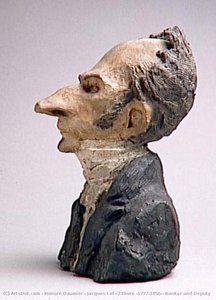
Unknown, maybe Hippolyte Lucien-Joseph Lucas (1807-1878), a Journalist, maybe P.Mendez de Vigo (1790-1860) a Spanish General, but Most Probably the Count Pelet de la Lozere (1785-1871), a Politician (1833) autor Honoré Daumier

Unknown, maybe Hippolyte Lucien-Joseph Lucas (1807-1878), a Journalist, maybe P.Mendez de Vigo (1790-1860) a Spanish General, but Most Probably the Count Pelet de la Lozere (1785-1871), a Politician

1833 · Clay / Terracotta · Musée d'Orsay, Pariis

This evocative portrait captures more than just the likeness of an elderly gentleman; it arrests a moment in time, freezing the very essence of 19th-century Parisian intellectual life. The subject, whose identity is suggested by the possibilities of a journalist or politician, possesses a gaze that seems to look past the viewer, into some distant, weighty contemplation. Rendered with the unmistakable hand of Honoré Daumier, the piece transcends mere portraiture;…

4
Ratapoil (front view) (1850) autor Honoré Daumier

Ratapoil (front view)

1850 · Bronze · Musée d'Orsay, Pariis

Honoré Daumier's "Ratapoil (front view)," created around 1850, is more than just a bronze sculpture; it’s a potent distillation of 19th-century French social commentary and political critique. This arresting figure, rendered with remarkable dynamism and a touch of unsettling realism, offers a captivating window into the turbulent world of post-Revolutionary France – a world grappling with nascent democracy, imperial ambitions, and the pervasive inequalities of its society. The sculpture’s enduring…

5
Intermission at the Comédie Française (1858) autor Honoré Daumier

Intermission at the Comédie Française

1858 · Watercolor · Hermitage muuseum, Stiiitlinburg

Honoré Daumier's “Intermission at the Comédie Française,” painted in 1858, isn’t merely a depiction of an elderly gathering; it’s a meticulously crafted observation of a specific moment frozen in time – and brimming with unspoken commentary. The artwork immediately draws the viewer into a densely packed scene: rows upon rows of men, their faces etched with age and lined with contemplation, are absorbed in reading newspapers or pamphlets within the…

6
Ratapoil (1850) autor Honoré Daumier

Ratapoil

1850 · Bronze · Staatliche Kunsthalle Karlsruhe, Karlsruhe

The photograph captures a pivotal moment – a frozen dance of energy and emotion rendered in the enduring medium of bronze. This exquisite reproduction offers an intimate encounter with "Ratapoil," a sculpture by the visionary artist Honoré Daumier, born in Marseille in 1808 and tragically lost in 1879. More than just a depiction of a figure, it’s a window into the social anxieties and artistic fervor that defined mid-19th century…

7
Ratapoil (rear view) (1850) autor Honoré Daumier

Ratapoil (rear view)

1850 · Sculpture · Musée d'Orsay, Pariis

In this rear view of the sculpture Ratapoil, we encounter a figure that seems to embody the very essence of 19th-century Parisian character. The work, dating from 1850, presents a silhouette that is both dynamic and deeply human. There is a certain tension in the posture; the figure leans with one hand on a hip, a cane held in the other, suggesting a man caught in a moment of restless…

8
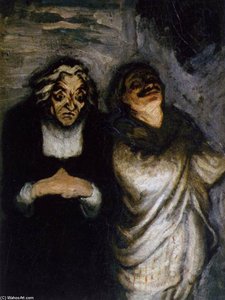
Scene from a Comedy (1858) autor Honoré Daumier

Scene from a Comedy

1858 · Oil On Canvas · Musée d'Orsay, Pariis

Honoré Daumier's "Scene from a Comedy," painted in 1858, isn’t merely a depiction of two figures; it’s a meticulously crafted snapshot of Parisian society and the biting social commentary that defined the artist’s career. Housed within the walls of the Musée d’Orsay, this oil on canvas offers a rare glimpse into Daumier's world – a world brimming with observation, critique, and an undeniable sense of humor laced with profound sadness.…

9
Ratapoil (1850) autor Honoré Daumier

Ratapoil

1850 · Acrylic On Canvas · Artizon Museum, Tokio

Honoré Daumier's "Ratapoil," created in 1850, isn’t merely a sculpture; it’s a distilled embodiment of the anxieties and frustrations simmering beneath the surface of mid-19th century France. This arresting figure, rendered in cast iron with a deliberate roughness that mirrors its subject matter, captures a moment of profound disillusionment – a silent indictment of societal hypocrisy and the precariousness of human existence. The sculpture’s power lies not just in its…

10
Family on the Barricades in 1848 (1854) autor Honoré Daumier

Family on the Barricades in 1848

1854 · Oil · Národní Galerie, Praha

In the heart of Honoré Daumier’s 1854 masterpiece, Family on the Barricades in 1848, we find a moment suspended in the amber of history. This is not merely a painting of a political uprising; it is a profound psychological study of human resilience. As the Second French Revolution tore through the streets of Paris, Daumier captured the very essence of the era's turbulent spirit. The scene presents a family huddled…

Kunstianikut Honoré Daumier nimekiri jätkub, 11 kuni 100

11The Print Collector (1865) autor Honoré DaumierThe Print Collector1865 · Art Institute of Chicago 12The Republic (1848) autor Honoré DaumierThe Republic1848 · Musée d'Orsay 13Comedy scene (scene from Molière) (1862) autor Honoré DaumierComedy scene (scene from Molière)1862 · Musée d'Orsay 14On a Bridge at Night (1848) autor Honoré DaumierOn a Bridge at Night1848 · The Phillips Collection 15Les Gens de Justice: Vous m (1845) autor Honoré DaumierLes Gens de Justice: Vous m1845 16Burden (1850) autor Honoré DaumierBurden1850 · Hermitage muuseum 17Street Musicians (1855) autor Honoré DaumierStreet Musicians1855 · Art Institute of Chicago 18Count Antoine-Maurice-Apollinaire d'Argout (1782-1858), Minister and Peer of France (1832) autor Honoré DaumierCount Antoine-Maurice-Apollinaire d'Argout (1782-1858), Minister and Peer of France1832 · Musée d'Orsay 19The Studio (1870) autor Honoré DaumierThe Studio1870 · J. Paul Getty muuseum 20Jean-Marie Fruchard (1788-1872), Deputy (1833) autor Honoré DaumierJean-Marie Fruchard (1788-1872), Deputy1833 · Musée d'Orsay 21Load (Washerwoman) (1853) autor Honoré DaumierLoad (Washerwoman)1853 · Národní Galerie 22Clément-François-Victor-Gabriel Prunelle (1774-1853), Doctor, Major of Lyon and Deputy (1832) autor Honoré DaumierClément-François-Victor-Gabriel Prunelle (1774-1853), Doctor, Major of Lyon and Deputy1832 · Musée d'Orsay 23The Intoxication of Silène (1850) autor Honoré DaumierThe Intoxication of Silène1850 24Two Lawyers (1860) autor Honoré DaumierTwo Lawyers1860 · Art Institute of Chicago 25Outside the Print–Seller's Shop (1860) autor Honoré DaumierOutside the Print–Seller's Shop1860 · Dallas Museum of Art 26Exit from the Theater (1863) autor Honoré DaumierExit from the Theater1863 · The Nelson-Atkins Museum of Art 27Felix Barthe autor Honoré DaumierFelix Barthe 28The Uprising (L (1848) autor Honoré DaumierThe Uprising (L1848 · The Phillips Collection 29Le Peintre (The Painter) (1865) autor Honoré DaumierLe Peintre (The Painter)1865 · Scottish National Gallery 30The Defender (1865) autor Honoré DaumierThe Defender1865 · Musée d'Orsay 31The Good Samaritan (1855) autor Honoré DaumierThe Good Samaritan1855 · Burrell Collection 32The Loge (In the Theatre Boxes) (1856) autor Honoré DaumierThe Loge (In the Theatre Boxes)1856 · Walters Art Museum 33Susannah and the Elders (1853) autor Honoré DaumierSusannah and the Elders1853 · Burrell Collection 34Penelopa's Dream (1842) autor Honoré DaumierPenelopa's Dream1842 · Bibliothèque Nationale 35Jean-Auguste Chevandier de Valdrome, Parliamentarian (The Fool) (1832) autor Honoré DaumierJean-Auguste Chevandier de Valdrome, Parliamentarian (The Fool)1832 · Musée d'Orsay 36The Washerwoman (1863) autor Honoré DaumierThe Washerwoman1863 · Musée d'Orsay 37Masks of 1831 (1832) autor Honoré DaumierMasks of 18311832 · Minneapolis Institute of Art 38Remembrances of St. Pelagie. (Souvenir de ste Pélagie) (1834) autor Honoré DaumierRemembrances of St. Pelagie. (Souvenir de ste Pélagie)1834 39Mr. Joliv (Adolphe Joliv) (1833) autor Honoré DaumierMr. Joliv (Adolphe Joliv)1833 · Musée d'art et d'histoire Paul Eluard 40Celebrités du Juste Milieu (1835) autor Honoré DaumierCelebrités du Juste Milieu1835 · Zimmerli Art Museum at Rutgers University 41Grand Staircase of the Palace of Justice (1848) autor Honoré DaumierGrand Staircase of the Palace of Justice1848 42The Conclusion of a Speech à la Demosthene (1848) autor Honoré DaumierThe Conclusion of a Speech à la Demosthene1848 43Neighbourhood gossip (1855) autor Honoré DaumierNeighbourhood gossip1855 · The Mesdag Collection 44Une salle d'attente (The Waiting Room) (1851) autor Honoré DaumierUne salle d'attente (The Waiting Room)1851 · Buffalo AKG Art Museum 45Second-Class Carriage (1849) autor Honoré DaumierSecond-Class Carriage1849 · Rhode Island School of Design Museum of Art 46Mme Pipelet, the Concierge (1849) autor Honoré DaumierMme Pipelet, the Concierge1849 · Rhode Island School of Design Museum of Art 47Hunters by the fireside (1850) autor Honoré DaumierHunters by the fireside1850 48Head of a Man (1855) autor Honoré DaumierHead of a Man1855 · National Museum Cardiff 49The Miller, His Son and the Donkey (1849) autor Honoré DaumierThe Miller, His Son and the Donkey1849 · Burrell Collection 50Bathers (1853) autor Honoré DaumierBathers1853 51On the Shore (1853) autor Honoré DaumierOn the Shore1853 52Return from the Market (1856) autor Honoré DaumierReturn from the Market1856 · Museum collection Am Römerholz 53The Confidence or The Kiss of Judas (1859) autor Honoré DaumierThe Confidence or The Kiss of Judas1859 · Petit Palais 54Four Heads (1857) autor Honoré DaumierFour Heads1857 · Burrell Collection 55Head of an Old Woman (1858) autor Honoré DaumierHead of an Old Woman1858 56Painting by Honoré Daumier (1862) autor Honoré DaumierPainting by Honoré Daumier1862 57Scapin (1861) autor Honoré DaumierScapin1861 · Harvard Art Museums 58Count Auguste-Hilarion de Kératry (1769-1859), Deputy, Peer of France (1832) autor Honoré DaumierCount Auguste-Hilarion de Kératry (1769-1859), Deputy, Peer of France1832 · Musée d'Orsay 59The Beautiful Narcissus (1842) autor Honoré DaumierThe Beautiful Narcissus1842 · Bibliothèque Nationale 60Sancho Panza, Resting Under a Tree (1865) autor Honoré DaumierSancho Panza, Resting Under a Tree1865 61The Painter (1867) autor Honoré DaumierThe Painter1867 · Musée des Beaux-Arts 62Au Palais de Justice (At the Law Courts) (1865) autor Honoré DaumierAu Palais de Justice (At the Law Courts)1865 · Rhode Island School of Design Museum of Art 63The Two Colleagues (Lawyers) (1867) autor Honoré DaumierThe Two Colleagues (Lawyers)1867 · Brooklyn Museum 64A Third Class Carriage (1865) autor Honoré DaumierA Third Class Carriage1865 · National Museum Cardiff 65François-Pierre-Guillaume Guizot (1787-1874), Deputy, Minister and Historian (1833) autor Honoré DaumierFrançois-Pierre-Guillaume Guizot (1787-1874), Deputy, Minister and Historian1833 · Musée d'Orsay 66Two Singers autor Honoré DaumierTwo SingersHarvard Art Museums 67Jean-Claude Fulchiron (1774-1859), Deputy, Peer of France, and Poet (1832) autor Honoré DaumierJean-Claude Fulchiron (1774-1859), Deputy, Peer of France, and Poet1832 · Musée d'Orsay 68Don Quixote and the Windmills (1850) autor Honoré DaumierDon Quixote and the Windmills1850 · Art Institute of Chicago 69The Serenade (1858) autor Honoré DaumierThe Serenade1858 · Scottish National Gallery 70The Print Amateur (1855) autor Honoré DaumierThe Print Amateur1855 · Harvard Art Museums 71Le Wagon de troisième classe, huile sur toile The Coach of third class, oil on fabric autor Honoré DaumierLe Wagon de troisième classe, huile sur toile The Coach of third class, oil on fabric 72Jacques Lefévre (1777-1856), Banker and Deputy (1833) autor Honoré DaumierJacques Lefévre (1777-1856), Banker and Deputy1833 · Musée d'Orsay 73The Print Collector (1862) autor Honoré DaumierThe Print Collector1862 · Burrell Collection 74Don Quixote and the Dead Mule (1860) autor Honoré DaumierDon Quixote and the Dead Mule1860 · Metropolitan Museum of Art 75The Strong Man (1865) autor Honoré DaumierThe Strong Man1865 · The Phillips Collection 76Head of Pasquin (1863) autor Honoré DaumierHead of Pasquin1863 · Dallas Museum of Art 77Baron Joseph de Podenas (1782-1851), Deputy (1833) autor Honoré DaumierBaron Joseph de Podenas (1782-1851), Deputy1833 · Musée d'Orsay 78Charles Philipon (1800-1861), Journalist and Director of the Magazines Caricature and Charivari (1833) autor Honoré DaumierCharles Philipon (1800-1861), Journalist and Director of the Magazines Caricature and Charivari1833 · Musée d'Orsay 79Rue Transnonain, April 15, 1834 (1834) autor Honoré DaumierRue Transnonain, April 15, 18341834 · Bibliothèque Nationale 80Theater Audience (1856) autor Honoré DaumierTheater Audience1856 · Rahvuslik Läänemaa Kunstimuuseum 81Don Quixote Reading (1866) autor Honoré DaumierDon Quixote Reading1866 · National Museum Cardiff 82Les Avocats et Les Plaideurs: Enfin! Nous avons obtenu la séparation de biens (1851) autor Honoré DaumierLes Avocats et Les Plaideurs: Enfin! Nous avons obtenu la séparation de biens1851 83Le Ventre Legislatif (1834) autor Honoré DaumierLe Ventre Legislatif1834 84Avant l (1865) autor Honoré DaumierAvant l1865 85Two Drinkers (Les Deux buveurs) autor Honoré DaumierTwo Drinkers (Les Deux buveurs)Barnes Foundation 86Two Lawyers autor Honoré DaumierTwo Lawyers 87Crispin et Scapin ou Scapin et Sylvestre, huile sur toile Crispin and Scapin or Scapin and Sylvestre, oil on fabric autor Honoré DaumierCrispin et Scapin ou Scapin et Sylvestre, huile sur toile Crispin and Scapin or Scapin and Sylvestre, oil on fabric 88Une cause célèbre, crayon et aquarelle A famous cause, pencil and watercolour autor Honoré DaumierUne cause célèbre, crayon et aquarelle A famous cause, pencil and watercolour 89Don Quixote and Sancho Panza (1864) autor Honoré DaumierDon Quixote and Sancho Panza1864 · Burrell Collection 90Don Quixote and Sancho Panza (1870) autor Honoré DaumierDon Quixote and Sancho Panza1870 · Courtauld Gallery 91The Reader autor Honoré DaumierThe Reader 92Street Scene (1864) autor Honoré DaumierStreet Scene1864 · Museum Boijmans Van Beuningen 93Charles-Léonard Gallois (1774-1851), Publicist and Historian, Republican (1833) autor Honoré DaumierCharles-Léonard Gallois (1774-1851), Publicist and Historian, Republican1833 · Musée d'Orsay 94André-Marie-Jean-Jacques Dupin, Also Called Dupin the Elder autor Honoré DaumierAndré-Marie-Jean-Jacques Dupin, Also Called Dupin the Elder 95Le Drame, huile sur toile The Drama, oils on fabric autor Honoré DaumierLe Drame, huile sur toile The Drama, oils on fabric 96The Hypochondriac (Le Malade imaginaire) autor Honoré DaumierThe Hypochondriac (Le Malade imaginaire)Barnes Foundation 97To the Street (1850) autor Honoré DaumierTo the Street1850 · The Phillips Collection 98Three Lawyers (1857) autor Honoré DaumierThree Lawyers1857 · The Phillips Collection 99Honoré Daumier Le Martyre de saint Sébastien, esquisse, huile sur panneau The Martyrdom of Sebastien saint, draft, oil on panel (1850) autor Honoré DaumierHonoré Daumier Le Martyre de saint Sébastien, esquisse, huile sur panneau The Martyrdom of Sebastien saint, draft, oil on panel1850 100Mother (1855) autor Honoré DaumierMother1855 · Serbia Riiklik Muuseum

Honoré Daumier kuulsaimad maalid ajastult ajastule

Teemad, mis püüdisid Honoré Daumier pilma

Neli teemat, mis esinevad neis originaalkindel kõige sagedamini, ning iga teema parim näide.

Muuseumid, kus on säilitatud Honoré Daumier originaalteosed

Kümne 8 muuseumi kollektsioonid, mis sisaldavad kõige rohkem sellel lehel esitatud teoseid.

Muuseumid Linn Honoré Daumier teosid Selle nimekirja maalid
Musée d'Orsay, PariisMusée d'Orsay Pariis 33 Unknown, maybe Hippolyte Lucien-Joseph Lucas (1807-1878), a Journalist, maybe P.Mendez de Vigo (1790-1860) a Spanish General, but Most Probably the Count Pelet de la Lozere (1785-1871), a Politician, Ratapoil (front view), Ratapoil (rear view)
Burrell Collection, GlasgowBurrell Collection Glasgow 9 The Good Samaritan, Susannah and the Elders, The Miller, His Son and the Donkey
The Phillips Collection, Washington, D.C.The Phillips Collection Washington, D.C. 8 On a Bridge at Night, The Uprising (L, The Strong Man
Art Institute of Chicago, ChicagoArt Institute of Chicago Chicago 4 The Print Collector, Street Musicians, Two Lawyers
National Museum Cardiff, CardiffNational Museum Cardiff Cardiff 8 Head of a Man, A Third Class Carriage, Don Quixote Reading
Rhode Island School of Design Museum of Art, ProvidenceRhode Island School of Design Museum of Art Providence 4 Second-Class Carriage, Mme Pipelet, the Concierge, Au Palais de Justice (At the Law Courts)
Bibliothèque Nationale, PariisBibliothèque Nationale Pariis 3 Penelopa's Dream, The Beautiful Narcissus, Rue Transnonain, April 15, 1834
Harvard Art Museums, CambridgeHarvard Art Museums Cambridge 3 Scapin, Two Singers, The Print Amateur

Honoré Daumier aastak aegades: originaalteos, mis määratleb iga ajastu

Teosed aastakate kaupa

Vali vuosakülg, et näha selle ajastu definieerivat originaalteost.

Sammlajate küsimused Honoré Daumier maalide kohta

Millise teosega on Honoré Daumier kõige kuulsam?Paljasta vastus

Honoré Daumier Me tahame Barabbast (Ecce Homo) (1852), Museum Folkwang, Essen. Järgnevad The Third-class Carriage (1860) ja Unknown, maybe Hippolyte Lucien-Joseph Lucas (1807-1878), a Journalist, maybe P.Mendez de Vigo (1790-1860) a Spanish General, but Most Probably the Count Pelet de la Lozere (1785-1871), a Politician (1833).

Kui vana oli Honoré Daumier, kui teos Honoré Daumier Me tahame Barabbast (Ecce Homo) loodi?Paljasta vastus

44 aastat vanus: teos Honoré Daumier Me tahame Barabbast (Ecce Homo) on pärinev aastast 1852 ning Honoré Daumier sündis aastal 1808.

Millised on kümne kõige kuulsama Honoré Daumier maalid?Paljasta vastus

Honoré Daumier Me tahame Barabbast (Ecce Homo), The Third-class Carriage, Unknown, maybe Hippolyte Lucien-Joseph Lucas (1807-1878), a Journalist, maybe P.Mendez de Vigo (1790-1860) a Spanish General, but Most Probably the Count Pelet de la Lozere (1785-1871), a Politician, Ratapoil (front view), Intermission at the Comédie Française, Ratapoil, Ratapoil (rear view), Scene from a Comedy, Ratapoil ja Family on the Barricades in 1848. Ülemine reiting näitab iga teose puhul aastat ja muuseumi.

Kui palju maali Honoré Daumier jäeti?Paljasta vastus

Meie kataloogist leiate 355 teost kunstnikult Honoré Daumier, mis on pärinevad ajastust 1832 kuni 1870.

Mitteks muuseumides rihangavad Honoré Daumier meistriteosed?Paljasta vastus

Peamiselt Musée d'Orsay (Pariis), Burrell Collection (Glasgow) ja The Phillips Collection (Washington, D.C.) muuseumites. Ülalpool olevate muuseumite tabelis on nendest kõik loetletud.

Millah aastades maalas Honoré Daumier oma kuulsamaid teoseid?Paljasta vastus

Ajal 1850s: 34 100 sellel lehel olevat teost on sellel perioodil loodud, მათart közül Honoré Daumier Me tahame Barabbast (Ecce Homo).

Mis on Honoré Daumier esimene ja viimane kuuls fama originaalteos?Paljasta vastus

Sellel lehel on kõige vanem teos Count Antoine-Maurice-Apollinaire d'Argout (1782-1858), Minister and Peer of France (1832) ja kõige värskeim The Studio (1870).

Milliseid teemasid Honoré Daumier kõige sagedamini valis?Paljasta vastus

People (19), Satire (15) ja Man (15), kogu selle lehekülje 100 teose kohta.

Millist tehnikat kasutas Honoré Daumier kõige rohkem?Paljasta vastus

Oil On Canvas, 16 teoseks 100 töödelt sellel lehel.

Minge pihta kunstisuunasse, kuhu Honoré Daumier kuulub?Paljasta vastus

Realism, seda lähtudes selle lehe originaalteostest.

Millised Honoré Daumier teosed on Musée d'Orsay näituses?Paljasta vastus

Unknown, maybe Hippolyte Lucien-Joseph Lucas (1807-1878), a Journalist, maybe P.Mendez de Vigo (1790-1860) a Spanish General, but Most Probably the Count Pelet de la Lozere (1785-1871), a Politician, Ratapoil (front view) ja Ratapoil (rear view): Musée d'Orsay, Pariis säilitab 19 selle lehel olevat teost.

Honoré Daumier: elu ja looming

Elu ja Varajased Aastad: Honoré Daumieri Tee Kunsti

Honoré-Victorin Daumier sündis 1808. aastal Marseille’s, tema elu oli sügavalt seotud 19. sajandi Prantsusmaa tormiliste vooludega. Tema varajased eluaastad olid märgitud isa poeetilistest ambitsioonidest ja hilisemast kolimisest Pariisi 1814. aastal, mis uputas ta linna, mis pulseeris kunstilisest energiast. Kuigi noor Daumier oli esialgu määratud juristi karjäärile, kaldus tema kalduvus vankumatult kunsti poole. Ta õpipoiss Aleksandre Lenoiri juures, omandades klassikalisi mõjusid koos Rubens’ dramaatilise chiaroscuro hindamisega, ning täiendas oma oskusi Académie Suisse’is. See põhiline koolitus osutus ülioluliseks tema eripärase stiili kujundamisel – võimsa realismi ja väljendusliku joonistusoskuse segu. Kuid Daumieri definitsiooniks ei olnud pelgalt kunstitehnika, vaid sügav tundlikkus teda ümbritsevate sotsiaalsete ebaõigluste ja poliitiliste absurdisuste suhtes. Tema isa soov oli temast kirjanik, kuid poeg leidis oma väljendusviisi visuaalses kunsti maailmas.

Terav Sulg: Karikatuur ja Sotsiaalne Kommentaar

Daumieri karjäär süttis tõeliselt 1830. aasta revolutsiooni järel, sündmus, mis muutis pöördumatult Prantsusmaa ajaloo kulgu ning pakkus samal ajal viljakat pinnast tema õitsvale satiirilisele andele. Ta kinnustus kiiresti meisterlikuks litograafina, algselt anonüümseilt kaasa aidates erinevatele väljaannetele enne tuntuks saamist oma töödega *Le Charivari* ajakirjas, mida asutas Charles Philipon. Just siin õitses Daumieri geenius täielikult. Tema karikatuurid ei olnud pelgalt humoorikad kujutised; need olid teravad süüdistused burzhuaaria vastu, õigussüsteemi ja poliitilistele institutsioonidele. Ta laimas kartmatult kuningas Louis-Philippet, teenides endale 1832. aastal kuuekuulise vanglakaristuse eriti terava karikatuuri eest. See kogemus ei vaikistanud teda, vaid kinnistas tema pühendumust hüpokraatsia paljastamisele ja autoriteedi väljakutsemisele kunsti kaudu. Tema litograafiad said visuaalseks manifestiks, tabades rahulolematuse vaimu ning pakkudes kriitilist kommentaari oma aja ühiskondlikele puudustele. Selle perioodi tohutu väljund on hämmastav – tuhanded litograafiad, mis olid nii populaarne meelelahutus kui ka võimas poliitiline avaldus. Ta kujutas sageli tavainimesi ja nende igapäevaelu, rõhutades sotsiaalset ebavõrdsust ja õiguse puudumist.

Karikatuuri Piiridest Väljaspool: Maalimine ja Skulptuurilised Visioonid

Kuigi Daumieri tuntakse kõige rohkem tema litograafia poolest, oleks teda pelgalt karikatuurimaailma piiramisel suur väärtus. Ta oli ka pühendunud maalikunstnik ja skulptor, kuigi tunnustus nende tööde eest saabus hiljem elus. Tema maalid, mis kujutavad sageli igapäevase Pariisi elu stseene – kolmanda klassi vagun, pesupesijad, advokaadid – on täis sügavat realismi ja empaatiat. Need ei ole idealiseeritud pildid, vaid pigem kompromissitu raskuste ja võitluse kujutamine. Ta kasutas meisterlikult lahtist pintslikraani ja dramaatilist valgust emotsioonide ja atmosfääri edasiandmiseks, ettearvates mõningaid Impressionistide hiljem omaks võetud tehnikaid. Tema skulptuuritööd, mis on suuresti loodud savist (paljud teosed jäid tema eluaegadel küpsetamata), näitavad sarnast pühendumust inimkuju tabamisele ausalt ja emotsionaalse sügavusega. Need skulptuurid, mis avastati pärast tema surma, demonstreerivad tähelepanuväärset modelleerimisandekust ja võimet väljendada psühholoogilist keerukust füüsilise žesti kaudu. Tema maalid ja skulptuurid olid tihti poliitiliselt laetud, peegeldades tema muret ühiskondlike probleemide üle.

Püsiv Pärand: Mõju ja Ajalooline Tähtsus

Honoré Daumieri mõju kunstiajalukku on vaieldamatu. Ta sillutas tee romantismist realismile, sillutades teed tulevaste põlvkondade kunstnikele, kes otsisid maailma kujutada sellisena nagu see tegelikult oli – vigadega ja kõikide puudustega. Tema kompromissitu sotsiaalne kommentaar mõjutas kunstnikke nagu Gustave Courbet ja Édouard Manet, samal ajal kui tema uuenduslik litograafia kasutamine revolutsioneeris trükikunsti. Tema töö resoniseerib tänapäevani, meenutades meile kunsti võimu väljakutse autoriteedile, paljastada ebaõiglusi ja tunnistada inimolukorda. Musée d'Orsay Pariisis majutab tema maalidest ja skulptuuridest olulist kollektsiooni, pakkudes külastajatele pilku maailma, mida ta nii elavalt kujutas. Tema litograafiad on laialdaselt kättesaadavad kollektsioonide kaudu nagu need, mis leitud OriginalUniqueArt’is, tagades tema satiirilise geeniusse jätkab mõtteprovotseerimist ja inspireerib dialoogi. Daumier ei olnud pelgalt kunstnik; ta oli oma aja kroonikakirjutaja – visuaalne poeet, kes kasutas oma talenti andmaks hääle hääletutele ja vastutust võtma võimul olevatelt. Tema pärand kestab tunnistusena kunsti kestvast olulisusest sotsiaalse muutuse jõuna.