Constantin Meunier portree

Constantin Meunier maalid: 51 kuulsumat teost galeriin läbi

Uuendatud november 2026 · järjestatud meie populaarsusindeksi järgi (otsingud, külastused ja tellimused igale teosele) · 51 teost Constantin Meunier meie kataloogis

Lühidalt

Galleriist vaadatuna on Constantin Meunier kõige kuulsam teos Holy-Water Font (1854), mille originaal ripub Royal Museum of Fine Arts Antwerp-is, Antverp. Women Working in a Glass Factory (1878) ja Return of the Miners (1850) täidavad kolmikut, mille iga silm tunnistab. Kunstnii Constantin Meunier 51 teose põhjal esitleb galeriis allpool 51 kõige kuulsumat, kus iga originaal on märgitud aastaga, muuseumiga ja kirjeldatud, mis teeb selle unikaalseks.

1831 – 1905, Etterbeek Social realism Enamama teoseid: Royal Museum of Fine Arts Antwerp

Galeria 10 parimat Constantin Meunier maali

1
Holy-Water Font (1854) autor Constantin Meunier

Holy-Water Font

1854 · Oil On Canvas · Royal Museum of Fine Arts Antwerp, Antverp

A solitary woman stands within a dim, quiet interior, her presence defined by the soft light catching the edge of a blue shawl. She is positioned beside a weathered stone holy water font, her hand resting upon its cold surface. The room is a study in shadow, where deep blues and earthy browns recede into a heavy, somber darkness. A checkered floor provides a geometric anchor to the scene, its…

3
Return of the Miners (1850) autor Constantin Meunier

Return of the Miners

1850 · Oil On Canvas · Royal Museum of Fine Arts Antwerp, Antverp

Return of the Miners by Constantin Meunier presents a group of laborers moving through an industrial landscape. The figures are positioned in the foreground, walking toward the right side of the frame. These workers, specifically miners, are depicted amidst a setting characterized by the presence of distant smokestacks and rooftops. The scene captures the physical reality of the working class during the Industrial Revolution, focusing on the specific lives of…

4
The Pithead (1850) autor Constantin Meunier

The Pithead

1850 · Oil · Royal Museum of Fine Arts Antwerp, Antverp

The Pithead is an oil painting by Constantin Meunier, created about 1850. The work depicts a scene of heavy industrial labor, focusing on the physical toil of the working class. A single male figure occupies the foreground, positioned slightly off-center and moving toward the viewer. His expression is strained, and his heavy clothing reflects the grit of his environment. The composition centers on this individual amidst a setting of industrial…

5
Saint Stephen as a Martyr (1866) autor Constantin Meunier

Saint Stephen as a Martyr

1866 · Oil On Canvas · Museum of Fine Arts Ghent (MSK), Gent

Constantin Meunier painted Saint Stephen as a Martyr about 1866. The work depicts the martyrdom of Saint Stephen, focusing on the immediate aftermath of the event. The central figure lies horizontally across the lower third of the canvas, a lifeless body dressed in white robes that are stained with crimson blood. His eyes remain open, directed toward the upper edge of the frame. A second figure, draped in dark, heavy…

6
Saint Stephen (1867) autor Constantin Meunier

Saint Stephen

1867 · Oil · Royal Museum of Fine Arts Antwerp, Antverp

The oil painting titled Saint Stephen emerges from the shadows of history, a somber creation by the Belgian artist Constantin Meunier. This work, rendered on canvas, captures a moment of profound stillness. It exists as a quiet meditation on sacrifice, appearing to have been produced about 1867. The figure lies caught in a perpetual state of repose, a subject that demands a slow, steady gaze to truly witness.

7
Episode from the Peasants' Revolt. The Fire of Turnhout (1798-1799) (1878) autor Constantin Meunier

Episode from the Peasants' Revolt. The Fire of Turnhout (1798-1799)

1878 · Oil · Museum of Fine Arts Ghent (MSK), Gent

The canvas holds a heavy, dark air. In the lower left, a group of figures huddles together, their bodies pressed into a tight, desperate knot. They are shadows among shadows. A man’s white shirt catches a stray, pale light, cutting through the gloom like a sharp intake of breath. Above them, the world is breaking. A turbulent landscape stretches toward the upper right, where the sky is bruised and thick…

8
Organ Grinder (1873) autor Constantin Meunier

Organ Grinder

1873 · Oil On Canvas · Royal Museum of Fine Arts Antwerp, Antverp

In this oil painting, Constantin Meunier presents a solitary young man caught in a moment of quiet stillness. The figure sits alone, his posture suggesting a heavy sense of exhaustion or perhaps a deep, inward contemplation. He appears to be an organ grinder, a man whose life is defined by the labor of his trade and the solitude that often accompanies it. The scene feels intimate, pulling the viewer into…

9
Two women at the Tobacco Factory in Seville (1883) autor Constantin Meunier

Two women at the Tobacco Factory in Seville

1883 · Oil

Two women occupy the foreground of this 1883 oil painting, their presence commanding the vertical space of the composition. One figure is draped in a soft pink dress, while the other wears white, creating a visual tension against the warm, earthy tones of the workshop. They stand amidst a bustling environment, their refined silhouettes contrasting with the industrial backdrop of the factory. The lighting, descending from the upper left, catches…

10
Tobacco Factory, Seville (1883) autor Constantin Meunier

Tobacco Factory, Seville

1883 · Oil On Canvas · Belgia Kuninglikud Fine Artsi muuseumid, Brüssel

The oil painting titled Tobacco Factory, Seville, was created by the Belgian artist Constantin Meunier in 1883. This work captures a specific moment of industry within a vast, stone-arched space. The canvas holds the heavy atmosphere of a working hall, where light falls upon the figures of women engaged in their daily labor.

Constantin Meunier maalid, järjestus 11 kuni 51

11The Flood of Leuven in 1891 (1896) autor Constantin MeunierThe Flood of Leuven in 18911896 12Whaler (1902) autor Constantin MeunierWhaler1902 · Finnish National Gallery 13Portrait of the Artist Gustave Poirier (1900) autor Constantin MeunierPortrait of the Artist Gustave Poirier1900 · Museum of Fine Arts Ghent (MSK) 14De buildrager, (1898) autor Constantin MeunierDe buildrager, (1898) 15Steel Foundry (1850) autor Constantin MeunierSteel Foundry1850 · Royal Museum of Fine Arts Antwerp 16Unloading a Sailing Ship (1878) autor Constantin MeunierUnloading a Sailing Ship1878 · Royal Museum of Fine Arts Antwerp 17The removal of the cracked melting pot (1885) autor Constantin MeunierThe removal of the cracked melting pot1885 · Belgia Kuninglikud Fine Artsi muuseumid 18Cigar Makers in Sevilla (1882) autor Constantin MeunierCigar Makers in Sevilla1882 · Royal Museum of Fine Arts Antwerp 19Mining Area (1882) autor Constantin MeunierMining Area1882 · Royal Museum of Fine Arts Antwerp 20In the Black Country (1893) autor Constantin MeunierIn the Black Country1893 · Musée d'Orsay 21Calvary (1900) autor Constantin MeunierCalvary1900 · Museum of Fine Arts Ghent (MSK) 22Collier with Safety Lamp autor Constantin MeunierCollier with Safety LampRoyal Museum of Fine Arts Antwerp 23Man at the Press autor Constantin MeunierMan at the PressBelgia Kuninglikud Fine Artsi muuseumid 24The bust of a docker autor Constantin MeunierThe bust of a dockerOldenburg State Museum for Art and Cultural History 25Buste d'emmanuel chabrier autor Constantin MeunierBuste d'emmanuel chabrier 26The Porter (1887) autor Constantin MeunierThe Porter1887 · Staatliche Kunsthalle Karlsruhe 27In a Salt Refinery at Rupelmonde autor Constantin MeunierIn a Salt Refinery at RupelmondeBelgia Kuninglikud Fine Artsi muuseumid 28Rupelmonde autor Constantin MeunierRupelmondeRoyal Museum of Fine Arts Antwerp 29Pupil in the Snow autor Constantin MeunierPupil in the SnowRoyal Museum of Fine Arts Antwerp 30An Old Bridge autor Constantin MeunierAn Old BridgeRoyal Museum of Fine Arts Antwerp 31The Blue Tavern autor Constantin MeunierThe Blue TavernRoyal Museum of Fine Arts Antwerp 32Abandoned shaft autor Constantin MeunierAbandoned shaftBelgia Kuninglikud Fine Artsi muuseumid 33Black Country – Borinage autor Constantin MeunierBlack Country – BorinageBelgia Kuninglikud Fine Artsi muuseumid 34Le faucheur autor Constantin MeunierLe faucheur 35The sower, (1890) autor Constantin MeunierThe sower, (1890) 36Monument Au Travail (Bruxelles) autor Constantin MeunierMonument Au Travail (Bruxelles) 37Monument Au Travail (Detail) (2) autor Constantin MeunierMonument Au Travail (Detail) (2) 38Monument Au Travail (Detail) (7) autor Constantin MeunierMonument Au Travail (Detail) (7) 39Monument Au Travail (Detail) autor Constantin MeunierMonument Au Travail (Detail) 40Monument Au Travail (Detail) (5) autor Constantin MeunierMonument Au Travail (Detail) (5) 41Monument Au Travail (Detail) (3) autor Constantin MeunierMonument Au Travail (Detail) (3) 42Monument Au Travail (Detail) (4) autor Constantin MeunierMonument Au Travail (Detail) (4) 43Der huttenarbeiter, (1890) autor Constantin MeunierDer huttenarbeiter, (1890) 44Der hafenarbeiter (2) autor Constantin MeunierDer hafenarbeiter (2) 45Der hafenarbeiter autor Constantin MeunierDer hafenarbeiter 46Cheval a L'abreuvoir, (1899) autor Constantin MeunierCheval a L'abreuvoir, (1899) 47The sower, (2) (1890) autor Constantin MeunierThe sower, (2) (1890) 48Monument Au Travail (Detail) (6) autor Constantin MeunierMonument Au Travail (Detail) (6) 49Triptych of the Mine (1902) autor Constantin MeunierTriptych of the Mine1902 · Belgia Kuninglikud Fine Artsi muuseumid 50The hiercheuse (1887) autor Constantin MeunierThe hiercheuse1887 · Belgia Kuninglikud Fine Artsi muuseumid 51Removal of a Broken Crucible (1884) autor Constantin MeunierRemoval of a Broken Crucible1884 · Belgia Kuninglikud Fine Artsi muuseumid

Constantin Meunier kuulsaimad maalid ajastult ajastule

Teemad, mis püüdisid Constantin Meunier pilma

Neli teemat, mis esinevad neis originaalkindel kõige sagedamini, ning iga teema parim näide.

Muuseumid, kus on säilitatud Constantin Meunier originaalteosed

Kümne 7 muuseumi kollektsioonid, mis sisaldavad kõige rohkem sellel lehel esitatud teoseid.

Muuseumid Linn Constantin Meunier teosid Selle nimekirja maalid
Royal Museum of Fine Arts Antwerp, AntverpRoyal Museum of Fine Arts Antwerp Antverp 14 Holy-Water Font, Return of the Miners, The Pithead
Belgia Kuninglikud Fine Artsi muuseumid, BrüsselBelgia Kuninglikud Fine Artsi muuseumid Brüssel 10 Women Working in a Glass Factory, Tobacco Factory, Seville, The removal of the cracked melting pot
Museum of Fine Arts Ghent (MSK), GentMuseum of Fine Arts Ghent (MSK) Gent 4 Saint Stephen as a Martyr, Episode from the Peasants' Revolt. The Fire of Turnhout (1798-1799), Portrait of the Artist Gustave Poirier
Finnish National Gallery, TallinnFinnish National Gallery Tallinn 1 Whaler
Musée d'Orsay, PariisMusée d'Orsay Pariis 1 In the Black Country
Oldenburg State Museum for Art and Cultural History, OldenburgOldenburg State Museum for Art and Cultural History Oldenburg 1 The bust of a docker
Staatliche Kunsthalle Karlsruhe, KarlsruheStaatliche Kunsthalle Karlsruhe Karlsruhe 1 The Porter

Constantin Meunier, iga kümnendiga üks signatuurpilt

Teosed aastakate kaupa

Vali vuosakülg, et näha selle ajastu definieerivat originaalteost.

Constantin Meunier maalid: galerii vastused

Milline Constantin Meunier maal on kõige kuulsam?Paljasta vastus

Holy-Water Font (1854), Royal Museum of Fine Arts Antwerp, Antverp. Järgnevad Women Working in a Glass Factory (1878) ja Return of the Miners (1850).

Kui vana Constantin Meunier oli teose Holy-Water Font valmimisel?Paljasta vastus

23 aastat vanus: teos Holy-Water Font on pärinev aastast 1854 ning Constantin Meunier sündis aastal 1831.

Millised on Constantin Meunier top 10 maali?Paljasta vastus

Holy-Water Font, Women Working in a Glass Factory, Return of the Miners, The Pithead, Saint Stephen as a Martyr, Saint Stephen, Episode from the Peasants' Revolt. The Fire of Turnhout (1798-1799), Organ Grinder, Two women at the Tobacco Factory in Seville ja Tobacco Factory, Seville. Ülemine reiting näitab iga teose puhul aastat ja muuseumi.

Kui palju teoseid Constantin Meunier lõi?Paljasta vastus

Meie kataloogist leiate 51 teost kunstnikult Constantin Meunier, mis on pärinevad ajastust 1850 kuni 1902.

Kust leiad Constantin Meunier kõige kuulsamad originaalteosed?Paljasta vastus

Peamiselt Royal Museum of Fine Arts Antwerp (Antverp), Belgia Kuninglikud Fine Artsi muuseumid (Brüssel) ja Museum of Fine Arts Ghent (MSK) (Gent) muuseumites. Ülalpool olevate muuseumite tabelis on nendest kõik loetletud.

Millal lõi Constantin Meunier oma kuulsamad maalid?Paljasta vastus

Ajal 1880s: 8 51 sellel lehel olevat teost on sellel perioodil loodud, მათart közül Two women at the Tobacco Factory in Seville.

Millised on Constantin Meunier varased ja hilised kuulsad teosed?Paljasta vastus

Sellel lehel on kõige vanem teos Return of the Miners (1850) ja kõige värskeim Whaler (1902).

Millist teemat Constantin Meunier kõige rohkem käsitledas?Paljasta vastus

Man (7), Shadows (6) ja People (5), kogu selle lehekülje 51 teose kohta.

Millises tehnikas töötas Constantin Meunier kõige rohkem?Paljasta vastus

Oil On Canvas, 9 teoseks 51 töödelt sellel lehel.

Millise suunaga on Constantin Meunier seotud?Paljasta vastus

Social realism, seda lähtudes selle lehe originaalteostest.

Milliseid Constantin Meunier originaalte Royal Museum of Fine Arts Antwerp kogumuses on?Paljasta vastus

Holy-Water Font, Return of the Miners ja The Pithead: Royal Museum of Fine Arts Antwerp, Antverp säilitab 14 selle lehel olevat teost.

Constantin Meunier: kunstnik

A Life Forged in Industry: The World of Constantin Meunier

Constantin Meunier, kes sündis Brüsseli suburbis Etterbeekis 1831. aastal, oli kunstnik, keda mõjutas sügavalt kasvav tööstusrevolution ja selle mõju inimvaimule. Tema elu on olnud rasketel uurumistel ja tööliseklassi sügava empaatiaga pinda kirjandatud lugu — narratiiv, mis sai tema kunstilise töödöö peamineks omaduseks. Isikliku tragedia varjuli langis varajastest — tema isa eneseõigus on tema lapsepõlve rasket atmosfääri, instillades talle ehkki suurema tundlikkuse kannatusele ja haavatavusele. See vormingeperiode, koos Brüsseli tehaste ja tööliste keskel kasvamisega, tegi alguse elikäivsele pühendumusele manuaalse töö väärikuse ja võitluse portretteerimisele. Algast algas tema tee skulptuurist, õppides Brüsseli Fine Arts akadeemias Louis Jehotte ja Charles-Auguste Fraikini juures, kuid Meunier'i kunstiline tee pöörduks ootamatult, kui ta kohtus Gustave Courbet'i murdmistavast realismiga. "Kivibröüki" (The Stone Breakers) rauke ausus resoneeris temas sügavalt, tehes teda veenuks, et maalimine pakub tugevamat vahendit tema aja sotsiaalsete probleemide lahendamiseks. Lähes kolm kümnendit, aastatel 1857 kuni 1884, pühendus ta peamiselt sellele kunstivõimendusele, dokumenteerides hoolikalt ümber tema toimuvaid eluasjaid.

From Social Realism to Monumental Visions

Meunier'i varajased maalised paljastavad terast vaatlemisoskust ja algavat huvi igapäevase elu vastu. Teosed nagu "Salle St Roch" (1857) ja "A Trappist Funeral" (1860) demonstreerivad tema võimet tabada tavapäevaste hetkide atmosfääri, kuid just tööstusmaailma sisseelamine sündis tema kunstilises visioonis. Ta sai tööliseklassi kronika — kaevurid, kes laskuvad maapõhi, sadamatöölised, kes kannatavad rasket koormat, ja terasidööjad, kes võitlevad tulise ahi vastu. Maalid nagu "Melting Steel at the Factory at Seraing" (1882) ja "Returning from the Pit" (1884) ei ole pelgalt töö kirjeldused; need on võimsad sõnad inimese vastupidavuse, Resilientsuse ja tööstusliku elu sageli brutaalsest reaalsusest. Hispaania periood, mis oli tellitatud Belgia valitsuse poolt 1882. aastal, pakkus ajutist pöördet uue suunaga religioossetele teemadele — maalid nagu "The Café Concert", "Procession on Good Friday" ja "The Tobacco Factory at Seville" näitasid tema mitmekülgsust. Kuid see kõrvalmõju osutus ajutiseks. Umbes 1885. aastal tundis Meunier irresistible pulli tagasi skulptuuri poole, tunnistas tema unikaalse võime edastada töö füüsilist ja monumentaalset olekut. See naasmine märkis uut faasi tema karriääris, mida iseloomustasid emotsionaalselt võimsad teosed nagu "The Puddler" (1886), "Firedamp" (1889) ja "Le Débardeur", kus iga teos tabas töötavate meeste raeka energiat ja sisemist väärikust.

The Monument to Labour: A Lasting Legacy

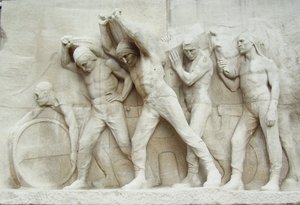
Ilmupõlvest kõige ambitsioossem projekt Meunier'i juures oli "Monument to Labour", laialdane ja mitmekülgne teos, mille omastas Belgia riik. See monumentaalne projekt ei olnud lihtsalt skulptuur; see oli kogu kunstiline ökosüsteem, mis oli loodud tähistama tööliseklassi panust. See koosnes neljast kivist basreliefist, mis esitas tööstust, kaevandust, sadamat ja sadamat — iga panel oli täis figureid, kes olid oma vastavates ametites tegevuses. Neid täiendasid neli pronksstatueet: seemnik, sepp, kaevur ja esivanem — ajastute vältel esindavad töö arhetüübid. Kõigi selle keskel seisis emotsionaalselt puudutav pronksgrupp pealkonnal "Maternity", tunnustades naiste ja pere vitalset rolli selles maailmas. "Monument to Labour" ei olnud pelgalt töö kirjeldamine; see oli selle tõstmine kõrgemale, selle väärikuse sisestamine ja selle fundamentaalse olulisuse tunnustamine ühiskonnale.

Influences and Artistic Significance

Constantin Meunier'i kunstiline teekond on olnud mitmete peamiste mõjete vormitud. Gustave Courbet'i sotsiaalrealism toimis algne katalüüsator, õhutades teda kohtuma oma aja reaalsusega vankumatult ausalt. Belgia muutuva tööstusmaastik pakkus pidevat inspiratsiooniallikat, pakkudes rikkalikku materjali ja veenevat narratiivi tema kunstile. Kuid Meunier ei olnud pelgalt dokumenterija; ta omastas unikaalset oskust imbuidta oma teemade väärikusega ja paatosega. Ta ei kartnud kirjeldada töö äärmust raskust, kuid rõhutas alati nende inimeste sisemist väärtust ja vastupidavust, kes seda tegid. See sotsiaalrealismi pühendumus avas tee hiljemtele kunstniktele, kes uurisid sotsiaalse õiglust ja töötajate õigusi. Tema töö seisab kui tunnistuskunstile, mis suudab olla jälgi jäljemeendaja, väljakutseks konventsioonidele ja marginaliseeritudide eest seisjaks. Ta oli ka Brüsseli Société Libre des Beaux-Arts kaasasasutaja, mõjuva ühingu liige, mis toetas kunstilist vabadust ja innovatsiooni.

A Continuing Resonance

Tänapäeval on Constantin Meunier'i pärand elav tema võimsate maaalide ja skulptuuride kaudu, mis jätkavad resonanssumoodi üle maailma. Muuseum Constantin Meunier, mis asutati 1939. aastal tema viimase kodu ja stuudio seinas Ixellesis, Brüsselis, toimib sobiva austamise märkina tema elule ja töödööle, hoides ligikaudu 150 tema teost. Tema kunst on asjakohane mitte ainult ajaloolise tähtsuse tõttu, vaid ka ajatuse tõttu, mis räägib töö väärikusest ja sotsiaalse teadlikkuse olulisusest. Meunier'i võime tabada inimvaimu keskel vääri tööstuslik progressi kiires liikumisel tagab tema koha Belgia ja Euroopa kunstiajaloo murdmute punktis — kunstniku, kes julges vaadata além sügavale ja paljastada sügava ilu ning sisemise väärtuse tavaliste inimeste eludes.