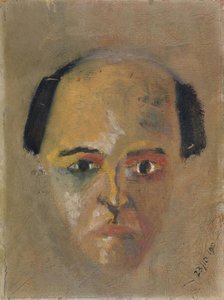
Arnold Schönberg portree

65 kulubumatamatumat Arnold Schönberg maalist, millist on vaid üks

Uuendatud november 2026 · järjestatud meie populaarsusindeksi järgi (otsingud, külastused ja tellimused igale teosele) · 65 teost Arnold Schönberg meie kataloogis

Lühidalt

Pierrot lunaire, op. 21 - Night (1912) on Arnold Schönberg maalide kõige silmapaistvam teos; originaal kuulub museumi Arnold Schönberg Center, Viin. Pärast seda suunatakse pilk Arnold Schönberg’s calendar (1935) ja Suite, op. 29 - Bi-directional twelve-tone row chart (1924) suunas. Meie kataloogis olevatest Arnold Schönberg 65 teosest on need 65 kõige kuulsumat, millist igaüks on esitatud koos aasta, muuseumi ja põhjusega, miks teos on püsiv.

1874 – 1951, Viin Expressionism Enamama teoseid: Arnold Schönberg Center

Arnold Schönberg top 10 maalist galeriist vaatenurgast

1
Pierrot lunaire, op. 21 - Night (1912) autor Arnold Schönberg

Pierrot lunaire, op. 21 - Night

1912 · Acrylic On Canvas · Arnold Schönberg Center, Viin

Arnold Schönberg’s *Pierrot lunaire*, op. 21, stands as a monumental achievement in the evolution of modern music, a work born from the anxieties and aesthetic explorations of early 20th-century Europe. This particular rendition, “Night,” meticulously captured in this evocative photographic reproduction, offers a profound glimpse into Schönberg’s expressionistic vision – a world of fractured emotion, haunting beauty, and unsettling psychological depth. Composed in Berlin in 1912, the piece was commissioned…

2
Arnold Schönberg’s calendar (1935) autor Arnold Schönberg

Arnold Schönberg’s calendar

1935 · Black and White Photography · Arnold Schönberg Center, Viin

The scene unfolds within the frame of Arnold Schönberg’s calendar, a work by the artist Arnold Schoenberg. In this captured moment from 1935, the air feels heavy with the quiet transition of a life in motion. We find Arnold Schönberg and his wife, Gertrud Kolisch Schoenberg, sharing a private space within the backseat of a vintage automobile. They are travelers, caught in the midst of their relocation to Los Angeles,…

3
Suite, op. 29 - Bi-directional twelve-tone row chart (1924) autor Arnold Schönberg

Suite, op. 29 - Bi-directional twelve-tone row chart

1924 · Acrylic On Canvas · Arnold Schönberg Center, Viin

Arnold Schönberg's "Suite, op. 29 – Bi-directional twelve-tone row chart" isn’t merely a musical score; it’s a visual manifestation of radical innovation, a testament to the composer’s relentless pursuit of sonic and artistic boundaries. Created in 1924, during a period of intense experimentation within his own compositional methods—specifically, his “Method of composing with twelve tones which are related only with one another”—this work represents a pivotal moment in 20th-century music…

4
Peace on Earth, op. 13 (1907) autor Arnold Schönberg

Peace on Earth, op. 13

1907 · Black and White Photography · Arnold Schönberg Center, Viin

To gaze upon this depiction of Arnold Schoenberg's "Peace on Earth, op. 13" is not merely to look at an aged sheet of music; it is to encounter a preserved echo of profound human yearning. This composition, born from the charged atmosphere of early twentieth-century Europe, transcends its musical notation to become a tangible artifact of hope. The visual evidence—the sepia tones, the delicate creases, the faint patina of time…

5
Phantasy for Violin with Piano Accompaniment, op. 47 (1949) autor Arnold Schönberg

Phantasy for Violin with Piano Accompaniment, op. 47

1949 · Acrylic On Canvas · Arnold Schönberg Center, Viin

This meticulously crafted hand-painted reproduction captures a pivotal moment in the oeuvre of Arnold Schoenberg, a composer who irrevocably altered the landscape of 20th-century music. The piece, “Phantasy for Violin with Piano Accompaniment,” op. 47, born from a commission in 1949, represents more than just a musical composition; it’s a tangible link to a brilliant mind grappling with radical innovation and profound personal transformation. The photograph itself – a stark…

6
Accompaniment to a Cinematographic Scene (1929) autor Arnold Schönberg

Accompaniment to a Cinematographic Scene

1929 · Mustvalge fotograafia · Arnold Schönberg Center, Viin

Schoenberg oli austraalia-ameerika komponeerija, kes oli maailma esimeste modernistide hulgas klassikalise muusikaga harmoniat muutnud ning tema muusikas oli motiiviprotsessid kohesuse vahendina. Ta tõmbasin välja mõtestamise variatsiooni, dissonantsiooni vabastamise ja "muusikaruumi ühtlust". Schoenberg oli esimeste maailmaregloori keskpunktis Anton Weberni ja Alban Bergiga ning nende töödele oli suur mõju kunstilisele maailmale. Tema esimene suurem osa oli Brahmsi ja Wagneri sümboolne mõju, mis näitas end esimestel maailmaregloodil. Schoenberg loobus aastatel 1933–1933 Saksa Kunstiakadeemia…

7
Blue Gaze (1910) autor Arnold Schönberg

Blue Gaze

1910 · Oil On Board · Arnold Schönberg Center, Viin

“Blue Gaze,” painted in 1910 by the titan of musical innovation, Arnold Schoenberg, is more than just a portrait; it's a visceral manifestation of artistic struggle and a testament to the burgeoning power of abstraction. Created during a pivotal period in Schoenberg’s life – a time when he was simultaneously wrestling with the radical new techniques of atonality in music and exploring the uncharted territories of visual expression – this…

8
Transfer ticket for public transport in Berlin (1927) autor Arnold Schönberg

Transfer ticket for public transport in Berlin

1927 · Acrylic On Canvas · Arnold Schönberg Center, Viin

This meticulously crafted hand-painted reproduction captures a pivotal moment in design history – the 1927 transfer ticket for the Berlin tram system, conceived by the visionary composer Arnold Schönberg. Far more than simply a means of payment, this circular artifact represents a radical shift towards efficiency and user experience, anticipating modern transit systems by nearly a century. Schönberg’s design wasn't born from artistic indulgence; it stemmed from a pragmatic desire…

9
The Musical Idea - W. A. Mozart K 465 (1934) autor Arnold Schönberg

The Musical Idea - W. A. Mozart K 465

1934 · Giclée Print · Arnold Schönberg Center, Viin

W.A. Mozart’s K. 465, “The Musical Idea,” takes on an entirely new dimension through the lens of Arnold Schönberg's profound inquiry into musical representation. This isn’t merely a reproduction of a classical score; it’s a visual echo of Schönberg’s seminal work, "Der Musikalische Gedanke," a treatise that fundamentally shifted our understanding of composition and its relationship to logic, technique, and artistic expression. The photograph itself – a meticulously annotated music…

10
Piano Piece, op. 19/6 (1911) autor Arnold Schönberg

Piano Piece, op. 19/6

1911 · Acrylic On Canvas · Arnold Schönberg Center, Viin

This meticulously crafted hand-painted reproduction captures Arnold Schönberg’s poignant “Piano Piece, op. 19/6,” a deceptively simple work born from a moment of profound grief and artistic experimentation. Created in 1911, shortly after the death of Gustav Mahler – a figure Schönberg deeply revered as both mentor and friend – the piece offers a rare glimpse into the composer’s emotional landscape during a period of intense creative upheaval. The image presented…

Arnold Schönberg kuulsad maalid, numbrid 11 kuni 65

11Excerpt from Arnold Schönberg’s own handwritten library catalogue: Works of Richard Strauss (1914) autor Arnold SchönbergExcerpt from Arnold Schönberg’s own handwritten library catalogue: Works of Richard Strauss1914 · Arnold Schönberg Center 12Self-Portrait (1910) autor Arnold SchönbergSelf-Portrait1910 · Arnold Schönberg Center 13The Biblical Way (Act I, Scene 2), Stadium (1927) autor Arnold SchönbergThe Biblical Way (Act I, Scene 2), Stadium1927 · Arnold Schönberg Center 14The Lucky Hand (scene 1) (1910) autor Arnold SchönbergThe Lucky Hand (scene 1)1910 · Arnold Schönberg Center 15Gertrud Schönberg (1930) autor Arnold SchönbergGertrud Schönberg1930 · Arnold Schönberg Center 16Tears (1910) autor Arnold SchönbergTears1910 · Arnold Schönberg Center 17Garden Scene (1907) autor Arnold SchönbergGarden Scene1907 · Arnold Schönberg Center 18Playing Cards for Whist/Bridge - Jack of Spades (1910) autor Arnold SchönbergPlaying Cards for Whist/Bridge - Jack of Spades1910 · Arnold Schönberg Center 19Formation scheme for the Gurrelieder (1918) autor Arnold SchönbergFormation scheme for the Gurrelieder1918 · Arnold Schönberg Center 20The Lucky Hand (scene 2) (1910) autor Arnold SchönbergThe Lucky Hand (scene 2)1910 · Arnold Schönberg Center 21Red Gaze (1910) autor Arnold SchönbergRed Gaze1910 · Arnold Schönberg Center 22Piano Concerto, op. 42 - Programmatic keywords (1942) autor Arnold SchönbergPiano Concerto, op. 42 - Programmatic keywords1942 · Arnold Schönberg Center 23Playing Cards for Whist/Bridge - King of Hearts (1910) autor Arnold SchönbergPlaying Cards for Whist/Bridge - King of Hearts1910 · Arnold Schönberg Center 24Structural Functions of Harmony - Chart of the Regions (1948) autor Arnold SchönbergStructural Functions of Harmony - Chart of the Regions1948 · Arnold Schönberg Center 25Interior and Portrait of a Woman (1910) autor Arnold SchönbergInterior and Portrait of a Woman1910 · Arnold Schönberg Center 26Blue Self-Portrait (1910) autor Arnold SchönbergBlue Self-Portrait1910 · Arnold Schönberg Center 27Self-Portrait (1918) autor Arnold SchönbergSelf-Portrait1918 · Arnold Schönberg Center 28Mathilde Schönberg (1909) autor Arnold SchönbergMathilde Schönberg1909 · Arnold Schönberg Center 29Expectation (Scene 3) (1911) autor Arnold SchönbergExpectation (Scene 3)1911 · Arnold Schönberg Center 30Handwriting samples (1923) autor Arnold SchönbergHandwriting samples1923 · Arnold Schönberg Center 31Suite for Piano, op. 25 - Prelude (1921) autor Arnold SchönbergSuite for Piano, op. 25 - Prelude1921 · Arnold Schönberg Center 32Landscape (1910) autor Arnold SchönbergLandscape1910 · Arnold Schönberg Center 33Erwartung, op. 17 (1909) autor Arnold SchönbergErwartung, op. 171909 · Arnold Schönberg Center 34Exlibris (1910) autor Arnold SchönbergExlibris1910 · Arnold Schönberg Center 35Alliance (Hands) (1910) autor Arnold SchönbergAlliance (Hands)1910 · Arnold Schönberg Center 36Portrait of a Woman (1910) autor Arnold SchönbergPortrait of a Woman1910 · Arnold Schönberg Center 37Coalition Chess - Ühenduse šahh (1925) autor Arnold SchönbergCoalition Chess - Ühenduse šahh1925 · Arnold Schönberg Center 38Moses and Aron (1930) autor Arnold SchönbergMoses and Aron1930 · Arnold Schönberg Center 39Playing Cards for Whist/Bridge - Queen of clubs (1909) autor Arnold SchönbergPlaying Cards for Whist/Bridge - Queen of clubs1909 · Arnold Schönberg Center 40Playing card design (1910) autor Arnold SchönbergPlaying card design1910 · Arnold Schönberg Center 41Brief to Wilhelm von Wymetal (1907) autor Arnold SchönbergBrief to Wilhelm von Wymetal1907 · Arnold Schönberg Center 42Alexander Zemlinsky (1910) autor Arnold SchönbergAlexander Zemlinsky1910 · Arnold Schönberg Center 43Green Self-Portrait (1910) autor Arnold SchönbergGreen Self-Portrait1910 · Arnold Schönberg Center 44Memory of Oskar Kokoschka (1910) autor Arnold SchönbergMemory of Oskar Kokoschka1910 · Arnold Schönberg Center 45Mathilde Schönberg cooking (1912) autor Arnold SchönbergMathilde Schönberg cooking1912 · Arnold Schönberg Center 46Model of a set of dentures (1926) autor Arnold SchönbergModel of a set of dentures1926 · Arnold Schönberg Center 47Coalition Chess - Plane (1925) autor Arnold SchönbergCoalition Chess - Plane1925 · Arnold Schönberg Center 48Gaze (Karl Kraus – The Great Wall of China) (1910) autor Arnold SchönbergGaze (Karl Kraus – The Great Wall of China)1910 · Arnold Schönberg Center 49Furniture design (1931) autor Arnold SchönbergFurniture design1931 · Arnold Schönberg Center 50Self-Portrait (1935) autor Arnold SchönbergSelf-Portrait1935 · Arnold Schönberg Center 51Self-Portrait (1922) autor Arnold SchönbergSelf-Portrait1922 · Arnold Schönberg Center 52The Musical Idea - Chart of the Regions (1934) autor Arnold SchönbergThe Musical Idea - Chart of the Regions1934 · Arnold Schönberg Center 53Schematic representation of European Jewry (1934) autor Arnold SchönbergSchematic representation of European Jewry1934 · Arnold Schönberg Center 54Model of a chair / library ladder (1945) autor Arnold SchönbergModel of a chair / library ladder1945 · Arnold Schönberg Center 55Five Pieces for Orchestra, op. 16/5 – First written copy (1909) autor Arnold SchönbergFive Pieces for Orchestra, op. 16/5 – First written copy1909 · Arnold Schönberg Center 56Staffliner for drawing staves (1950) autor Arnold SchönbergStaffliner for drawing staves1950 · Arnold Schönberg Center 57Mauriži Zam (1935) autor Arnold SchönbergMauriži Zam1935 · Arnold Schönberg Center 58Critic I (1910) autor Arnold SchönbergCritic I1910 · Arnold Schönberg Center 59Emil Hertzka (1910) autor Arnold SchönbergEmil Hertzka1910 · Arnold Schönberg Center 60Speak not always of the leaves, op. 15/14 - Tema tõlgendus eesti keelde: kõigest üks vähese mõtete kirju õhtu müüki. (1909) autor Arnold SchönbergSpeak not always of the leaves, op. 15/14 - Tema tõlgendus eesti keelde: kõigest üks vähese mõtete kirju õhtu müüki.1909 · Arnold Schönberg Center 61Music Typewriter (1909) autor Arnold SchönbergMusic Typewriter1909 · Arnold Schönberg Center 62Piano Piece, op. 11/2 (1909) autor Arnold SchönbergPiano Piece, op. 11/21909 · Arnold Schönberg Center 63Walking Self-Portrait (1911) autor Arnold SchönbergWalking Self-Portrait1911 · Arnold Schönberg Center 64Chess Set autor Arnold SchönbergChess SetArnold Schönberg Center 65Tape Dispenser (1945) autor Arnold SchönbergTape Dispenser1945 · Arnold Schönberg Center

Arnold Schönberg kuulsaimad maalid ajastult ajastule

Teemad, mis püüdisid Arnold Schönberg pilma

Neli teemat, mis esinevad neis originaalkindel kõige sagedamini, ning iga teema parim näide.

Muuseumid, kus on säilitatud Arnold Schönberg originaalteosed

Muuseum, milles on kõige rohkem sellel lehel esitatud maaleid.

Muuseumid Linn Arnold Schönberg teosid Selle nimekirja maalid
Arnold Schönberg Center, ViinArnold Schönberg Center Viin 65 Pierrot lunaire, op. 21 - Night, Arnold Schönberg’s calendar, Suite, op. 29 - Bi-directional twelve-tone row chart

Arnold Schönberg aastakatega: iga aastakannaga üks unikaalne originaal

Teosed aastakate kaupa

Vali vuosakülg, et näha selle ajastu definieerivat originaalteost.

Arnold Schönberg maalid: küsimused galeriile

Mis on Arnold Schönberg kõige kuulsam teos?Paljasta vastus

Pierrot lunaire, op. 21 - Night (1912), Arnold Schönberg Center, Viin. Järgnevad Arnold Schönberg’s calendar (1935) ja Suite, op. 29 - Bi-directional twelve-tone row chart (1924).

Mis vanuses luunud Arnold Schönberg teos Pierrot lunaire, op. 21 - Night?Paljasta vastus

38 aastat vanus: teos Pierrot lunaire, op. 21 - Night on pärinev aastast 1912 ning Arnold Schönberg sündis aastal 1874.

Millised on Arnold Schönberg kümneks kuulsumat maalatist?Paljasta vastus

Pierrot lunaire, op. 21 - Night, Arnold Schönberg’s calendar, Suite, op. 29 - Bi-directional twelve-tone row chart, Peace on Earth, op. 13, Phantasy for Violin with Piano Accompaniment, op. 47, Accompaniment to a Cinematographic Scene, Blue Gaze, Transfer ticket for public transport in Berlin, The Musical Idea - W. A. Mozart K 465 ja Piano Piece, op. 19/6. Ülemine reiting näitab iga teose puhul aastat ja muuseumi.

Kui palju teoseid kunstniku Arnold Schönberg kohta on teada?Paljasta vastus

Meie kataloogist leiate 65 teost kunstnikult Arnold Schönberg, mis on pärinevad ajastust 1907 kuni 1950.

Kust saab näha kõige kuulsamaid Arnold Schönberg originaalteoseid?Paljasta vastus

Peamiselt Arnold Schönberg Center (Viin) muuseumites. Ülalpool olevate muuseumite tabelis on nendest kõik loetletud.

Mille perioodi jooksul lõi Arnold Schönberg oma tuntumad maalid?Paljasta vastus

Ajal 1910s: 29 65 sellel lehel olevat teost on sellel perioodil loodud, მათart közül Pierrot lunaire, op. 21 - Night.

Milline kuuls Arnold Schönberg maal on kõige varasem ja milline kõige hiljema?Paljasta vastus

Sellel lehel on kõige vanem teos Peace on Earth, op. 13 (1907) ja kõige värskeim Staffliner for drawing staves (1950).

Millist teemasid Arnold Schönberg eelistas?Paljasta vastus

Atonality (11), Schoenberg (8) ja Self-portrait (6), kogu selle lehekülje 65 teose kohta.

Mida Arnold Schönberg kõige rohkem kasutas oma maalide nimiseks?Paljasta vastus

Acrylic On Canvas, 17 teoseks 65 töödelt sellel lehel.

Millisse toomangu kuulub Arnold Schönberg teos?Paljasta vastus

Expressionism ja Expressionist modernism, seda lähtudes selle lehe originaalteostest.

Mida Arnold Schönberg originaalte ma näen Arnold Schönberg Center muuseumis?Paljasta vastus

Pierrot lunaire, op. 21 - Night, Arnold Schönberg’s calendar ja Suite, op. 29 - Bi-directional twelve-tone row chart: Arnold Schönberg Center, Viin säilitab 65 selle lehel olevat teost.

Arnold Schönberg: kunstniku portree

varaj puud ja muusikalised algused

Arnold Schönberg, austria-ameerika helilooj, sündis 13. september 1874 Austrias, Viinnis. Tema varajane elu oli tähistatud vahendusega algusega, kuna tema isa oli kingapoodi omanik. Vaatamata sellele juhtumisele suunas Schönbergi loomulik armastus muusika vastu teda suurel määral iseseisvalt selles valdkonnas õppima.

muutlik areng ja märkimistekendavad teosed

Schönbergi algased teosed, nagu Verklärte Nacht (1899), näitasid Brahmsi ja Wagneri stiilide sündmist. Edasine areng tegi temast keskne tegelane Teises Viini koolkonnas koos Anton Weberni ja Alban Bergi. Tema kompositsioonid, sealhulgas stringkvartett nr 2 (1907–1908), Erwartung (1909) ja Pierrot Lunaire (1912), näitasid tema innovatiivset lähenemist atonaalsusele.

õpetamine, emigratsioon ja hilisem elu

1933. aastal lahkus Schönberg Preussia Kunstiakadeemiast natsistliku võimuküllekkumise tõttu, kuna viimastel oli tema muusik nii nimetatud "lahjustunud". Seejärel õpetas ta USA-s, sealhulgas Californias Los Angelesi ülikoolis (1936–1944), kus on tema nimel nimetatud erinevad asutused. [https://OriginalUniqueArt.com/@/arnold-scherichia](avastage rohkem Schönbergi elu ja loomingust OriginalUniqueArt lehelt).

pärand ja mõju

Kui maailm sai teada Holokaustist, mälestas Schönberg selle ohvrite vastu teoses A Survivor from Warsaw (1947). Israelie kontserdimuusikakool ja akadeemia valis ta 1951. aastal aupresidentiks. [https://OriginalUniqueArt.com/@@/a@d3bqc7-the-museum-destroyed-by-fire-(united-states)](lugege lähemalt tema loomingu mõju OriginalUniqueArt lehelt). olulised punktid:
  • Schönbergi innovatiivne muusika oli üks 20. sajandi klassikamuusika mõjuvaimaid ja poleemilisemaid suunad.
  • vähemalt kolm heliloojate põlvkonda arendas edasi selle veidi formaalseid põhimõtteid.
  • tema esteetiline ja muusikahistoriline vaade mõjutas muusikoloogid Theodor W. Adorno ja Carl Dahlhausit. [https://OriginalUniqueArt.com/@@/a@d3cl2x--a-journey-through-art-history-with-OriginalUniqueArt-s-extensive-collection-](uurige kunsti laia kogumust OriginalUniqueArt lehelt, mis ulatub 12. sajandist kuni 20. sajandini).