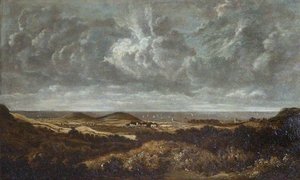
Robert Ladbrooke portree

17 kulubumatamatum Robert Ladbrooke maali, galeriiselektsioon

Uuendatud november 2026 · järjestatud meie populaarsusindeksi järgi (otsingud, külastused ja tellimused igale teosele) · 17 teost Robert Ladbrooke meie kataloogis

Lühidalt

Kõigist Robert Ladbrooke jäetud originaalteostest on kõige kuulsam The Mackerel Market on Yarmouth Beach, Norfolk (1810). Järgnevad sellest Landscape (1820) ja Landscape with a Church (1840). Meie kataloogist löytyb 17 teost kunstnikult Robert Ladbrooke; galeriist on säilitatud 17 maailmas kõige imetlustunud teost, millest iga on esitatud koos kuupäeva, museumi ja oma luguga.

1768 – 1842, Norwich Enamama teoseid: National Trust

Robert Ladbrooke top 10 maalist: galeriis valitud teosed

Kunstianikut Robert Ladbrooke nimekiri jätkub, 11 kuni 17

Muuseumid, kus on säilitatud Robert Ladbrooke originaalteosed

Kümne 7 muuseumi kollektsioonid, mis sisaldavad kõige rohkem sellel lehel esitatud teoseid.

Muuseumid Linn Robert Ladbrooke teosid Selle nimekirja maalid
National Trust, NorwichNational Trust Norwich 2 Beeston Regis from the 'Roman Camp', Man and Dog on a Path in a Wooded Landscape
The Stirling Smith Art Gallery - Museum, StirlingThe Stirling Smith Art Gallery - Museum Stirling 1 Landscape with a Church
Smithsonian American Art Museum, Washington, D.C.Smithsonian American Art Museum Washington, D.C. 1 Barnyard Scene
Norfolk Museums, NorwichNorfolk Museums Norwich 1 Yarmouth Harbour, Moonlight
Yale Center for British Art, New HavenYale Center for British Art New Haven 1 Wooded Landscape with Woman and Child Walking Down a Road
Towneley Hall Art Gallery - Museum, BurnleyTowneley Hall Art Gallery - Museum Burnley 1 The Old Farmstead
Wolverhampton Art Gallery, WolverhamptonWolverhampton Art Gallery Wolverhampton 1 An Oak Glade

Robert Ladbrooke aastak aegades: originaalteos, mis määratleb iga ajastu

Teosed aastakate kaupa

Vali vuosakülg, et näha selle ajastu definieerivat originaalteost.

Sammlajate küsimused Robert Ladbrooke maalide kohta

Millise teosega on Robert Ladbrooke kõige kuulsam?Paljasta vastus

The Mackerel Market on Yarmouth Beach, Norfolk (1810). Järgnevad Landscape (1820) ja Landscape with a Church (1840).

Kui vana oli Robert Ladbrooke, kui teos The Mackerel Market on Yarmouth Beach, Norfolk loodi?Paljasta vastus

42 aastat vanus: teos The Mackerel Market on Yarmouth Beach, Norfolk on pärinev aastast 1810 ning Robert Ladbrooke sündis aastal 1768.

Millised on kümne kõige kuulsama Robert Ladbrooke maalid?Paljasta vastus

The Mackerel Market on Yarmouth Beach, Norfolk, Landscape, Landscape with a Church, Landscape with Trees, Cattle, and Stream, Barnyard Scene, Wood Scene, Yarmouth Beach, Norfolk, Yarmouth Harbour, Moonlight, Wooded Landscape with Woman and Child Walking Down a Road ja A View of Norwich Castle and Cathedral, Norfolk. Ülemine reiting näitab iga teose puhul aastat ja muuseumi.

Kui palju maali Robert Ladbrooke jäeti?Paljasta vastus

Meie kataloogist leiate 17 teost kunstnikult Robert Ladbrooke, mis on pärinevad ajastust 1800 kuni 1840.

Mitteks muuseumides rihangavad Robert Ladbrooke meistriteosed?Paljasta vastus

Peamiselt National Trust (Norwich), The Stirling Smith Art Gallery - Museum (Stirling) ja Smithsonian American Art Museum (Washington, D.C.) muuseumites. Ülalpool olevate muuseumite tabelis on nendest kõik loetletud.

Millah aastades maalas Robert Ladbrooke oma kuulsamaid teoseid?Paljasta vastus

Ajal 1810s: 4 17 sellel lehel olevat teost on sellel perioodil loodud, მათart közül The Mackerel Market on Yarmouth Beach, Norfolk.

Mis on Robert Ladbrooke esimene ja viimane kuuls fama originaalteos?Paljasta vastus

Sellel lehel on kõige vanem teos Landscape with Trees, Cattle, and Stream (1800) ja kõige värskeim Landscape with a Church (1840).

Millised Robert Ladbrooke teosed on National Trust näituses?Paljasta vastus

Beeston Regis from the 'Roman Camp' ja Man and Dog on a Path in a Wooded Landscape: National Trust, Norwich säilitab 2 selle lehel olevat teost.

Robert Ladbrooke: elu ja looming

A Norfolk Visionary: The Life and Art of Robert Ladbrooke

Robert Ladbrooke, born in Norwich in 1768, stands as a pivotal figure in the development of British landscape painting, inextricably linked to the rise of the celebrated Norwich School. His story is one of humble beginnings blossoming into artistic leadership, a testament to dedication and a deep connection to his native Norfolk countryside. Apprenticed at a young age to an artist and printer named White, Ladbrooke’s early years instilled in him both technical skill and a practical understanding of image-making – foundations that would prove invaluable throughout his career. It was during this formative period that a crucial encounter occurred with John Crome, a fellow aspiring artist who shared Ladbrooke's passion and similar social standing. This meeting sparked not only a lifelong friendship but also an artistic partnership that would reshape the landscape of British art. The two young men lived together, dedicating their spare hours to sketching, copying masterworks, and nurturing their burgeoning talents. Their bond was further cemented when they married sisters, solidifying a personal and creative alliance that defined much of their artistic journeys.

Forging a New Path: The Norwich School and Artistic Development

The early 19th century witnessed a growing desire amongst artists to move beyond the dominance of London’s art institutions and cultivate regional identities. This spirit culminated in 1803 with the co-founding of the Norwich Society of Artists by Ladbrooke and Crome, an event that marked the true genesis of the Norwich School – England's first recognized art movement outside the capital. The school championed a direct engagement with nature, particularly the unique character of the Norfolk landscape. This wasn’t merely topographical representation; it was about capturing the essence of place, the subtle nuances of light and atmosphere, and the beauty inherent in everyday rural life. Initially, Ladbrooke practiced portraiture, but he soon gravitated towards landscapes, demonstrating a remarkable ability to portray atmospheric effects and evoke the mood of his subjects. His dedication earned him recognition, with regular exhibitions at both the Royal Academy and the British Institution. Though a brief secession from the Norwich Society in 1816, alongside Joseph Stannard and others, proved ultimately unsuccessful, it underscored a desire for artistic independence and a willingness to challenge established norms.

A Legacy in Landscape: Key Works and Artistic Style

Ladbrooke’s *oeuvre* is characterized by its unwavering focus on the rural areas of Norfolk – its churches, waterways, and expansive skies. While his reputation remained largely localized during his lifetime, his works are now recognized as significant contributions to British landscape art. Notable examples include his skillful aquatints, such as “A View of the Fellmongers on the River near Bishop’s Bridge” and “A View of Norwich Castle,” which showcase his mastery of light and atmosphere. However, it was his monumental project, “Views of the Churches of Norfolk,” that truly cemented his legacy. This ambitious undertaking, comprising over 650 lithographic plates published posthumously in five volumes (1843), stands as an invaluable visual record of Norfolk’s architectural heritage. Ladbrooke's style is defined by meticulous observation, a muted palette reflecting the distinctive quality of Norfolk light, and a profound sensitivity to mood and atmosphere. He drew inspiration from Dutch landscape painting traditions, evident in his careful attention to detail and atmospheric perspective.

A Family of Artists and Enduring Significance

Robert Ladbrooke’s influence extended far beyond his own artistic achievements, shaping the careers of his sons – Henry Ladbrooke and John Berney Ladbrooke – both accomplished artists who continued the Norwich School tradition. Henry gained acclaim for his evocative moonlight scenes, while John Berney excelled in depicting woodland landscapes. This familial continuation underscores the strength of the artistic environment fostered by Robert Ladbrooke. His role as a founder of the Norwich School holds immense historical significance. The school not only nurtured a sense of artistic community but also challenged the centralized authority of London-based art institutions, paving the way for regional artistic movements. Furthermore, “Views of the Churches of Norfolk” remains an invaluable historical document, offering insights into 19th-century architecture and rural life in East Anglia. Ladbrooke’s legacy is preserved through his works held in museums and private collections worldwide, ensuring that his contribution to British art continues to be appreciated by generations to come. He enjoyed a comfortable retirement thanks to the success of his teaching and artistic endeavors, passing away at his home on Scoles' Green, Norwich, on October 11, 1842 – marking the end of an era for the Norwich School, yet ensuring its enduring spirit lived on through his sons and the continued appreciation of his evocative landscapes.