


1


Uuendatud november 2026 · järjestatud meie populaarsusindeksi järgi (otsingud, külastused ja tellimused igale teosele) · 10 teost Pierre Prévost meie kataloogis
Lühidalt
Galleriist vaadatuna on Pierre Prévost kõige kuulsam teos Panorama of Paris taken from the roof of the Pavillon de Flore, at the Tuileries (1833), mille originaal ripub Carnavalet Museum-is, Pariis. Panorama of Constantinople (divided into 16 numbered compartments) ja Panorama of Constantinople (divided into 16 numbered compartments) täidavad kolmikut, mille iga silm tunnistab. Kunstnii Pierre Prévost 10 teose põhjal esitleb galeriis allpool 10 kõige kuulsumat, kus iga originaal on märgitud aastaga, muuseumiga ja kirjeldatud, mis teeb selle unikaalseks.


Kümne 2 muuseumi kollektsioonid, mis sisaldavad kõige rohkem sellel lehel esitatud teoseid.
| Muuseumid | Linn | Pierre Prévost teosid | Selle nimekirja maalid |
|---|---|---|---|
 Carnavalet Museum |
Pariis | 1 | Panorama of Paris taken from the roof of the Pavillon de Flore, at the Tuileries |
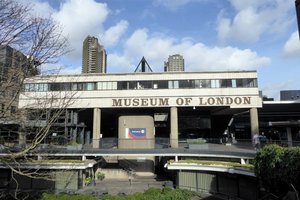 Londoni muuseum |
London | 1 | A Panoramic View of London, from the Tower of St. Margaret's Church, Westminster |
Kõik sellel lehel asuvad Pierre Prévost originaalteosed on loodud aastal 1815: siin on need, kõige kuulsemad esimesena.
Vali aasta, et näha originaale.
Panorama of Paris taken from the roof of the Pavillon de Flore, at the Tuileries (1833), Carnavalet Museum, Pariis. Järgnevad Panorama of Constantinople (divided into 16 numbered compartments) ja Panorama of Constantinople (divided into 16 numbered compartments).
Panorama of Paris taken from the roof of the Pavillon de Flore, at the Tuileries, Panorama of Constantinople (divided into 16 numbered compartments), Panorama of Constantinople (divided into 16 numbered compartments), Panorama of Constantinople (divided into 16 numbered compartments), Panorama of Constantinople (divided into 16 numbered compartments), Panorama of Constantinople (divided into 16 numbered compartments), Panorama of Constantinople (divided into 16 numbered compartments), Panorama of Constantinople (divided into 16 numbered compartments), Panorama of Constantinople ja A Panoramic View of London, from the Tower of St. Margaret's Church, Westminster. Ülemine reiting näitab iga teose puhul aastat ja muuseumi.
Meie kataloogist leibab 10 teost kunstnikult Pierre Prévost.
Peamiselt Carnavalet Museum (Pariis) ja Londoni muuseum (London) muuseumites. Ülalpool olevate muuseumite tabelis on nendest kõik loetletud.
Pierre Prévost entered the world in Montigny-le-Gannelon on 7 December 1764, arriving at a moment when the boundaries of landscape painting were about to expand into new dimensions. As a student of Pierre-Henri de Valenciennes, he learned the rigors of classical training, yet his true contribution lay in a specialized form of immersive observation. He became the first French panorama painter, an artist capable of translating the vastness of the world onto a circular stage.
His work was defined by a desire to place the viewer within the center of a scene. Through his panoramas, distant cities and historical moments were brought into a close, encircling presence. He did not merely paint landscapes; he constructed environments. His technique often involved watercolor on paper, which was then meticulously glued onto canvas backings to create the scale required for such monumental views.
Prévost’s career was marked by a series of expansive topographical studies that captured the essence of European and Mediterranean locales. His eye moved from the familiar streets of France to the far reaches of the Levant. Some of his most notable subjects included:
In these works, he captured a world in transition. His London panorama, painted around 1815, offers a window into a city before the great fires and reconstructions of the nineteenth century. It shows the Abbey and the Palace of Westminster as they existed in the shadow of the Napoleonic Wars. He possessed a particular skill for documenting the topography of a place, recording how buildings sat in relation to rivers and open spaces with a precise, unadorned clarity.
The scale of Prévost's ambition often required collaboration. For his view of Paris from the Tuileries, he worked alongside Constant Bourgeois, Denis Fontaine, and Jean Mouchet to achieve the necessary breadth of detail. His life was deeply intertwined with the major historical shifts of his era, from the evacuation of Toulon in 1793 to the aftermath of the Battle of Wagram.
He remained in Paris for much of his professional life, eventually passing away there on 30 August 1823. He was laid to rest in the Père Lachaise Cemetery. While many of his largest, full-scale panoramic works have been lost to time, the preparatory pieces and smaller views remain as fragments of a vanished perspective, preserved in collections such as the Louvre and the Museum of London.