


1


Uuendatud november 2026 · järjestatud meie populaarsusindeksi järgi (otsingud, külastused ja tellimused igale teosele) · 99 teost Philip Connard meie kataloogis
Lühidalt
Merry England on Philip Connard maalide kõige rohkem tähelepanu pälva teos. Pärast seda suunatakse pilk British Warships at Constantinople (1920) ja From HMS 'Caesar' HMS 'Superb' at Constantinople, HMS 'Lord Nelson' and the French 'Diderot' in the Distance with Seaforth Highlanders Marching along the Quay (1919) suunas. Meie kataloogis olevatest Philip Connard 99 teosest on need 97 kõige kuulsumat, millist igaüks on esitatud koos aasta, muuseumi ja põhjusega, miks teos on püsiv.


 Sketch for '27 Knots HMS 'Melampus''1918
12
 Gun Practice HMS 'Canterbury'1918
13
 Sailor on the Bridge1918
14
 Rangefinder in Action, August 19181918
15
 The Destruction of an Airship off the Frisian Coast, 11 August 19181918
16
 The Guns of HMS 'Caesar' Off Constantinople, Looking towards the Golden Horn1919
17
 Lady in Pink1930
18
 A Destroyer in a Heavy Sea From HMS 'Melampus'1918
19
 River CraftOrleans House Gallery
20
 The Ratcatcher
21
 Georgina
22
 London Bridge
23
 Bathers at Dieppe
24
 The Shipyard
25
 Charing Cross Bridge, London
26
 Spring on Wimbledon Common, London
27
 Preparing for the Walk1908
28
 Woman on a Balcony1909
29
 A Sketch in Norfolk1910
30
 The River Tang1913
31
 The Nosegay1913
32
 Evening1918
33
 Harwich1918
34
 Light Cruisers1918
35
 Suffolk Pastoral1920
36
 The Chief1918
37
 Captain P. Boyds, RN1918
38
 Still Life with Crockery1920 · The Ashmolean Museum of Art And Archaeology
39
 Ferry Steamers at Constantinople, Christmas 19181918 · Orleans House Gallery
40
 HMS 'Curlew'1918
41
 Between Decks1918
42
 Philip Connard1920
43
 HMS 'Danaë'1918
44
 Anti Aircraft Gun1918
45
 Off Harwich1918
46
 HMS 'Curaçao'1918
47
 The Harwich Force Leaving for Sea1918
48
 Near the South Dogger1918
49
 Oiler Alongside1918
50
 Cloud Shadows1918
51
 A Destroyer1918
52
 Pastoral Players1922 · Walker Art Gallery
53
 HMS 'Canterbury'1918
54
 Parkestone1918
55
 The Harwich Force Sailing Race1918
56
 Sketch for 'The Harwich Force at Sea'1918
57
 Lowering the Whaler HMS 'Coventry'1918
58
 The Surrender of the 'Goeben' Passing the German Embassy, Constantinople, Flying the White Flag1919
59
 Cookhouse HMS 'Maidstone'1918
60
 Vice Admiral the Honourable Sir Somerset A. Gough Calthorpe (1864–1937), GCMG, KCB, CVO, on Board HMS 'Superb' at Constantinople1918
61
 The Port of Constantinople The Guns of HMS 'Caesar'1919
62
 The Harwich Force at Sea1918
63
 Coastal Motor Boats off the Frisian Coast, 11 August 19181918
64
 The Return of a 'Camel' off the Frisian Coast HMS 'Curaçao', 11 August 19181918
65
 The Bridge, HMS 'Melampus'1918
66
 St George's Day Bridge of HMS 'Canterbury', on Patrol Work when the Great Naval Raid on Zeebrugge and Ostend Took Place1918
67
 Edward Meyerstein1928
68
 Apollo and Daphne1925
69
 Miss Elsie Benge1928
70
 Swans and Cygnets1935 · Walker Art Gallery
71
 Jack Percy Blake1942 · Guildhall Art Gallery
72
 Balloon Barrage and Shipping1940
73
 Air Chief Marshal Sir Edgar Ludlow Hewitt (1886–1973), KCB, CMG, DSO, MC1942
74
 Self Portrait1950 · Richmond Reference Library
75
 Albert Emil Davies (1875–1950)1940 · Guildhall Art Gallery
76
 27 Knots HMS 'Melampus'1918
77
 The Bandstand1918
78
 Trout Stream1942
79
 Chelsea Reaches, London
80
 Sunset
81
 Richmond Bridge, SurreyOrleans House Gallery
82
 Flowers
83
 The Thames
84
 The Market Place, Tangiers, Morocco
85
 Dessert
86
 A Talk on the Ramparts
87
 The Lilac Dress
88
 River SceneOrleans House Gallery
89
 Suffolk LandscapeOrleans House Gallery
90
 RhododendronsOrleans House Gallery
91
 The Abbey Ruins
92
 Family Group
93
 The Bathers
94
 Fanny Fillipi DowsonLaing Art Gallery
95
 Hardy of Chelsea Green
96
 The Red Gown
97
 Still Life
Neli teemat, mis esinevad neis originaalkindel kõige sagedamini, ning iga teema parim näide.
Kümne 6 muuseumi kollektsioonid, mis sisaldavad kõige rohkem sellel lehel esitatud teoseid.
| Muuseumid | Linn | Philip Connard teosid | Selle nimekirja maalid |
|---|---|---|---|
 Orleans House Gallery |
Riverside | 6 | River Craft, Ferry Steamers at Constantinople, Christmas 1918, Richmond Bridge, Surrey |
 Walker Art Gallery |
Liverpool | 2 | Pastoral Players, Swans and Cygnets |
 Guildhall Art Gallery |
London | 2 | Jack Percy Blake, Albert Emil Davies (1875–1950) |
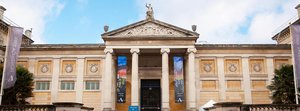 The Ashmolean Museum of Art And Archaeology |
Oxford | 1 | Still Life with Crockery |
 Richmond Reference Library |
Thames | 1 | Self Portrait |
 Laing Art Gallery |
Newcastle upon Tyne | 1 | Fanny Fillipi Dowson |
Vali vuosakülg, et näha selle ajastu definieerivat originaalteost.


Merry England. Järgnevad British Warships at Constantinople (1920) ja From HMS 'Caesar' HMS 'Superb' at Constantinople, HMS 'Lord Nelson' and the French 'Diderot' in the Distance with Seaforth Highlanders Marching along the Quay (1919).
Merry England, British Warships at Constantinople, From HMS 'Caesar' HMS 'Superb' at Constantinople, HMS 'Lord Nelson' and the French 'Diderot' in the Distance with Seaforth Highlanders Marching along the Quay, Jane, Evelyn, James and Helen, The Forecastle, HMS 'Curlew', The Quarter Deck, Between Decks, HMS 'Coventry', E.44 Making an Attack, E.45 The Commander, Lieutenant Commander J. E. Gaimes, DSO, RN ja Submarines. Ülemine reiting näitab iga teose puhul aastat ja muuseumi.
Meie kataloogist leiate 99 teost kunstnikult Philip Connard, mis on pärinevad ajastust 1908 kuni 1950.
Peamiselt Orleans House Gallery (Riverside), Walker Art Gallery (Liverpool) ja Guildhall Art Gallery (London) muuseumites. Ülalpool olevate muuseumite tabelis on nendest kõik loetletud.
Ajal 1910s: 51 97 sellel lehel olevat teost on sellel perioodil loodud, მათart közül From HMS 'Caesar' HMS 'Superb' at Constantinople, HMS 'Lord Nelson' and the French 'Diderot' in the Distance with Seaforth Highlanders Marching along the Quay.
Sellel lehel on kõige vanem teos Preparing for the Walk (1908) ja kõige värskeim Self Portrait (1950).
Landscape (5), Atmospheric (4) ja Maritime art (3), kogu selle lehekülje 97 teose kohta.
Impressionism, seda lähtudes selle lehe originaalteostest.
River Craft, Ferry Steamers at Constantinople, Christmas 1918 ja Richmond Bridge, Surrey: Orleans House Gallery, Riverside säilitab 6 selle lehel olevat teost.
