


1


Uuendatud november 2026 · järjestatud meie populaarsusindeksi järgi (otsingud, külastused ja tellimused igale teosele) · 60 teost Peter Jacob Horemans meie kataloogis
Lühidalt
Kõigist Peter Jacob Horemans jäetud originaalteostest on kõige kuulsam Portrait of Frau Heigl (1738), mis kuulub Bavaria riiklikud maalidema kogumikud kogele linnas München. Järgnevad sellest Kitchen Still Life with Coffee Drinker (1765) ja Musical Still Life with Horn Player (1765). Meie kataloogist löytyb 60 teost kunstnikult Peter Jacob Horemans; galeriist on säilitatud 58 maailmas kõige imetlustunud teost, millest iga on esitatud koos kuupäeva, museumi ja oma luguga.


 The Smoker1764 · Bavaria riiklikud maalidema kogumikud
12
 Hunting Still Life with Hunter1765 · Bavaria riiklikud maalidema kogumikud
13
 Hunting Still Life with Hunter1765 · Bavaria riiklikud maalidema kogumikud
14
 Kitchen Interior with Beer Drinker1765 · Bavaria riiklikud maalidema kogumikud
15
 Kitchen Still Life with Female Figure Counting Money and Parrot1760 · Bavaria riiklikud maalidema kogumikud
16
 Still Life with Violinist1763 · Bavaria riiklikud maalidema kogumikud
17
 The Tailor's Workshop1759
18
 Still life with a distinguished gentleman1762 · Bavaria riiklikud maalidema kogumikud
19
 Fruit still life with a female figure drinking wine1764 · Bavaria riiklikud maalidema kogumikud
20
 Kitchen still life with female figure and parrot (An allegory of feeling)1760 · Bavaria riiklikud maalidema kogumikud
21
 Shoemakers-shop1759
22
 Still Life with Female Figure1770 · Bavaria riiklikud maalidema kogumikud
23
 Kitchen Still Life with Female Figure and Parrot1771 · Bavaria riiklikud maalidema kogumikud
24
 Court Musician Felix Reiner with Bassoon1774 · Bavaria riiklikud maalidema kogumikud
25
 Court Musician with Violin (Johann Georg Holzbogen)1774 · Bavaria riiklikud maalidema kogumikud
26
 Still Life "The Treasurer"1773 · Bavaria riiklikud maalidema kogumikud
27
 Kitchen Still Life with Female Figure and Parrot1771 · Bavaria riiklikud maalidema kogumikud
28
 Portrait of District Administrator Josef Heigl1768 · Bavaria riiklikud maalidema kogumikud
29
 Spring (Johanna de Lasence Having Coffee in the Garden)1767 · Bavaria riiklikud maalidema kogumikud
30
 Self-portrait in the artist's atelier1766 · Bavaria riiklikud maalidema kogumikud
31
 Bildnis eines Silberdieners1772 · Bavaria riiklikud maalidema kogumikud
32
 Portrait of court sculptor Roman Anton Boos (1730-1810) in his studio next to a bust of elector Maximilian III1766 · Bavaria riiklikud maalidema kogumikud
33
 Hunting a wild boar1773 · Varssavi Rahvusmuuseum
34
 Hunting with falcons1773 · Varssavi Rahvusmuuseum
35
 Picnic in the park1776 · Lenbachhaus
36
 Concert in the garden1776 · Lenbachhaus
37
 Still Life with Plucked Chicken1764 · Bavaria riiklikud maalidema kogumikud
38
 Still Life with Pork Knuckle and Squirrel1765 · Bavaria riiklikud maalidema kogumikud
39
 Still Life with Dead Partridge1764 · Bavaria riiklikud maalidema kogumikud
40
 Still Life with Fish1765 · Bavaria riiklikud maalidema kogumikud
41
 Still Life with Pork Knuckle and Parrot1765 · Bavaria riiklikud maalidema kogumikud
42
 Still Life with Fruit1765 · Bavaria riiklikud maalidema kogumikud
43
 Still Life with Dead Lamb1765 · Bavaria riiklikud maalidema kogumikud
44
 Still Life with Dead Hare1764 · Bavaria riiklikud maalidema kogumikud
45
 Still Life with Fruit1765 · Bavaria riiklikud maalidema kogumikud
46
 Still Life with Kitchen Utensils and Plucked Chicken1765 · Bavaria riiklikud maalidema kogumikud
47
 Still Life with Kitchen Utensils and Dead Partridge1765 · Bavaria riiklikud maalidema kogumikud
48
 Still Life with Lobster1765 · Bavaria riiklikud maalidema kogumikud
49
 Still Life with Lobster1766 · Bavaria riiklikud maalidema kogumikud
50
 Still Life with Grapes and Apples1768 · Bavaria riiklikud maalidema kogumikud
51
 Fruit Still Life1770 · Bavaria riiklikud maalidema kogumikud
52
 Still Life with Crabs1766 · Bavaria riiklikud maalidema kogumikud
53
 Fruit Still Life1768 · Bavaria riiklikud maalidema kogumikud
54
 Fruit Snack1770 · Bavaria riiklikud maalidema kogumikud
55
 Still Life with Fruit and Dead Birds1771 · Bavaria riiklikud maalidema kogumikud
56
 Still Life with Fruit and Dead Birds1771 · Bavaria riiklikud maalidema kogumikud
57
 A Musical Gathering at the Court of the Elector Karl Albrecht of Bavaria1730 · Metropolitan Museum of Art
58
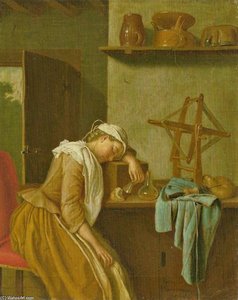 Schlafendes KüchenmädchenBavaria riiklikud maalidema kogumikud
Kümne 4 muuseumi kollektsioonid, mis sisaldavad kõige rohkem sellel lehel esitatud teoseid.
| Muuseumid | Linn | Peter Jacob Horemans teosid | Selle nimekirja maalid |
|---|---|---|---|
 Bavaria riiklikud maalidema kogumikud |
München | 51 | Portrait of Frau Heigl, Kitchen Still Life with Coffee Drinker, Musical Still Life with Horn Player |
 Varssavi Rahvusmuuseum |
Varssavi | 2 | Hunting a wild boar, Hunting with falcons |
 Lenbachhaus |
München | 2 | Picnic in the park, Concert in the garden |
 Metropolitan Museum of Art |
New York | 1 | A Musical Gathering at the Court of the Elector Karl Albrecht of Bavaria |
Vali vuosakülg, et näha selle ajastu definieerivat originaalteost.

Portrait of Frau Heigl (1738), Bavaria riiklikud maalidema kogumikud, München. Järgnevad Kitchen Still Life with Coffee Drinker (1765) ja Musical Still Life with Horn Player (1765).
38 aastat vanus: teos Portrait of Frau Heigl on pärinev aastast 1738 ning Peter Jacob Horemans sündis aastal 1700.
Portrait of Frau Heigl, Kitchen Still Life with Coffee Drinker, Musical Still Life with Horn Player, Still Life with Female Figure with Flowers, Still Life with Elegant Lady, Still Life with Fruit and Female Figure, The Soup Eater, Still Life with Female Figure with Beer Glass, Still Life with Female Figure ja Musical Still Life with Male Figure. Ülemine reiting näitab iga teose puhul aastat ja muuseumi.
Meie kataloogist leiate 60 teost kunstnikult Peter Jacob Horemans, mis on pärinevad ajastust 1730 kuni 1776.
Peamiselt Bavaria riiklikud maalidema kogumikud (München), Varssavi Rahvusmuuseum (Varssavi) ja Lenbachhaus (München) muuseumites. Ülalpool olevate muuseumite tabelis on nendest kõik loetletud.
Ajal 1760s: 36 58 sellel lehel olevat teost on sellel perioodil loodud, მათart közül Kitchen Still Life with Coffee Drinker.
Sellel lehel on kõige vanem teos A Musical Gathering at the Court of the Elector Karl Albrecht of Bavaria (1730) ja kõige värskeim Picnic in the park (1776).
Portrait of Frau Heigl, Kitchen Still Life with Coffee Drinker ja Musical Still Life with Horn Player: Bavaria riiklikud maalidema kogumikud, München säilitab 51 selle lehel olevat teost.