Maxim Vorobjev portree

68 kulubumatamatumat Maxim Vorobjev maalist, millist on vaid üks

Uuendatud november 2026 · järjestatud meie populaarsusindeksi järgi (otsingud, külastused ja tellimused igale teosele) · 68 teost Maxim Vorobjev meie kataloogis

Lühidalt

Full Length Portrait (1992) on Maxim Vorobjev maalide kõige silmapaistvam teos; originaal kuulub museumi The Sotiris Felios Collection, Athen. Pärast seda suunatakse pilk Smirna (1820) ja The Nevka by the Elagin Island (1829) suunas. Meie kataloogis olevatest Maxim Vorobjev 68 teosest on need 68 kõige kuulsumat, millist igaüks on esitatud koos aasta, muuseumi ja põhjusega, miks teos on püsiv.

1787 – 1855, Pihkva Romanticism Enamama teoseid: The Sotiris Felios Collection

Maxim Vorobjev top 10 maalist galeriist vaatenurgast

1
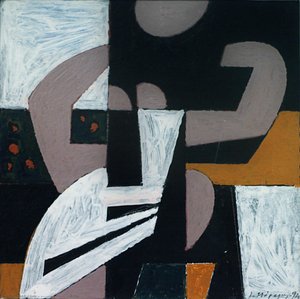
Full Length Portrait (1992) autor Maxim Vorobjev

Full Length Portrait

1992 · Oil · The Sotiris Felios Collection, Athen

In Maxim Vorobiev's Full Length Portrait, a man emerges from a void of deep, absolute black. He stands squarely facing the viewer, his presence commanding the center of the frame. This formal, symmetrical presentation creates a sense of stillness, as if the subject has paused mid-breath to meet a gaze. He occupies nearly the entire vertical space, his tall figure cutting through the darkness with a quiet, imposing authority. His…

2
Smirna (1820) autor Maxim Vorobjev

Smirna

1820 · Watercolor

The harbor of Smyrna, modern-day Izmir, Turkey, unfolds in this 1820 watercolor. The composition is anchored by a formidable citadel perched upon a rising hill, overlooking a bustling maritime scene. In the foreground, several sailing ships navigate the waters, their rigging and rounded sails rendered with precise, linear detail. The sea and sky meet at a hazy horizon where rolling mountains fade into the distance through atmospheric perspective. The palette…

3
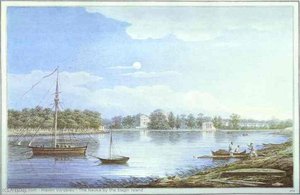
The Nevka by the Elagin Island (1829) autor Maxim Vorobjev

The Nevka by the Elagin Island

1829 · Watercolor · Hermitage muuseum, Stiiitlinburg

The artwork, "The Nevka by the Elagin Island" by Maxim Nikiforovich Vorobyov from 1829, presents a serene landscape scene. The image depicts a view of the Neva River and Elagin Island in Russia, likely during twilight or dawn given the soft lighting and partially obscured moon. The composition is balanced, with the river acting as a central horizontal axis dividing the scene into foreground, middle ground, and background. The subject…

4
Artist's Workshop in Rome. (1830) autor Maxim Vorobjev

Artist's Workshop in Rome.

1830 · Watercolor · Tretyakovi kunstgalerii, Moskva

Maxim Vorobiev’s Artist's Workshop in Rome., created about 1830, presents a spacious interior defined by high ceilings and large windows that allow a diffused light to permeate the space. The composition is broadly symmetrical, organizing the studio into a structured environment of creative industry. At the center of this arrangement, an easel holds a painting, positioned near a seated figure presumably representing the artist. This central focus anchors the room,…

5
Interior of the Church of the Nativity in Bethlehem. (1835) autor Maxim Vorobjev

Interior of the Church of the Nativity in Bethlehem.

1835 · Oil · Varssavi Rahvusmuuseum, Varssavi

The oil painting depicts the interior of the Church of the Nativity in Bethlehem, a cavernous space defined by heavy stone arches and structural pillars. A central perspective directs the eye toward an illuminated altar at the far end of the nave. The color palette relies on muted, earthy tones, including ochre, deep browns, and stone greys. Light enters the scene from specific, localized sources: numerous metal lamps, known as…

6
Ave Maria (1839) autor Maxim Vorobjev

Ave Maria

1839 · Watercolor

The shadows of a Roman night press inward, thick and heavy, as a luminous moon hangs suspended in the sky. This celestial light spills downward, cutting through the darkness to illuminate a scene of profound human distress. A man kneels in the center of the chaos, his posture one of absolute vulnerability, perhaps seeking divine solace amidst a crowd of onlookers. The air feels heavy with the weight of a…

7
A Bridegroom Buying a Ring for His Fiancee (1839) autor Maxim Vorobjev

A Bridegroom Buying a Ring for His Fiancee

1839 · Oil On Canvas

The air in the Russian marketplace feels heavy with the scent of dust and the low murmur of passing pedestrians. Under the soft, diffused light of a midday sun, a man leans toward a jeweler, his focus narrowing entirely to the small, precious object that will bind his future to another. He is a man caught in a singular, transformative instant. Beside him, his fiancée waits, her presence a gentle…

8
Head of John the Baptist (1845) autor Maxim Vorobjev

Head of John the Baptist

1845 · Oil

The light catches the ridge of a nose and the curve of a forehead, pulling a face from the shadows of a deep, dark background. This is the head of John the Baptist, rendered with a heavy, emotional weight that seems to vibrate in the quiet air of the room. He gazes slightly upward and to the left, his eyes fixed on something unseen beyond the frame. There is a…

9
Head of John the Evangelist (1840) autor Maxim Vorobjev

Head of John the Evangelist

1840 · Oil On Canvas

This oil painting on canvas presents a close-up portrait of the head and shoulders of a man identified as John the Evangelist. The subject is depicted with a serene expression, gazing slightly off-center to his right, which creates a sense of introspection. The composition is tightly focused on the face and upper torso, with the figure cropped just below the shoulders against an indistinct, dark background.

10
Festival in Rome in October. Scene in the Loggia (Asking to Dance) (1842) autor Maxim Vorobjev

Festival in Rome in October. Scene in the Loggia (Asking to Dance)

1842 · Oil On Canvas

The scene unfolds within a spacious loggia, where the architecture of Rome provides a structured frame for a moment of social grace. Under the soft, diffused light of an October afternoon, a group of elegantly dressed figures gathers to engage in the delicate choreography of courtship and celebration. A gentleman in a dark coat and top hat gestures toward a woman in a light-colored gown, his posture signaling a formal…

Maxim Vorobjev kuulsad maalid, numbrid 11 kuni 68

11A Head of a Young Man (1845) autor Maxim VorobjevA Head of a Young Man1845 12Flying with Knowledge (2018) autor Maxim VorobjevFlying with Knowledge2018 · Museum of Greek Children's Art 13Figure (1927) autor Maxim VorobjevFigure1927 · The Pavle Beljanski Memorial Collection 14Local (1933) autor Maxim VorobjevLocal1933 · National Gallery of Bulgaria 15Self Portrait (1933) autor Maxim VorobjevSelf Portrait1933 16Raising of Columns to St Isaac's Cathedral (1838) autor Maxim VorobjevRaising of Columns to St Isaac's Cathedral1838 · Hermitage muuseum 17The Carob Tree (2001) autor Maxim VorobjevThe Carob Tree2001 · Contemporary Art Platform 18Portrait of the Sculptress Vaska Emanuilova (1927) autor Maxim VorobjevPortrait of the Sculptress Vaska Emanuilova1927 · National Gallery of Bulgaria 19Kerameikos – Night (2007) autor Maxim VorobjevKerameikos – Night2007 · The Sotiris Felios Collection 20Acrobats (1987) autor Maxim VorobjevAcrobats1987 · The Sotiris Felios Collection 21Panaghia Keriotissa (2009) autor Maxim VorobjevPanaghia Keriotissa2009 · The Sotiris Felios Collection 22The Wielder (2008) autor Maxim VorobjevThe Wielder2008 · The Sotiris Felios Collection 23Myrsini (2008) autor Maxim VorobjevMyrsini2008 · The Sotiris Felios Collection 24Clairvoyant (2010) autor Maxim VorobjevClairvoyant2010 · The Sotiris Felios Collection 25Summer (1999) autor Maxim VorobjevSummer1999 · The Sotiris Felios Collection 26Travellers in Snowy Mountains (1663) autor Maxim VorobjevTravellers in Snowy Mountains1663 27Arta (1994) autor Maxim VorobjevArta1994 · The Sotiris Felios Collection 28View of the Moscow Kremlin (from the Kamenny Bridge) (1819) autor Maxim VorobjevView of the Moscow Kremlin (from the Kamenny Bridge)1819 · Tretyakovi kunstgalerii 29The Bay of Naples Near Castellmare (1846) autor Maxim VorobjevThe Bay of Naples Near Castellmare1846 30The Portrait of a Young Man from Tomara’s Family (1847) autor Maxim VorobjevThe Portrait of a Young Man from Tomara’s Family1847 · National Art Museum of Ukraine 31Pansies (2002) autor Maxim VorobjevPansies2002 · The Sotiris Felios Collection 32Portrait of Hetman Petro Konashevych-Sahaidachnyi (1860) autor Maxim VorobjevPortrait of Hetman Petro Konashevych-Sahaidachnyi1860 · Ukraina ajalumuuseum 33The Summit (2009) autor Maxim VorobjevThe Summit2009 · Ibrahimi Collection 34Night Scene on the Volga (1871) autor Maxim VorobjevNight Scene on the Volga1871 · Metropolitan Museum of Art 35In Beech forest (1881) autor Maxim VorobjevIn Beech forest1881 · National Art Museum of Ukraine 36Mountain Aragats (1917) autor Maxim VorobjevMountain Aragats1917 · Armenia Riiklik Kunstimuuseum 37Beggar (1933) autor Maxim VorobjevBeggar1933 · National Gallery of Bulgaria 38Pine Trees (2015) autor Maxim VorobjevPine Trees2015 · The Sotiris Felios Collection 39Shadows of Flowers (2011) autor Maxim VorobjevShadows of Flowers2011 · Ibrahimi Collection 40Pansies in a Flower Βed II (2006) autor Maxim VorobjevPansies in a Flower Βed II2006 · The Sotiris Felios Collection 41The Lover (1977) autor Maxim VorobjevThe Lover1977 · The Ramzi and Saeda Dalloul Art Foundation 42Exodus (2006) autor Maxim VorobjevExodus2006 · The Sotiris Felios Collection 43Chris – Conjuror (1983) autor Maxim VorobjevChris – Conjuror1983 · The Sotiris Felios Collection 44Untitled Composition #1 (1989) autor Maxim VorobjevUntitled Composition #11989 45Amaryllises Ι (2006) autor Maxim VorobjevAmaryllises Ι2006 · The Sotiris Felios Collection 46Carp (1992) autor Maxim VorobjevCarp1992 · The Sotiris Felios Collection 47Lenses (1998) autor Maxim VorobjevLenses1998 · The Sotiris Felios Collection 48Chinese Puppet Player (1998) autor Maxim VorobjevChinese Puppet Player1998 · The Sotiris Felios Collection 49Offering (1998) autor Maxim VorobjevOffering1998 · The Sotiris Felios Collection 50Untitled (2001) autor Maxim VorobjevUntitled2001 · UPF Art Track 51Erotic (2002) autor Maxim VorobjevErotic2002 · The Sotiris Felios Collection 52جدار و كوفية‎ (2005) autor Maxim Vorobjevجدار و كوفية‎2005 · The Ramzi and Saeda Dalloul Art Foundation 53The Treasure of Life (2007) autor Maxim VorobjevThe Treasure of Life2007 · Ibrahimi Collection 54Seasonal Fruit (2006) autor Maxim VorobjevSeasonal Fruit2006 · The Sotiris Felios Collection 55Almond Tree (2007) autor Maxim VorobjevAlmond Tree2007 · The Sotiris Felios Collection 56The Time (2009) autor Maxim VorobjevThe Time2009 · Ibrahimi Collection 57From Soil (2008) autor Maxim VorobjevFrom Soil2008 · Ibrahimi Collection 58Acrobat on Stool (2010) autor Maxim VorobjevAcrobat on Stool2010 · The Sotiris Felios Collection 59Robin (2012) autor Maxim VorobjevRobin2012 · The Sotiris Felios Collection 60The Fall of Haifa 22.4.1948 (2012) autor Maxim VorobjevThe Fall of Haifa 22.4.19482012 · The Ramzi and Saeda Dalloul Art Foundation 61Blackbird (2012) autor Maxim VorobjevBlackbird2012 · The Sotiris Felios Collection 62Vase with flowers (2016) autor Maxim VorobjevVase with flowers2016 · Museum of Greek Children's Art 63Young Olive Tree with Flame (2018) autor Maxim VorobjevYoung Olive Tree with Flame2018 · The Sotiris Felios Collection 64Red Morning Glory and Rotten Gun autor Maxim VorobjevRed Morning Glory and Rotten GunNational Gallery Singapore 65Birth of Beirut autor Maxim VorobjevBirth of BeirutThe Ramzi and Saeda Dalloul Art Foundation 66View from Yauza on Kremlin in Moscow autor Maxim VorobjevView from Yauza on Kremlin in Moscow 67Cucumbers autor Maxim VorobjevCucumbers 68Tree of Life autor Maxim VorobjevTree of LifeThe Ramzi and Saeda Dalloul Art Foundation

Maxim Vorobjev kuulsaimad maalid ajastult ajastule

Teemad, mis püüdisid Maxim Vorobjev pilma

Neli teemat, mis esinevad neis originaalkindel kõige sagedamini, ning iga teema parim näide.

Muuseumid, kus on säilitatud Maxim Vorobjev originaalteosed

Kümne 8 muuseumi kollektsioonid, mis sisaldavad kõige rohkem sellel lehel esitatud teoseid.

Muuseumid Linn Maxim Vorobjev teosid Selle nimekirja maalid
The Sotiris Felios Collection, AthenThe Sotiris Felios Collection Athen 26 Full Length Portrait, Kerameikos – Night, Acrobats
Ibrahimi Collection, AmmanIbrahimi Collection Amman 5 The Summit, Shadows of Flowers, The Treasure of Life
The Ramzi and Saeda Dalloul Art Foundation, BeirutThe Ramzi and Saeda Dalloul Art Foundation Beirut 5 The Lover, جدار و كوفية‎, The Fall of Haifa 22.4.1948
National Gallery of Bulgaria, SofiaNational Gallery of Bulgaria Sofia 3 Local, Portrait of the Sculptress Vaska Emanuilova, Beggar
Hermitage muuseum, StiiitlinburgHermitage muuseum Stiiitlinburg 2 The Nevka by the Elagin Island, Raising of Columns to St Isaac's Cathedral
Tretyakovi kunstgalerii, MoskvaTretyakovi kunstgalerii Moskva 2 Artist's Workshop in Rome., View of the Moscow Kremlin (from the Kamenny Bridge)
Museum of Greek Children's Art, AthensMuseum of Greek Children's Art Athens 2 Flying with Knowledge, Vase with flowers
National Art Museum of Ukraine, KievNational Art Museum of Ukraine Kiev 2 The Portrait of a Young Man from Tomara’s Family, In Beech forest

Maxim Vorobjev aastakatega: iga aastakannaga üks unikaalne originaal

Teosed aastakate kaupa

Vali vuosakülg, et näha selle ajastu definieerivat originaalteost.

Maxim Vorobjev maalid: küsimused galeriile

Mis on Maxim Vorobjev kõige kuulsam teos?Paljasta vastus

Full Length Portrait (1992), The Sotiris Felios Collection, Athen. Järgnevad Smirna (1820) ja The Nevka by the Elagin Island (1829).

Millised on Maxim Vorobjev kümneks kuulsumat maalatist?Paljasta vastus

Full Length Portrait, Smirna, The Nevka by the Elagin Island, Artist's Workshop in Rome., Interior of the Church of the Nativity in Bethlehem., Ave Maria, A Bridegroom Buying a Ring for His Fiancee, Head of John the Baptist, Head of John the Evangelist ja Festival in Rome in October. Scene in the Loggia (Asking to Dance). Ülemine reiting näitab iga teose puhul aastat ja muuseumi.

Kui palju teoseid kunstniku Maxim Vorobjev kohta on teada?Paljasta vastus

Meie kataloogist leiate 68 teost kunstnikult Maxim Vorobjev, mis on pärinevad ajastust 1819 kuni 1847.

Kust saab näha kõige kuulsamaid Maxim Vorobjev originaalteoseid?Paljasta vastus

Peamiselt The Sotiris Felios Collection (Athen), Ibrahimi Collection (Amman) ja The Ramzi and Saeda Dalloul Art Foundation (Beirut) muuseumites. Ülalpool olevate muuseumite tabelis on nendest kõik loetletud.

Mille perioodi jooksul lõi Maxim Vorobjev oma tuntumad maalid?Paljasta vastus

Ajal 1840s: 6 68 sellel lehel olevat teost on sellel perioodil loodud, მათart közül Head of John the Baptist.

Milline kuuls Maxim Vorobjev maal on kõige varasem ja milline kõige hiljema?Paljasta vastus

Sellel lehel on kõige vanem teos View of the Moscow Kremlin (from the Kamenny Bridge) (1819) ja kõige värskeim The Portrait of a Young Man from Tomara’s Family (1847).

Millist teemasid Maxim Vorobjev eelistas?Paljasta vastus

Man (6), People (5) ja Woman (5), kogu selle lehekülje 68 teose kohta.

Mida Maxim Vorobjev kõige rohkem kasutas oma maalide nimiseks?Paljasta vastus

Oil On Canvas, 9 teoseks 68 töödelt sellel lehel.

Millisse toomangu kuulub Maxim Vorobjev teos?Paljasta vastus

Romanticism, seda lähtudes selle lehe originaalteostest.

Mida Maxim Vorobjev originaalte ma näen The Sotiris Felios Collection muuseumis?Paljasta vastus

Full Length Portrait, Kerameikos – Night ja Acrobats: The Sotiris Felios Collection, Athen säilitab 26 selle lehel olevat teost.

Maxim Vorobjev: kunstniku portree

Maxim Vorobjev: Venema ja Vene maastikuupintuse romantiik

Pskovis 1787. aastal sündinud Maxim Nikiforovitš Vorobjev oli mees, kelle elu oli kangaas, mille lõrmid olid kootud sõjaväที่สุด teenistusest, kunstiline õpilaskonnatust, diplomaatlistest missioonidest ja sügavast isiklikust kadunust. Ta ei olnud pelgalt maalari; ta oli nii maastike kui ka inimkogemuse uurenija, kes püüdis oma täpsete detailide ja emotsionaalse tundlikkusega tabada oma ajastu olemust. Tema teekond, mis ulatus Vene ajaloolisest südamepiirkonnast Palestiina ja Itaalia eksootilistele randadele, kujundas teda üheks 19. sajandi Vene maastikupeetri kütkestavaimat tegelaskujundiks.

Vorobjevi varajane elu oli üllatavalt lihtne. Kuna ta oli pensionär sõja lapsed, kes hiljem töötas Kunstiakadeemia hooldajana, sai ta oma esialseid kunstipõskleid juba kümne aasta vanuses. See ebatraditsiooniline algus — noor poiss õpilasena kunstimaailma ranguses keskkonnas — pani aluse tema hoolikale lähenemisele ja kompositsiooni sügavale mõistmisele. Ta alustas oma ametlikke õpinguid maastikupeetrise Fyodor Aleksejevi juures, kes oli linnamaastike meister, ning täiendas oma oskusi arhitekt Jean-François Thomas de Thomoni all, kelle mõju on nähtav Vorobjevi arhitektuursetes joonistustes ja võimetus integreerida ehitisi loomulikult laiemasse maastikku.

Tema varajane karjäär oli iseloomulik Vene sõjaväe teenistusega. 1909. aastal liitus ta Aleksejeviga ekspeditsioonil, et dokumenteerida Kesk-Vene ajaloolisi piirkondi — see kogemus tekitas temas sügava austuse riigi mitmekülgise geograafia ja arhitektuuripärandi vastu. See teekond jõudis lõpule tema osalemisega 1913–1914. aastate kampaaniates koos Vene armeedega Saksamaal ja Prantsusmaal, mis kahtlemata mõjutas tema arusaamat sõjast ja selle vaikutust maapinnale. Need aastad ei olnud pelgalt sõjaline jälgimine; Vorobjevi roll abistajana võimaldas tal arendada oma kunstilisi oskusi, joonistades lahinguvälju ja kindlustusi hämmastava täpsusega.

Palestiina ja diplomaatiline missioon

KPerhaps kõige olulisem peatükk Vorobjevi karjääris avanes tema 1820. aasta missiooni ajal Palestinasse suurehertogi Nikolai Pavlovitši nimel. See ei olnud lihtne kunstiline ekskursioon, vaid hoolikalt planeeritud diplomaatiline ettevõtus, mille eesmärk oli dokumenteerida piirkonna kristlikke püh местаid võimalike taastamisprojektide jaoks Moskva läheduses. Tegenedes rangas salajasuses ja silmitsi osalis Ottomaanide autoriteetidega, kes kartsid Vene mõjutust, saavutas Vorobule märkimistava saavutuse jälgimise ja dokumenteerimise valdkonnas. Ta joonistas hoolikalt muinaisi ruineid — Jeruzalemi Teise Templi jäänusid, Elu meret — ning ka Jaffa ja Smirna nagu karge ja elu täis linnade tänapäevaseid kohti. Tema akvarelid ei olnud pelgalt esitused; need olid katsed tabada nende paikade vaimu ja atmosfæeri, peegeldades nii nende ajaloolist tähtsust kui ka elavat olevikku.

Tulemuseks olnud enam kui ühekskümne akvarelle koostunud kogum become väärtuslik ressurss arhitektidele ja planeerijatele. Projekt nõudis diskreetsust, sundides Vorobjevi töötama salaja, navigeerides keerulistes poliitilistes oludes ja kultuurilistes tundlikkustes. See salajane olemus lisab tema töö ümber hirmutavale intrigale, rõhutades tähtsust, mille ta panustas ajalooliste paikade säilitamisel.

Kadunuse ja mõttelise meele kunstnik

Tema armastatud naise, Cleo, ootamatul surmal 1840. aastal uputas Vorobjevi sügavas kurbuses ja alkoholismis. See isiklik tragedia mõjutas drastiliselt tema loomingulist tegevust, viies töö kvaliteedi ja mahtude languseni. Ta tõmbus oma sisemaailma, otsides lohutust reisidest — eriti reisist Itaaliasse vahemikus 1uste 1844 kuni 1846 aastat. Selle aja jooksul lõi ta joonistuste sarja, ajatuna katsma üle oma kurbuse ja taasleidma inspiratsiooni. Need hilisema ajastu teosed, kuigi sageli melankolia värvitud, näitavad jätkuvat tehnilist meistriklassi ning sügavat tundlikkust valguse ja atmosfääri vastu.

Hoolimata vähenenud loomingulise saavutuste arvust, püsib Vorobjevi pärand elus läbi tema emotsionaalselt võimsate kujenduste Vene maastikest, ajaloolistest kohtadest ja Palestiina eksootisest ilust. Tema töö on tunnistus tema kunstilisest oskusest, seikluslikust vaimust ja võimest tabada möödunud ajastu olemust. Tema maalid pakuvad ainulaadset vaadet 19. sajandi Venemaale — riigile, mis võitles oma identiteediga, uuris oma minevikku ja astus avatud maailma.

Peateosed ja kunstiline stiil

Vorobjevi kunstistiil on iseloomulik täpne detailide rikkus, tugev perspektiivitunne ja romantilist tundlikkus. Ta oli eriti osav valguse ja varju efektide tabamises, luues atmosfäärilisi maastikke, mis tekitavad sügava emotsionaalse vastuse. Tema maalid sisaldavad sageli suuremaid vaateid, hoolikalt joonistatud ehitusi ja igapäevaselt tegevuses olevaid inimesi — kõik esitatud märkimisväärse realismi ja tundlikkusega. Nõudlevad teosed hõlmavad nii "Vaade Kremli" (View of the Kremlin), üksikasjalik linnamaastik, mis demonstreerib Moskva arhitektuurilist hiilgusest, kui ka "Sisevaade Jeruzalemi templi juurde" (Inner View Of The Temple In Jerusalem), dramaatiline religioosne siseala kujendus, mis näitab tema meistriklassi perspektiivis ja kompositsioonis.

Tema pühendumus täpsusele on ilmne tema arhitektuuride hoolikas joonistamine, samas kui tema maastikud omavad kordamatut emotsionaalset sügavust. Vorobjevi töö peegeldab oma ajastu kunstilisi suundumusi — klassikalise realismi ja romantilise idealismi segu — tehes temast olulise tegelase Vene maastikupeetrise arengus.