Kristian Møhl portree

3 kulubumatamatum Kristian Møhl maali, galeriiselektsioon

Uuendatud november 2026 · järjestatud meie populaarsusindeksi järgi (otsingud, külastused ja tellimused igale teosele) · 3 teost Kristian Møhl meie kataloogis

Lühidalt

Kõigist Kristian Møhl jäetud originaalteostest on kõige kuulsam The Strandmølle Lake (1906), mis kuulub Statens Museum For Kunst kogele linnas Kooberemaa. Järgnevad sellest View of Gammel and Nytorv in Copenhagen (1924) ja Cushion,. Meie kataloogist löytyb 3 teost kunstnikult Kristian Møhl; galeriist on säilitatud 3 maailmas kõige imetlustunud teost, millest iga on esitatud koos kuupäeva, museumi ja oma luguga.

1876 – 1962, Ibsker Enamama teoseid: Statens Museum For Kunst

Kristian Møhl top 10 maalist: galeriis valitud teosed

3
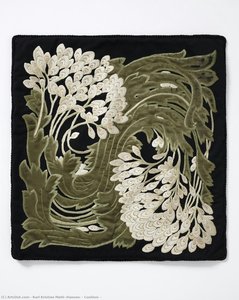
Cushion, autor Kristian Møhl

Cushion,

Embroidery · Designmuseum Danmark, Koopenhaagen

Karl Kristian Møhl-Hansen’s embroidered cushion offers a quiet departure from the dramatic, turbulent skies often found in his landscape paintings. While his canvases frequently capture the sweeping vistas of the Danish countryside, this textile work focuses on the intimate details of the natural world. The design features stylized leaves and flowers woven into complex geometric patterns, drawing heavily from Scandinavian mythology. These motifs act as symbols of fertility and the…

Muuseumid, kus on säilitatud Kristian Møhl originaalteosed

Kümne 2 muuseumi kollektsioonid, mis sisaldavad kõige rohkem sellel lehel esitatud teoseid.

Muuseumid Linn Kristian Møhl teosid Selle nimekirja maalid
Statens Museum For Kunst, KooberemaaStatens Museum For Kunst Kooberemaa 2 The Strandmølle Lake, View of Gammel and Nytorv in Copenhagen
Designmuseum Danmark, KoopenhaagenDesignmuseum Danmark Koopenhaagen 1 Cushion,

Kristian Møhl aasta-aastaga: originaalteosed, mis defineerivad iga perioodi

Aastast 1906 aastat 1924 kuni 1924, töötas Kristian Møhl 19 aastat: valik järgneb selle pikale kareerile aasta-aastalt, esitledes selle parimaid originaalteoseid.

Teosed aasta kaupa

Vali aasta, et näha originaale.

Sammlajate küsimused Kristian Møhl maalide kohta

Millise teosega on Kristian Møhl kõige kuulsam?Paljasta vastus

The Strandmølle Lake (1906), Statens Museum For Kunst, Kooberemaa. Järgnevad View of Gammel and Nytorv in Copenhagen (1924) ja Cushion,.

Kui vana oli Kristian Møhl, kui teos The Strandmølle Lake loodi?Paljasta vastus

30 aastat vanus: teos The Strandmølle Lake on pärinev aastast 1906 ning Kristian Møhl sündis aastal 1876.

Kui palju maali Kristian Møhl jäeti?Paljasta vastus

Meie kataloogist leiate 3 teost kunstnikult Kristian Møhl, mis on pärinevad ajastust 1906 kuni 1924.

Mitteks muuseumides rihangavad Kristian Møhl meistriteosed?Paljasta vastus

Peamiselt Statens Museum For Kunst (Kooberemaa) ja Designmuseum Danmark (Koopenhaagen) muuseumites. Ülalpool olevate muuseumite tabelis on nendest kõik loetletud.

Mis on Kristian Møhl esimene ja viimane kuuls fama originaalteos?Paljasta vastus

Sellel lehel on kõige vanem teos The Strandmølle Lake (1906) ja kõige värskeim View of Gammel and Nytorv in Copenhagen (1924).

Millised Kristian Møhl teosed on Statens Museum For Kunst näituses?Paljasta vastus

The Strandmølle Lake ja View of Gammel and Nytorv in Copenhagen: Statens Museum For Kunst, Kooberemaa säilitab 2 selle lehel olevat teost.

Kristian Møhl: elu ja looming

Karl Kristian Møhl(-Hansen) (1876-1962): A Danish Painter of Expressionist Landscapes and Decorative Arts

  • Born: Esbjerg, Denmark, 1876
  • Died: 1962
  • Other Names: Christian Møhl-Hansen, Karl Kristian M0hl(-Hansen), Christian M0hl-Hansen

Early Life and Artistic Training

  • Born Carl Christian Hansen, he later changed his name to Møhl-Hansen on February 23, 1929, and further simplified it to Møhl in 1957.
  • Brother of theologian Peter Olaf Ryberg Hansen.
  • Began as an apprentice building painter, demonstrating early practical skills.
  • Attended technical school before pursuing formal artistic training at the Royal Danish Academy of Fine Arts, enrolling on April 18, 1895. This foundational education provided him with a strong understanding of technique and composition.
  • Early career involved diverse experiences, laying groundwork for his later stylistic development.

Artistic Development and Influences

  • Møhl’s artistic journey was marked by extensive travel throughout Europe, including Italy, London, Spain, the Netherlands, and Paris. These travels exposed him to a wide range of artistic styles and cultural influences.
  • His work is generally categorized as Expressionist, characterized by its emotional intensity and subjective interpretation of reality. While influenced by broader European Expressionism, Møhl developed a distinct Danish sensibility in his landscapes.
  • While specific direct influences are not extensively documented, the prevalence of landscape painting within his oeuvre suggests an appreciation for artists depicting nature's power and beauty. The influence of the Danish Golden Age painters is also likely present, though he moved beyond their more classical approach.
  • His decorative art pieces demonstrate a keen eye for design and pattern, reflecting a broader interest in applied arts alongside fine art painting.

Major Works and Achievements

  • Møhl’s oeuvre primarily consists of landscapes, often depicting the Danish countryside with an expressive use of color and brushwork. These works capture not just the visual appearance but also the emotional atmosphere of the scenes.
  • He created decorative art pieces such as cushions, showcasing his versatility and talent for design.
  • While he didn't achieve widespread international fame during his lifetime, Møhl was a respected figure within the Danish art scene.
  • His work is represented in collections of museums like the Brücke Museum in Berlin, indicating recognition beyond Denmark.

Historical Significance and Legacy

  • Karl Kristian Møhl(-Hansen) contributes to understanding the development of Expressionism within a Scandinavian context. His landscapes offer a unique perspective on Danish nature through an emotionally charged lens.
  • His exploration of decorative arts highlights the interconnectedness between fine art and applied design in early 20th-century Denmark.
  • Møhl’s legacy lies in his ability to capture the essence of the Danish landscape with expressive power, contributing to a broader understanding of Expressionist aesthetics within Scandinavian art history. His work provides valuable insight into the artistic climate of Denmark during the first half of the 20th century.