Károly Brocky portree

16 kulubumatamatumat Károly Brocky maalist, millist on vaid üks

Uuendatud november 2026 · järjestatud meie populaarsusindeksi järgi (otsingud, külastused ja tellimused igale teosele) · 16 teost Károly Brocky meie kataloogis

Lühidalt

The Daughters of István Medgyasszay (1833) on Károly Brocky maalide kõige rohkem tähelepanu pälva teos. Pärast seda suunatakse pilk Jozefína Tschildová (Fanny) (1844) ja Spring suunas. Meie kataloogis olevatest Károly Brocky 16 teosest on need 16 kõige kuulsumat, millist igaüks on esitatud koos aasta, muuseumi ja põhjusega, miks teos on püsiv.

1807 – 1855, Timișoara Romanticism Enamama teoseid: Ungari Riiklik Galeria

Károly Brocky top 10 maalist galeriist vaatenurgast

1
The Daughters of István Medgyasszay (1833) autor Károly Brocky

The Daughters of István Medgyasszay

1833 · Oil On Canvas

Four figures occupy a stone terrace, arranged with a formal symmetry that suggests both familial order and social standing. Three women and a young boy are positioned against a lush, outdoor backdrop where distant mountains fade into a soft atmospheric haze. The composition relies on a balanced, central axis, grounding the subjects within their immediate environment. Light falls softly across the scene, diffusing over the textures of stone and fabric…

2
Jozefína Tschildová (Fanny) (1844) autor Károly Brocky

Jozefína Tschildová (Fanny)

1844 · Oil On Canvas · Slovaki Riiklik Kunstigaleri, Bratislava

Presented in an oval format, this mid-19th-century portrait captures a woman from the chest up in a three-quarter view. She is positioned with her hands clasped near her chest, a gesture that lends an air of elegance and composure to the composition. The subject wears a ruffled, off-the-shoulder pink gown, which creates a soft contrast against the deep green drapery in the background and the neutral, muted beige of the…

3
Spring autor Károly Brocky

Spring

Oil

Three children occupy a lush green field, their small forms caught in a moment of unburdened play. The sun hangs high, casting a warm glow over the meadow and the trees that line the background. One child balances on a single leg, a fleeting gesture of physical grace. Another reaches out, a finger pointing toward something unseen in the grass. A third child lingers nearby, a quiet observer of the…

10
Mother and Child (1846) autor Károly Brocky

Mother and Child

1846 · Ungari Riiklik Galeria, Budapest

The painting Mother and Child by Karoly Brocky (Charles Brocky) is a beautiful example of 19th-century art, showcasing the artist's skill in capturing intimate moments. Created in 1846, this oil on canvas piece measures 62 x 54 cm and is currently housed at the Hungarian National Gallery in Budapest, Hungary. The Artist and His Work Karoly Brocky (Charles Brocky) was a Hungarian painter known for his realistic and detailed style.…

Károly Brocky kuulsad maalid, numbrid 11 kuni 16

Teemad, mis püüdisid Károly Brocky pilma

Neli teemat, mis esinevad neis originaalkindel kõige sagedamini, ning iga teema parim näide.

Muuseumid, kus on säilitatud Károly Brocky originaalteosed

Kümne 3 muuseumi kollektsioonid, mis sisaldavad kõige rohkem sellel lehel esitatud teoseid.

Muuseumid Linn Károly Brocky teosid Selle nimekirja maalid
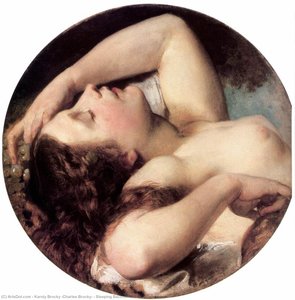
Ungari Riiklik Galeria, BudapestUngari Riiklik Galeria Budapest 5 Sleeping Bacchante, Mother and Child, Psyche Resting
Slovaki Riiklik Kunstigaleri, BratislavaSlovaki Riiklik Kunstigaleri Bratislava 1 Jozefína Tschildová (Fanny)
Herman Ottó Museum, MiskolcHerman Ottó Museum Miskolc 1 Lucy Ashton and Ravenswood Visiting Blind Alice

Károly Brocky aastakatega: iga aastakannaga üks unikaalne originaal

Teosed aastakate kaupa

Vali vuosakülg, et näha selle ajastu definieerivat originaalteost.

Károly Brocky maalid: küsimused galeriile

Mis on Károly Brocky kõige kuulsam teos?Paljasta vastus

The Daughters of István Medgyasszay (1833). Järgnevad Jozefína Tschildová (Fanny) (1844) ja Spring.

Mis vanuses luunud Károly Brocky teos The Daughters of István Medgyasszay?Paljasta vastus

26 aastat vanus: teos The Daughters of István Medgyasszay on pärinev aastast 1833 ning Károly Brocky sündis aastal 1807.

Millised on Károly Brocky kümneks kuulsumat maalatist?Paljasta vastus

The Daughters of István Medgyasszay, Jozefína Tschildová (Fanny), Spring, Portrait of a Woman with Veil, Lucy Ashton and Ravenswood Visiting Blind Alice, Sleeping Bacchante, supid and Psyche, Summer, Winter ja Mother and Child. Ülemine reiting näitab iga teose puhul aastat ja muuseumi.

Kui palju teoseid kunstniku Károly Brocky kohta on teada?Paljasta vastus

Meie kataloogist leiate 16 teost kunstnikult Károly Brocky, mis on pärinevad ajastust 1833 kuni 1850.

Kust saab näha kõige kuulsamaid Károly Brocky originaalteoseid?Paljasta vastus

Peamiselt Ungari Riiklik Galeria (Budapest), Slovaki Riiklik Kunstigaleri (Bratislava) ja Herman Ottó Museum (Miskolc) muuseumites. Ülalpool olevate muuseumite tabelis on nendest kõik loetletud.

Mille perioodi jooksul lõi Károly Brocky oma tuntumad maalid?Paljasta vastus

Ajal 1840s: 4 16 sellel lehel olevat teost on sellel perioodil loodud, მათart közül Jozefína Tschildová (Fanny).

Milline kuuls Károly Brocky maal on kõige varasem ja milline kõige hiljema?Paljasta vastus

Sellel lehel on kõige vanem teos The Daughters of István Medgyasszay (1833) ja kõige värskeim Sleeping Bacchante (1850).

Millist teemasid Károly Brocky eelistas?Paljasta vastus

Woman (3), Children (2) ja Portraits (2), kogu selle lehekülje 16 teose kohta.

Mida Károly Brocky kõige rohkem kasutas oma maalide nimiseks?Paljasta vastus

Oil On Canvas, 3 teoseks 16 töödelt sellel lehel.

Millisse toomangu kuulub Károly Brocky teos?Paljasta vastus

Romanticism, seda lähtudes selle lehe originaalteostest.

Mida Károly Brocky originaalte ma näen Ungari Riiklik Galeria muuseumis?Paljasta vastus

Sleeping Bacchante, Mother and Child ja Psyche Resting: Ungari Riiklik Galeria, Budapest säilitab 5 selle lehel olevat teost.

Károly Brocky: kunstniku portree

A Life Forged in Motion

Born in the vibrant landscape of Temesvár in 1808, the life of Karoly Brocky—often known to the wider world as Charles Brocky—was far from a conventional path of academic stability. The son of a hairdresser, his early years were marked by the transient rhythms of the stage, having joined a troupe of strolling actors to sustain himself in his youth. This period of wandering likely imbued his later works with a profound understanding of human drama and character. His artistic metamorphosis truly began when he found refuge in the free drawing schools of Vienna, followed by rigorous training at the prestigious École du Louvre in Paris. These formative travels through Europe’s great cultural hubs allowed him to absorb a diverse palette of influences, transforming a young wanderer into a master of the brush.

Bridging the Baroque and the Romantic

Brocky’s artistry stands as a remarkable bridge between two monumental eras: the dramatic grandeur of the Baroque and the tender emotionalism of the Romantic movement. He possessed a rare ability to marry the meticulous, chiaroscuro-driven techniques of masters like Rembrandt and Caravaggio with the burgeoning sensitivity of the nineteenth century. His brushwork, while deliberate and precise, maintained a fluid grace that captured the psychological depth of his subjects. In his portraits, one finds not merely a likeness, but an exploration of the soul. This mastery is particularly evident in his use of light and shadow to sculpt form and evoke mood, creating compositions that feel both timelessly classical and intensely personal. He excelled at capturing the delicate interplay of light upon skin and fabric, a hallmark of the Baroque aesthetic adapted for a new, more emotive age.

The Echo of Intimacy and Emotion

The legacy of Brocky is best preserved in the quiet, evocative moments captured on his canvases. His works often transcend simple genre painting to touch upon the universal experiences of love, motherhood, and devotion. Through his ability to render everyday life with such reverence, he solidified his place as a significant figure in Hungarian art history.

Notable examples of his enduring mastery include:
  • Mother and Child: A poignant 1846 masterpiece that showcases his skill in rendering soft textures and tender, intimate connections through a delicate play of light.
  • Does He Love Me: A piece that exemplifies his ability to weave narrative tension and emotional ambiguity into a single, captivating scene.
  • Self-Portrait: A testament to his technical precision and his capacity for capturing the human form with both realism and expressive nuance.
Through these works, Brocky remains a painter of profound depth, reminding us of an era where technique and emotion were inextricably linked. His journey from the traveling troupes of his youth to the prestigious galleries of Europe serves as a testament to a life dedicated to capturing the very essence of the human spirit.