


1


Uuendatud november 2026 · järjestatud meie populaarsusindeksi järgi (otsingud, külastused ja tellimused igale teosele) · 48 teost Jules Olitski meie kataloogis
Lühidalt
Kõigist Jules Olitski jäetud originaalteostest on kõige kuulsam Frame Extension (1966). Järgnevad sellest Lady Chatterly's Lover (1955) ja Unlocked (1966). Meie kataloogist löytyb 48 teost kunstnikult Jules Olitski; galeriist on säilitatud 34 maailmas kõige imetlustunud teost, millest iga on esitatud koos kuupäeva, museumi ja oma luguga.


 Bad Boogaloo1968
12
 Mother of Night 21973
13
 Samizdat 21976
14
 Greek Princess 81976
15
 Key of Agenor III1981
16
 Pouncer Pink and Yellow2001
17
 First Love 9
18
 Untitled
19
 Esprit de Baron Ochs 6
20
 Without Trembling 4
21
 Radical Love 7
22
 Fourth Larro
23
 Hasmoneans Type 6 (F 1)
24
 All Out
25
 First Love 8
26
 Absalom Passage 19
27
 Sahny 8
28
 Sacred Chronicles 1
29
 Yulala
30
 9th Yellow
31
 With Love and Disregard Rapture Blessing
32
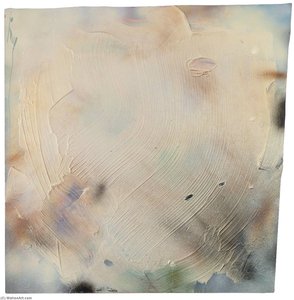 Siren Passage
33
 Beauty of Ariel
34
 Kristina Type 3Chrysler Museum of Art
Neli teemat, mis esinevad neis originaalkindel kõige sagedamini, ning iga teema parim näide.
Muuseum, milles on kõige rohkem sellel lehel esitatud maaleid.
| Muuseumid | Linn | Jules Olitski teosid | Selle nimekirja maalid |
|---|---|---|---|
 Chrysler Museum of Art |
Norfolk | 1 | Kristina Type 3 |
Vali vuosakülg, et näha selle ajastu definieerivat originaalteost.
Frame Extension (1966). Järgnevad Lady Chatterly's Lover (1955) ja Unlocked (1966).
44 aastat vanus: teos Frame Extension on pärinev aastast 1966 ning Jules Olitski sündis aastal 1922.
Frame Extension, Lady Chatterly's Lover, Unlocked, Pink Alert, Conditions, Flow Choice, A, Cadmium Orange of Dr. Frankenstein, (Twice) Disarmed ja Green Spread. Ülemine reiting näitab iga teose puhul aastat ja muuseumi.
Meie kataloogist leiate 48 teost kunstnikult Jules Olitski, mis on pärinevad ajastust 1955 kuni 2001.
Peamiselt Chrysler Museum of Art (Norfolk) muuseumites. Ülalpool olevate muuseumite tabelis on nendest kõik loetletud.
Ajal 1960s: 10 34 sellel lehel olevat teost on sellel perioodil loodud, მათart közül Frame Extension.
Sellel lehel on kõige vanem teos Lady Chatterly's Lover (1955) ja kõige värskeim Pouncer Pink and Yellow (2001).
Abstract (3) ja Geometric abstraction (2), kogu selle lehekülje 34 teose kohta.
Color field painting, seda lähtudes selle lehe originaalteostest.
The story of Jules Olitski is one of profound transformation, a journey that began in the turbulent shadows of Soviet Ukraine and culminated in the radiant, weightless expanses of American abstraction. Born Jevel Demikovsky in 1922 within the Snizhne region, his early life was marked by the heavy hand of political upheaval. The execution of his father during the era of Stalinist repression left an indelible mark on the young artist, instilling a resilience that would later define his creative spirit. Emigrating to the United States as a child with his mother and grandmother, Olitski found a new home in Brooklyn, where the vibrant, pulsing energy of postwar New York City began to shape his burgeoning artistic sensibilities.
His path toward mastery was paved through rigorous academic pursuit and an insatiable curiosity for the mechanics of light and shadow. After studying at the Pratt Institute and the National Academy of Design, the G.I. Bill provided him with a transformative opportunity to study in Paris during the late 1940s. It was in the studios of Europe—specifically at the Ossip Zadkine School and the Académie de la Grande Chaumiére—that Olitski began a deliberate process of artistic stripping. He sought to shed the heavy, gestural habits of traditional painting, looking instead toward the psychological depth found in the tonal subtleties of Rembrandt. This period of self-assessment was crucial; he was not merely learning new techniques but was actively deconstructing his own perception to find a more pure form of expression.
Olitski’s true artistic breakthrough arrived in 1951 with his debut at Galerie huit in Paris, marking the beginning of a trajectory that would redefine the boundaries of the canvas. While many of his contemporaries were immersed in the frantic, muscular energy of Abstract Expressionism, Olitski moved in a different direction. He began to reject chromatic excess in favor of monochromatic explorations and expansive, atmospheric voids. His work became a meditation on the essence of color itself, rather than a vehicle for narrative or figure.
To achieve this, he pioneered a revolutionary technique that bridged the gap between painting and atmosphere. By utilizing spray guns to apply thin, delicate layers of acrylic paint, he was able to create surfaces that appeared almost weightless, as if the color were not sitting upon the canvas but emanating from within it. This method allowed for:
Works such as Kristina Type 3 exemplify this mastery, where sun-drenched yellows and stark whites interact to create a window into a pure dimension of light. In these canvases, Olitski achieved what many thought impossible: the depiction of the intangible.
As a central figure in the development of Color Field painting and Lyrical Abstraction, Olitski’s influence on 20th-century art cannot be overstated. He helped shift the focus of the art world from the "action" of the painter to the "experience" of the viewer. His canvases do not demand to be read like a story; they demand to be felt as environments. By removing the trace of the brushstroke, he removed the ego of the artist, leaving only the pure, unadulterated presence of color.
His legacy is found in the way modern abstraction approaches the concept of space and perception. Through his innovative use of spray paint and his commitment to exploring the limits of monochromatic depth, Olitski transformed the canvas from a flat surface into a profound, immersive landscape. He remains a titan of mid-century abstraction, an artist who took the trauma of his early life and transmuted it into a legacy of light, air, and infinite color.


