


1


Uuendatud oktoober 2026 · järjestatud meie populaarsusindeksi järgi (otsingud, külastused ja tellimused igale teosele) · 57 teost John Warwick Smith meie kataloogis
Lühidalt
Kõigist John Warwick Smith jäetud originaalteostest on kõige kuulsam The Colosseum. Järgnevad sellest In The Bay Of Salerno, Near Vietri ja Near Glarus, Switzerland (1781). Meie kataloogist löytyb 57 teost kunstnikult John Warwick Smith; galeriist on säilitatud 57 maailmas kõige imetlustunud teost, millest iga on esitatud koos kuupäeva, museumi ja oma luguga.


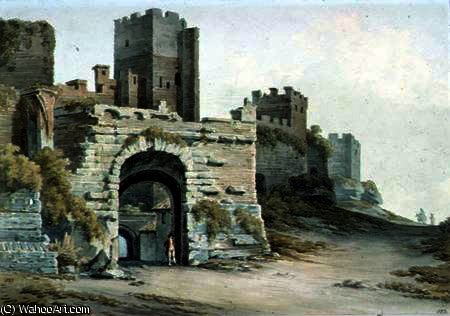


 The Northern Boundary Of St. Bride's Bay
12
 Convent At Vietri, Near Salerno
13
 Isola Madre, Lago Maggiore
14
 Matlock High Tor
15
 Salerno
16
 On Mt. Palatine
17
 Isola Madre
18
 The Villa Medici, Rome
19
 On The Coast Of Sorrentum
20
 Coast Near Sorrento
21
 Bay Scene In Moonlight
22
 The Ruins Of Cymmer Abbey On The Maw River
23
 Ullswater, Looking Toward Patterdale
24
 View Of Vesuvius
25
 Cascade Of Buffalora
26
 Bay Skin In Moonlight
27
 View Of The Early Castle Of Diganwy
28
 Approach To Belle Grange Park
29
 Village Of Stonethwaite And Eagle Cragg, Borrowdale
30
 Saint Michael's Mount, Cornwall
31
 Alpine Scene
32
 The Slate Quarries At Bron Llwyd
33
 River Landscape With A Single Arched Bridge
34
 Llyn Geirionedd Not Far From Trefriew, On The River Conway
35
 Alpine Bridge And Woodland Scenery Near Pistil Y Maw
36
 Lake Windermere From Calgarth With Belle Isle
37
 The Hermitage At Frascati
38
 Near Pontaberglaslyn
39
 River Scene
40
 Iew From The Vidette Near Hakin On Signal Hill
41
 The River Tay And Tributary
42
 In The Camp Vaccinio At Rome
43
 Approach to Belle grounge park
44
 The Priory Of Beddgelert, Caernarvonshire
45
 The Colosseum, RomeNationalmuseum
46
 Craig Y Ladron - The Thieves Precipice
47
 The Falls Of The Doshart With Upper End Of Loch Tay
48
 Hafod- Upper Part Of Cascade
49
 An Interior View Of The Colosseum, Rome
50
 A View Of Tivoli Looking Towards Rome
51
 Carnedd Llewelyn And Carnedd David, Carnarvonshire, Seen Across The River Ogwen
52
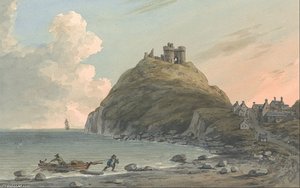 Ruins Of Cricceith Castle And Part Of The Town On The Bay On Cardigan
53
 River With Bridge
54
 Falls Of Tivoli
55
 A Fisherman In The Vale Of Myfod, Site Of The Palace Of The Princess Of Powis
56
 Auckland Castle, Co. Durham - View over the River Gauntless
57
 The Lakes Of Llanberis - From The Road From Carnarvon Going To Llanberis
Neli teemat, mis esinevad neis originaalkindel kõige sagedamini, ning iga teema parim näide.
Kümne 2 muuseumi kollektsioonid, mis sisaldavad kõige rohkem sellel lehel esitatud teoseid.
| Muuseumid | Linn | John Warwick Smith teosid | Selle nimekirja maalid |
|---|---|---|---|
 Birmingham Museum and Art Gallery |
Birmingham | 4 | Near Glarus, Switzerland, Naples From Sir William Hamilton's Villa, Wooded Landscape |
 Nationalmuseum |
Stockholm | 1 | The Colosseum, Rome |
Vali vuosakülg, et näha selle ajastu definieerivat originaalteost.
The Colosseum. Järgnevad In The Bay Of Salerno, Near Vietri ja Near Glarus, Switzerland (1781).
The Colosseum, In The Bay Of Salerno, Near Vietri, Near Glarus, Switzerland, Naples From Sir William Hamilton's Villa, Wooded Landscape, The Town and Castle of Warwick, Porta tiburtina, Castle Point, The Falls Of Tivoli With Three Figures In ja The Val D'aosta, Piedmont. Ülemine reiting näitab iga teose puhul aastat ja muuseumi.
Meie kataloogist leiate 57 teost kunstnikult John Warwick Smith, mis on pärinevad ajastust 1781 kuni 1800.
Peamiselt Birmingham Museum and Art Gallery (Birmingham) ja Nationalmuseum (Stockholm) muuseumites. Ülalpool olevate muuseumite tabelis on nendest kõik loetletud.
Ajal 1780s: 2 57 sellel lehel olevat teost on sellel perioodil loodud, მათart közül Near Glarus, Switzerland.
Sellel lehel on kõige vanem teos Near Glarus, Switzerland (1781) ja kõige värskeim The Town and Castle of Warwick (1800).
Scenes (7), Beach (6) ja Rivers (5), kogu selle lehekülje 57 teose kohta.
Romanticism, seda lähtudes selle lehe originaalteostest.
Near Glarus, Switzerland, Naples From Sir William Hamilton's Villa ja Wooded Landscape: Birmingham Museum and Art Gallery, Birmingham säilitab 4 selle lehel olevat teost.
In the golden age of British watercolor, few names evoke the atmospheric splendor of the Romantic era quite like John Warwick Smith. A pioneer who bridged the gap between meticulous topographical recording and the emotive power of landscape painting, Smith possessed a rare ability to translate the rugged textures of the natural world into luminous, breathing compositions. Born in 1749 in Irthington, near Carlisle, his early life was deeply intertwined with the pastoral rhythms of the English countryside. As the son of a gardener to the esteemed Gilpin family, he was positioned at the very threshold of artistic greatness, benefiting from a lineage of connection that would eventually lead him under the tutelage of the celebrated animal painter, Sawrey Gilpin. This early training instilled in him a profound respect for anatomical precision and organic form, laying the groundwork for a career defined by both accuracy and artistry.
Smith’s ascent within the British art scene was marked by his remarkable skill as a draughtsman. His early professional endeavors, most notably his contributions to Samuel Middiman’s Select Views in Great Britain, established him as a master of detail, capable of capturing the architectural and geological essence of the British Isles. However, it was the transformative patronage of George Greville, 2nd Earl of Warwick, that would forever alter the trajectory of his work. This aristocratic support provided Smith with the freedom to venture beyond the familiar borders of Cumberland, leading to a monumental voyage to Italy between 1776 and 1781. It was during these years of wandering through Rome and Naples that the artist truly found his voice, absorbing the classical light and dramatic vistas of the Mediterranean.
The period spent in Italy served as a crucible for Smith’s artistic evolution. Immersed in the vibrant artistic milieu of Southern Europe, he moved away from the more rigid, descriptive techniques of his youth toward a much richer, more expressive application of watercolor. He began to move beyond simple tinting—the standard practice of his contemporaries—to embrace a sophisticated palette and a more fluid brushwork that captured the ephemeral qualities of light and atmosphere. This transition earned him the affectionate nicknames "Warwick" or "Italian" Smith, reflecting both his patron and his profound connection to the landscapes of the continent.
His works from this era are characterized by a breathtaking sense of scale and drama. Whether documenting the volcanic majesty of Mount Vesuvius or the serene, sun-drenched shores of Lake Como, Smith utilized color not merely as a decorative element, but as a narrative tool to evoke emotion. His ability to render the interplay of shadow and brilliance allowed him to capture the very soul of his subjects, making his landscapes feel less like static maps and more like lived experiences. This mastery of light placed him at the forefront of a movement that sought to find the sublime within the natural world, influencing the development of the Romantic landscape tradition.
The historical significance of John Warwick Smith lies in his role as a bridge between the topographical traditions of the 18th century and the expressive landscapes of the 19th. He did not merely record what he saw; he interpreted the feeling of the terrain. His collaborations with fellow artists such as Francis Towne and Thomas Hearne, alongside his documented encounters with luminaries like Francesco Hayez, placed him at the heart of an international artistic dialogue.
Today, Smith’s legacy is preserved in the prestigious collections of institutions such as the British Museum, the Tate, and the Metropolitan Museum of Art. His contributions to the medium of watercolor helped elevate it from a secondary sketching tool to a respected fine art capable of profound complexity. When viewing his works today, one is struck by several enduring elements:
Through his meticulous documentation of Wales and Italy, Smith left behind a visual treasury that continues to inspire awe, reminding us of a time when the brush was used to capture the very breath of the earth.


