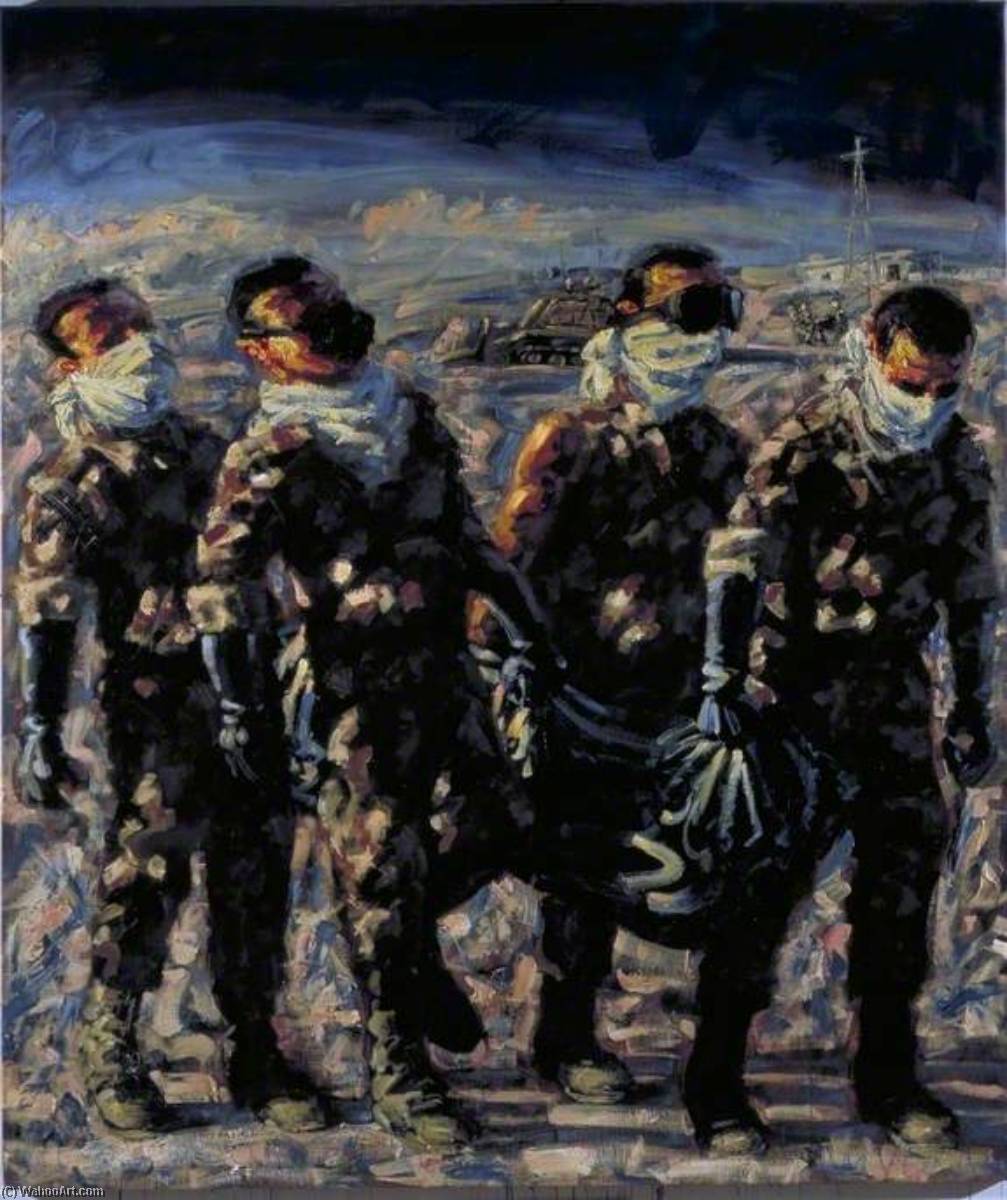
A Stark Vision: The Life and Art of John Keane
Born in 1954, Sir John Keane emerged as a distinctive voice in contemporary
British art, though his path to prominence was far from conventional. Unlike many artists who followed a traditional academic route, Keane’s early life was shaped by a career in the Royal Marines, serving for over two decades and rising to the rank of Captain. This formative experience profoundly impacted his artistic sensibility, instilling within him a rigorous discipline, an acute observational skill, and a deep understanding of human psychology – qualities that would later define his powerful portraiture. It wasn’t until after leaving the military that Keane fully embraced painting, initially as a means of personal expression and therapy following service in Northern Ireland. He is often referred to by his birth name, John Fryer Thomas Keane, but it's under the moniker 'John Keane' that he has achieved widespread recognition.
From Battlefield to Canvas: The Development of a Unique Style
Keane’s artistic breakthrough came with his adoption of a strikingly minimalist aesthetic – almost exclusively
black and white paintings. This deliberate restriction wasn’t born from a lack of technical ability, but rather a conscious choice to strip away superficiality and focus on the essential character of his subjects. He eschews vibrant color, believing it can distract from the raw emotion and
psychological depth he seeks to convey. His technique is meticulous, often employing layers of thin washes and precise brushwork to create subtle gradations of tone and texture. The resulting portraits are not merely likenesses; they are intense studies in personality, capturing a sense of vulnerability, authority, or inner turmoil with remarkable accuracy. Early works were largely self-portraits, explorations of his own identity and experiences, but he quickly transitioned to depicting figures from the political sphere, becoming known for his unflinching portrayals of prominent leaders and controversial personalities.
Political Portraits and Social Commentary
Keane’s work is inextricably linked with its engagement with contemporary politics and social issues. He doesn't shy away from controversy, tackling subjects that are often divisive and emotionally charged. His portraits of figures like Tony Blair, Margaret Thatcher, and George W. Bush are not celebratory depictions but rather critical examinations of power, leadership, and the consequences of political decisions.
He aims to provoke thought and dialogue, forcing viewers to confront uncomfortable truths about the individuals who shape our world. His approach is deliberately neutral in terms of overt judgment; he presents his subjects as they are, allowing their own expressions and body language to speak volumes. This objectivity, however, doesn’t diminish the power of his commentary – if anything, it amplifies it. The starkness of his
black and white palette further emphasizes this sense of detachment, creating a timeless quality that transcends immediate political contexts.
Influences and Artistic Lineage
While Keane's style is highly individual, echoes of artistic masters can be discerned in his work.
The influence of Lucian Freud is evident in his unflinching realism and psychological intensity. He also draws inspiration from the photographic portraits of
Irving Penn and
Richard Avedon, admiring their ability to capture a sense of intimacy and vulnerability. However, Keane’s artistic lineage extends beyond portraiture. The minimalist aesthetic of artists like
Mark Rothko and
Ad Reinhardt resonates in his deliberate reduction of form and color. He is not simply replicating these influences but rather synthesizing them into something entirely new – a unique visual language that reflects his own experiences and perspectives. His work also shares affinities with the tradition of political caricature, though Keane’s approach is far more nuanced and subtle than traditional satire.
Legacy and Historical Significance
John Keane has established himself as one of Britain's leading contemporary portrait artists. His paintings are held in numerous public and private collections, including the National Portrait Gallery, London, and have been exhibited internationally.
- His work challenges conventional notions of portraiture, moving beyond mere representation to explore the complexities of human character and power.
- He has played a significant role in revitalizing the tradition of political art, demonstrating its continued relevance in the 21st century.
- Keane’s unflinching honesty and artistic integrity have earned him widespread respect from both critics and collectors.
As his career continues to evolve, Keane remains committed to using his art as a means of
social commentary and psychological exploration. His stark vision offers a powerful and unsettling reflection on the world around us, reminding us that true understanding requires confronting uncomfortable truths and challenging our own preconceptions. He is not merely painting portraits; he is holding up a mirror to society, forcing us to examine ourselves and the individuals who shape our destiny.