John Edward Brett portree

John Edward Brett maalid: 45 kuulsumat teost galeriin läbi

Uuendatud november 2026 · järjestatud meie populaarsusindeksi järgi (otsingud, külastused ja tellimused igale teosele) · 48 teost John Edward Brett meie kataloogis

Lühidalt

Galleriist vaadatuna on John Edward Brett kõige kuulsam teos Lady with a Dove: Madame Loeser (1864), mille originaal ripub Tate Gallery-is, London. Forest Cove, Cardigan Bay (1883) ja Cape Cornwall from Whitesand Bay (1872) täidavad kolmikut, mille iga silm tunnistab. Kunstnii John Edward Brett 48 teose põhjal esitleb galeriis allpool 45 kõige kuulsumat, kus iga originaal on märgitud aastaga, muuseumiga ja kirjeldatud, mis teeb selle unikaalseks.

1830 – 1902 Pre-raphaelite Enamama teoseid: Tate Gallery

Galeria 10 parimat John Edward Brett maali

1
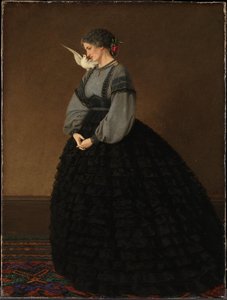
Lady with a Dove: Madame Loeser (1864) autor John Edward Brett

Lady with a Dove: Madame Loeser

1864 · Oil On Canvas · Tate Gallery, London

The gaze meets Lady with a Dove: Madame Loeser, a portrait that holds its subject in a quiet, suspended moment. Painted by John Edward Brett in 1864, the work presents a woman caught in a stillness that feels both intimate and profound. This oil on canvas captures a specific presence, one that remains part of the esteemed Tate collection.

2
Forest Cove, Cardigan Bay (1883) autor John Edward Brett

Forest Cove, Cardigan Bay

1883 · Oil · Amgueddfa Cymru, Cardiff

The sun hangs high over Cardigan Bay, casting a bright, clear light across a scene of quiet activity. Along the shoreline, the beach is alive with the presence of people, each figure caught in a moment of leisure as they enjoy the warmth of the day. The water meets the land in a gentle rhythm, while several boats drift upon the surface—some resting near the shallow shore and others appearing…

3
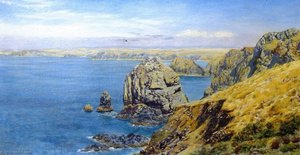
Cape Cornwall from Whitesand Bay (1872) autor John Edward Brett

Cape Cornwall from Whitesand Bay

1872 · Oil On Panel · Fitzwilliam Museum

The oil on panel painting depicts a rocky shoreline where large boulders are scattered across the foreground and middle ground. These stones meet a sandy beach that extends toward the ocean. The water appears calm, meeting the horizon under a light that provides depth to the scene. In the distance, several small figures are positioned along the shore, appearing as minute details against the scale of the landscape. The composition…

John Edward Brett maalid, järjestus 11 kuni 45

John Edward Brett kuulsaimad maalid ajastult ajastule

Teemad, mis püüdisid John Edward Brett pilma

Neli teemat, mis esinevad neis originaalkindel kõige sagedamini, ning iga teema parim näide.

Muuseumid, kus on säilitatud John Edward Brett originaalteosed

Kümne 8 muuseumi kollektsioonid, mis sisaldavad kõige rohkem sellel lehel esitatud teoseid.

Muuseumid Linn John Edward Brett teosid Selle nimekirja maalid
Tate Gallery, LondonTate Gallery London 2 Lady with a Dove: Madame Loeser, Florence from Bellosguardo
Fitzwilliam MuseumFitzwilliam Museum 2 Cape Cornwall from Whitesand Bay, Landscape
Amgueddfa Cymru, CardiffAmgueddfa Cymru Cardiff 1 Forest Cove, Cardigan Bay
Walker Art Gallery, LiverpoolWalker Art Gallery Liverpool 1 The Stonebreaker
Tate Britain, LondonTate Britain London 1 The Glacier of Rosenlaui
Sheffield City Art Galleries, SheffieldSheffield City Art Galleries Sheffield 1 Mount Etna from Taormina, Sicily
Barber Institute of Fine Arts, BirminghamBarber Institute of Fine Arts Birmingham 1 Kennack Sands, Cornwall
Russell, BournemouthRussell Bournemouth 1 The Land's End, Cornwall

John Edward Brett, iga kümnendiga üks signatuurpilt

Teosed aastakate kaupa

Vali vuosakülg, et näha selle ajastu definieerivat originaalteost.

John Edward Brett maalid: galerii vastused

Milline John Edward Brett maal on kõige kuulsam?Paljasta vastus

Lady with a Dove: Madame Loeser (1864), Tate Gallery, London. Järgnevad Forest Cove, Cardigan Bay (1883) ja Cape Cornwall from Whitesand Bay (1872).

Kui vana John Edward Brett oli teose Lady with a Dove: Madame Loeser valmimisel?Paljasta vastus

34 aastat vanus: teos Lady with a Dove: Madame Loeser on pärinev aastast 1864 ning John Edward Brett sündis aastal 1830.

Millised on John Edward Brett top 10 maali?Paljasta vastus

Lady with a Dove: Madame Loeser, Forest Cove, Cardigan Bay, Cape Cornwall from Whitesand Bay, Landscape, Val di Cogne, Switzerland, Preliminary watercolor sketch for 'The Glacier of Rosenlaut], Norbury on the Mole, The Stonebreaker, The Glacier of Rosenlaui ja Florence from Bellosguardo. Ülemine reiting näitab iga teose puhul aastat ja muuseumi.

Kui palju teoseid John Edward Brett lõi?Paljasta vastus

Meie kataloogist leiate 48 teost kunstnikult John Edward Brett, mis on pärinevad ajastust 1850 kuni 1891.

Kust leiad John Edward Brett kõige kuulsamad originaalteosed?Paljasta vastus

Peamiselt Tate Gallery (London), Fitzwilliam Museum ja Amgueddfa Cymru (Cardiff) muuseumites. Ülalpool olevate muuseumite tabelis on nendest kõik loetletud.

Millal lõi John Edward Brett oma kuulsamad maalid?Paljasta vastus

Ajal 1870s: 22 45 sellel lehel olevat teost on sellel perioodil loodud, მათart közül Cape Cornwall from Whitesand Bay.

Millised on John Edward Brett varased ja hilised kuulsad teosed?Paljasta vastus

Sellel lehel on kõige vanem teos Head of a Young Boy (1850) ja kõige värskeim The Isles of Skomer and Skokholm (1891).

Millist teemat John Edward Brett kõige rohkem käsitledas?Paljasta vastus

Beach (5), Saints (5) ja Coastal landscape (3), kogu selle lehekülje 45 teose kohta.

Millise suunaga on John Edward Brett seotud?Paljasta vastus

Pre-raphaelite ja Romanticism, seda lähtudes selle lehe originaalteostest.

Milliseid John Edward Brett originaalte Tate Gallery kogumuses on?Paljasta vastus

Lady with a Dove: Madame Loeser ja Florence from Bellosguardo: Tate Gallery, London säilitab 2 selle lehel olevat teost.

John Edward Brett: kunstnik

John Edward Brett: A Pioneer of Scientific Landscape Painting

John Edward Brett (1830-1902) stands as a pivotal figure in British Pre-Raphaelite art, distinguished by his unwavering dedication to meticulous observation and artistic representation of the natural world. Born in Lincolnshire, England, Brett’s formative years instilled within him a profound fascination for geology and botany – passions that would irrevocably shape his artistic vision and propel him to become one of the foremost landscape painters of his era. Unlike many of his contemporaries who prioritized idealized beauty, Brett approached nature with a scientist's rigor, meticulously documenting geological formations and plant species with unparalleled accuracy. This commitment to scientific detail wasn’t merely an intellectual pursuit; it served as the bedrock for his artistic endeavors, informing his compositions and imbuing them with palpable realism.
  • Early Life & Education: Brett's upbringing fostered a love of science alongside artistic inclination. He studied at Lincoln Art School and later honed his skills at the Royal Academy in London, absorbing influences from artists like Turner and Ruskin – figures who championed the revival of medieval art and advocated for a return to naturalistic representation.
  • The Cornish Influence: Brett’s artistic breakthrough occurred during his expeditions to Cornwall, where he embarked on extensive geological surveys alongside fellow Pre-Raphaelites. The rugged coastline, dramatic granite tors, and vibrant flora captivated him, inspiring a prolific output of paintings depicting these landscapes with breathtaking detail.
  • Technique & Style: Brett’s distinctive style is characterized by thick impasto brushstrokes—a technique deliberately chosen to convey the texture and physicality of stone and vegetation. He employed glazing methods to achieve luminous color palettes that captured the subtleties of light and atmosphere, mirroring Ruskin's belief in the importance of capturing “the spirit of place.”

Notable Works & Artistic Achievements

Brett’s oeuvre encompasses a remarkable range of subjects, reflecting his multifaceted interests. Among his most celebrated paintings are "Cape Cornwall from Whitesand Bay," "Head of a Young Boy," and "The Glacier of Rosenlaui"—each demonstrating his mastery of landscape painting and his ability to convey profound emotional resonance. “Cape Cornwall” exemplifies his meticulous geological rendering, capturing the grandeur of Cornwall’s coastline with astonishing precision. Similarly, “Head of a Young Boy,” showcases Brett's skill in portraiture alongside his commitment to realism. However, it was "The Glacier of Rosenlaui" that cemented his reputation as a visionary artist—a monumental canvas depicting the sublime beauty of Switzerland’s glacial landscape and embodying Ruskin’s aesthetic ideals.

Legacy & Historical Significance

John Edward Brett’s contribution to British art extends far beyond his individual paintings. He championed Ruskin’s aesthetic philosophy—a belief that art should serve as a conduit for moral instruction and inspire contemplation of the natural world—establishing himself as one of the foremost voices advocating for scientific observation within artistic practice. His meticulous depictions of landscapes resonated deeply with Victorian audiences, fostering an appreciation for geological science and bolstering the Pre-Raphaelite movement’s commitment to portraying nature truthfully. Today, Brett's artworks continue to inspire admiration for their technical brilliance and emotional depth—testaments to his enduring legacy as a pioneer of scientific landscape painting and a champion of Ruskinian ideals.