Jean Baptiste Mallet portree

26 kulubumatamatumat Jean Baptiste Mallet maalist, millist on vaid üks

Uuendatud november 2026 · järjestatud meie populaarsusindeksi järgi (otsingud, külastused ja tellimused igale teosele) · 26 teost Jean Baptiste Mallet meie kataloogis

Lühidalt

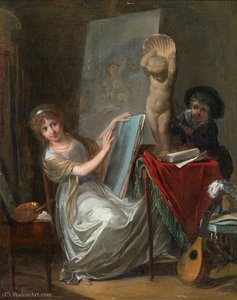
The Visit to the Convalescent (1779) on Jean Baptiste Mallet maalide kõige silmapaistvam teos; originaal kuulub museumi Musée Cognacq-Jay, Pariis. Pärast seda suunatakse pilk Bacchante in a Landscape (1800) ja Innocence and Fidelity bringing back Love (1810) suunas. Meie kataloogis olevatest Jean Baptiste Mallet 26 teosest on need 26 kõige kuulsumat, millist igaüks on esitatud koos aasta, muuseumi ja põhjusega, miks teos on püsiv.

1759 – 1835, Grasse Neoclassicism Enamama teoseid: Musée Cognacq-Jay

Jean Baptiste Mallet top 10 maalist galeriist vaatenurgast

2
Bacchante in a Landscape (1800) autor Jean Baptiste Mallet

Bacchante in a Landscape

1800 · Oil

In this oil painting from 1800, we find ourselves drawn into a serene, pastoral scene that feels almost whispered. A Bacchante, a follower of Bacchus, is positioned within a lush, verdant landscape, accompanied by two young children. The composition relies on a stable, triangular arrangement of these figures, which provides a sense of calm and permanence to the moment. There is a certain stillness here, as if the viewer has…

3
Innocence and Fidelity bringing back Love (1810) autor Jean Baptiste Mallet

Innocence and Fidelity bringing back Love

1810 · Oil · Villa Fragonard, Grasse

In the quietude of an outdoor architectural space, the allegorical oil painting Innocence and Fidelity bringing back Love unfolds. This work, created by Jean Baptiste Mallet, captures a moment of profound connection between figures that represent virtues of the heart. The scene breathes with a sense of purpose as the characters interact within a setting of stone and lush greenery, frozen in a state of graceful movement.

4
The Toilet of Saint John the Baptist as a Child (1820) autor Jean Baptiste Mallet

The Toilet of Saint John the Baptist as a Child

1820 · Oil On Panel

In this intimate scene from 1820, we find ourselves drawn into a private, domestic ritual. The composition centers on a young Saint John the Baptist, a child being attended to by women in a setting that blurs the line between an interior room and an outdoor terrace. There is a profound sense of stillness here. The light, descending from the upper left, washes over the figures with a soft, directional…

5
Young Woman Kneeling Before a Priest (1826) autor Jean Baptiste Mallet

Young Woman Kneeling Before a Priest

1826 · Oil On Canvas · Museum of Fine Arts, Boston

This evocative painting, Young Woman Kneeling Before a Priest, transports the viewer into a scene steeped in profound piety and quiet drama. The composition centers on a young woman, clad in pristine white, captured at the very apex of supplication. Her posture—kneeling with hands clasped tightly—speaks volumes of vulnerability and earnest petition. She bows toward the standing figure of the priest, whose presence anchors the solemnity of the moment. Beyond…

Jean Baptiste Mallet kuulsad maalid, numbrid 11 kuni 26

Teemad, mis püüdisid Jean Baptiste Mallet pilma

Neli teemat, mis esinevad neis originaalkindel kõige sagedamini, ning iga teema parim näide.

Muuseumid, kus on säilitatud Jean Baptiste Mallet originaalteosed

Kümne 8 muuseumi kollektsioonid, mis sisaldavad kõige rohkem sellel lehel esitatud teoseid.

Muuseumid Linn Jean Baptiste Mallet teosid Selle nimekirja maalid
Musée Cognacq-Jay, PariisMusée Cognacq-Jay Pariis 1 The Visit to the Convalescent
Villa Fragonard, GrasseVilla Fragonard Grasse 1 Innocence and Fidelity bringing back Love
Museum of Fine Arts, BostonMuseum of Fine Arts Boston 1 Young Woman Kneeling Before a Priest
National Gallery of Art, WashingtonNational Gallery of Art Washington 1 Young French Marquise in Exile in Lausanne
Musée des Arts Décoratifs, PariisMusée des Arts Décoratifs Pariis 1 Young Semi-Nude Woman Warming Herself Near a Fireplace
Musée Fabre, MontpellierMusée Fabre Montpellier 1 The marriage
Musée Jean-Honoré Fragonard, GrasseMusée Jean-Honoré Fragonard Grasse 1 "Eloise at the Abbey of the Paraclete"
Los Angeles County Museum of Art, Los AngelesLos Angeles County Museum of Art Los Angeles 1 Venus and a Sleeping Cupid

Jean Baptiste Mallet aastakatega: iga aastakannaga üks unikaalne originaal

Teosed aastakate kaupa

Vali vuosakülg, et näha selle ajastu definieerivat originaalteost.

Jean Baptiste Mallet maalid: küsimused galeriile

Mis on Jean Baptiste Mallet kõige kuulsam teos?Paljasta vastus

The Visit to the Convalescent (1779), Musée Cognacq-Jay, Pariis. Järgnevad Bacchante in a Landscape (1800) ja Innocence and Fidelity bringing back Love (1810).

Mis vanuses luunud Jean Baptiste Mallet teos The Visit to the Convalescent?Paljasta vastus

20 aastat vanus: teos The Visit to the Convalescent on pärinev aastast 1779 ning Jean Baptiste Mallet sündis aastal 1759.

Millised on Jean Baptiste Mallet kümneks kuulsumat maalatist?Paljasta vastus

The Visit to the Convalescent, Bacchante in a Landscape, Innocence and Fidelity bringing back Love, The Toilet of Saint John the Baptist as a Child, Young Woman Kneeling Before a Priest, Young French Marquise in Exile in Lausanne, Young Semi-Nude Woman Warming Herself Near a Fireplace, The marriage, "Eloise at the Abbey of the Paraclete" ja L'Heure du rendez vous. Ülemine reiting näitab iga teose puhul aastat ja muuseumi.

Kui palju teoseid kunstniku Jean Baptiste Mallet kohta on teada?Paljasta vastus

Meie kataloogist leiate 26 teost kunstnikult Jean Baptiste Mallet, mis on pärinevad ajastust 1779 kuni 1826.

Kust saab näha kõige kuulsamaid Jean Baptiste Mallet originaalteoseid?Paljasta vastus

Peamiselt Musée Cognacq-Jay (Pariis), Villa Fragonard (Grasse) ja Museum of Fine Arts (Boston) muuseumites. Ülalpool olevate muuseumite tabelis on nendest kõik loetletud.

Mille perioodi jooksul lõi Jean Baptiste Mallet oma tuntumad maalid?Paljasta vastus

Ajal 1810s: 3 26 sellel lehel olevat teost on sellel perioodil loodud, მათart közül Innocence and Fidelity bringing back Love.

Milline kuuls Jean Baptiste Mallet maal on kõige varasem ja milline kõige hiljema?Paljasta vastus

Sellel lehel on kõige vanem teos The Visit to the Convalescent (1779) ja kõige värskeim Young Woman Kneeling Before a Priest (1826).

Millist teemasid Jean Baptiste Mallet eelistas?Paljasta vastus

Woman (5), Red skirt (2) ja Landscape (2), kogu selle lehekülje 26 teose kohta.

Mida Jean Baptiste Mallet kõige rohkem kasutas oma maalide nimiseks?Paljasta vastus

Oil, 3 teoseks 26 töödelt sellel lehel.

Millisse toomangu kuulub Jean Baptiste Mallet teos?Paljasta vastus

Neoclassicism, seda lähtudes selle lehe originaalteostest.

Jean Baptiste Mallet: kunstniku portree

A Life Immersed in Refinement: Jean-Baptiste Mallet and the Elegance of a Vanishing World

Jean-Baptiste Mallet, born in the sun-drenched Provençal town of Grasse in 1759, emerged as a painter deeply attuned to the subtleties of aristocratic life during a period of immense social upheaval. While not a revolutionary figure in terms of artistic style, his significance lies in his exquisite ability to capture the grace and intimacy of French society on the cusp of modernity. He wasn’t striving for grand historical narratives or bold innovations; instead, Mallet dedicated himself to portraying the delicate beauty of domestic scenes, refined portraits, and mythological subjects imbued with a distinctly Rococo sensibility.

His artistic journey began under the tutelage of Simon Julien in Toulon, but it was his subsequent studies with Pierre-Paul Prud'hon in Paris that truly shaped his aesthetic. Prud’hon, known for his elegant line and emphasis on emotional expression, instilled in Mallet a dedication to precision and refinement. However, Mallet didn’t simply mimic his master; he absorbed influences from a broader spectrum of artists—the genre scenes of Jean-Baptiste Greuze, the playful spirit of his fellow Grasse native Jean-Honoré Fragonard, and the meticulous detail of Louis Léopold Boilly all contributed to the development of his unique style. A fascination with 17th-century Dutch painting is also evident in his work, particularly in the masterful rendering of textures and light.

The Painter of Intimate Moments: Style and Subject Matter

Mallet’s oeuvre primarily consists of gouaches and watercolors, often executed on a relatively small scale. This choice wasn't merely practical; it allowed him to focus intently on detail and create works that exuded an air of intimacy. He excelled in genre scenes depicting life during the Directorate and the First Empire—vignettes of fashionable gatherings, private moments within elegant interiors, and playful depictions of domestic life. These paintings offer a fascinating glimpse into the customs and sensibilities of the French upper class.

While he produced some portraits – including one of Chénier held in the Musée des Beaux-Arts de Carcassonne – Mallet’s true passion lay in scenes that allowed for greater artistic license. He frequently depicted nymphs bathing, graceful classical nudes, and allegorical subjects like ‘Venus and a Sleeping Cupid,’ which showcase his mastery of form and composition. His paintings are characterized by their delicate brushwork, luminous colors, and an overall sense of refined elegance. He wasn’t interested in dramatic narratives or overt displays of emotion; instead, he sought to capture the quiet beauty and subtle pleasures of life.

Recognition and Legacy: A Chronicler of a Bygone Era

Mallet was a consistent exhibitor at the Paris Salon from 1793 until 1827, earning recognition for his skill and artistry. He received second-class medals in 1812 and a first-class medal in 1817, solidifying his reputation as a leading painter of genre scenes. However, his significance extends beyond mere accolades.

His paintings serve as invaluable historical documents, providing detailed insights into the interior decorations, furnishings, and fashions of late 18th and early 19th-century France. The meticulous precision with which he rendered fabrics, furniture, and everyday objects makes his works a treasure trove for historians and art enthusiasts alike. Furthermore, the widespread availability of prints based on his paintings ensured that his style reached a broad audience, influencing generations of artists.

A Lasting Impression: Mallet’s Place in Art History

Though perhaps not as widely celebrated as some of his contemporaries, Jean-Baptiste Mallet occupies a unique and important position within the landscape of French art. He wasn't a revolutionary innovator, but rather a master craftsman who dedicated himself to capturing the beauty and refinement of a vanishing world. His paintings offer a poignant glimpse into the lives of the aristocracy during a period of profound change, providing a valuable window into the customs, sensibilities, and aesthetic values of a bygone era.

His works continue to captivate viewers with their delicate brushwork, luminous colors, and overall sense of elegance. Mallet’s legacy lies not in grand pronouncements or bold innovations, but in his ability to create paintings that evoke a feeling of intimacy, grace, and quiet beauty—a testament to the enduring power of refined artistry.