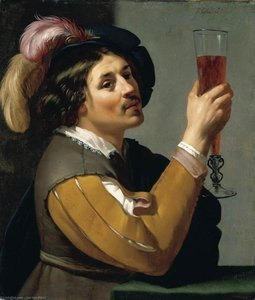
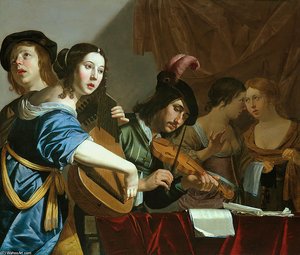
Jan Van Bijlert portree

61 kulubumatamatum Jan Van Bijlert maali, galeriiselektsioon

Uuendatud november 2026 · järjestatud meie populaarsusindeksi järgi (otsingud, külastused ja tellimused igale teosele) · 63 teost Jan Van Bijlert meie kataloogis

Lühidalt

Kõigist Jan Van Bijlert jäetud originaalteostest on kõige kuulsam Portrait of Beatrix Gibels van Linschoten. (1650), mis kuulub Varssavi Rahvusmuuseum kogele linnas Varssavi. Järgnevad sellest Portrait of Jan Strick van Linschoten (1647) ja Young man tuning his violin (1630). Meie kataloogist löytyb 63 teost kunstnikult Jan Van Bijlert; galeriist on säilitatud 61 maailmas kõige imetlustunud teost, millest iga on esitatud koos kuupäeva, museumi ja oma luguga.

1597 – 1671, Utrecht Baroque Enamama teoseid: Centraal Museum

Jan Van Bijlert top 10 maalist: galeriis valitud teosed

1
Portrait of Beatrix Gibels van Linschoten. (1650) autor Jan Van Bijlert

Portrait of Beatrix Gibels van Linschoten.

1650 · Oil · Varssavi Rahvusmuuseum, Varssavi

This 1650 oil portrait presents a formal and dignified bust-length depiction of an elderly woman, identified as Beatrix Gibels van Linschoten. Positioned slightly off-center, the subject faces toward the viewer's left, though her gaze is directed toward the observer. She is dressed in formal or mourning attire, which includes a black headpiece and a translucent black veil that drapes behind her. A crisp, white collar provides a sharp geometric contrast…

2
Portrait of Jan Strick van Linschoten (1647) autor Jan Van Bijlert

Portrait of Jan Strick van Linschoten

1647 · Oil On Panel · Varssavi Rahvusmuuseum, Varssavi

The man sits before us, caught in a moment of quiet dignity that feels as though it might break at any second. He is Jan Strick van Linschoten, and his gaze meets the viewer with a calm, composed steadying force. The light, sweeping in from the upper left, carves his features out of a deep, indeterminate darkness, casting soft shadows that trace the lines of his face and the texture…

3
Young man tuning his violin (1630) autor Jan Van Bijlert

Young man tuning his violin

1630 · Oil On Canvas · Hermitage muuseum, Stiiitlinburg

The painting titled Young man tuning his violin is a work by the Dutch artist Jan van Bijlert. It captures a solitary moment of musical preparation, frozen in the year 1630. The subject is caught in a quiet, private interval, his attention fixed upon the tension of the strings.

4
Portrait of Beatrix Gibels van Linschoten (1650) autor Jan Van Bijlert

Portrait of Beatrix Gibels van Linschoten

1650 · Oil On Canvas · Varssavi Rahvusmuuseum, Varssavi

An elderly woman gazes toward the viewer from a position slightly off-center, her presence defined by a somber and formal composure. The composition is a bust-length portrait, rendered with the precision characteristic of the Dutch Golden Age. A dark, indistinct background pushes the subject forward, allowing the play of light to define her features. Directional light enters from the upper left, casting soft shadows across the right side of her…

5
Girl with a flute (1630) autor Jan Van Bijlert

Girl with a flute

1630 · Oil On Canvas · Art Gallery of New South Wales, Sydney

A young woman leans forward toward the viewer, her body arranged in a diagonal composition that creates a sense of immediate presence. She holds a wooden flute to her lips, her fingers positioned upon the instrument. The lighting originates from the upper left, casting a strong glow across her face, chest, and hands, while leaving the background in deep, near-black shadow. This use of chiaroscuro defines the contours of her…

6
Dice Players (1620) autor Jan Van Bijlert

Dice Players

In this intimate scene from 1620, we find ourselves pulled directly into a quiet, tense corner of a tavern or a private room. Four figures are gathered around a table, their attention fixed entirely on the small, decisive movement of dice. The composition is tight, almost claustrophobic, which forces us to become silent observers of this gambling game. A man leans forward, his posture suggesting a heavy investment in the…

7
Calling of Matthew (1627) autor Jan Van Bijlert

Calling of Matthew

1627 · Oil On Canvas · Museum Catharijneconvent, Utrecht

In this oil on canvas, Jan van Bijlert presents the biblical scene of the Calling of Matthew. Painted around 1627, the work captures a moment of profound transition. The composition centers on a group of men gathered around a wooden table, their attention drawn to a central figure whose gesture of invitation initiates the narrative. It is a scene of immediate, theatrical action, where the quietude of contemplation meets the…

8
Saint John the Evangelist (1625) autor Jan Van Bijlert

Saint John the Evangelist

1625 · Oil · Centraal Museum, Utrehti

In Saint John the Evangelist, Jan van Bijlert presents a medium shot that focuses on the upper body of the subject. The composition is centered on the figure of the saint, who is positioned slightly to the right of the frame. He is depicted with his hands clasped, looking upward toward an unseen light source. On a table before him lies an open book, while an eagle is situated in…

9
Fortune-teller with Young Couple (1630) autor Jan Van Bijlert

Fortune-teller with Young Couple

1630 · Oil On Canvas · Gemäldegalerie, Berliin

We are looking at Fortune-teller with Young Couple, a work from 1630 by the Dutch artist Jan van Bijlert. This oil painting captures a quiet, tense moment of interaction between four figures. The scene is centered on an elderly woman who acts as a fortune-teller, holding the hand of a young woman. A man leans in closely to observe the exchange, while a small child clings to the woman's back.

10
Man in Armour Holding a Pike (1630) autor Jan Van Bijlert

Man in Armour Holding a Pike

1630 · Oil On Canvas · Norton Simoni muuseum, Pasadena

A single light source strikes from the upper left, carving a face out of the darkness. The man turns, his gaze meeting the viewer with a calm, commanding stillness. He is encased in polished dark armor, the metal reflecting the room in cold, silvered glints. A golden-yellow sash cinches his waist, a sharp puncture of color against the deep blacks of his breastplate. He holds a pike, its long diagonal…

Kunstianikut Jan Van Bijlert nimekiri jätkub, 11 kuni 61

11Venus Chastising Cupid (1628) autor Jan Van BijlertVenus Chastising Cupid1628 · Museum of Fine Arts 12Family Group as Cornelia, Mother of the Gracchi, Showing Her Children - c.1635 (1635) autor Jan Van BijlertFamily Group as Cornelia, Mother of the Gracchi, Showing Her Children - c.16351635 · Musée des Beaux-Arts 13Portrait of a man from the Van Soesdijk family, probably Steven Jansz. van Soesdijk (ca. 1560-1646) (1630) autor Jan Van BijlertPortrait of a man from the Van Soesdijk family, probably Steven Jansz. van Soesdijk (ca. 1560-1646)1630 · Centraal Museum 14The Rejected Offer (1635) autor Jan Van BijlertThe Rejected Offer1635 · Centraal Museum 15The camp follower (1630) autor Jan Van BijlertThe camp follower1630 · Centraal Museum 16Venus trying to prevent Adonis from going hunting (fragment) (1630) autor Jan Van BijlertVenus trying to prevent Adonis from going hunting (fragment)1630 · Centraal Museum 17Merry Company (1630) autor Jan Van BijlertMerry Company1630 · Walters Art Museum 18Girl Teasing a Cat (1630) autor Jan Van BijlertGirl Teasing a Cat1630 · Walters Art Museum 19The procuress (1626) autor Jan Van BijlertThe procuress1626 · Herzog Anton Ulrich Museum 20Charity (1630) autor Jan Van BijlertCharity1630 · Musée des Beaux-Arts de Quimper 21The Feast of Alexander and Kleitos (1635) autor Jan Van BijlertThe Feast of Alexander and Kleitos1635 · Gemäldegalerie 22Mercury (1627) autor Jan Van BijlertMercury1627 · Gemäldegalerie 23Vanitas (1640) autor Jan Van BijlertVanitas1640 · Centraal Museum 24The Black King (1645) autor Jan Van BijlertThe Black King1645 25Fantasied portrait of Emperor Hendrik IV (1050-1106) (1641) autor Jan Van BijlertFantasied portrait of Emperor Hendrik IV (1050-1106)1641 · Centraal Museum 26Heraclitus and Democritus (1640) autor Jan Van BijlertHeraclitus and Democritus1640 · Centraal Museum 27Pastoral (1640) autor Jan Van BijlertPastoral1640 · Centraal Museum 28A Concert. (1637) autor Jan Van BijlertA Concert.1637 · Varssavi Rahvusmuuseum 29At the procuress. (1637) autor Jan Van BijlertAt the procuress.1637 · Varssavi Rahvusmuuseum 30Finding of Moses (1640) autor Jan Van BijlertFinding of Moses1640 · Gemäldegalerie 31Portrait of Hendrik van Leeuwen ( -1657) (1652) autor Jan Van BijlertPortrait of Hendrik van Leeuwen ( -1657)1652 · Rijksmuseum Twenthe 32Portrait of a man (1650) autor Jan Van BijlertPortrait of a man1650 · Centraal Museum 33Portrait of an unknown woman (1650) autor Jan Van BijlertPortrait of an unknown woman1650 · Centraal Museum 34Vanity (1650) autor Jan Van BijlertVanity1650 · Centraal Museum 35Paris and Oenone (1650) autor Jan Van BijlertParis and Oenone1650 · Centraal Museum 36Saint Sebastian attended by Saint Irene (1650) autor Jan Van BijlertSaint Sebastian attended by Saint Irene1650 37An allegory of the sense of smell (1671) autor Jan Van BijlertAn allegory of the sense of smell1671 38The Concert (1635) autor Jan Van BijlertThe Concert1635 39Venus and Amor and an Old Woman (1630) autor Jan Van BijlertVenus and Amor and an Old Woman1630 · Musée des Beaux-Arts 40Young Man Drinking a Glass of Wine (1635) autor Jan Van BijlertYoung Man Drinking a Glass of Wine1635 41Shepherd Holding a Flute (1630) autor Jan Van BijlertShepherd Holding a Flute1630 42The Lute Player, Jan van Bijlert, c. 1630 - c. 1640 (1640) autor Jan Van BijlertThe Lute Player, Jan van Bijlert, c. 1630 - c. 16401640 · Rijksmuseum 43Saint Marc the Evangelist autor Jan Van BijlertSaint Marc the Evangelist 44Saint Matthew the Evangelist autor Jan Van BijlertSaint Matthew the Evangelist 45The Holy Family autor Jan Van BijlertThe Holy Family 46The Five Senses autor Jan Van BijlertThe Five SensesNiedersächsisches Landesmuseum 47A Bagpipe Player autor Jan Van BijlertA Bagpipe Player 48The concert (Den Haag) autor Jan Van BijlertThe concert (Den Haag)Kunstmuseum Den Haag 49Young Man Playing the Lute (1625) autor Jan Van BijlertYoung Man Playing the Lute1625 · Thyssen-Bornemisza Museum 50Virgin and Child (1635) autor Jan Van BijlertVirgin and Child1635 · Herzog Anton Ulrich Museum 51Portrait of a Woman, Jan van Bijlert, c. 1650 (1650) autor Jan Van BijlertPortrait of a Woman, Jan van Bijlert, c. 16501650 · Rijksmuseum 52A Woman Holding Pancakes autor Jan Van BijlertA Woman Holding Pancakes 53Ulysses and Circe autor Jan Van BijlertUlysses and Circe 54A Shepherdess autor Jan Van BijlertA Shepherdess 55Musical Company autor Jan Van BijlertMusical Company 56Muusikamuja (1629) autor Jan Van BijlertMuusikamuja1629 · Academy of Fine Arts Vienna 57Portraits of the Inhabitants at St Jobsgasthuis in Utrecht (1630) autor Jan Van BijlertPortraits of the Inhabitants at St Jobsgasthuis in Utrecht1630 · Centraal Museum 58Adoration of the kings: the Wise Men present their gifts to the Christ-child (1630) autor Jan Van BijlertAdoration of the kings: the Wise Men present their gifts to the Christ-child1630 · Centraal Museum 59Pulling the Pretzel (1630) autor Jan Van BijlertPulling the Pretzel1630 · Centraal Museum 60in the brothel autor Jan Van Bijlertin the brothelNational Museum in Wrocław 61Portrait of an Elderly Man and Two Women autor Jan Van BijlertPortrait of an Elderly Man and Two WomenNational Gallery

Jan Van Bijlert kuulsaimad maalid ajastult ajastule

Teemad, mis püüdisid Jan Van Bijlert pilma

Neli teemat, mis esinevad neis originaalkindel kõige sagedamini, ning iga teema parim näide.

Muuseumid, kus on säilitatud Jan Van Bijlert originaalteosed

Kümne 8 muuseumi kollektsioonid, mis sisaldavad kõige rohkem sellel lehel esitatud teoseid.

Muuseumid Linn Jan Van Bijlert teosid Selle nimekirja maalid
Centraal Museum, UtrehtiCentraal Museum Utrehti 16 Saint John the Evangelist, Portrait of a man from the Van Soesdijk family, probably Steven Jansz. van Soesdijk (ca. 1560-1646), The Rejected Offer
Varssavi Rahvusmuuseum, VarssaviVarssavi Rahvusmuuseum Varssavi 5 Portrait of Beatrix Gibels van Linschoten., Portrait of Jan Strick van Linschoten, Portrait of Beatrix Gibels van Linschoten
Gemäldegalerie, BerliinGemäldegalerie Berliin 4 Fortune-teller with Young Couple, The Feast of Alexander and Kleitos, Mercury
Walters Art Museum, BaltimoreWalters Art Museum Baltimore 2 Merry Company, Girl Teasing a Cat
Herzog Anton Ulrich Museum, BrunschwigHerzog Anton Ulrich Museum Brunschwig 2 The procuress, Virgin and Child
Rijksmuseum, AmsterdamRijksmuseum Amsterdam 2 The Lute Player, Jan van Bijlert, c. 1630 - c. 1640, Portrait of a Woman, Jan van Bijlert, c. 1650
Hermitage muuseum, StiiitlinburgHermitage muuseum Stiiitlinburg 1 Young man tuning his violin
Art Gallery of New South Wales, SydneyArt Gallery of New South Wales Sydney 1 Girl with a flute

Jan Van Bijlert aastak aegades: originaalteos, mis määratleb iga ajastu

Teosed aastakate kaupa

Vali vuosakülg, et näha selle ajastu definieerivat originaalteost.

Sammlajate küsimused Jan Van Bijlert maalide kohta

Millise teosega on Jan Van Bijlert kõige kuulsam?Paljasta vastus

Portrait of Beatrix Gibels van Linschoten. (1650), Varssavi Rahvusmuuseum, Varssavi. Järgnevad Portrait of Jan Strick van Linschoten (1647) ja Young man tuning his violin (1630).

Kui vana oli Jan Van Bijlert, kui teos Portrait of Beatrix Gibels van Linschoten. loodi?Paljasta vastus

53 aastat vanus: teos Portrait of Beatrix Gibels van Linschoten. on pärinev aastast 1650 ning Jan Van Bijlert sündis aastal 1597.

Millised on kümne kõige kuulsama Jan Van Bijlert maalid?Paljasta vastus

Portrait of Beatrix Gibels van Linschoten., Portrait of Jan Strick van Linschoten, Young man tuning his violin, Portrait of Beatrix Gibels van Linschoten, Girl with a flute, Dice Players, Calling of Matthew, Saint John the Evangelist, Fortune-teller with Young Couple ja Man in Armour Holding a Pike. Ülemine reiting näitab iga teose puhul aastat ja muuseumi.

Kui palju maali Jan Van Bijlert jäeti?Paljasta vastus

Meie kataloogist leiate 63 teost kunstnikult Jan Van Bijlert, mis on pärinevad ajastust 1620 kuni 1671.

Mitteks muuseumides rihangavad Jan Van Bijlert meistriteosed?Paljasta vastus

Peamiselt Centraal Museum (Utrehti), Varssavi Rahvusmuuseum (Varssavi) ja Gemäldegalerie (Berliin) muuseumites. Ülalpool olevate muuseumite tabelis on nendest kõik loetletud.

Millah aastades maalas Jan Van Bijlert oma kuulsamaid teoseid?Paljasta vastus

Ajal 1630s: 23 61 sellel lehel olevat teost on sellel perioodil loodud, მათart közül Young man tuning his violin.

Mis on Jan Van Bijlert esimene ja viimane kuuls fama originaalteos?Paljasta vastus

Sellel lehel on kõige vanem teos Dice Players (1620) ja kõige värskeim An allegory of the sense of smell (1671).

Milliseid teemasid Jan Van Bijlert kõige sagedamini valis?Paljasta vastus

Woman (24), Man (23) ja Dark background (7), kogu selle lehekülje 61 teose kohta.

Millist tehnikat kasutas Jan Van Bijlert kõige rohkem?Paljasta vastus

Oil, 22 teoseks 61 töödelt sellel lehel.

Minge pihta kunstisuunasse, kuhu Jan Van Bijlert kuulub?Paljasta vastus

Baroque, seda lähtudes selle lehe originaalteostest.

Millised Jan Van Bijlert teosed on Centraal Museum näituses?Paljasta vastus

Saint John the Evangelist, Portrait of a man from the Van Soesdijk family, probably Steven Jansz. van Soesdijk (ca. 1560-1646) ja The Rejected Offer: Centraal Museum, Utrehti säilitab 16 selle lehel olevat teost.

Jan Van Bijlert: elu ja looming

Jan van Bijlert: A Utrecht Caravaggist’s Dramatic Vision

Jan Hermansz van Bijlert, born in Utrecht around 1598 and passing away in the same city in 1671, stands as a pivotal figure within the vibrant artistic landscape of the Dutch Golden Age. Initially influenced by the intense realism and dramatic lighting of Caravaggio, van Bijlert evolved into one of the most prominent practitioners of what became known as Utrecht Caravaggism – a distinctly regional style that combined Italian Baroque principles with a uniquely Dutch sensibility. His prolific output, numbering approximately 200 paintings, offers a compelling glimpse into a period of artistic experimentation and the burgeoning influence of Italian masters on Northern European art. Van Bijlert’s early life remains somewhat shrouded in mystery, though it's believed he received some initial training from his father, Herman Beernts van Bijlert, a skilled stained-glass worker. This foundational experience likely instilled within him an appreciation for detail and craftsmanship – qualities that would later manifest powerfully in his paintings. He subsequently studied under Abraham Bloemaert, a respected Utrecht painter known for his meticulous depictions of mythological scenes and portraits. Crucially, van Bijlert’s artistic journey extended beyond the borders of the Netherlands, with significant periods spent in France and Italy. These experiences proved transformative, exposing him to the revolutionary techniques and dramatic intensity championed by Caravaggio, whose influence would irrevocably shape his style.

The Bentvueghel Circle and Early Roman Years

Van Bijlert’s arrival in Rome in 1621 marked a significant turning point. He quickly became integrated into the *Bentvueghels*, a notoriously convivial circle of artists – Dutch, Flemish, and Italian – who established a shared identity through adopted nicknames. Van Bijlert chose “Aeneas,” a reference to the Roman hero known for his strength and resilience. The Bentvueghels were not merely artistic collaborators; they were also avid socialites, exchanging witty verses, satirical prints, and, of course, paintings. This environment fostered an atmosphere of intense exchange and experimentation, allowing artists to push boundaries and develop their individual styles. During this period in Rome, van Bijlert honed his skills, mastering Caravaggio’s signature techniques: the stark contrast between light and shadow (chiaroscuro), the dramatic cropping of compositions to create a sense of immediacy, and an unwavering commitment to realistic representation. His early works from this era are characterized by these elements, depicting scenes of intense emotion and often featuring figures caught in moments of action or contemplation.

A Shift Towards Classicism and Genre Scenes

Around 1630, van Bijlert’s artistic trajectory shifted noticeably. While retaining the core principles of Caravaggism – particularly the dramatic use of light – he began to incorporate elements of classicizing style, possibly influenced by fellow Utrecht artist Cornelis van Poelenburch. This evolution manifested in a lightening of his palette and a move towards more elevated subject matter, including religious scenes and allegorical compositions. Interestingly, this period also saw the emergence of van Bijlert’s fascination with genre scenes. He produced a series of paintings depicting intimate moments from everyday life – brothels, musical gatherings, and tavern scenes – often populated by small figures rendered with remarkable detail and psychological insight. These works, reminiscent of those created by Jacob Duck, offered a glimpse into the social fabric of Utrecht society and demonstrated van Bijlert’s ability to capture human emotion and interaction with subtle grace.

Guild Life, Patronage, and Legacy

Van Bijlert's life was deeply intertwined with the civic and religious institutions of Utrecht. He joined the schutterij (a citizen militia) in 1625 and became a member of the Utrecht Guild of St. Luke in 1630, serving as deacon from 1632 to 1637 and later appointed regent of the Sint-Jobsgasthuis in 1634. His involvement extended beyond artistic pursuits; he played a role in establishing the “Schilders-College” (painter’s school) in 1639, serving as its regent and mentoring a new generation of artists, including Bartram de Fouchier and Ludolf Leendertsz de Jongh. This dedication to both art and community underscores his position as a respected figure within Utrecht's cultural elite. Jan van Bijlert’s legacy is firmly rooted in the Utrecht Caravaggisti movement. His paintings, characterized by their dramatic lighting, realistic depictions of human figures, and exploration of emotional intensity, continue to captivate viewers today. His work stands as a testament to the dynamic exchange of artistic ideas that flourished during the Dutch Golden Age – a period when Italian Baroque principles were embraced, adapted, and ultimately transformed into a uniquely Northern European style. His approximately 200 paintings provide a rich and detailed record of this fascinating artistic evolution.