Jan Baptist Weenix portree

78 kulubumatamatum Jan Baptist Weenix maali, galeriiselektsioon

Uuendatud november 2026 · järjestatud meie populaarsusindeksi järgi (otsingud, külastused ja tellimused igale teosele) · 86 teost Jan Baptist Weenix meie kataloogis

Lühidalt

Kõigist Jan Baptist Weenix jäetud originaalteostest on kõige kuulsam Tobit, asleep under a vine, is blinded (1642), mis kuulub Museum Boijmans Van Beuningen kogele linnas Rotterdam. Järgnevad sellest Italian landscape with shelter and antiques ruins (1658) ja Still Life with a Dead Swan (1651). Meie kataloogist löytyb 86 teost kunstnikult Jan Baptist Weenix; galeriist on säilitatud 78 maailmas kõige imetlustunud teost, millest iga on esitatud koos kuupäeva, museumi ja oma luguga.

1621 – 1659, Amsterdam Dutch golden age Enamama teoseid: Bavaria riiklikud maalidema kogumikud

Jan Baptist Weenix top 10 maalist: galeriis valitud teosed

1
Tobit, asleep under a vine, is blinded (1642) autor Jan Baptist Weenix

Tobit, asleep under a vine, is blinded

1642 · Oil On Canvas · Museum Boijmans Van Beuningen, Rotterdam

A single man reclines in the heavy shade of a vine. He is Tobit, lost to a deep, unsuspecting sleep. The air around him feels thick, weighted by the muted tones of ochre and forest green. Sunlight does not flood this scene; instead, it pierces through the foliage in sharp, controlled beams, illuminating the textures of his slumped posture and the coarse fabric of his clothing. He rests amidst a…

2
Italian landscape with shelter and antiques ruins (1658) autor Jan Baptist Weenix

Italian landscape with shelter and antiques ruins

1658 · Oil On Panel · Mauritshuis, Haag

The oil on panel painting titled Italian landscape with shelter and antiques ruins was executed by the artist Jan Baptist Weenix in 1658. This landscape painting depicts a specific pastoral setting within an Italianate environment. The scene is populated by a group of peasants and various livestock, including sheep and goats. These figures are situated near a rustic cottage and several ancient architectural ruins that occupy the landscape.

3
Still Life with a Dead Swan (1651) autor Jan Baptist Weenix

Still Life with a Dead Swan

1651 · Oil On Canvas · Detroit Institute of Arts, Detroit

The painting Still Life with a Dead Swan by Jan Baptist Weenix captures a heavy, silent moment of the hunt. Created about 1651, the work presents a collection of fallen game as a trophy of the chase. A white swan rests at the center, its pale plumage a stark contrast to the darker forms surrounding it. This central figure is accompanied by a turkey, two partridges, and a small finch,…

4
Tobit Sleeping Under the Vine (1641) autor Jan Baptist Weenix

Tobit Sleeping Under the Vine

1641 · Oil · Museum Catharijneconvent, Utrecht

In this work, titled Tobit Sleeping Under the Vine, we encounter a significant piece by the Dutch Golden Age painter Jan Baptist Weenix. Created around 1642, the painting belongs to the Baroque period, a time when the interplay of light and shadow began to define the dramatic tension of Northern European art. Weenix, born in Amsterdam, Netherlands, brought a disciplined approach to his subjects, often blending meticulous observation with a…

5
The Scissors Grinder (1641) autor Jan Baptist Weenix

The Scissors Grinder

1641 · Oil · Bavaria riiklikud maalidema kogumikud, München

The air feels heavy with the scent of damp stone and the rhythmic, metallic scrape of steel against stone. Under a vast, expansive sky, a group of figures gathers within the skeletal remains of a classical ruin. A man leans into his work, operating a grinding wheel that cuts through the quietude of the scene. Beside him, a woman sits in repose, while a small child stands close by, watching…

6
Hunters Near Ruins (1648) autor Jan Baptist Weenix

Hunters Near Ruins

1648 · Oil On Canvas · Cleveland Museum of Art, Cleveland

Hunters Near Ruins is an oil on canvas painting by Jan Baptist Weenix. The work is dated 1648. This piece belongs to the Dutch Golden Age, a period during which the artist developed a specific approach to landscape and human figures.

7
Portrait of René Descartes (1647) autor Jan Baptist Weenix

Portrait of René Descartes

1647 · Oil · Centraal Museum, Utrehti

In this 1647 oil painting, Jan Baptist Weenix captures the French philosopher René Descartes. The subject appears in a medium close-up, his presence defined by a heavy, somber stillness. He is an elderly man, his face marked by the weight of thought and the passage of years. A bright white collar cuts through the darkness of his attire, framing a pale countenance that emerges from a deep, umber shadow.

8
Monument at a Harbour (1648) autor Jan Baptist Weenix

Monument at a Harbour

1648 · Oil · Statens Museum For Kunst, Kooberemaa

The composition relies on strong vertical elements, primarily through imposing columns and a central, highly ornate pedestal topped with a large urn. These structures anchor the scene, providing a sense of scale against the scattered human figures in the foreground and middle ground. Through a use of deep recession, the perspective draws the eye past a colonnade toward a distant, hazy horizon where the masts of ships are visible.

9
Harbour with Antique Ruins (1648) autor Jan Baptist Weenix

Harbour with Antique Ruins

1648 · Oil On Canvas · Nationalmuseum, Stockholm

The scene unfolds in 1648, a moment captured in the oil on canvas known as Harbour with Antique Ruins. This work belongs to the hand of Jan Baptist Weenix, an artist who brings the weight of history into a living, breathing maritime setting. The painting presents a world where the weathered stone of classical antiquity meets the constant, rhythmic movement of a working harbor. It is a vision of a…

10
The Angel Raphael Leaving Tobias's Family (1648) autor Jan Baptist Weenix

The Angel Raphael Leaving Tobias's Family

1648 · Oil · Nationalmuseum, Stockholm

In "The Angel Raphael Leaving Tobias's Family" by Jan Baptist Weenix, a divine departure unfolds with sudden, celestial energy. The scene captures the exact moment the Angel Raphael ascends toward the heavens, leaving the family below in a state of profound awe and reverence. A powerful diagonal movement pulls the eye from the lower left foreground upward toward the upper left, where the angelic figure climbs into a swirling formation…

Kunstianikut Jan Baptist Weenix nimekiri jätkub, 11 kuni 78

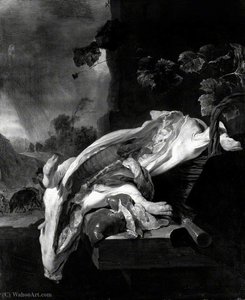
11vegetable-sellers at the house-door, 5 figures (1646) autor Jan Baptist Weenixvegetable-sellers at the house-door, 5 figures1646 12caravane near the shore (1646) autor Jan Baptist Weenixcaravane near the shore1646 13Mother and Child (1647) autor Jan Baptist WeenixMother and Child1647 14Circumcision of Moses' son (1640) autor Jan Baptist WeenixCircumcision of Moses' son1640 · Varssavi Rahvusmuuseum 15Still Life with Game, Hunter and Two Dogs (1652) autor Jan Baptist WeenixStill Life with Game, Hunter and Two Dogs1652 · Bavaria riiklikud maalidema kogumikud 16Butterfly Dog and Dead Bird (1649) autor Jan Baptist WeenixButterfly Dog and Dead Bird1649 · Museum Mayer van den Bergh 17Pleasure boating (1650) autor Jan Baptist WeenixPleasure boating1650 18The Sleeping Shepherdess (1658) autor Jan Baptist WeenixThe Sleeping Shepherdess1658 · National Gallery of Ireland 19Roman Tinker (1656) autor Jan Baptist WeenixRoman Tinker1656 · Städel Museum 20The love letter (1650) autor Jan Baptist WeenixThe love letter1650 · National Museum of Art, Architecture and Design 21Italian Harbour (1651) autor Jan Baptist WeenixItalian Harbour1651 · Hermitage muuseum 22Italian Peasants among Ruins (1650) autor Jan Baptist WeenixItalian Peasants among Ruins1650 · Detroit Institute of Arts 23Sleeping girl (1656) autor Jan Baptist WeenixSleeping girl1656 · Bavaria riiklikud maalidema kogumikud 24Rest on the Flight into Egypt (1657) autor Jan Baptist WeenixRest on the Flight into Egypt1657 · Museum Boijmans Van Beuningen 25Merry Company on a Ferry (1649) autor Jan Baptist WeenixMerry Company on a Ferry1649 · Museum Gouda 26Battle at the foot of the mountain. (1650) autor Jan Baptist WeenixBattle at the foot of the mountain.1650 · Varssavi Rahvusmuuseum 27Christina Lepper de Kempenaer and Her Children (1653) autor Jan Baptist WeenixChristina Lepper de Kempenaer and Her Children1653 28Italian port scene, 1649 (1649) autor Jan Baptist WeenixItalian port scene, 16491649 · Centraal Museum 29Italian Landscape with Horsemen by a Spring (1657) autor Jan Baptist WeenixItalian Landscape with Horsemen by a Spring1657 · Centraal Museum 30Before the walls of Rome (1650) autor Jan Baptist WeenixBefore the walls of Rome1650 · National Museum in Wrocław 31Portrait of a man with a letter (1650) autor Jan Baptist WeenixPortrait of a man with a letter1650 · Agnes Etherington Art Center 32A Landscape with a Ford (1660) autor Jan Baptist WeenixA Landscape with a Ford1660 · Regional Gallery in Liberec 33In the Campagna (1669) autor Jan Baptist WeenixIn the Campagna1669 · National Gallery of Ireland 34Dead Fowl Being Eaten by a Cat (1653) autor Jan Baptist WeenixDead Fowl Being Eaten by a Cat1653 · Städel Museum 35Departure of an Oriental Entourage (1647) autor Jan Baptist WeenixDeparture of an Oriental Entourage1647 · Louvre'i muuseum 36Display of Dead Game (1641) autor Jan Baptist WeenixDisplay of Dead Game1641 · Petit Palais 37Dead Game (1641) autor Jan Baptist WeenixDead Game1641 38River Landscape with a Ferry (1650) autor Jan Baptist WeenixRiver Landscape with a Ferry1650 · Montreal Museum of Fine Arts 39Still Life with Dead Game and Poultry (1656) autor Jan Baptist WeenixStill Life with Dead Game and Poultry1656 · Centraal Museum 40Still Life with Fowl (1650) autor Jan Baptist WeenixStill Life with Fowl1650 · Museum of Fine Arts Ghent (MSK) 41Marine with a Venetian Bucintoro (1650) autor Jan Baptist WeenixMarine with a Venetian Bucintoro1650 · Staatliche Kunsthalle Karlsruhe 42The Dutch Ambassador on his Way to Isfahan, Jan Baptist Weenix, 1653 - 1659 (1659) autor Jan Baptist WeenixThe Dutch Ambassador on his Way to Isfahan, Jan Baptist Weenix, 1653 - 16591659 · Rijksmuseum 43After the Hunt, Jan Baptist Weenix, c. 1656 (1656) autor Jan Baptist WeenixAfter the Hunt, Jan Baptist Weenix, c. 16561656 · Rijksmuseum 44Still Life with White Mouse (1680) autor Jan Baptist WeenixStill Life with White Mouse1680 · Ernest Zmetáki kunstigaleri 45Still Life with Game autor Jan Baptist WeenixStill Life with GameHarvard Art Museums 46The Ford in the River (1647) autor Jan Baptist WeenixThe Ford in the River1647 · Hermitage muuseum 47Harbor View with Rider in Oriental Dress, autor Jan Baptist WeenixHarbor View with Rider in Oriental Dress,Groninger Museum 48The Holy Women at the Tomb autor Jan Baptist WeenixThe Holy Women at the TombNational Gallery of Ireland 49An Italian Seaport autor Jan Baptist WeenixAn Italian SeaportRoyal Museum of Fine Arts Antwerp 50Architectural interior with foreign shippers, ruins and a shipyard beyond autor Jan Baptist WeenixArchitectural interior with foreign shippers, ruins and a shipyard beyond 51Study of a sheep autor Jan Baptist WeenixStudy of a sheep 52A pig's carcase autor Jan Baptist WeenixA pig's carcase 53The Tinker and His Dog autor Jan Baptist WeenixThe Tinker and His Dog 54Landscape with Peasants and Animals autor Jan Baptist WeenixLandscape with Peasants and Animals 55Dead Partridge (1650) autor Jan Baptist WeenixDead Partridge1650 · Mauritshuis 56Goat Lying Down, Jan Baptist Weenix, 1645 - 1660 (1660) autor Jan Baptist WeenixGoat Lying Down, Jan Baptist Weenix, 1645 - 16601660 · Rijksmuseum 57A Dog and a Cat near a partially disembowelled Deer, Jan Baptist Weenix, 1645 - 1660 (1660) autor Jan Baptist WeenixA Dog and a Cat near a partially disembowelled Deer, Jan Baptist Weenix, 1645 - 16601660 · Rijksmuseum 58Still Life with Dead Poultry, Lidded Pitcher and Passglas autor Jan Baptist WeenixStill Life with Dead Poultry, Lidded Pitcher and PassglasBavaria riiklikud maalidema kogumikud 59Game-piece autor Jan Baptist WeenixGame-pieceNational Gallery of Ireland 60Dead game and hunting tackle in landscape autor Jan Baptist WeenixDead game and hunting tackle in landscape 61Hound with a Joint of Meat and a Cat Looking on autor Jan Baptist WeenixHound with a Joint of Meat and a Cat Looking on 62Bouquet of flowers autor Jan Baptist WeenixBouquet of flowersGemäldegalerie 63Shipping in Harbour autor Jan Baptist WeenixShipping in Harbour 64Herons and Lapwings autor Jan Baptist WeenixHerons and Lapwings 65Still Life of Dead Game in a Landscape with a Huntsman autor Jan Baptist WeenixStill Life of Dead Game in a Landscape with a Huntsman 66An italian port scene autor Jan Baptist WeenixAn italian port scene 67Shepherds and Flocks among Classical Ruins autor Jan Baptist WeenixShepherds and Flocks among Classical Ruins 68A Coast Scene with Classical Ruins autor Jan Baptist WeenixA Coast Scene with Classical RuinsWallace Collection 69Still Life with Dead Game autor Jan Baptist WeenixStill Life with Dead Game 70Hounds and an Owl with Dead Birds and Sculptures in a Landscape autor Jan Baptist WeenixHounds and an Owl with Dead Birds and Sculptures in a Landscape 71Still Life with Dead Birds autor Jan Baptist WeenixStill Life with Dead Birds 72Family in a Mediterranean Seaport autor Jan Baptist WeenixFamily in a Mediterranean Seaport 73Figures near a Seaport autor Jan Baptist WeenixFigures near a SeaportScottish National Gallery 74A Huntsman cutting up a Dead Deer, with Two Deerhounds autor Jan Baptist WeenixA Huntsman cutting up a Dead Deer, with Two DeerhoundsNational Gallery 75Ancient Ruins autor Jan Baptist WeenixAncient RuinsSzépművészeti Múzeum 76Figures among ruins autor Jan Baptist WeenixFigures among ruinsThe Kremer Collection 77Ancient Ruins (detail) autor Jan Baptist WeenixAncient Ruins (detail)Szépművészeti Múzeum 78Girl as Shepherdess (1650) autor Jan Baptist WeenixGirl as Shepherdess1650 · Musée de Picardie

Jan Baptist Weenix kuulsaimad maalid ajastult ajastule

Teemad, mis püüdisid Jan Baptist Weenix pilma

Neli teemat, mis esinevad neis originaalkindel kõige sagedamini, ning iga teema parim näide.

Muuseumid, kus on säilitatud Jan Baptist Weenix originaalteosed

Kümne 8 muuseumi kollektsioonid, mis sisaldavad kõige rohkem sellel lehel esitatud teoseid.

Muuseumid Linn Jan Baptist Weenix teosid Selle nimekirja maalid
Bavaria riiklikud maalidema kogumikud, MünchenBavaria riiklikud maalidema kogumikud München 4 The Scissors Grinder, Still Life with Game, Hunter and Two Dogs, Sleeping girl
Centraal Museum, UtrehtiCentraal Museum Utrehti 4 Portrait of René Descartes, Italian port scene, 1649, Italian Landscape with Horsemen by a Spring
National Gallery of Ireland, DublinNational Gallery of Ireland Dublin 4 The Sleeping Shepherdess, In the Campagna, The Holy Women at the Tomb
Rijksmuseum, AmsterdamRijksmuseum Amsterdam 4 The Dutch Ambassador on his Way to Isfahan, Jan Baptist Weenix, 1653 - 1659, After the Hunt, Jan Baptist Weenix, c. 1656, Goat Lying Down, Jan Baptist Weenix, 1645 - 1660
Museum Boijmans Van Beuningen, RotterdamMuseum Boijmans Van Beuningen Rotterdam 2 Tobit, asleep under a vine, is blinded, Rest on the Flight into Egypt
Mauritshuis, HaagMauritshuis Haag 2 Italian landscape with shelter and antiques ruins, Dead Partridge
Detroit Institute of Arts, DetroitDetroit Institute of Arts Detroit 2 Still Life with a Dead Swan, Italian Peasants among Ruins
Nationalmuseum, StockholmNationalmuseum Stockholm 2 Harbour with Antique Ruins, The Angel Raphael Leaving Tobias's Family

Jan Baptist Weenix aasta-aastaga: originaalteosed, mis defineerivad iga perioodi

Aastast 1640 aastat 1659 kuni 1659, töötas Jan Baptist Weenix 20 aastat: valik järgneb selle pikale kareerile aasta-aastalt, esitledes selle parimaid originaalteoseid.

Teosed aasta kaupa

Vali aasta, et näha originaale.

Sammlajate küsimused Jan Baptist Weenix maalide kohta

Millise teosega on Jan Baptist Weenix kõige kuulsam?Paljasta vastus

Tobit, asleep under a vine, is blinded (1642), Museum Boijmans Van Beuningen, Rotterdam. Järgnevad Italian landscape with shelter and antiques ruins (1658) ja Still Life with a Dead Swan (1651).

Kui vana oli Jan Baptist Weenix, kui teos Tobit, asleep under a vine, is blinded loodi?Paljasta vastus

21 aastat vanus: teos Tobit, asleep under a vine, is blinded on pärinev aastast 1642 ning Jan Baptist Weenix sündis aastal 1621.

Millised on kümne kõige kuulsama Jan Baptist Weenix maalid?Paljasta vastus

Tobit, asleep under a vine, is blinded, Italian landscape with shelter and antiques ruins, Still Life with a Dead Swan, Tobit Sleeping Under the Vine, The Scissors Grinder, Hunters Near Ruins, Portrait of René Descartes, Monument at a Harbour, Harbour with Antique Ruins ja The Angel Raphael Leaving Tobias's Family. Ülemine reiting näitab iga teose puhul aastat ja muuseumi.

Kui palju maali Jan Baptist Weenix jäeti?Paljasta vastus

Meie kataloogist leiate 86 teost kunstnikult Jan Baptist Weenix, mis on pärinevad ajastust 1640 kuni 1659.

Mitteks muuseumides rihangavad Jan Baptist Weenix meistriteosed?Paljasta vastus

Peamiselt Bavaria riiklikud maalidema kogumikud (München), Centraal Museum (Utrehti) ja National Gallery of Ireland (Dublin) muuseumites. Ülalpool olevate muuseumite tabelis on nendest kõik loetletud.

Millah aastades maalas Jan Baptist Weenix oma kuulsamaid teoseid?Paljasta vastus

Ajal 1650: 11 78 sellel lehel olevat teost on sellel perioodil loodud, მათart közül Pleasure boating.

Mis on Jan Baptist Weenix esimene ja viimane kuuls fama originaalteos?Paljasta vastus

Sellel lehel on kõige vanem teos Circumcision of Moses' son (1640) ja kõige värskeim The Dutch Ambassador on his Way to Isfahan, Jan Baptist Weenix, 1653 - 1659 (1659).

Milliseid teemasid Jan Baptist Weenix kõige sagedamini valis?Paljasta vastus

Landscape (18), Ruins (17) ja Sky (13), kogu selle lehekülje 78 teose kohta.

Millist tehnikat kasutas Jan Baptist Weenix kõige rohkem?Paljasta vastus

Oil On Canvas, 30 teoseks 78 töödelt sellel lehel.

Minge pihta kunstisuunasse, kuhu Jan Baptist Weenix kuulub?Paljasta vastus

Dutch golden age ja Baroque, seda lähtudes selle lehe originaalteostest.

Millised Jan Baptist Weenix teosed on Bavaria riiklikud maalidema kogumikud näituses?Paljasta vastus

The Scissors Grinder, Still Life with Game, Hunter and Two Dogs ja Sleeping girl: Bavaria riiklikud maalidema kogumikud, München säilitab 4 selle lehel olevat teost.

Jan Baptist Weenix: elu ja looming

Hollandi kuldaja tevisionär

Jan Baptist Weenix seisab Hollandi kuldaja ajastuses eristuva üksindena, olles tunnustatud oma ainulaadse segu täpsest tähelepanust ja kujut力liku visi 것에. Kuigi tema kunstiline panus oli võrreldes selliste kaasajatega nagu Rembrandt või Vermeer suhteliselt besaadne, on Weenixi aportatsioon Hollandi kunstilo history on vääramatu — eriti tema murdilik uuring Itaalia maastikutest, kuhu on lisatud inimfiguurid, luues stiililise eeskuju, mis kaja oleks kogu järglaste põlvkondades. Sündinud 1621. aastal Amsterdambis, lähedal puldisevate sadamaäärade ääres, pärines Weenix arhidektide suguvõsast — pärand, mis on tõenäoliselt kujustanud tema kujundavate aastate sisu selle ajastu intellektuaalse ja struktuurse karge kesknägemuse all.

Vaatamata isiklikule keerukusele — ajaloo kirjutused viitavad, et ta võitles meditsiinilise seisundi tõttu kõnelemisraskustega — omastas Weenix kirjanduse ja kunsti vastu põlemist, mida südamearmik ema toetas, korraldades talle õpilasõime Jan Micker'i juures, kes oli Rembrandt'i nimekaart. See varajane koolitus sisaldas temas ranget lähenemist joonistamisele ja jälgimisele, mis sai hiljem tema teosest eristavaks sünnimärgiks. Ta täiendas oma oskusi Utrechtis Abraham Bloemaerti juhendamisel ning naasis hiljem Amsterdami, et õppida Claes Corneliszoon Moeyaertilt, kinnistades nii oma põhimõtteid Hollandi valitsevates kunstivooludes.

Teekond läbi valguse ja maastiku

Weenixi karjääri suund muutus armsalt tema reiside tõttu, eriti pärast temaเดินทางit Roomasse 1643. aastal koos Nicolaes Pieterszoon Berchemiga. See ekskursioon võimaldas tal kohtuda Bentvueghels laugunduse kireva intellektuaalse ja kunstilise keskkonnaga, kogemus, mis tõi teda lähemale laiemale stiililisele valdkonnale. Roomas omastas ta itaalset stiili, mida iseloomustavad soe, kuldne valgus ja klassikalised maastikud, mis kontrastis kaunilt traditsioonilise hollandiese maalimise kargemate ja tumedamate toonidega. See Rooma mõjutuste periood võimaldas tal saavutada "itaalsed maastikud", kus Lõhnav Europe metsik ilu oli reimaginitud Põhja-Euroopa vahetus.

Tema töö selles ajast ühendas sageli klassikaliste miljöode grandioossusust koos intiimsete, inimlikud elementidega. Olgu see siis sadamakohtad, mis kumaldasid merikaubanduse häälitsusi, või laiad vaated, mis tekitasid ajatulkususe tunnet, Weenixil oli ainulaadne võime tabada kohaga seotud atmosfääri. Tema meistriklassis ei piirdunud vaid kauge horisontiga; ta oli samasugult osav tabama elu vaikset ja sageli viskeraalset realismi oma stillelife'ide kaudu. Tema kirjelduse jahultatud loomade ja metsjahtide juures märkasime hämmastavat realismist, kus iga tekstuur — alates metsiku jahukoja kargusest kuni sulgede õrnuse kuni — oli kujundatud hinget lõikav täpsusega.

Realism ja kunstiline pärand

Jan Baptist Weenixi olulisus peitub tema võimes ühendada Hollandi traditsiooni kargus ja hollandise realismi ning itaalsuse liikumuse idealiseeritud ilu. Tema mitmekülgsus võimaldas tal navigeerida erinevate teemade vahel, alates draamatilise pingestusega teostest nagu Jahipärast kuni tema loomastudiide vaikse ja peaaegu tumeda intensiivsusega. Tema pintslit läbi on vaataja kutsutud maailma, kus piirid jälgitud loodusmaailma ja kujutlatud klassikalise mineviku vahel on kaunilt hägunenud.

Kui peegeldame tema elu ja tööd, eristavad tema püsivat tähtsust mitmed võtmeelemendid:

  • Stiililine innovatsioon: Ta oli pioneer itaalsed maastikuelemendid integreerimisel Hollandi traditsiooni, luues oma kaasajatele uue visuaalse keele.
  • Teknika meistriklassis: Tema ranget koolitus võimaldas erakordset detailidust nii laakupärsetes maastikudes kui ka intiimsetes stillelife'ides.
  • Mitmekülgsus: Tema võime sujuvalt liikuda sadamakohtade, jahiteemade ja looportretime vahel demonstreerib haruldast talenti laiusust.
  • Ajalooline mõju: Bentvueghels liikuna aitas ta edendada kunstiliste ideede rahvusvahelist vahetust, mis määras 17. sajandi kunstimaailma.

Kuigi tema elu oli suhteliselt lühike, lõppudes 1661. aastal, on Jan Baptist Weenixi jätt Jan maalistuse arengus nähtav. Ta õpetas tulevatele põlvkedele, kuidas vaadata horisonti mitte ainult piirina, vaid kui künni valgusest, ajaloost ja inimlikust emotsioonist.