James Peel portree

James Peel maalid: 41 kuulsumat teost galeriin läbi

Uuendatud november 2026 · järjestatud meie populaarsusindeksi järgi (otsingud, külastused ja tellimused igale teosele) · 41 teost James Peel meie kataloogis

Lühidalt

Galleriile on James Peel kõige kuulsam teos Landscape in the Glaslyn Valley (1877). The Tinker (1842) ja Snowdon (1870) täidavad kolmikut, mille iga silm tunnistab. Kunstnii James Peel 41 teose põhjal esitleb galeriis allpool 41 kõige kuulsumat, kus iga originaal on märgitud aastaga, muuseumiga ja kirjeldatud, mis teeb selle unikaalseks.

1811 – 1906, Newcastle upon Tyne Romanticism Enamama teoseid: Darlington Library

Galeria 10 parimat James Peel maali

1
Landscape in the Glaslyn Valley (1877) (autor) James Peel

Landscape in the Glaslyn Valley

1877 · Oil On Canvas

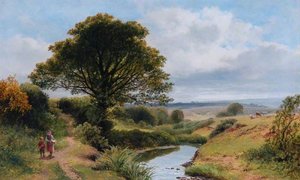
Landscape in the Glaslyn Valley is a work by the English painter James Peel. Created about 1877, this oil on canvas presents a quiet, natural scene that captures the essence of a specific topography. The composition focuses on the interplay between the ruggedness of the mountains and the steady presence of the river valley below.

2
The Tinker (1842) (autor) James Peel

The Tinker

1842 · Oil · Darlington Library, Darlington

A man and a child occupy the foreground of this 1842 composition, positioned before a building with a single visible window. The man, likely a traveling tinker, sits on the ground amidst his tools, holding a bucket. His posture suggests a brief respite from the labor of his trade. Nearby, a suitcase rests in the lower left corner, while a chair and a bowl sit close to the central figure.…

3
Snowdon (1870) (autor) James Peel

Snowdon

We are looking at Snowdon, a work by James Peel dating from 1870. This piece reflects the artist's deep connection to the landscapes of the United Kingdom, particularly the rugged terrains of Wales. Peel was born in Newcastle upon Tyne, United Kingdom, and his career was defined by a sincere, naturalistic approach to the British countryside. He spent much of his life observing the subtle shifts in light and atmosphere…

5
Landscape with a River (1877) (autor) James Peel

Landscape with a River

1877 · Oil On Canvas

Landscape with a River is a work by the English painter James Peel. Created in 1877, the painting captures a serene countryside scene featuring a church positioned in the background. The composition focuses on a peaceful atmosphere where trees surround the structure and five cows graze near the water's edge.

6
Pont y Pant and the Lledr Valley (1877) (autor) James Peel

Pont y Pant and the Lledr Valley

1877 · Oil On Canvas · Laing Art Gallery, Newcastle upon Tyne

Pont y Pant and the Lledr Valley is a landscape painting by the English artist James Peel. Created in 1877, the work captures a specific corner of the Welsh countryside. The scene focuses on a valley where the river flows through the center of the composition. Mountains rise in the background, framing the terrain.

James Peel maalid, järjestus 11 kuni 41

Teemad, mis püüdisid James Peel pilma

Neli teemat, mis esinevad neis originaalkindel kõige sagedamini, ning iga teema parim näide.

Muuseumid, kus on säilitatud James Peel originaalteosed

Kümne 8 muuseumi kollektsioonid, mis sisaldavad kõige rohkem sellel lehel esitatud teoseid.

Muuseum Linn James Peel teosed Selle nimekirja maalid
Darlington Library, DarlingtonDarlington Library Darlington 8 The Tinker, Landscape with Cows, Landscape with Fisherman
Laing Art Gallery, Newcastle upon TyneLaing Art Gallery Newcastle upon Tyne 4 Pont y Pant and the Lledr Valley, Mill near Sheppard, Devon, Cotherstone, Yorkshire
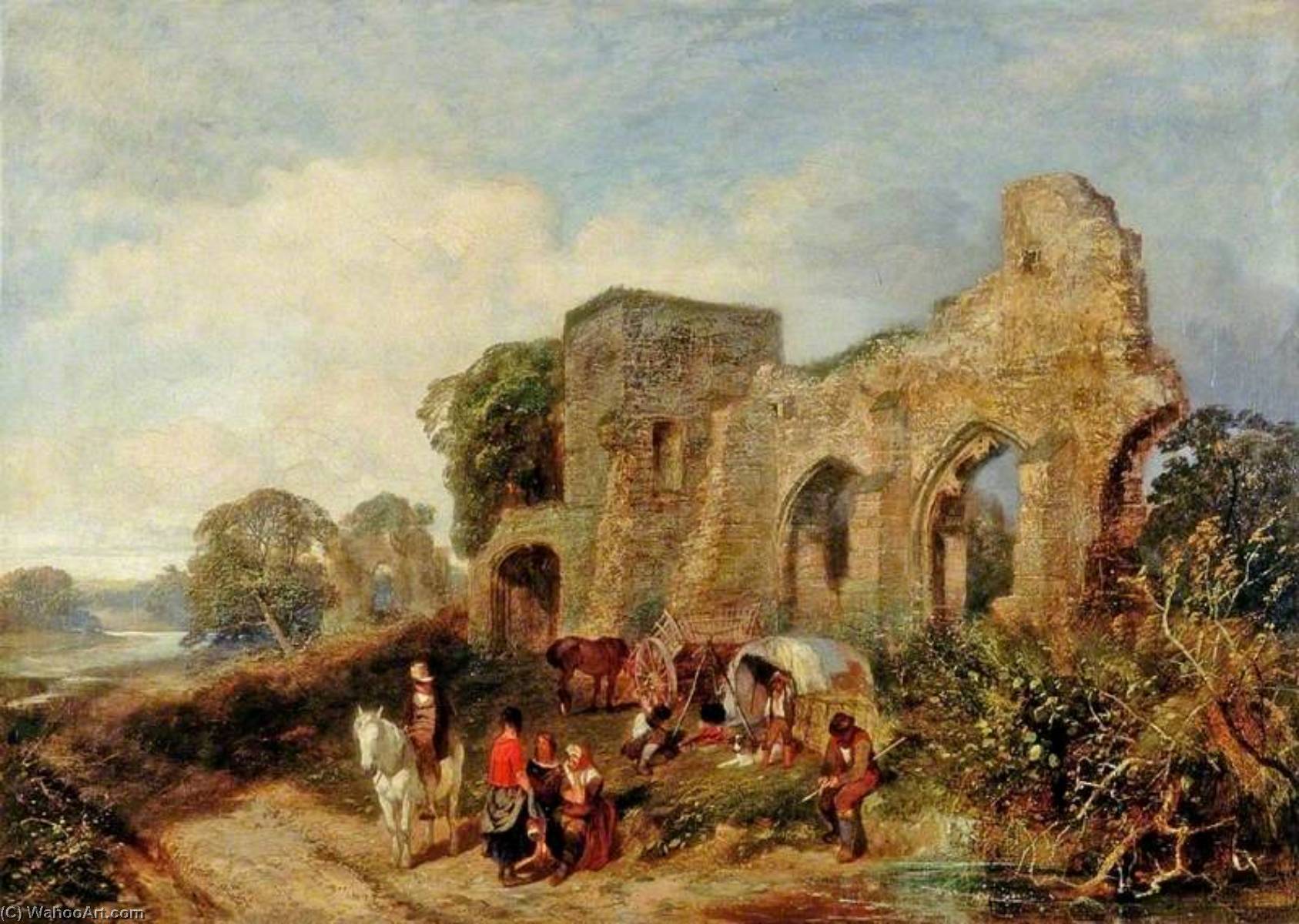
Llyfrgell Genedlaethol Cymru / The National Library of Wales, AberystwythLlyfrgell Genedlaethol Cymru / The National Library of Wales Aberystwyth 3 Snowdon, Hauling Logs near Rhuddlan Castle, Moel Siabod, North Wales
Sunderland Museum - Winter Gardens, SunderlandSunderland Museum - Winter Gardens Sunderland 3 Landscape in Cumberland, Sunrise on Loughrigg, Cumbria, Borrowdale, Cumbria
Harris Museum - Art Gallery, PrestonHarris Museum - Art Gallery Preston 1 Totteridge, near Hampstead
Campbeltown Museum, CampbeltownCampbeltown Museum Campbeltown 1 James McAllister Hall ( )
Wolverhampton Art Gallery, WolverhamptonWolverhampton Art Gallery Wolverhampton 1 Near Rosthwaite
Leeds Art Gallery, LeedsLeeds Art Gallery Leeds 1 Cyfyng Falls

James Peel, iga kümnendiga üks signatuurpilt

Teosed aastakate kaupa

Vali vuosakülg, et näha selle ajastu definieerivat originaalteost.

James Peel maalid: galerii vastused

Milline James Peel maal on kõige kuulsam?Paljasta vastus

Landscape in the Glaslyn Valley (1877). Järgnevad The Tinker (1842) ja Snowdon (1870).

Kui vana James Peel oli teose Landscape in the Glaslyn Valley valmimisel?Paljasta vastus

66 aastat vanus: teos Landscape in the Glaslyn Valley on pärinev aastast 1877 ning James Peel sündis aastal 1811.

Millised on James Peel top 10 maali?Paljasta vastus

Landscape in the Glaslyn Valley, The Tinker, Snowdon, Hauling Logs near Rhuddlan Castle, Landscape with a River, Pont y Pant and the Lledr Valley, Landscape River and Mountains, Totteridge, near Hampstead, Landscape ja Landscape with Cows. Ülemine reiting näitab iga teose puhul aastat ja muuseumi.

Kui palju teoseid James Peel lõi?Paljasta vastus

Meie kataloogist leiate 41 teost kunstnikult James Peel, mis on pärinevad ajastust 1842 kuni 1900.

Kust leiad James Peel kõige kuulsamad originaalteosed?Paljasta vastus

Peamiselt Darlington Library (Darlington), Laing Art Gallery (Newcastle upon Tyne) ja Llyfrgell Genedlaethol Cymru / The National Library of Wales (Aberystwyth) muuseumites. Ülalpool olevate muuseumite tabelis on nendest kõik loetletud.

Millal lõi James Peel oma kuulsamad maalid?Paljasta vastus

Ajal 1870s: 6 41 sellel lehel olevat teost on sellel perioodil loodud, sellest Landscape in the Glaslyn Valley.

Millised on James Peel varased ja hilised kuulsad teosed?Paljasta vastus

Sellel lehel on kõige vanem teos The Tinker (1842) ja kõige värskeim Landscape River and Mountains (1900).

Millist teemat James Peel kõige rohkem käsitledas?Paljasta vastus

Landscape (5), River (4) ja Trees (3), kogu selle lehekülje 41 teose kohta.

Millises tehnikas töötas James Peel kõige rohkem?Paljasta vastus

Oil On Canvas, 4 teoseks 41 töödelt sellel lehel.

Millise suunaga on James Peel seotud?Paljasta vastus

Romanticism, seda lähtudes selle lehe originaalteostest.

Milliseid James Peel originaalte Darlington Library kogumuses on?Paljasta vastus

The Tinker, Landscape with Cows ja Landscape with Fisherman: Darlington Library, Darlington säilitab 8 selle lehel olevat teost.

James Peel: kunstnik

James Peel: A Painter of Northern Light

Born in Newcastle upon Tyne in 1811, James Peel’s life and artistic journey were inextricably linked to the rugged beauty of northern England – specifically, Northumberland, Yorkshire, and Wales. His early years, steeped in the industrial heritage of his father's woollen drapery business, provided a grounding in observation and an appreciation for the changing landscapes around him. Unlike many artists of his era who sought grand, idealized vistas, Peel’s work possessed a remarkable intimacy, capturing not just the scenery but also the subtle textures, atmospheric conditions, and quiet rhythms of rural life. His artistic development was nurtured by Alexander Dalziel, a skilled wood engraver, who recognized Peel's innate talent for drawing and encouraged his pursuit of painting.

Peel’s formal training began at Bruce’s School in Newcastle, where he honed his skills alongside notable figures like Sir Charles Mark Palmer and John Collingwood Bruce. However, it was a move to London in 1840 that truly propelled his career forward. Initially drawn to portraiture – producing striking copies of works by Wilkie Collins, including ‘Blind Fiddler’ and ‘The Village Festival,’ both housed within the National Gallery – Peel soon gravitated towards landscape painting. This shift reflected a deeper connection with the natural world, an impulse he would consistently pursue throughout his career.

A Palette of Northern Moods

Peel's artistic style is characterized by a remarkable sensitivity to light and atmosphere. He wasn’t interested in dramatic sunsets or sweeping vistas; instead, he meticulously rendered the subtle shifts in color and tone that defined the northern skies – the bruised purples of impending rain, the hazy greys of misty mornings, and the golden hues of late afternoon. His brushwork was precise yet fluid, conveying a sense of immediacy and spontaneity. He frequently depicted scenes of everyday rural life: shepherds tending their flocks, farmers working in their fields, and villagers engaged in their routines. These weren’t romanticized depictions; they were honest portrayals of a hardworking people living in harmony with the land.

A key element of Peel's technique was his masterful rendering of trees – an obsession that became almost synonymous with his name. He possessed an extraordinary ability to capture their intricate forms, the play of light and shadow on their bark, and the way they stood sentinel against the sky. Works like ‘A Lane in Berwickshire’ and ‘Cotherstone, Yorkshire,’ now residing in the Laing Art Gallery in Newcastle, exemplify this skill, showcasing a deep understanding of tree structure and an almost tactile quality to his brushstrokes.

Royal Recognition and Artistic Circles

Peel's dedication and talent quickly gained him recognition within the established art world. He began exhibiting at the Royal Academy in 1843 and subsequently joined the Royal Society of British Artists, a prestigious organization that championed English landscape painting. His work was consistently praised for its sincerity, technical skill, and evocative portrayal of northern landscapes. He wasn’t merely documenting scenery; he was conveying a feeling – a sense of quiet contemplation, rustic charm, and deep connection to the land.

Peel's artistic circle extended beyond the Royal Academy. He actively participated in “free” exhibitions organized by figures like Ford Madox Brown and William Bell Scott, challenging the established norms of the art market and advocating for greater accessibility to art. These initiatives demonstrated his commitment to fostering a vibrant and inclusive artistic community.

Legacy and Enduring Appeal

James Peel died in Reading in 1906, leaving behind a substantial body of work that continues to resonate with viewers today. His paintings are not grand statements but intimate glimpses into the heart of northern England – a region he loved deeply and captured with remarkable honesty and skill. His influence can be seen in subsequent generations of landscape artists who sought to emulate his sensitivity to light, his meticulous technique, and his profound appreciation for the beauty of the natural world.

Peel’s legacy extends beyond his artistic achievements. He represents a pivotal moment in British art history – a time when landscape painting moved away from idealized representations and embraced a more direct and personal approach. His work serves as a reminder that true artistry lies not just in technical skill but also in the ability to capture the essence of a place and its people.