Herbert Bayer portree

23 kulubumatamatum Herbert Bayer maali, galeriiselektsioon

Uuendatud november 2026 · järjestatud meie populaarsusindeksi järgi (otsingud, külastused ja tellimused igale teosele) · 33 teost Herbert Bayer meie kataloogis

Lühidalt

Kõigist Herbert Bayer jäetud originaalteostest on kõige kuulsam The News That's Never Read, from the Early Series (1939). Järgnevad sellest Iron Winding Stair (1928) ja The limits of my language mean the limits of my world. Ludwig Wittgenstein, Tractatus logigo philosphicus, 1922. From the series Great Ideas of Western Man (1979). Meie kataloogist löytyb 33 teost kunstnikult Herbert Bayer; galeriist on säilitatud 23 maailmas kõige imetlustunud teost, millest iga on esitatud koos kuupäeva, museumi ja oma luguga.

1900 – 1985, Haag am Hausruck Enamama teoseid: Städel Museum

Herbert Bayer top 10 maalist: galeriis valitud teosed

1
The News That's Never Read, from the Early Series (1939) (autor) Herbert Bayer

The News That's Never Read, from the Early Series

1939 · Painting

In this 1939 work from the early series, we find ourselves looking at a scene of profound stillness. The composition centers on a stack of newspapers, their headlines declaring "The News That's Never Read." It is a heavy, physical presence of paper, piled haphazardly, accompanied by a simple box of tissues. The monochromatic palette strips away the distractions of color, leaving us with a stark, almost clinical view of domestic…

2
Iron Winding Stair (1928) (autor) Herbert Bayer

Iron Winding Stair

1928 · Gelatin Silver Print

In this work, titled Iron Winding Stair, we encounter a precise study of form and structure created by Herbert Bayer. The piece dates from about 1928, a period when the artist was deeply engaged with the principles of modern design. It captures a functional architectural element, transforming a simple winding staircase into a subject of geometric investigation.

3
The limits of my language mean the limits of my world. Ludwig Wittgenstein, Tractatus logigo philosphicus, 1922. From the series Great Ideas of Western Man (1979) (autor) Herbert Bayer

The limits of my language mean the limits of my world. Ludwig Wittgenstein, Tractatus logigo philosphicus, 1922. From the series Great Ideas of Western Man

1979 · Painting

The work titled The limits of my language mean the limits of my world. Ludwig Wittgenstein, Tractatus logigo philosphicus, 1922. From the series Great Ideas of Western Man is a creation by the artist Herbert Bayer. It emerged from the Great Ideas of Western Man advertising campaign, a project spanning the years 1950 to 1975. This specific piece was created about 1979.

4
Paperboard Packs a Mighty Wallop, from the Early Series (1942) (autor) Herbert Bayer

Paperboard Packs a Mighty Wallop, from the Early Series

1942 · Pencil

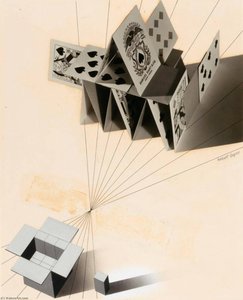
The scene unfolds within the lines of Paperboard Packs a Mighty Wallop, from the Early Series. This work emerges from the hand of Herbert Bayer, an artist whose origins trace back to Haag am Hausruck, Austria, in 1900. The image captures a moment of tension and logistical urgency, frozen in time as the world experiences the shifts of the early 1940s. It dates to about 1942, a period when the…

Kunstianikut Herbert Bayer nimekiri jätkub, 11 kuni 23

11Ugly Duckling of the Office, from the Early Series (1939) (autor) Herbert BayerUgly Duckling of the Office, from the Early Series1939 12Weakness into Strength, from the Early Series (1941) (autor) Herbert BayerWeakness into Strength, from the Early Series1941 13Destiny of an Old Directory, from the Early Series (1939) (autor) Herbert BayerDestiny of an Old Directory, from the Early Series1939 14Paperboard that goes to war is paper that wasn't burned. From the Early Series (1942) (autor) Herbert BayerPaperboard that goes to war is paper that wasn't burned. From the Early Series1942 15Fire Steals Too Much of an Important Resource, from the Early Series (1942) (autor) Herbert BayerFire Steals Too Much of an Important Resource, from the Early Series1942 16(Seven Convolutions, portfolio) (1948) (autor) Herbert Bayer(Seven Convolutions, portfolio)1948 17I hold that while man exists it is his duty to improve not only his own condition but to assist in ameliorating mankind. Abraham Lincoln on Man's Responsibility. From the series Great Ideas of Western Man (1956) (autor) Herbert BayerI hold that while man exists it is his duty to improve not only his own condition but to assist in ameliorating mankind. Abraham Lincoln on Man's Responsibility. From the series Great Ideas of Western Man1956 18Every new opinion, at its starting, is precisely in a minority of one. Thomas Carlyle, Heroes and Hero Worship, II, 1840, lecture in London, May 8. From the series Great Ideas of Western Man (1961) (autor) Herbert BayerEvery new opinion, at its starting, is precisely in a minority of one. Thomas Carlyle, Heroes and Hero Worship, II, 1840, lecture in London, May 8. From the series Great Ideas of Western Man1961 19God made the world and all things therein.and has made of one blood all nations of men for to dwell on the face of the earth. St. Paul. Fromthe series Great Ideas of Western Man (1958) (autor) Herbert BayerGod made the world and all things therein.and has made of one blood all nations of men for to dwell on the face of the earth. St. Paul. Fromthe series Great Ideas of Western Man1958 20The art of progress is to preserve order amid change and to preserve change amid order. Alfred North Whitehead (1861 1947). From the series Great Ideas of Western Man (1964) (autor) Herbert BayerThe art of progress is to preserve order amid change and to preserve change amid order. Alfred North Whitehead (1861 1947). From the series Great Ideas of Western Man1964 21Reason Is Language, Logos. Johann Georg Hamann (1730 1738). From the series Great Ideas (1966) (autor) Herbert BayerReason Is Language, Logos. Johann Georg Hamann (1730 1738). From the series Great Ideas1966 22Articulated Wall (autor) Herbert BayerArticulated WallRuta de la Amistad Patronato Ruta de la Amistad A.C. 23The things that will destroy America are prosperity at any price, peace at any price, safety first instead of duty first, and love of soft living and the get rich quick theory of life. Theodore Roosevelt. From the series Great Ideas of Western Man (1959) (autor) Herbert BayerThe things that will destroy America are prosperity at any price, peace at any price, safety first instead of duty first, and love of soft living and the get rich quick theory of life. Theodore Roosevelt. From the series Great Ideas of Western Man1959

Teemad, mis püüdisid Herbert Bayer pilma

Neli teemat, mis esinevad neis originaalkindel kõige sagedamini, ning iga teema parim näide.

Muuseumid, kus on säilitatud Herbert Bayer originaalteosed

Kümne 3 muuseumi kollektsioonid, mis sisaldavad kõige rohkem sellel lehel esitatud teoseid.

Muuseum Linn Herbert Bayer teosed Selle nimekirja maalid
Städel Museum, FrankfurtStädel Museum Frankfurt 1 Sundeck
Lentos Kunstmuseum Linz, LinzLentos Kunstmuseum Linz Linz 1 Selfportrait
Ruta de la Amistad Patronato Ruta de la Amistad A.C., Mexico CityRuta de la Amistad Patronato Ruta de la Amistad A.C. Mexico City 1 Articulated Wall

Herbert Bayer aastak aegades: originaalteos, mis määratleb iga ajastu

Teosed aastakate kaupa

Vali vuosakülg, et näha selle ajastu definieerivat originaalteost.

Sammlajate küsimused Herbert Bayer maalide kohta

Millise teosega on Herbert Bayer kõige kuulsam?Paljasta vastus

The News That's Never Read, from the Early Series (1939). Järgnevad Iron Winding Stair (1928) ja The limits of my language mean the limits of my world. Ludwig Wittgenstein, Tractatus logigo philosphicus, 1922. From the series Great Ideas of Western Man (1979).

Kui vana oli Herbert Bayer, kui teos The News That's Never Read, from the Early Series loodi?Paljasta vastus

39 aastat vanus: teos The News That's Never Read, from the Early Series on pärinev aastast 1939 ning Herbert Bayer sündis aastal 1900.

Millised on kümne kõige kuulsama Herbert Bayer maalid?Paljasta vastus

The News That's Never Read, from the Early Series, Iron Winding Stair, The limits of my language mean the limits of my world. Ludwig Wittgenstein, Tractatus logigo philosphicus, 1922. From the series Great Ideas of Western Man, Paperboard Packs a Mighty Wallop, from the Early Series, Sundeck, Selfportrait, Billions of Powdered Eggs, from the Early Series, Strength Out of Straw, from the Early Series, Waste Paper to Package, from the Early Series ja Aim High from the Early Series. Ülemine reiting näitab iga teose puhul aastat ja muuseumi.

Kui palju maali Herbert Bayer jäeti?Paljasta vastus

Meie kataloogist leiate 33 teost kunstnikult Herbert Bayer, mis on pärinevad ajastust 1928 kuni 1979.

Mitteks muuseumides rihangavad Herbert Bayer meistriteosed?Paljasta vastus

Peamiselt Städel Museum (Frankfurt), Lentos Kunstmuseum Linz (Linz) ja Ruta de la Amistad Patronato Ruta de la Amistad A.C. (Mexico City) muuseumites. Ülalpool olevate muuseumite tabelis on nendest kõik loetletud.

Millah aastades maalas Herbert Bayer oma kuulsamaid teoseid?Paljasta vastus

Ajal 1940s: 8 23 sellel lehel olevat teost on sellel perioodil loodud, sellest Paperboard Packs a Mighty Wallop, from the Early Series.

Mis on Herbert Bayer esimene ja viimane kuuls fama originaalteos?Paljasta vastus

Sellel lehel on kõige vanem teos Iron Winding Stair (1928) ja kõige värskeim The limits of my language mean the limits of my world. Ludwig Wittgenstein, Tractatus logigo philosphicus, 1922. From the series Great Ideas of Western Man (1979).

Milliseid teemasid Herbert Bayer kõige sagedamini valis?Paljasta vastus

Black and white (3), Abstract composition (2) ja Men (2), kogu selle lehekülje 23 teose kohta.

Millist tehnikat kasutas Herbert Bayer kõige rohkem?Paljasta vastus

Painting, 2 teoseks 23 töödelt sellel lehel.

Herbert Bayer: elu ja looming

Herbert Bayer: Minimalistse visiooni arhitekt

Herbert Bayer (1900–1985) seisab 20. sajandi kunstis ja disainis ainulaadse näguena, olles võtmetäeline sild Bauhause radikaalse eksperimentaatilise vaimu ja ameerika kultuuri kujundanud kasvava modernismi vahel. Sündinud Haagis, Kroatias (kuigi hiljem peetis end eelkõigimalt austrialaseks), oli Bayeri elu kunstiline taaskujundus, mida isutas vääramatu lihtsustuspüüdlus ning sügav mõju tippograafiale, arhitektuurile ja korporatiivsele identiteedile. Tema teekond õpilasest Georg Schmidthammer juures Bauhause trükitegevuse direktori rolli, sealt edasi *Vogue* kunstidirektoriks ja lõpuks Atlantic Richfield Company (ARCO) visuaalse keele kujundajaks, paljastab kunstniku, kes kohandus pidevalt ja laiendas oma käsitöö piire.

Bayeri varajane koolitus Weimar Bauhausis oli vundamentne. Immergeerudes kooli filosoofiasse „vorm järgneb funktsioonile“, omastas ta kiiresti Walter Gropius poolt edendatud reduktiivse disaini põhimõtteid. Kuid tema lähenemist ei määranud pelgalt noudamine väljakujunenud doktriinidele; Bayeril oli unikaalselt intuitiivne tunnetus visuaalse kommunikatsioonist aru saamiseks. Ta eksperimenteeris tippograafiaga, lükates kõrvale traditsioonilistest hierarhiatest ja omaklustades julget, täielikult väikestest tähedest koosnevat sans-serif stiili – see oli teadlik kõrvalekaldumine ajastu konventsioonidest. See „universaalne alamärk“, mis loodi 1925. aastal, kuid ei saanud kunagi täielikult kommertssena trükivormina realiseeruks, on jäänud tema pärandi nurgakiviks, mõjutades hilisemaid trükidesjaid nagu ITC Bauhaus ja Architype Bayer.

Bauhausie pärand: Tippograafia ja enemap

Bayeri töö Bauhausis oli iseloomulik vankumatule pühendumisele selgusele ja tõhususele. Ta kujundas hoolikalt kooli väljaanded, kasutades teravat, geomeetrilist sans-ilt ilma trükivormi, mis eelistas loetavust ja vähendas visuaalset segadust. See lähenemine lahendus üle tippograafia; ta uuris graafilise disaini põhimõtteid, proponentina toimides minimalistlikule esteetikale, mis oli juurdunud geomeetrisse abstraktsiooni. Tema loomingud ei olnud pelgalt dekoratiivsed, vaid toimisid tõhsa kommunikatsiooni tööriistadena – filosoofiana, mis oli sügavalt sisse sureeritud Bauhause eetika.

Lبtudes Saksamaalt 1937. aastal natsismi tõusu tõttu, leidis Bayer uusi võimalusi Berliinis ja hiljem Ameerikas. Ta liitus *Vogue* ajakirja Berliini kontoriga, jätkates oma modernsete disainipõhimõtete uurimist. Tema aeg Ameerika Ühendustes märgis kuju muutumist korporatiivse kunstijuhini, mis saavutas oma 峰punkti mõjuvalikus rollis ARCOs. See periood nägi tema poolt ettevõtte visuaalse identiteedi transformatsiooni, luues sofisteetset ja koheselt loetavat brändi läbi silmapaistva tippograafia, arhitektuursete projektide ja meeldejäävate logode kombinatsiooni.

ARCO ja korporatiivne kunstikogu

Bayeri ametiaeg Atlantic Richfield Company (ARCO) kunstidirektorina esindab ehk tema kõige olulisemat ja püsivamat saavutust. Tunnustades visuaalse kommunikatsiooni võimekust korporatiivset kultuuri mõjutada, kogus ta üks maailma suurimaid ja mõjuvamaid korporatiivseid kunstikolektsioone. Ta ei osonud pelgalt kunstiteoste ostja; ta kujundas keskkonna, mis peegeldas ettevõtte väärtusi – innovatsiooni, dünaamikat ja edudirulikult vaadatavat perspektiivi.

Tema mõju laaudunud üle valimise; Bayer kujundas Los Angelesis asuva ARCO Plaza peakkontori, integreerides oma nimekirja minimalistliku esteetika ehituse arhitektuuri. Ta lõi ka ikoonilisi visuaalseid elemente ettevõttele, sealhulgas selle logo ja reklaanimaterjalid. „Double Ascension“ allikas ARCO Plaza kaksikuttornide vahel seisab kui tunnistus tema loovvisiooni ja püsiva pärandi eest korporatiivses maailmas.

Püsiv mõju: Minimalism ja enemap

Herbert Bayeri mõju 20. sajandi disainile on järeleidamatut. Tema uuendusmeelne töö tippograafiaga, eriti täielikult väikestest tähedest koosneva sans-serif trükivormi arendamine, mõjutab disainereid siiani. Tema reduktiivne esteetika – mida iseloomustavad lihtsus, selgus ja geomeetriline abstraktsioon – pani aluse liikumetele nagu minimalistsus ja šwiitsistiil.

Lisaks konkreetsetele tehnikatele on Bayeri disainilähenemine – fookus funktsionaalsusele, kommunikatsioonile ja visuaalsele mõjule – jäänud hämmastavalt asjakohaseks meie üha keerukamavas maailmas. Ta tõi esile, et hea disain ei tähendagi ornamentika; see tähendab tähenduslihide loomist ideede ja publiku vahel. Tema pärand elab mitte ainult läbi tema ikooniliste loomingute, vaid ka kui inspiratsioon genetsionidele kunstnikest ja disaineritest, kes soovivad kujundada visuaalselt veenvamat tulevikku.