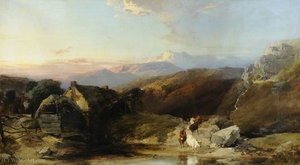
Henry Bright portree

Henry Bright maalid: 49 kuulsumat teost galeriin läbi

Uuendatud november 2026 · järjestatud meie populaarsusindeksi järgi (otsingud, külastused ja tellimused igale teosele) · 49 teost Henry Bright meie kataloogis

Lühidalt

Galleriist vaadatuna on Henry Bright kõige kuulsam teos Orford castle, suffolk, mille originaal ripub Norfolk Museums-is, Norwich. Windmill at Sheringham, Norfolk ja Landscape with a Windmill and Cattle täidavad kolmikut, mille iga silm tunnistab. Kunstnii Henry Bright 49 teose põhjal esitleb galeriis allpool 49 kõige kuulsumat, kus iga originaal on märgitud aastaga, muuseumiga ja kirjeldatud, mis teeb selle unikaalseks.

1810 – 1873, Saxmundham Romanticism Enamama teoseid: Norfolk Museums

Galeria 10 parimat Henry Bright maali

1
Orford castle, suffolk autor Henry Bright

Orford castle, suffolk

Oil · Norfolk Museums, Norwich

In the painting Orford castle, suffolk, the English landscape painter Henry Bright presents a coastal scene centered on a large stone structure. This castle occupies the background, positioned beneath a sky filled with heavy, cloudy formations. The architecture of the fortification provides a solid, vertical contrast to the horizontal expanse of the beach in the foreground. The light across the scene is filtered through this cloud cover, casting a muted…

2
Windmill at Sheringham, Norfolk autor Henry Bright

Windmill at Sheringham, Norfolk

Oil

In "Windmill at Sheringham, Norfolk," Henry Bright captures a quiet moment within the English countryside. The scene centers on a windmill rising from the heart of a wide field, its structure reaching toward a vast, cloudy sky. Two sails rest atop the mill, one larger than the other, while two smaller sails sit further down the body of the machine. This structure anchors the landscape, acting as a silent witness…

3
Landscape with a Windmill and Cattle autor Henry Bright

Landscape with a Windmill and Cattle

Landscape with a Windmill and Cattle by Henry Bright presents a rural scene centered on a windmill positioned in the foreground. The structure occupies a prominent space within the composition, surrounded by a field of grass. Several cows are scattered throughout the landscape, with some animals grazing in close proximity to the windmill while others are situated further into the field. These cattle are depicted amidst the greenery, moving through…

Henry Bright maalid, järjestus 11 kuni 49

Teemad, mis püüdisid Henry Bright pilma

Neli teemat, mis esinevad neis originaalkindel kõige sagedamini, ning iga teema parim näide.

Muuseumid, kus on säilitatud Henry Bright originaalteosed

Kümne 4 muuseumi kollektsioonid, mis sisaldavad kõige rohkem sellel lehel esitatud teoseid.

Muuseumid Linn Henry Bright teosid Selle nimekirja maalid
Norfolk Museums, NorwichNorfolk Museums Norwich 1 Orford castle, suffolk
Yale Center for British Art, New HavenYale Center for British Art New Haven 1 On the Norfolk Broad
Rahvuslik Mereväemuuseum, LondonRahvuslik Mereväemuuseum London 1 On the French Coast
Anglesey AbbeyAnglesey Abbey 1 Landwade hall, cambridgeshire

Henry Bright, iga aasta esindavad teosed

Kõik sellel lehel asuvad Henry Bright originaalteosed on loodud aastal 1855: siin on need, kõige kuulsemad esimesena.

Teosed aasta kaupa

Vali aasta, et näha originaale.

Henry Bright maalid: galerii vastused

Milline Henry Bright maal on kõige kuulsam?Paljasta vastus

Orford castle, suffolk, Norfolk Museums, Norwich. Järgnevad Windmill at Sheringham, Norfolk ja Landscape with a Windmill and Cattle.

Millised on Henry Bright top 10 maali?Paljasta vastus

Orford castle, suffolk, Windmill at Sheringham, Norfolk, Landscape with a Windmill and Cattle, On the Norfolk Broad, Heavy weather, Wolf's crag, Coast scene, On the French Coast, Black Gang Chine, Isle of Wight ja Effect after Rain. Ülemine reiting näitab iga teose puhul aastat ja muuseumi.

Kui palju teoseid Henry Bright lõi?Paljasta vastus

Meie kataloogist leibab 49 teost kunstnikult Henry Bright.

Kust leiad Henry Bright kõige kuulsamad originaalteosed?Paljasta vastus

Peamiselt Norfolk Museums (Norwich), Yale Center for British Art (New Haven) ja Rahvuslik Mereväemuuseum (London) muuseumites. Ülalpool olevate muuseumite tabelis on nendest kõik loetletud.

Millist teemat Henry Bright kõige rohkem käsitledas?Paljasta vastus

Landscape (14), Beach (8) ja Scenes (6), kogu selle lehekülje 49 teose kohta.

Millises tehnikas töötas Henry Bright kõige rohkem?Paljasta vastus

Oil, 2 teoseks 49 töödelt sellel lehel.

Millise suunaga on Henry Bright seotud?Paljasta vastus

Romanticism, seda lähtudes selle lehe originaalteostest.

Henry Bright: kunstnik

The Quiet Elegance of Henry Bright

In the heart of the nineteenth century, a period defined by rapid industrial transformation, the works of Henry Bright offered a sanctuary of stillness and pastoral grace. Born in 1812 in the tranquil town of Saxmundham, Suffolk, Bright was a child of the English countryside, a heritage that would later manifest in his profound ability to capture the soul of the landscape. His early life was not one of immediate artistic pursuit; rather, it was shaped by a practical apprenticeship to a chemist, first in Woodbridge and later in Norwich. It was during these formative years, amidst the measured rhythms of apothecary work, that his true passion began to emerge through the quiet habit of sketching, eventually leading him toward the prestigious Norwich School of painters.

Bright’s artistic evolution was deeply intertwined with the masters of his era. He found significant inspiration in the works of John Frederick Herring Sr., whose command over watercolor and animal subjects left an indelible mark on Bright’s technique. This influence is evident in the way Bright approached his subjects—not merely as static elements of a landscape, but as living components of a breathing ecosystem. His development was further enriched by his association with Alfred Stannard and his collaborative spirit with fellow artists like William Shayer. In these partnerships, Bright often took on the vital role of painting backgrounds, demonstrating a sophisticated understanding of atmospheric perspective and the structural depth required to make a scene feel truly immersive.

A Mastery of Atmosphere and Detail

The essence of Bright’s oeuvre lies in its understated beauty. While many of his contemporaries sought the dramatic or the monumental, Bright found greatness in the minute and the mundane. His compositions frequently feature the gentle movement of livestock, the weathered textures of old barns, and the soft light filtering through dense foliage. He possessed a rare talent for plein air observation, allowing him to translate the fleeting nuances of light and shadow onto canvas and paper with remarkable fidelity. Whether working in oil or watercolor, his palette remained rooted in the muted, earthy tones that define the English pastoral tradition.

His technical prowess is perhaps most notable in his ability to create depth through tonal variation. In works such as "Trees by a River with Cattle," one can observe how he utilizes atmospheric perspective to guide the viewer's eye from the detailed textures of the foreground into the hazy, ethereal distance. This mastery allowed him to elevate simple rural scenes into profound meditations on peace and permanence. His work often explores several key themes:

  • The Dignity of Rural Life: A focus on the harmonious coexistence of humans, animals, and nature.
  • Atmospheric Light: The use of subtle tonal shifts to capture specific times of day, from dawn to dusk.
  • Textural Realism: Meticulous rendering of organic elements like bark, water, and stone.

Legacy and Historical Significance

Beyond the canvas, Bright lived a life of multifaceted engagement, serving as a respected merchant in London, which provided him with a unique perspective on the intersection of commerce and culture. His reputation grew steadily throughout the Victorian era, earning him recognition that extended beyond the local circles of East Anglia. The historical significance of his work lies in its role as a preservation of a vanishing way of life; through his eyes, we witness the English landscape before the full weight of the industrial revolution altered its character forever.

Today, the legacy of Henry Bright is preserved in esteemed institutions such as the Norwich Castle Museum, where his paintings continue to resonate with modern viewers. His ability to evoke nostalgia and a sense of profound tranquility ensures that his contribution to the Norwich School remains vital. He did not merely paint landscapes; he captured the quiet dignity of the natural world, leaving behind a body of work that serves as a timeless testament to the beauty of the English countryside.