Henri Regnault portree

21 kulubumatamatum Henri Regnault maali, galeriiselektsioon

Uuendatud november 2026 · järjestatud meie populaarsusindeksi järgi (otsingud, külastused ja tellimused igale teosele) · 21 teost Henri Regnault meie kataloogis

Lühidalt

Kõigist Henri Regnault jäetud originaalteostest on kõige kuulsam Automedon Akillese hobjadega (1868), mis kuulub Museum of Fine Arts kogele linnas Boston. Järgnevad sellest General Juan Prim (1814-1870) (1868) ja Portrait of a Young Woman (1863). Meie kataloogist löytyb 21 teost kunstnikult Henri Regnault; galeriist on säilitatud 21 maailmas kõige imetlustunud teost, millest iga on esitatud koos kuupäeva, museumi ja oma luguga.

1843 – 1871, Pariis Romanticism Enamama teoseid: Musée d'Orsay

Henri Regnault top 10 maalist: galeriis valitud teosed

1
Automedon Akillese hobjadega (1868) (autor) Henri Regnault

Automedon Akillese hobjadega

1868 · Õlimaal kangaruumil · Museum of Fine Arts, Boston

Rüütliaja Prantsuse kunsti panteonis on väheseid teoseid, mis pakendavad ruumi nii viskeerse intensiivsusega kui Henri Regnault'i Automedon Akillese hobjadega. See 1868. aastal valminud monumentaalne meistriteos on hingedepuhas vaade romantika südamesse, kus inimvaimu ja jumaliku jõu piirid hälguvad päikeseloojese rannamaastiku keskel. Maal püüab kinni sügava võitluse ja müütilise pinge hetke, esitledes legendaarset uerersoo Automedonit, kes on vastu söörnuks Akillese võimsatele ja suurepärastele hobjadest. See ei ole pelgalt koode Iliasest; see on…

2
General Juan Prim (1814-1870) (1868) (autor) Henri Regnault

General Juan Prim (1814-1870)

1868 · Oil On Canvas · Art Institute of Chicago, Chicago

A black horse pulls its weight against a pale, shifting sky. The animal's musculature is defined by sharp, white highlights that catch the light, tracing the tension in its neck and flank. Atop this powerful creature sits General Juan Prim, a figure of stillness amidst a world of motion. He sits upright, his gaze fixed forward, meeting the viewer with a steady, unblinking presence. The palette is stripped of color,…

4
Juan Prim, October 8, 1868 (1869) (autor) Henri Regnault

Juan Prim, October 8, 1868

1869 · Oil On Canvas · Musée d'Orsay, Pariis

The work before us is titled Juan Prim, October 8, 1868, a significant oil on canvas by the French artist Henri Regnault. It was executed around 1869, capturing a moment of profound historical weight. The subject is the Spanish general and statesman Juan Prim, a figure central to the political shifts of his era. Regnault’s approach to this portrait moves beyond simple likeness, functioning as a tribute to both the…

5
Orpheus in the Underworld (1865) (autor) Henri Regnault

Orpheus in the Underworld

1865 · Oil On Canvas · Musée d'Orsay, Pariis

Orpheus in the Underworld is a work by Henri Regnault. Created in 1865, the piece captures a moment of profound mythological tension. This specific composition was submitted to the Prix de Rome in 1865, marking a significant point in the artist's early career. The subject matter draws from the ancient tales of the musician who descended into the realm of the dead.

6
Presumed portrait of the artist's brother (23 June 1859) (1859) (autor) Henri Regnault

Presumed portrait of the artist's brother (23 June 1859)

1859 · Graphite Pencil

In this intimate graphite study, we encounter Presumed portrait of the artist's brother (23 June 1859) by Henri Regnault. Created in 1859, the work offers a quiet glimpse into the artist's personal sphere. It is a portrait of a young man, captured in a moment of stillness. The subject is presumably the artist's brother, providing a rare, private connection to the man behind the more public canvases of the nineteenth…

7
The Spanish scoundrel (1868) (autor) Henri Regnault

The Spanish scoundrel

1868 · Oil On Canvas · Musée des Beaux-Arts de Dijon, Dijon

In The Spanish scoundrel by Henri Regnault, a vertical portrait focuses on the upper body of a woman. Positioned slightly off-center, the subject is captured in a close-up, eye-level view that establishes an immediate presence. She is depicted looking away from the viewer, her expression contemplative or perhaps melancholic. This averted gaze creates a sense of emotional mystery, distancing the subject from the observer while maintaining an intimate connection through…

8
Hassan Et Namouna (1870) (autor) Henri Regnault

Hassan Et Namouna

1870 · Oil On Canvas

A diagonal line pulls the eye through a room of heavy shadows and warm light. On the right, a man reclines, his body a slow curve against a mountain of cushions. To the left, a woman sits, her fingers poised over the strings of a musical instrument. The air in the room feels thick, weighted by the scent of dust and the low hum of a melody. Sunlight filters through…

9
The madrilenian (1868) (autor) Henri Regnault

The madrilenian

1868 · Watercolor

This work functions as a study of traditional Spanish costume. The man's attire and posture suggest the role of a street vendor or a porter. The sketch reflects a period of intense observation of foreign cultures, specifically the materiality of life found in Spain. The technique relies on layering diluted washes to create subtle tonal variations, a method common to 19th-century watercolor practice. The result is a document of cultural…

10
Still Life (1867) (autor) Henri Regnault

Still Life

1867 · Oil On Canvas · Musée de Grenoble, Grenoble

In "Still Life" by Henri Regnault, the canvas captures a somber aftermath. Created about 1867, the work presents a collection of dead game and furs arranged in a dense, triangular formation. A dead hare lies at the center of this quiet assembly, its limp form resting among various animal skins. These elements occupy the foreground, creating a visceral scene of the hunt's conclusion.

Kunstianikut Henri Regnault nimekiri jätkub, 11 kuni 21

Henri Regnault kuulsaimad maalid ajastult ajastule

Teemad, mis püüdisid Henri Regnault pilma

Neli teemat, mis esinevad neis originaalkindel kõige sagedamini, ning iga teema parim näide.

Muuseumid, kus on säilitatud Henri Regnault originaalteosed

Kümne 8 muuseumi kollektsioonid, mis sisaldavad kõige rohkem sellel lehel esitatud teoseid.

Muuseum Linn Henri Regnault teosed Selle nimekirja maalid
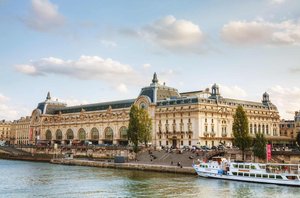
Musée d'Orsay, PariisMusée d'Orsay Pariis 4 Juan Prim, October 8, 1868, Orpheus in the Underworld, Historical scene
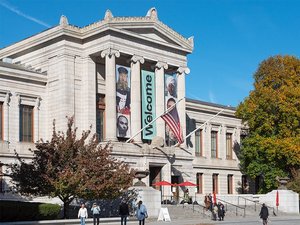
Museum of Fine Arts, BostonMuseum of Fine Arts Boston 3 Automedon Akillese hobjadega, Sketch for Automedon with the Horses of Achilles, Sketch for Automedon with the Horses of Achilles
Art Institute of Chicago, ChicagoArt Institute of Chicago Chicago 2 General Juan Prim (1814-1870), Portrait of a Young Woman
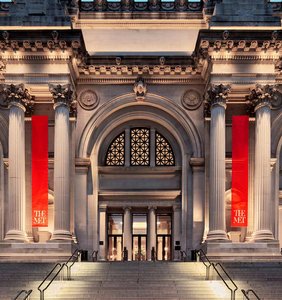
Metropolitan Museum of Art, New YorkMetropolitan Museum of Art New York 2 The spy, Salome
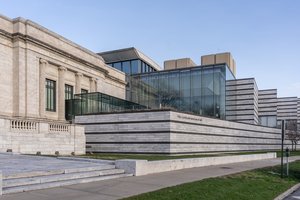
Cleveland Museum of Art, ClevelandCleveland Museum of Art Cleveland 2 Self portrait, Seated african woman
Musée des Beaux-Arts de Dijon, DijonMusée des Beaux-Arts de Dijon Dijon 1 The Spanish scoundrel
Musée de Grenoble, GrenobleMusée de Grenoble Grenoble 1 Still Life
National Gallery of Art, WashingtonNational Gallery of Art Washington 1 A Chief of Abyssinia

Henri Regnault aastak aegades: originaalteos, mis määratleb iga ajastu

Teosed aastakate kaupa

Vali vuosakülg, et näha selle ajastu definieerivat originaalteost.

Sammlajate küsimused Henri Regnault maalide kohta

Millise teosega on Henri Regnault kõige kuulsam?Paljasta vastus

Automedon Akillese hobjadega (1868), Museum of Fine Arts, Boston. Järgnevad General Juan Prim (1814-1870) (1868) ja Portrait of a Young Woman (1863).

Kui vana oli Henri Regnault, kui teos Automedon Akillese hobjadega loodi?Paljasta vastus

25 aastat vanus: teos Automedon Akillese hobjadega on pärinev aastast 1868 ning Henri Regnault sündis aastal 1843.

Millised on kümne kõige kuulsama Henri Regnault maalid?Paljasta vastus

Automedon Akillese hobjadega, General Juan Prim (1814-1870), Portrait of a Young Woman, Juan Prim, October 8, 1868, Orpheus in the Underworld, Presumed portrait of the artist's brother (23 June 1859), The Spanish scoundrel, Hassan Et Namouna, The madrilenian ja Still Life. Ülemine reiting näitab iga teose puhul aastat ja muuseumi.

Kui palju maali Henri Regnault jäeti?Paljasta vastus

Meie kataloogist leiate 21 teost kunstnikult Henri Regnault, mis on pärinevad ajastust 1859 kuni 1870.

Mitteks muuseumides rihangavad Henri Regnault meistriteosed?Paljasta vastus

Peamiselt Musée d'Orsay (Pariis), Museum of Fine Arts (Boston) ja Art Institute of Chicago (Chicago) muuseumites. Ülalpool olevate muuseumite tabelis on nendest kõik loetletud.

Millah aastades maalas Henri Regnault oma kuulsamaid teoseid?Paljasta vastus

Ajal 1860s: 10 21 sellel lehel olevat teost on sellel perioodil loodud, sellest Automedon Akillese hobjadega.

Mis on Henri Regnault esimene ja viimane kuuls fama originaalteos?Paljasta vastus

Sellel lehel on kõige vanem teos Presumed portrait of the artist's brother (23 June 1859) (1859) ja kõige värskeim Hassan Et Namouna (1870).

Milliseid teemasid Henri Regnault kõige sagedamini valis?Paljasta vastus

Man (9), Woman (5) ja Portrait (3), kogu selle lehekülje 21 teose kohta.

Millist tehnikat kasutas Henri Regnault kõige rohkem?Paljasta vastus

Oil On Canvas, 13 teoseks 21 töödelt sellel lehel.

Minge pihta kunstisuunasse, kuhu Henri Regnault kuulub?Paljasta vastus

Romanticism, seda lähtudes selle lehe originaalteostest.

Millised Henri Regnault teosed on Musée d'Orsay näituses?Paljasta vastus

Juan Prim, October 8, 1868, Orpheus in the Underworld ja Historical scene: Musée d'Orsay, Pariis säilitab 4 selle lehel olevat teost.

Henri Regnault: elu ja looming

A Brilliant Light Extinguished: The Life and Legacy of Henri Regnault

The history of nineteenth-century French art is often told through the lens of enduring movements, yet few figures embody the tragic intersection of immense promise and sudden loss as poignantly as Henri Regnault. Born in Paris in 1843 to the esteemed physicist Henri Victor Regnault, the young artist was raised within an atmosphere of intellectual rigor and scientific curiosity. This foundation of precision would later manifest in his breathtaking command over anatomical detail and light. His journey through the prestigious studios of Antoine Montfort, Louis Lamothe, and the celebrated Alexandre Cabanel provided him with a formidable academic toolkit, yet Regnault was never merely a student of tradition. He possessed an innate restlessness, a desire to push beyond the rigid boundaries of the École des Beaux-Arts to capture the visceral energy of the world around him.

Regnault’s ascent in the Parisian art world was nothing short of meteoric. The turning point of his early career arrived in 1866, when he secured the prestigious Prix de Rome. This triumph, achieved with his monumental work Thetis Bringing Vulcan’s Arms to Achilles, signaled the arrival of a master capable of blending classical grandeur with an unprecedented sense of movement and sculptural depth. While the award traditionally directed winners toward the study of antiquity in Italy, Regnault’s time in Rome and his travels through Spain and North Africa served to broaden his aesthetic horizons far beyond the classical canon. He found himself increasingly drawn to the Hispanophone-Italian school, a style that favored the materiality of life and the evocative power of capturing fleeting, everyday moments.

Mastery of the Dramatic and the Orientalist Vision

As his technique matured, Regnault’s work began to bridge the gap between academic precision and a burgeoning fascination with Orientalism and Spanish realism. He possessed a rare ability to infuse historical and biblical narratives with a contemporary, almost cinematic intensity. Nowhere is this more evident than in his most famous masterpiece, Salomé. Originally conceived as a portrait of an Italian model in Rome, the canvas underwent a dramatic transformation as Regnault expanded its scope, eventually completing it amidst the vibrant atmosphere of Tangier. The resulting painting is a sensory triumph; through disheveled hair, flowing drapery, and a palpable sense of tension, he captures the biblical temptress at the height of her seductive power, leaving viewers breathless with the sheer vitality of the brushwork.
His repertoire was remarkably diverse, reflecting a deep engagement with both the mythic and the mundane. His ability to oscillate between the epic scale of Greek mythology—seen in works like Automedon with the Horses of Achilles—and the intimate, atmospheric studies of Spanish shepherds demonstrates an artist who refused to be pigeonholed. Regnault’s eye was uniquely attuned to the dynamism of urban centers and the rugged beauty of foreign landscapes, seeking to portray humanity not as static figures in a vacuum, but as living beings caught within the swirling currents of their era. His work often featured:

  • Anatomical Precision: A profound understanding of the human form, inherited from his classical training.
  • Luminous Color Palettes: An ability to use light to create depth and emotional resonance.
  • Narrative Tension: The capacity to freeze a moment of high drama, making the mythological feel immediate and real.

A Tragic End and Lasting Significance

The trajectory of Regnault’s life was violently interrupted by the onset of the Franco-Prussian War. In a final, tragic act of devotion to his country, the artist laid down his brushes to take up arms. He fell on the field of battle in January 1871, at the tender age of twenty-seven. His death sent shockwaves through the Parisian art community, marking the loss of a talent that many believed would lead the next generation of French painters into a new era of brilliance.

Despite his short life, Regnault’s impact remains indelible. He stands as a pivotal figure who navigated the delicate transition between the structured traditions of the past and the expressive freedoms of the modern age. His works continue to captivate audiences in institutions such as The Metropolitan Museum of Art, serving as enduring testaments to a spirit that was as much about the pursuit of truth as it was about the pursuit of beauty. In the annals of art history, Henri Regnault remains a luminous star—a painter whose brief, intense flame left behind a glow that continues to illuminate the complexities of 19th-century realism and Orientalism.