Harry John Johnson portree

22 kulubumatamatum Harry John Johnson maali, galeriiselektsioon

Uuendatud november 2026 · järjestatud meie populaarsusindeksi järgi (otsingud, külastused ja tellimused igale teosele) · 22 teost Harry John Johnson meie kataloogis

Lühidalt

Kõigist Harry John Johnson jäetud originaalteostest on kõige kuulsam John Ferneley (1838), mis kuulub National Portrait Gallery kogele linnas London. Järgnevad sellest Upper Section of Great Hall Entrances (1874) ja Portrait of David Cox sketching (1844). Meie kataloogist löytyb 22 teost kunstnikult Harry John Johnson; galeriist on säilitatud 22 maailmas kõige imetlustunud teost, millest iga on esitatud koos kuupäeva, museumi ja oma luguga.

1826 – 1884, Birmingham Enamama teoseid: Alexandra Palace

Harry John Johnson top 10 maalist: galeriis valitud teosed

1
John Ferneley (1838) autor Harry John Johnson

John Ferneley

1838 · Oil · National Portrait Gallery, London

The year is 1838, and the portrait captures a sense of prestige that feels rooted in the very fabric of the nineteenth century. The subject's expression is one of quiet contemplation, as if he is caught in the middle of a profound thought. The formal nature of his dress and the meticulous rendering of his features suggest a man of standing, someone whose life is defined by the same precision…

2
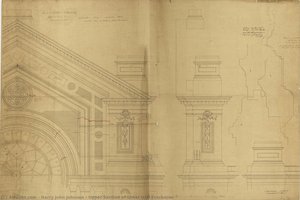
Upper Section of Great Hall Entrances (1874) autor Harry John Johnson

Upper Section of Great Hall Entrances

1874 · Drawing · Alexandra Palace, London

In this exquisite architectural drawing from 1874, we are transported to the heart of London’s architectural splendor. The Upper Section of Great Hall Entrances serves as a breathtaking window into the soul of the Alexandra Palace, capturing a moment when British design reached a pinnacle of monumental ambition. Through the meticulous hand of Harry John Johnson, the viewer is invited to gaze upward at the soaring arches and stately columns…

Kunstianikut Harry John Johnson nimekiri jätkub, 11 kuni 22

Teemad, mis püüdisid Harry John Johnson pilma

Neli teemat, mis esinevad neis originaalkindel kõige sagedamini, ning iga teema parim näide.

Muuseumid, kus on säilitatud Harry John Johnson originaalteosed

Kümne 3 muuseumi kollektsioonid, mis sisaldavad kõige rohkem sellel lehel esitatud teoseid.

Muuseumid Linn Harry John Johnson teosid Selle nimekirja maalid
Alexandra Palace, LondonAlexandra Palace London 13 Upper Section of Great Hall Entrances, Architectural Details, Elevation of the North Front
Birmingham Museum and Art Gallery, BirminghamBirmingham Museum and Art Gallery Birmingham 2 Portrait of David Cox sketching, Athens
National Portrait Gallery, LondonNational Portrait Gallery London 1 John Ferneley

Harry John Johnson aastak aegades: originaalteos, mis määratleb iga ajastu

Teosed aastakate kaupa

Vali vuosakülg, et näha selle ajastu definieerivat originaalteost.

Sammlajate küsimused Harry John Johnson maalide kohta

Millise teosega on Harry John Johnson kõige kuulsam?Paljasta vastus

John Ferneley (1838), National Portrait Gallery, London. Järgnevad Upper Section of Great Hall Entrances (1874) ja Portrait of David Cox sketching (1844).

Kui vana oli Harry John Johnson, kui teos John Ferneley loodi?Paljasta vastus

12 aastat vanus: teos John Ferneley on pärinev aastast 1838 ning Harry John Johnson sündis aastal 1826.

Millised on kümne kõige kuulsama Harry John Johnson maalid?Paljasta vastus

John Ferneley, Upper Section of Great Hall Entrances, Portrait of David Cox sketching, Architectural Details, Elevation of the North Front, Elevations of Front of Conservatory, Elevation of Fronts and Great Hall Cross Section, Elevation of the South Front, Drawing of Great Hall Entrance ja South Elevation of Refreshment Wing. Ülemine reiting näitab iga teose puhul aastat ja muuseumi.

Kui palju maali Harry John Johnson jäeti?Paljasta vastus

Meie kataloogist leiate 22 teost kunstnikult Harry John Johnson, mis on pärinevad ajastust 1838 kuni 1874.

Mitteks muuseumides rihangavad Harry John Johnson meistriteosed?Paljasta vastus

Peamiselt Alexandra Palace (London), Birmingham Museum and Art Gallery (Birmingham) ja National Portrait Gallery (London) muuseumites. Ülalpool olevate muuseumite tabelis on nendest kõik loetletud.

Millah aastades maalas Harry John Johnson oma kuulsamaid teoseid?Paljasta vastus

Ajal 1870s: 13 22 sellel lehel olevat teost on sellel perioodil loodud, მათart közül Upper Section of Great Hall Entrances.

Mis on Harry John Johnson esimene ja viimane kuuls fama originaalteos?Paljasta vastus

Sellel lehel on kõige vanem teos John Ferneley (1838) ja kõige värskeim Upper Section of Great Hall Entrances (1874).

Milliseid teemasid Harry John Johnson kõige sagedamini valis?Paljasta vastus

Architecture (3), Victorian era (3) ja Building design (2), kogu selle lehekülje 22 teose kohta.

Millised Harry John Johnson teosed on Alexandra Palace näituses?Paljasta vastus

Upper Section of Great Hall Entrances, Architectural Details ja Elevation of the North Front: Alexandra Palace, London säilitab 13 selle lehel olevat teost.

Harry John Johnson: elu ja looming

A Visionary of the Victorian Line: The Life and Legacy of Harry John Johnson

In the heart of the industrial revolution, amidst the soot and soaring ambition of Birmingham, lived a man whose pen captured the very soul of British architectural grandeur. Harry John Johnson (1826–1884) was not merely a draftsman; he was a chronicler of an era defined by its unyielding pursuit of precision and monumental scale. Born in 1826, Johnson emerged from the rigorous academic environment of the King Edward VI Grammar School, where he first mastered the mathematical foundations that would later allow him to translate complex structural engineering into delicate, breathtaking art. His intellectual journey took a unique turn at Harris Manchester College, Oxford, where his studies in theology provided a contemplative depth to his observational skills, fostering a reverence for the permanence and dignity of the structures he so meticulously documented.

Johnson’s artistry flourished within the specialized realm of architectural draughtsmanship, a discipline that demanded both technical perfection and an aesthetic eye for proportion. Serving the Birmingham Philosophical Society, he became a vital link between the conceptual blueprints of architects and the visual realization of their dreams. His work was characterized by an extraordinary command of pen and ink, a medium that allowed him to navigate the intricate shadows and sharp edges of Victorian masonry with unparalleled clarity. Through his hands, the heavy stone and iron of the nineteenth century were transformed into elegant compositions of light and line, capturing the rhythmic beauty of classical facades and the structural ingenuity of new engineering marvels.

Masterpieces of Precision and Architectural Detail

The true brilliance of Johnson’s oeuvre lies in his ability to freeze a moment of architectural triumph in time. His drawings serve as historical windows, offering us a glimpse into the splendor of structures that defined the Victorian landscape. One cannot discuss his contributions without reflecting on his celebrated works from 1874, a period where his technical mastery reached its zenith. His elevations of the South Facade Architectural Details and the South Elevation of the Refreshment Wing at Alexandra Palace stand as testament to his ability to render the monumental with an intimate touch. In these pieces, every cornice, column, and ornamental flourish is rendered with such fidelity that one can almost feel the weight of the stone and the grandeur of the palace's design.

Beyond the grand palaces, Johnson possessed a remarkable talent for capturing the delicate intersection of nature and engineering. His Elevations of Front of Conservatory showcases his ability to document the intricate glasswork and iron frameworks that were becoming hallmarks of Victorian leisure architecture. This work highlights a significant aspect of his development: the transition from purely structural documentation to an art form that celebrates the aesthetic harmony of the built environment. His legacy is defined by these specific achievements:

  • Technical Mastery: The use of fine pen and ink to achieve high-contrast shadows and intricate textures in classical masonry.
  • Historical Documentation: Providing irreplaceable visual records of iconic British landmarks like Alexandra Palace during their period of greatest significance.
  • Architectural Sensitivity: A unique ability to balance the rigid requirements of engineering accuracy with the fluid beauty of artistic composition.

Ultimately, Harry John Johnson remains a vital figure for those who appreciate the intersection of art and industry. While his name may not occupy the same spotlight as the great landscape painters of his age, his contribution to the visual history of Britain is profound. He captured the structural heartbeat of a nation in transition, leaving behind a collection of works that continue to inspire awe through their meticulous detail and their enduring celebration of Victorian architectural elegance.