Giorgio Vasari portree

100 kulubumatamatumat Giorgio Vasari maalist, millist on vaid üks

Uuendatud november 2026 · järjestatud meie populaarsusindeksi järgi (otsingud, külastused ja tellimused igale teosele) · 122 teost Giorgio Vasari meie kataloogis

Lühidalt

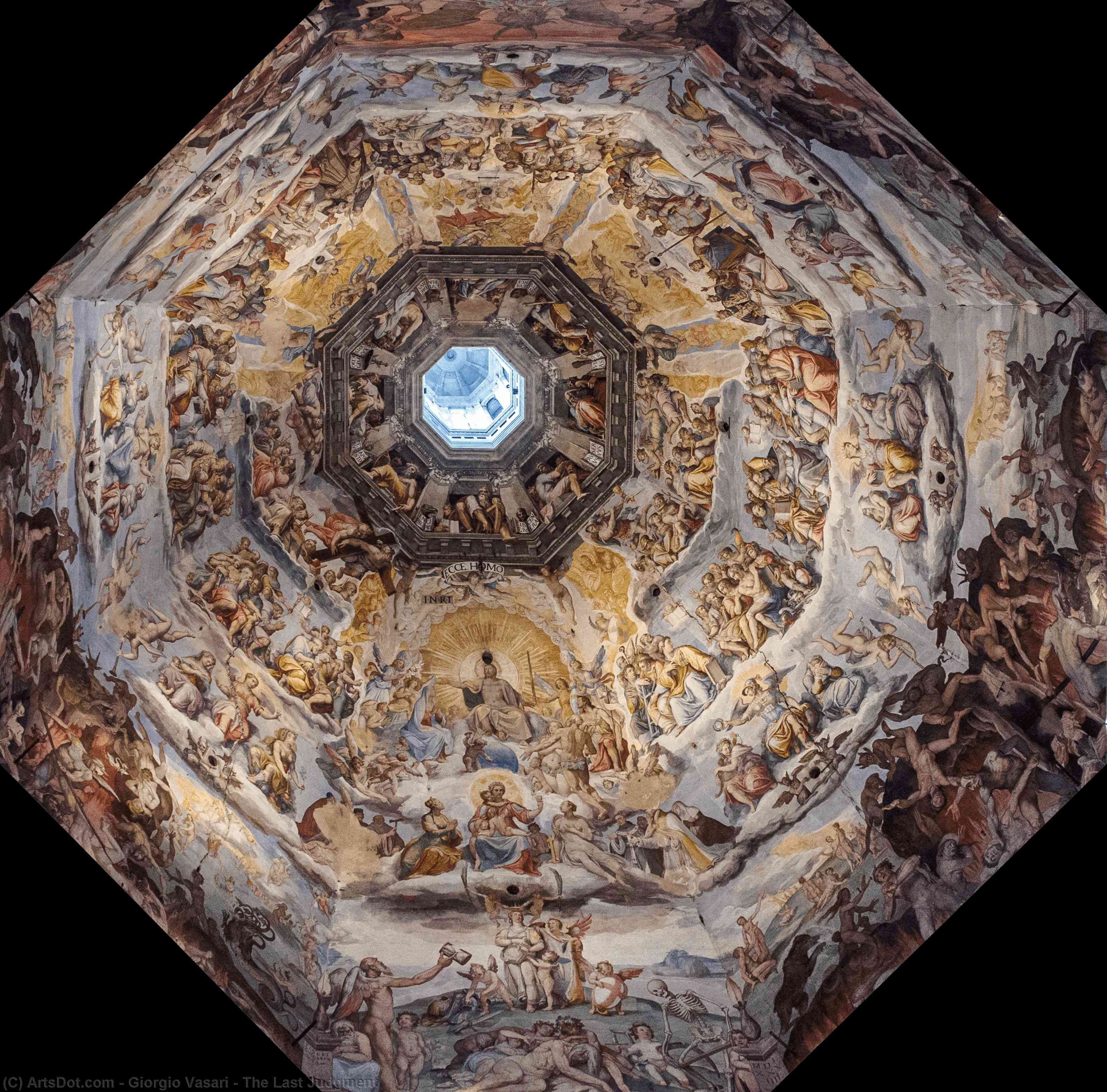
Viimane kohtupäev (detail) (1572) on Giorgio Vasari maalide kõige silmapaistvam teos; originaal kuulub museumi Duomo, Firenze. Pärast seda suunatakse pilk Allegory of Justice (1543) ja The Last Judgment (detail) (1572) suunas. Meie kataloogis olevatest Giorgio Vasari 122 teosest on need 100 kõige kuulsumat, millist igaüks on esitatud koos aasta, muuseumi ja põhjusega, miks teos on püsiv.

1511 – 1574, Arezzo Manerism Enamama teoseid: Palazzo Vecchio

Giorgio Vasari top 10 maalist galeriist vaatenurgast

1
Viimane kohtupäev (detail) (1572) autor Giorgio Vasari

Viimane kohtupäev (detail)

1572 · Fresko · Duomo, Firenze

on Giorgio Vasari kunstiteos. See konkreetne osa pakub vaatajale suunatud vaadet palju suuremale ja monumentaalsele freskoile. See püüab kinni sügava vaimse tähendusega hetke, keskendudes kohtupäeva teemale. Teos on dateeritud umbes aastale 1572.

2
Allegory of Justice (1543) autor Giorgio Vasari

Allegory of Justice

1543 · Acrylic On Canvas · Museo di Capodimonte, Neapel

Giorgio Vasari's 1543 fresco, “Allegory of Justice and Truth,” residing within the Palazzo Cancelleria in Rome, is far more than a mere decorative panel; it’s a meticulously constructed visual sermon on virtue, governance, and the very foundations of Renaissance ideals. Commissioned by Cardinal Alessandro Farnese, this monumental work transcends its initial purpose as a room decoration to become a profound meditation on the principles that underpinned the burgeoning power of…

3
The Last Judgment (detail) (1572) autor Giorgio Vasari

The Last Judgment (detail)

1572 · Acrylic On Canvas · Duomo, Firenze

Within the soaring dome of Florence’s Duomo, a monumental fresco unfolds – Giorgio Vasari and Federico Zuccari's “The Last Judgment,” completed between 1572 and 1579. More than just a depiction of biblical narrative, it is an immersive experience, a theatrical tableau of judgment, salvation, and the eternal consequences of earthly choices. The sheer scale—over 3,600 square meters—immediately overwhelms the viewer, drawing them into a world of swirling figures, dramatic light,…

4
Marriage at Cana (1566) autor Giorgio Vasari

Marriage at Cana

1566 · Oil On Canvas · Szépművészeti Múzeum, Budapest

The air in the room feels heavy with the scent of spilled wine and the heat of a crowded celebration. At the center of the commotion, a quiet miracle unfolds. Jesus Christ sits amidst the revelry, a calm presence in a sea of moving bodies and draped fabrics. Around him, the disciples and guests are caught in a moment of transition, their faces turned toward the sudden abundance of the…

5
Triumphant entrance of Leone X in Florence (1563) autor Giorgio Vasari

Triumphant entrance of Leone X in Florence

1563 · Oil On Canvas · Palazzo Vecchio, Firenze

A Florentine Spectacle: Witnessing Power and Faith Giorgio Vasari’s *Triumphant Entrance of Leone X in Florence* (1563) is a monumental oil painting that bursts with the energy of a civic celebration. This isn't merely a depiction of a procession; it’s a carefully constructed narrative of papal authority reasserting itself within the heart of Renaissance Florence. The scene unfolds with a deliberate chaos, teeming with figures – from the Pope himself…

6
Annunciation (1570) autor Giorgio Vasari

Annunciation

1570 · Acrylic On Canvas · Móra Ferenc Múzeum, Szeged

Giorgio Vasari’s 1570 Annunciation, housed within the serene confines of the Morgan Library and Museum in New York City, isn't merely a depiction of a biblical narrative; it’s a profound meditation on divine grace, humility, and the transformative power of faith. Painted during the height of the Italian Renaissance, this fresco embodies the era’s fascination with classical ideals blended seamlessly with deeply rooted Christian symbolism. Vasari, a pivotal figure in…

7
Cosimo il Vecchio as San Cosma (1559) autor Giorgio Vasari

Cosimo il Vecchio as San Cosma

1559 · Oil On Canvas · Palazzo Vecchio, Firenze

The year is 1559, and Florence pulses with the ambition of the Renaissance under the shrewd guidance of Cosimo I de’ Medici. Within the walls of the Palazzo Vecchio, a masterpiece emerges – Giorgio Vasari’s “Cosimo il Vecchio as San Cosma,” a portrait that transcends mere likeness to become a potent symbol of power, piety, and the enduring legacy of the Medici dynasty. This isn't simply a depiction of a…

8
The Last Judgment (1572) autor Giorgio Vasari

The Last Judgment

1572 · Acrylic On Canvas · Duomo, Firenze

Within the soaring dome of Florence Cathedral, a monumental fresco—known as *The Last Judgment*—commands attention, not merely for its sheer scale (spanning over 3,600 square meters), but for the profound drama it embodies. Commissioned by Grand Duke Cosimo I de’ Medici in 1572 and completed a decade later through the collaboration of Giorgio Vasari and Federico Zuccari, this work represents a pivotal moment in Renaissance art, a visual articulation of…

9
The Resurrection (1545) autor Giorgio Vasari

The Resurrection

1545 · Oil On Canvas · Museo di Capodimonte, Neapel

Giorgio Vasari's "The Resurrection," painted in 1545, isn’t merely a depiction of a biblical event; it’s a visceral embodiment of faith and the promise of rebirth. Created during the height of the Italian Renaissance, this oil-on-canvas work transcends simple religious illustration, plunging the viewer into a world of intense drama and profound spiritual significance. Vasari, already establishing himself as a pivotal figure in art history through his “Lives of Artists,”…

10
Cosimo surrounded by artists and scholars (1558) autor Giorgio Vasari

Cosimo surrounded by artists and scholars

1558 · Fresco · Palazzo Vecchio, Firenze

The scene unfolds within a grand, red-toned chamber where Cosimo surrounded by artists and scholars gathers. This fresco, painted by Giorgio Vasari, captures a moment of intense intellectual exchange. The air seems thick with the quiet energy of collaboration. Figures move through the space, some standing in the foreground while others recede into the background. It is a world of shared purpose and deep thought.

Giorgio Vasari kuulsad maalid, numbrid 11 kuni 100

11Perseus and Andromeda (1570) autor Giorgio VasariPerseus and Andromeda1570 · Palazzo Vecchio 12Allegory of the Immaculate Conception (1541) autor Giorgio VasariAllegory of the Immaculate Conception1541 · Galleria degli Uffizi 13Cosimo I de Medici surrounded by his Architects, Engineers and Sculptors (1555) autor Giorgio VasariCosimo I de Medici surrounded by his Architects, Engineers and Sculptors1555 · Palazzo Vecchio 14Façade on the Lungarno (1560) autor Giorgio VasariFaçade on the Lungarno1560 · Galleria degli Uffizi 15Ercole fanciullo strozza i serpenti (1557) autor Giorgio VasariErcole fanciullo strozza i serpenti1557 · Palazzo Vecchio 16Lorenzo il Magnifico among philosophers and scholars (1558) autor Giorgio VasariLorenzo il Magnifico among philosophers and scholars1558 · Palazzo Vecchio 17Tribute of the Nations to Paul III (1546) autor Giorgio VasariTribute of the Nations to Paul III1546 · Palazzo della Cancellaria 18Interor view (1542) autor Giorgio VasariInteror view1542 · Casa Vasari 19Martyrdom of St Stephen (1560) autor Giorgio VasariMartyrdom of St Stephen1560 · Vatikani Pinakoteek 20Interor view (1555) autor Giorgio VasariInteror view1555 · Palazzo Vecchio 21Filippo Brunelleschi and Lorenzo Ghiberti present to Cosimo the model for the San Lorenzo church (1558) autor Giorgio VasariFilippo Brunelleschi and Lorenzo Ghiberti present to Cosimo the model for the San Lorenzo church1558 · Palazzo Vecchio 22First fruits offered to Saturn (1557) autor Giorgio VasariFirst fruits offered to Saturn1557 · Palazzo Vecchio 23Sala del Cinquecento autor Giorgio VasariSala del CinquecentoPalazzo Vecchio 24Ceiling of the Sala del Cinquecento (detail) autor Giorgio VasariCeiling of the Sala del Cinquecento (detail)Palazzo Vecchio 25View of the Studiolo (1570) autor Giorgio VasariView of the Studiolo1570 · Palazzo Vecchio 26Ceiling decoration (1556) autor Giorgio VasariCeiling decoration1556 · Palazzo Vecchio 27Holy Family with Saint Francis in a Landscape (1542) autor Giorgio VasariHoly Family with Saint Francis in a Landscape1542 · Los Angeles County Museum of Art 28Judith and Holofernes (1554) autor Giorgio VasariJudith and Holofernes1554 · Saint Louis Art Museum 29Self-Portrait (1550) autor Giorgio VasariSelf-Portrait1550 · Galleria degli Uffizi 30Saint Jerome in Meditation (1550) autor Giorgio VasariSaint Jerome in Meditation1550 · Musée Fesch 31Portrait of Bernardetto de' Medici (1549) autor Giorgio VasariPortrait of Bernardetto de' Medici1549 · Bode Museum 32Ceiling decoration (1556) autor Giorgio VasariCeiling decoration1556 · Palazzo Vecchio 33Piero de' Medici called the Gouty (1556) autor Giorgio VasariPiero de' Medici called the Gouty1556 · Palazzo Vecchio 34Allegory of Romagna (1660) autor Giorgio VasariAllegory of Romagna1660 · Palazzo Vecchio 35Portrait of an old lady. (1540) autor Giorgio VasariPortrait of an old lady.1540 · Varssavi Rahvusmuuseum 36Clement VII crowns Charles V in San Petronio in Bologna (1559) autor Giorgio VasariClement VII crowns Charles V in San Petronio in Bologna1559 · Palazzo Vecchio 37The Temptation of Saint Jerome (1544) autor Giorgio VasariThe Temptation of Saint Jerome1544 · Art Institute of Chicago 38Apotheosis of Cosimo I (1565) autor Giorgio VasariApotheosis of Cosimo I1565 39The Adoration of the Magi (1567) autor Giorgio VasariThe Adoration of the Magi1567 · Scottish National Gallery 40Holy Family with John the Baptist as child (1547) autor Giorgio VasariHoly Family with John the Baptist as child1547 · Bavaria riiklikud maalidema kogumikud 41Holy family with little John the Baptist (1545) autor Giorgio VasariHoly family with little John the Baptist1545 · Bavaria riiklikud maalidema kogumikud 42Musicians (1545) autor Giorgio VasariMusicians1545 · Isabella Stewart Gardneri muuseum 43Holy Family (1546) autor Giorgio VasariHoly Family1546 · Kunsthistorisches Museum 44Battle of Barbagianni, nearby Pisa (1564) autor Giorgio VasariBattle of Barbagianni, nearby Pisa1564 · Palazzo Vecchio 45Volcano's forge (1555) autor Giorgio VasariVolcano's forge1555 46The rout of the Pisans at Torre San Vincenzo (1550) autor Giorgio VasariThe rout of the Pisans at Torre San Vincenzo1550 47The birth of Venus (1555) autor Giorgio VasariThe birth of Venus1555 48Don Giovanni and Don Garzia de' Medici (1556) autor Giorgio VasariDon Giovanni and Don Garzia de' Medici1556 49Allegory of Volterra; to the bottom, view of Lucignano (1556) autor Giorgio VasariAllegory of Volterra; to the bottom, view of Lucignano1556 50Allegory of Prato; to the bottom, view of Livorno (1557) autor Giorgio VasariAllegory of Prato; to the bottom, view of Livorno1557 51Allegory of Pistoia; to the bottom, view of Piombino (1557) autor Giorgio VasariAllegory of Pistoia; to the bottom, view of Piombino1557 52Allegory of Pisa; to the bottom, view of Siena (1557) autor Giorgio VasariAllegory of Pisa; to the bottom, view of Siena1557 53Allegory of Cortona; to the bottom, view of Montecarlo (1557) autor Giorgio VasariAllegory of Cortona; to the bottom, view of Montecarlo1557 54Allegory of Borgo San Sepolcro; to the bottom, view of Scarperia (1557) autor Giorgio VasariAllegory of Borgo San Sepolcro; to the bottom, view of Scarperia1557 55Allegory of Arezzo; to the bottom, view of Florence (1557) autor Giorgio VasariAllegory of Arezzo; to the bottom, view of Florence1557 56Portrait of Cosimo I de' Medici (1558) autor Giorgio VasariPortrait of Cosimo I de' Medici1558 · Palazzo Vecchio 57Lorenzo the Magnificent receives the tribute of the ambassadors (1556) autor Giorgio VasariLorenzo the Magnificent receives the tribute of the ambassadors1556 58Jacob's Dream (1557) autor Giorgio VasariJacob's Dream1557 · Walters Art Museum 59The Calling of Saints Peter and Andrew (1551) autor Giorgio VasariThe Calling of Saints Peter and Andrew1551 60Apostles Peter and John Blessing the People of Samaria (1557) autor Giorgio VasariApostles Peter and John Blessing the People of Samaria1557 · Gemäldegalerie 61The Head of a Bishop (possibly St Ambrose or St Donato) (1569) autor Giorgio VasariThe Head of a Bishop (possibly St Ambrose or St Donato)1569 62Marriage at Cana (1566) autor Giorgio VasariMarriage at Cana1566 · Szépművészeti Múzeum 63The storming of the fortress near Porta Camollia in Siena (1570) autor Giorgio VasariThe storming of the fortress near Porta Camollia in Siena1570 64The storming of the fortress of Stampace in Pisa (1569) autor Giorgio VasariThe storming of the fortress of Stampace in Pisa1569 · Palazzo Vecchio 65The emperor Massimiliano lifts the siege from Livorno (1569) autor Giorgio VasariThe emperor Massimiliano lifts the siege from Livorno1569 66The battle of Marciano in Val di Chiana (1570) autor Giorgio VasariThe battle of Marciano in Val di Chiana1570 67Capture of Porto Ercole (1569) autor Giorgio VasariCapture of Porto Ercole1569 68Cerere loooks for Proserpina (1558) autor Giorgio VasariCerere loooks for Proserpina1558 · Palazzo Vecchio 69Entombment (1532) autor Giorgio VasariEntombment1532 · Casa Vasari 70Paul III Farnese Names Cardinals and Distributes Benefices (1546) autor Giorgio VasariPaul III Farnese Names Cardinals and Distributes Benefices1546 · Palazzo della Cancellaria 71Three river gods autor Giorgio VasariThree river godsKupferstichkabinett 72The Annunciation (1850) autor Giorgio VasariThe Annunciation1850 73Calliope (1558) autor Giorgio VasariCalliope1558 · Palazzo Vecchio 74Perseus and Andromeda (detail) (1570) autor Giorgio VasariPerseus and Andromeda (detail)1570 · Palazzo Vecchio 75Death of Saint Peter martyr autor Giorgio VasariDeath of Saint Peter martyrKunsthistorisches Museum 76Portrait of Duke Alessandro de' Medici (detail) (1534) autor Giorgio VasariPortrait of Duke Alessandro de' Medici (detail)1534 77Temptations of St Jerome (1541) autor Giorgio VasariTemptations of St Jerome1541 78Deposition from the Cross (1540) autor Giorgio VasariDeposition from the Cross1540 · Santi Donato e Ilariano 79Façade of the Palazzo dei Cavalieri (1562) autor Giorgio VasariFaçade of the Palazzo dei Cavalieri1562 · Piazza dei Cavalieri 80Saint Mark (1571) autor Giorgio VasariSaint Mark1571 · National Gallery of Art 81Saint Luke (1571) autor Giorgio VasariSaint Luke1571 · National Gallery of Art 82Palazzo delle Logge (1573) autor Giorgio VasariPalazzo delle Logge1573 83Façade (1560) autor Giorgio VasariFaçade1560 · Galleria degli Uffizi 84Summer (1557) autor Giorgio VasariSummer1557 · Palazzo Vecchio 85Incredulity of St Thomas (1572) autor Giorgio VasariIncredulity of St Thomas1572 · Santa Croce 86Pope Leo X Appointing Cardinals (1556) autor Giorgio VasariPope Leo X Appointing Cardinals1556 · Szépművészeti Múzeum 87The Nativity (1546) autor Giorgio VasariThe Nativity1546 · Galleria Borghese 88Monument to Michelangelo (1570) autor Giorgio VasariMonument to Michelangelo1570 · Santa Croce 89Justice (1542) autor Giorgio VasariJustice1542 · Gallerie dell'Accademia di Venezia 90Childhood of Jupiter (1556) autor Giorgio VasariChildhood of Jupiter1556 · Palazzo Vecchio 91The Studio of the Painter (detail) (1563) autor Giorgio VasariThe Studio of the Painter (detail)1563 · Casa Vasari 92Paul III Farnese Directing the Continuance of St Peter's (1546) autor Giorgio VasariPaul III Farnese Directing the Continuance of St Peter's1546 · Palazzo della Cancellaria 93Winter (1557) autor Giorgio VasariWinter1557 · Palazzo Vecchio 94The Virgin and Child with Saints Elizabeth and John the Baptist autor Giorgio VasariThe Virgin and Child with Saints Elizabeth and John the BaptistNational Gallery of Ireland 95Martyrdom of St Sigismund autor Giorgio VasariMartyrdom of St Sigismund 96The 1530 Siege of Florence (1558) autor Giorgio VasariThe 1530 Siege of Florence1558 · Palazzo Vecchio 97Patience (1542) autor Giorgio VasariPatience1542 · Gallerie dell'Accademia di Venezia 98Annunciation (1570) autor Giorgio VasariAnnunciation1570 · Pierpont Morgani raamatukogu ja muuseum 99Foundation of Florentia, a Roman settlement autor Giorgio VasariFoundation of Florentia, a Roman settlementPalazzo Vecchio 100Maalikoda (1563) autor Giorgio VasariMaalikoda1563 · Casa Vasari

Giorgio Vasari kuulsaimad maalid ajastult ajastule

Teemad, mis püüdisid Giorgio Vasari pilma

Neli teemat, mis esinevad neis originaalkindel kõige sagedamini, ning iga teema parim näide.

Muuseumid, kus on säilitatud Giorgio Vasari originaalteosed

Kümne 8 muuseumi kollektsioonid, mis sisaldavad kõige rohkem sellel lehel esitatud teoseid.

Muuseumid Linn Giorgio Vasari teosid Selle nimekirja maalid
Palazzo Vecchio, FirenzePalazzo Vecchio Firenze 30 Triumphant entrance of Leone X in Florence, Cosimo il Vecchio as San Cosma, Cosimo surrounded by artists and scholars
Galleria degli Uffizi, FirenzeGalleria degli Uffizi Firenze 7 Allegory of the Immaculate Conception, Façade on the Lungarno, Self-Portrait
Duomo, FirenzeDuomo Firenze 3 Viimane kohtupäev (detail), The Last Judgment (detail), The Last Judgment
Szépművészeti Múzeum, BudapestSzépművészeti Múzeum Budapest 3 Marriage at Cana, Marriage at Cana, Pope Leo X Appointing Cardinals
Palazzo della Cancellaria, RoomaPalazzo della Cancellaria Rooma 3 Tribute of the Nations to Paul III, Paul III Farnese Names Cardinals and Distributes Benefices, Paul III Farnese Directing the Continuance of St Peter's
Museo di Capodimonte, NeapelMuseo di Capodimonte Neapel 2 Allegory of Justice, The Resurrection
Casa Vasari, ArezzoCasa Vasari Arezzo 2 Interor view, Entombment
Bavaria riiklikud maalidema kogumikud, MünchenBavaria riiklikud maalidema kogumikud München 2 Holy Family with John the Baptist as child, Holy family with little John the Baptist

Giorgio Vasari aastakatega: iga aastakannaga üks unikaalne originaal

Teosed aastakate kaupa

Vali vuosakülg, et näha selle ajastu definieerivat originaalteost.

Giorgio Vasari maalid: küsimused galeriile

Mis on Giorgio Vasari kõige kuulsam teos?Paljasta vastus

Viimane kohtupäev (detail) (1572), Duomo, Firenze. Järgnevad Allegory of Justice (1543) ja The Last Judgment (detail) (1572).

Mis vanuses luunud Giorgio Vasari teos Viimane kohtupäev (detail)?Paljasta vastus

61 aastat vanus: teos Viimane kohtupäev (detail) on pärinev aastast 1572 ning Giorgio Vasari sündis aastal 1511.

Millised on Giorgio Vasari kümneks kuulsumat maalatist?Paljasta vastus

Viimane kohtupäev (detail), Allegory of Justice, The Last Judgment (detail), Marriage at Cana, Triumphant entrance of Leone X in Florence, Annunciation, Cosimo il Vecchio as San Cosma, The Last Judgment, The Resurrection ja Cosimo surrounded by artists and scholars. Ülemine reiting näitab iga teose puhul aastat ja muuseumi.

Kui palju teoseid kunstniku Giorgio Vasari kohta on teada?Paljasta vastus

Meie kataloogist leiate 122 teost kunstnikult Giorgio Vasari, mis on pärinevad ajastust 1532 kuni 1573.

Kust saab näha kõige kuulsamaid Giorgio Vasari originaalteoseid?Paljasta vastus

Peamiselt Palazzo Vecchio (Firenze), Galleria degli Uffizi (Firenze) ja Duomo (Firenze) muuseumites. Ülalpool olevate muuseumite tabelis on nendest kõik loetletud.

Mille perioodi jooksul lõi Giorgio Vasari oma tuntumad maalid?Paljasta vastus

Ajal 1550s: 38 100 sellel lehel olevat teost on sellel perioodil loodud, მათart közül Cosimo il Vecchio as San Cosma.

Milline kuuls Giorgio Vasari maal on kõige varasem ja milline kõige hiljema?Paljasta vastus

Sellel lehel on kõige vanem teos Entombment (1532) ja kõige värskeim Palazzo delle Logge (1573).

Millist teemasid Giorgio Vasari eelistas?Paljasta vastus

Renaissance (25), Man (24) ja Woman (15), kogu selle lehekülje 100 teose kohta.

Mida Giorgio Vasari kõige rohkem kasutas oma maalide nimiseks?Paljasta vastus

Fresco, 24 teoseks 100 töödelt sellel lehel.

Millisse toomangu kuulub Giorgio Vasari teos?Paljasta vastus

Manerism, seda lähtudes selle lehe originaalteostest.

Mida Giorgio Vasari originaalte ma näen Palazzo Vecchio muuseumis?Paljasta vastus

Triumphant entrance of Leone X in Florence, Cosimo il Vecchio as San Cosma ja Cosimo surrounded by artists and scholars: Palazzo Vecchio, Firenze säilitab 29 selle lehel olevat teost.

Giorgio Vasari: kunstniku portree

Elu Kanga Lõngas: Giorgio Vasari Renessansi Vaim

Giorgio Vasari, sündinud 30. juulil 1511 Aretzos, Toskaanas, ei olnud pelgalt maaler; ta oli Itaalia renessansi vaimu kvintessents. Tema elu lahkus kui elav kangas, põimitud kunstilise loomingu, arhitektuurilise uuenduse, tabamõistliku ajalookirjutise ja kindla pühendumusega tähistada meistreid, kes olid enne teda tulnud. Varajased õpingud Guglielmo da Marsiglia juures, osava vitraažikunstniku käe all, suunasid noore Giorgio tee visuaalse kunsti poole. Kuid kolimine Firenzesse kuueteistkümneselt süütas tõeliselt tema potentsiaali. Sukeldudes Andrea del Sarto dünaamilisse ringi ja omandades Rosso Fiorentino ja Jacopo Pontormo mõju, alustas Vasari teekonda, mis muudaks ta oma ajastu kõige mõjukamate figuuride hulgas. Tema kujunemisaja märke jätsid sügavalt ka võimsa Medici perekonna patroonlus ja sõprus – suhe, mis kujundas nii tema karjääri kui ka kunstirooli ühiskonnas.

Kunstniku Käsi ja Silm

Vasari kunstilist stiili iseloomustatakse sageli mannerismina, peegeldades 16. sajandi keskpaiga valitsevaid esteetilisi suundumusi. Tema maale iseloomustavad pikendatud figuurid, dünaamilised kompositsioonid ja värvide nüansiline kasutamine – omadused, mida tema eluajal kõrgelt hinnati. Kuigi ta ei saavutanud ehk sama püsivat kuulsust kui mõned temapoolsed kroonikakunstnikud, oli Vasari oskus vaieldamatu. Tähelepanuväärsed teosed nagu Maalri Ateljee, fresko Casa Varis Aretzos, pakuvad põnevat pilku tolle aja kunstipraktikasse. Freskomaalide tohutu ulatus ja ambitsioon Palazzo Vecchios Firenzes, mis toimus aastatel 1555–1572, demonstreerivad tema meisterlikkust suurte dekoratiivskeemide alal. Tema viimane monumentaalne ettevõtmine, Viimane kohtupäev, Firenze katedraali kuplil – mis valmis pärast tema surma Federico Zuccari poolt – on tunnistuseks tema vankumatu pühendumisest grandioossetele kunstivisiioonidele. Lisaks maalimisele olid Vasari arhitektuurilised panused sama olulised. Ta kujundas Palazzo degli Uffizi elegantsel loggia, muutes selle avalikuks väljakuks ja luues elutähtsa lingi Firenze linnamaastikus. Ehk kõige kuulsamalt kavandas ta ja järelevalvet Vasari koridori ehitust, salajast käiku, mis ühendab Uffizi galeriid Palazzo Pittiga – inseneritöö ja arhitektuurilise leidlikkuse saavutus, mis köidab tänini külastajaid.

Ajaloolane Sepistamas Pärandust

Kuid võib-olla just kunstiajaloolasena kindlustas Giorgio Vasari oma püsivaima pärandi. Tema monumentaalne teos, Kaasaegsete maalikunstnike, skulptorite ja arhitektide elud, mis avaldati 1550. aastal (ümbertöödeldud väljaanne 1568. aastal), revolutsioneeris viisi, kuidas kunstist arusaadi ja seda hindati. See läbimurdelik tekst ei olnud pelgalt biograafiakogumik; see kehtestas narratiivse raamistiku Itaalia renessansi kunsti arengule, jälgides selle evolutsiooni varajastest meistritest nagu Cimabue ja Giotto kuni oma kaasaegseteni Michelangelo ja Raphael. Vasari töö tutvustas väga renessansi kontsepti – klassikaliste ideaalide taassündi – ja pani aluse moodsale kunstiajaloo distsipliinile. Kuigi tunnustades, et Vasari arvestused ei ole ilma eelarvamuste ja ebatäpsusteta, eriti seoses oma ajast varasemate kunstnikega, on Elude mõju jäänud sügavaks. See andis olulise ajaloolise konteksti kunstilisele loomingule, tõstes kunstnike staatust osavatest käsitöölistest intellektuaalseteks figuurideks, mis väärisid akadeemilist tähelepanu.

Mõjud ja Püsiv Tähtsus

Vasari kunstiline areng oli sügavalt mõjutatud tema kokkupuutest renessansi meistriteostega. Tema visiit Rooma 1529. aastal, kus ta uuris Raphaeli ja teiste kõrrenessansi kunstnike töid, osutus pöördeliseks. Ta omandas nende kompositsiooni põhimõtted, anatoomilise täpsuse ja idealiseeritud ilu, integreerides need oma stiili. Michelangelo, keda Vasari suuresti imetles, avaldas eriti tugevat mõju nii tema maalimisele kui ka arhitektuurile. Michelangelo tööde tohutu ulatus ja dünaamilisus on näha paljudes Vasari projektides. Lisaks konkreetsetele kunstnikele mõjutasid Vasari lähenemisviisi kunstile ja ajaloo üldisemad intellektuaalsed voolud renessanssis – humanism, klassikaline õppimine ja uuenenud huvi empiirilise vaatluse vastu. Giorgio Vasari suri 27. juunil 1574 Firenzes, jättes maha mitmekülgse pärandi, mis kestab tänini. Ta ei olnud mitte ainult andekas kunstnik ja arhitekt, vaid ka pioneerajaloolane, kelle kirjutised kujundasid meie arusaama ühest transformatiivsemast perioodist Lääne kunstiajaloo ajaloos. Tema töö on oluline kõigile neile, kes soovivad uurida Itaalia renessansi rikkalikku kultuuripärandit.