Lühidalt
Kõigist Fairlie Harmar jäetud originaalteostest on kõige kuulsam After A Game Of Tennis (1923), mis kuulub Birmingham Museum and Art Gallery kogele linnas Birmingham. Järgnevad sellest St Giles, Oxford ja The Bridge at Monxton (1916). Meie kataloogist löytyb 18 teost kunstnikult Fairlie Harmar; galeriist on säilitatud 18 maailmas kõige imetlustunud teost, millest iga on esitatud koos kuupäeva, museumi ja oma luguga.
Fairlie Harmar top 10 maalist: galeriis valitud teosed
Kunstianikut Fairlie Harmar nimekiri jätkub, 11 kuni 18
Teemad, mis püüdisid Fairlie Harmar pilma
Neli teemat, mis esinevad neis originaalkindel kõige sagedamini, ning iga teema parim näide.
British painting 2 teost
Muuseumid, kus on säilitatud Fairlie Harmar originaalteosed
Kümne 5 muuseumi kollektsioonid, mis sisaldavad kõige rohkem sellel lehel esitatud teoseid.
| Muuseumid | Linn | Fairlie Harmar teosid | Selle nimekirja maalid |
|---|---|---|---|
| Wolverhampton | 2 | Ships on the Thames, Flowers | |
| Birmingham | 1 | After A Game Of Tennis | |
| Liverpool | 1 | The Bridge at Monxton | |
| Oxford | 1 | The Laurel Walk | |
| Darlington | 1 | Chibbet, Exmoor, Somerset |
Fairlie Harmar aastak aegades: originaalteos, mis määratleb iga ajastu
Teosed aastakate kaupa
Vali vuosakülg, et näha selle ajastu definieerivat originaalteost.
Sammlajate küsimused Fairlie Harmar maalide kohta
Millise teosega on Fairlie Harmar kõige kuulsam?Paljasta vastus
After A Game Of Tennis (1923), Birmingham Museum and Art Gallery, Birmingham. Järgnevad St Giles, Oxford ja The Bridge at Monxton (1916).
Kui vana oli Fairlie Harmar, kui teos After A Game Of Tennis loodi?Paljasta vastus
47 aastat vanus: teos After A Game Of Tennis on pärinev aastast 1923 ning Fairlie Harmar sündis aastal 1876.
Millised on kümne kõige kuulsama Fairlie Harmar maalid?Paljasta vastus
After A Game Of Tennis, St Giles, Oxford, The Bridge at Monxton, The Laurel Walk, Women's Royal Air Force Workers Drilling at Andover Aerodrome, Birthday Celebration, Garden Gate, L'Aveyron, Cheyne Walk Gardens ja Sarson Farm, Early Spring. Ülemine reiting näitab iga teose puhul aastat ja muuseumi.
Kui palju maali Fairlie Harmar jäeti?Paljasta vastus
Meie kataloogist leiate 18 teost kunstnikult Fairlie Harmar, mis on pärinevad ajastust 1912 kuni 1938.
Mitteks muuseumides rihangavad Fairlie Harmar meistriteosed?Paljasta vastus
Peamiselt Wolverhampton Art Gallery (Wolverhampton), Birmingham Museum and Art Gallery (Birmingham) ja Walker Art Gallery (Liverpool) muuseumites. Ülalpool olevate muuseumite tabelis on nendest kõik loetletud.
Millah aastades maalas Fairlie Harmar oma kuulsamaid teoseid?Paljasta vastus
Ajal 1920s: 4 18 sellel lehel olevat teost on sellel perioodil loodud, მათart közül After A Game Of Tennis.
Mis on Fairlie Harmar esimene ja viimane kuuls fama originaalteos?Paljasta vastus
Sellel lehel on kõige vanem teos The Laurel Walk (1912) ja kõige värskeim Cheyne Walk Gardens (1938).
Millised Fairlie Harmar teosed on Wolverhampton Art Gallery näituses?Paljasta vastus
Ships on the Thames ja Flowers: Wolverhampton Art Gallery, Wolverhampton säilitab 2 selle lehel olevat teost.
Fairlie Harmar: elu ja looming
Fairlie Harmar (1876–1945): A Painter of Quiet Landscapes and Intimate Portraits
Fairlie Harmar (1876-1945) was an English painter who quietly established herself as a significant figure in early 20th-century British art. Born in Weymouth, Dorset, she pursued her artistic ambitions at the Slade School of Fine Art under the tutelage of Henry Tonks and Fred Brown—a formative experience that instilled in her a meticulous approach to observation and representation. Her oeuvre is characterized by evocative landscapes imbued with subtle tonal harmonies alongside delicately rendered portraits capturing fleeting moments of human emotion. Harmar’s work offers a poignant glimpse into the domestic life and artistic sensibilities of her era, reflecting both Impressionistic influences and a deep connection to the natural world.- Early Life & Education: Fairlie Harmar's formative years were spent in Weymouth, Dorset, where she absorbed the beauty of the coastal landscape—a visual element that would permeate much of her subsequent artistic output. Her studies at the Slade School of Fine Art provided her with invaluable technical skills and intellectual grounding, fostering a disciplined eye for detail and composition.
- Style & Technique: Harmar’s distinctive style leaned heavily towards Impressionism, prioritizing capturing atmospheric conditions and conveying subjective experience rather than striving for photographic accuracy. She skillfully employed muted palettes—often dominated by greens, blues, and browns—to evoke mood and atmosphere, layering brushstrokes to create textured surfaces that subtly shimmered with light.
- Notable Works: Among Harmar’s most celebrated paintings are “A la Chaumière” (1928), a luminous depiction of a Parisian apartment interior bathed in diffused sunlight, and “St Giles, Oxford” (1920), which captures the serene grandeur of Oxford University Chapel. These pieces exemplify her ability to distill complex emotions into simple visual forms—a hallmark of her artistic vision.
- Influences & Connections: Harmar’s artistic sensibilities were undoubtedly shaped by the broader intellectual currents of her time, including discussions surrounding Symbolism and Modernism. Her association with Ezra Pound and fellow artists fostered a stimulating environment for experimentation and critical engagement.
- Legacy & Recognition: Fairlie Harmar's contribution to British art history is recognized through inclusion in prominent collections such as the Ashmolean Museum and the Royal Collection, where her paintings continue to inspire admiration for their understated beauty and psychological depth. Her work stands as a testament to the power of quiet observation and skillful execution—qualities that resonate powerfully with viewers today.
Exploring Landscapes & Domestic Interiors
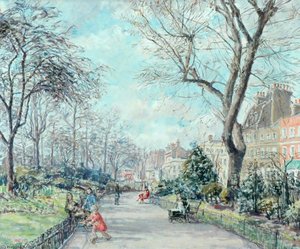
Harmar’s landscapes frequently depict tranquil scenes of Dorset countryside, capturing the subtle shifts in light and color throughout the seasons. She meticulously rendered details—such as foliage textures and reflections on water surfaces—to convey a profound sense of place. Simultaneously, her portraits delve into the inner lives of her subjects, portraying them with sensitivity and empathy. These intimate depictions reveal nuanced expressions of emotion and capture fleeting moments of human connection. Her ability to translate psychological states onto canvas solidified her reputation as one of Britain’s foremost portrait artists.- “Cheyne Walk Gardens” (1938): This Impressionistic landscape showcases Harmar's masterful use of color and brushwork, capturing the autumnal splendor of Cheyne Walk Gardens in Chelsea.