Eugene Jansson portree

Eugene Jansson maalid: 36 kuulsumat teost galeriin läbi

Uuendatud november 2026 · järjestatud meie populaarsusindeksi järgi (otsingud, külastused ja tellimused igale teosele) · 36 teost Eugene Jansson meie kataloogis

Lühidalt

Galleriile on Eugene Jansson kõige kuulsam teos Naval Bathhouse (1907). Athletes (1912) ja Ring gymnast I (1911) täidavad kolmikut, mille iga silm tunnistab. Kunstnii Eugene Jansson 36 teose põhjal esitleb galeriis allpool 36 kõige kuulsumat, kus iga originaal on märgitud aastaga, muuseumiga ja kirjeldatud, mis teeb selle unikaalseks.

1862 – 1915, Jakob ja Johannes vald Enamama teoseid: Nationalmuseum

Galeria 10 parimat Eugene Jansson maali

1
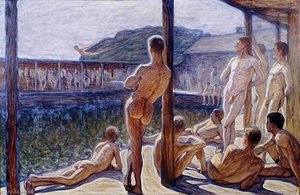
Naval Bathhouse (1907) (autor) Eugene Jansson

Naval Bathhouse

1907 · Oil On Canvas

In this 1907 oil on canvas, a group of thirteen nude men is gathered around a body of water. The figures are positioned at varying depths within the frame, with several individuals in the foreground and others receding toward the middle ground. These men are depicted in states of repose or quiet movement, some looking out toward the water while others face one another. The setting is a pool or…

2
Athletes (1912) (autor) Eugene Jansson

Athletes

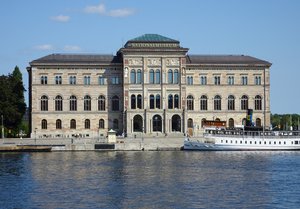
1912 · Oil On Canvas · Nationalmuseum, Stockholm

The oil painting titled Athletes was created by the Swedish artist Eugene Jansson. Painted about 1912, the work captures a moment of physical tension. It features two nude male figures held in a dynamic, sculptural pose. The figures exist within a space that feels both heavy and light.

3
Ring gymnast I (1911) (autor) Eugene Jansson

Ring gymnast I

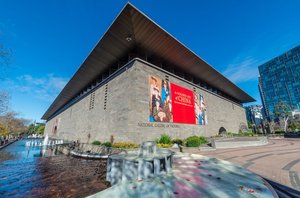
1911 · Oil On Canvas · National Gallery of Victoria, Melbourne

In the evocative masterpiece Ring gymnast I, created in 1911, the Swedish painter Eugène Jansson invites us into a realm where physical prowess meets profound artistic expression. The painting captures a moment of breathtaking suspended animation, depicting a male figure performing an acrobatic feat, his body contorted with grace and strength as he hangs from a rope. This is not merely a study of anatomy, but a celebration of the…

4
Still Life with Onions (1882) (autor) Eugene Jansson

Still Life with Onions

1882 · Nationalmuseum, Stockholm

Still Life with Onions is a somber and tactile oil painting that emphasizes volume and texture through a dramatic use of light and shadow. The composition is tightly cropped, focusing on three large onions and a ceramic vessel set against a dark, indistinct background. The color palette is earthy and muted, dominated by deep browns, ochres, burnt sienna, and creamy whites, with subtle blue accents appearing on the pottery.

5
Gripsholm castle (1881) (autor) Eugene Jansson

Gripsholm castle

1881 · Oil On Canvas

The castle rises from the surface of Lake Mälaren, a heavy silhouette anchored to its island. Two towers, crowned with domes of differing heights, reach toward a pale sky. Below, a single boat drifts near the shore, its presence a quiet punctuation in the stillness of the water. A lone figure moves upon the island, a small presence amidst the stone and the expanse of the lake. The scene is…

6
Dusk (1890) (autor) Eugene Jansson

Dusk

1890 · Oil

There is a specific, quiet moment when the daylight retreats from the streets of Stockholm, leaving behind a world painted in shades of indigo and cobalt. In this 1890 work, Dusk, we find ourselves observing the city at that precise transition. The sky is a deep, serene blue, casting a soft light over an urban landscape that feels both populated and profoundly solitary. Buildings rise in the background, their silhouettes…

7
Döbelns street (1889) (autor) Eugene Jansson

Döbelns street

1889 · Oil

A small village street, unpaved and composed of dirt, stretches through the center of the composition. Two figures walk along this rustic path, their presence adding a sense of scale to the surrounding architecture. In the background, several houses line the horizon, their forms contributing to the quiet charm of the settlement. A single lamp post stands to one side, a silent sentinel in the stillness. Further back, a third…

8
In the Park (1887) (autor) Eugene Jansson

In the Park

1887 · Oil

Painted in 1887, this work belongs to a period of transition in Swedish art. During this time, artists were moving toward more personal, psychological interpretations of the natural world. The piece reflects a quiet introspection, capturing a fleeting moment of peace within the landscape. It avoids the grandiosity of traditional landscape painting, opting instead for a grounded, intimate view of nature.

9
Stormy Night (1898) (autor) Eugene Jansson

Stormy Night

In "Stormy Night" by Eugene Jansson, the composition is dominated by a vast, swirling sky that occupies the upper two-thirds of the canvas. This expansive celestial space creates a sense of movement and cosmic energy above the terrestrial elements. A large, dark, rectangular structure sits horizontally across the middle ground, its form softened by shadow and light. Below this structure, a series of glowing, white or pale yellow orbs represent…

10
Summer Night (1898) (autor) Eugene Jansson

Summer Night

In Summer Night by Eugene Jansson, an urban night scene unfolds through a heavy, textured application of paint. The composition is dominated by a strong verticality that pulls the eye upward and inward. Two towering, dark building masses flank a narrow street, creating a deep, receding perspective that draws the viewer into the heart of the city. This one-point perspective looks down a narrow urban canyon, which creates a palpable…

Eugene Jansson maalid, järjestus 11 kuni 36

Eugene Jansson kuulsaimad maalid ajastult ajastule

Teemad, mis püüdisid Eugene Jansson pilma

Neli teemat, mis esinevad neis originaalkindel kõige sagedamini, ning iga teema parim näide.

Muuseumid, kus on säilitatud Eugene Jansson originaalteosed

Kümne 5 muuseumi kollektsioonid, mis sisaldavad kõige rohkem sellel lehel esitatud teoseid.

Muuseum Linn Eugene Jansson teosed Selle nimekirja maalid
Nationalmuseum, StockholmNationalmuseum Stockholm 13 Athletes, Still Life with Onions, A Night in May
National Museum of Art, Architecture and Design, OsloNational Museum of Art, Architecture and Design Oslo 2 Stormy Night, Summer Night
National Gallery of Victoria, MelbourneNational Gallery of Victoria Melbourne 1 Ring gymnast I
Cleveland Museum of Art, ClevelandCleveland Museum of Art Cleveland 1 Evening Mood-Lidingö
Detroit Institute of Arts, DetroitDetroit Institute of Arts Detroit 1 Gymnast

Eugene Jansson, iga kümnendiga üks signatuurpilt

Teosed aastakate kaupa

Vali vuosakülg, et näha selle ajastu definieerivat originaalteost.

Eugene Jansson maalid: galerii vastused

Milline Eugene Jansson maal on kõige kuulsam?Paljasta vastus

Naval Bathhouse (1907). Järgnevad Athletes (1912) ja Ring gymnast I (1911).

Kui vana Eugene Jansson oli teose Naval Bathhouse valmimisel?Paljasta vastus

45 aastat vanus: teos Naval Bathhouse on pärinev aastast 1907 ning Eugene Jansson sündis aastal 1862.

Millised on Eugene Jansson top 10 maali?Paljasta vastus

Naval Bathhouse, Athletes, Ring gymnast I, Still Life with Onions, Gripsholm castle, Dusk, Döbelns street, In the Park, Stormy Night ja Summer Night. Ülemine reiting näitab iga teose puhul aastat ja muuseumi.

Kui palju teoseid Eugene Jansson lõi?Paljasta vastus

Meie kataloogist leiate 36 teost kunstnikult Eugene Jansson, mis on pärinevad ajastust 1881 kuni 1914.

Kust leiad Eugene Jansson kõige kuulsamad originaalteosed?Paljasta vastus

Peamiselt Nationalmuseum (Stockholm), National Museum of Art, Architecture and Design (Oslo) ja National Gallery of Victoria (Melbourne) muuseumites. Ülalpool olevate muuseumite tabelis on nendest kõik loetletud.

Millal lõi Eugene Jansson oma kuulsamad maalid?Paljasta vastus

Ajal 1890s: 16 36 sellel lehel olevat teost on sellel perioodil loodud, sellest Dusk.

Millised on Eugene Jansson varased ja hilised kuulsad teosed?Paljasta vastus

Sellel lehel on kõige vanem teos Gripsholm castle (1881) ja kõige värskeim Lifting Weights with One Arm (1914).

Millist teemat Eugene Jansson kõige rohkem käsitledas?Paljasta vastus

Sky (16), Water (12) ja Cityscape (7), kogu selle lehekülje 36 teose kohta.

Millises tehnikas töötas Eugene Jansson kõige rohkem?Paljasta vastus

Oil On Canvas, 22 teoseks 36 töödelt sellel lehel.

Milliseid Eugene Jansson originaalte Nationalmuseum kogumuses on?Paljasta vastus

Athletes, Still Life with Onions ja A Night in May: Nationalmuseum, Stockholm säilitab 13 selle lehel olevat teost.

Eugene Jansson: kunstnik

A Life Bathed in Blue: The Enigmatic World of Eugène Jansson

Eugène Fredrik Jansson, born in Stockholm in 1862, was a Swedish painter whose work occupies a unique and haunting space within the landscape of late 19th and early 20th-century art. He wasn’t merely documenting his surroundings; he was translating an internal emotional state onto canvas, one steeped in melancholy, longing, and a profound sensitivity to light and atmosphere. Jansson's life, marked by chronic illness and a quiet introspection, profoundly shaped his artistic vision, leading him to become known as “Blåmålaren” – the Blue Painter – for his evocative nocturnal scenes of Stockholm. His story is not one of flamboyant social circles or dramatic breakthroughs, but rather a slow, deliberate exploration of color, form, and the human condition, culminating in a body of work that continues to resonate with its quiet power.

Early Years and Artistic Formation

Jansson’s upbringing was relatively modest, his parents striving for cultural enrichment despite their position between the working class and lower middle class. This instilled in him an early appreciation for both art and music – he received piano lessons as a child. However, at fourteen, scarlet fever struck, leaving him with lasting health problems: impaired eyesight, hearing difficulties, and chronic kidney issues. These physical limitations undoubtedly contributed to his withdrawal from the bustling world and fostered a more internal focus. He initially studied at the Tekniska Skolan (now Konstfack) under Edvard Perséus, a portrait painter who provided foundational training. While accepted into the Royal Swedish Academy of Arts’ antique school in 1881, financial constraints prevented him from joining his peers in Paris, then the epicenter of artistic innovation. This meant Stockholm itself became his primary subject matter, and he remained largely within its confines for much of his career. His early works reflect this – assisting Perséus with portraits and experimenting with still lifes before discovering his signature style.

The Nocturnes: Painting the Soul of a City

It was in the 1890s that Jansson truly found his voice, embarking on a series of night scenes that would define his reputation. These weren’t simply depictions of Stockholm at night; they were explorations of mood and emotion rendered through an almost monochromatic palette dominated by shades of blue. He painted views over Riddarfjärden bay, as seen from his home on Södermalm, and streetscapes imbued with a sense of stillness and solitude. The brushstrokes are visible, expressive, contributing to the overall feeling of atmospheric haze and dreamlike quality. These paintings weren’t about precise representation; they were about capturing the *feeling* of being in Stockholm at night – the quiet hum of the city, the play of light on water, the sense of isolation amidst urban life. The influence of Impressionism is present, but Jansson pushed beyond its focus on fleeting moments of light to create something more deeply psychological. He wasn’t merely observing; he was internalizing and re-presenting his emotional response to the city around him.

A Shift in Focus: The Male Nudes

Around 1904, Jansson's artistic focus underwent a significant transformation. While continuing to paint nocturnes, he began to create a series of male nudes, often depicted in intimate settings or with symbolic objects. These paintings are remarkable for their frankness and sensitivity, challenging the conventions of the time. They weren’t overtly erotic but rather explorations of beauty, vulnerability, and the human form. The exact reasons behind this shift remain debated, but it's likely a combination of personal exploration and a growing interest in symbolism and psychological themes. These nudes were often painted in private, away from public scrutiny, reflecting a deeply personal artistic endeavor. They are characterized by soft lighting, delicate modeling, and an overall sense of quiet contemplation.

Legacy and Historical Significance

Eugène Jansson died in 1915, leaving behind a relatively small but profoundly impactful body of work. He didn’t achieve widespread recognition during his lifetime, remaining somewhat outside the mainstream art world. However, his paintings have gained increasing appreciation in recent decades, recognized for their unique aesthetic and psychological depth. His influence can be seen in later Scandinavian artists who explored themes of isolation, melancholy, and the beauty of the natural world. He stands as a testament to the power of individual vision – an artist who dared to paint not what he saw, but what he *felt*, creating a hauntingly beautiful and enduring legacy that continues to captivate audiences today. His paintings are more than just landscapes or portraits; they are windows into the soul, bathed in the evocative light of a Stockholm night.