

1


Uuendatud november 2026 · järjestatud meie populaarsusindeksi järgi (otsingud, külastused ja tellimused igale teosele) · 3 teost Eugène Castelnau meie kataloogis
Lühidalt
Kõigist Eugène Castelnau jäetud originaalteostest on kõige kuulsam The music lesson (1866), mis kuulub Musée Paul Valéry kogele linnas Sète. Järgnevad sellest Les garrigues du pic Saint-Loup (1859) ja Paysage, les bords du Vidourle (1880). Meie kataloogist löytyb 3 teost kunstnikult Eugène Castelnau; galeriist on säilitatud 3 maailmas kõige imetlustunud teost, millest iga on esitatud koos kuupäeva, museumi ja oma luguga.
Kümne 2 muuseumi kollektsioonid, mis sisaldavad kõige rohkem sellel lehel esitatud teoseid.
| Muuseum | Linn | Eugène Castelnau teosed | Selle nimekirja maalid |
|---|---|---|---|
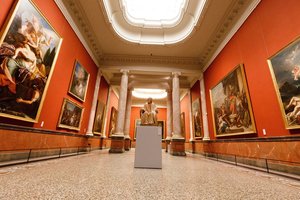 Musée Fabre |
Montpellier | 2 | Les garrigues du pic Saint-Loup, Paysage, les bords du Vidourle |
 Musée Paul Valéry |
Sète | 1 | The music lesson |
Vali vuosakülg, et näha selle ajastu definieerivat originaalteost.


The music lesson (1866), Musée Paul Valéry, Sète. Järgnevad Les garrigues du pic Saint-Loup (1859) ja Paysage, les bords du Vidourle (1880).
39 aastat vanus: teos The music lesson on pärinev aastast 1866 ning Eugène Castelnau sündis aastal 1827.
Meie kataloogist leiate 3 teost kunstnikult Eugène Castelnau, mis on pärinevad ajastust 1859 kuni 1880.
Peamiselt Musée Fabre (Montpellier) ja Musée Paul Valéry (Sète) muuseumites. Ülalpool olevate muuseumite tabelis on nendest kõik loetletud.
Sellel lehel on kõige vanem teos Les garrigues du pic Saint-Loup (1859) ja kõige värskeim Paysage, les bords du Vidourle (1880).
Les garrigues du pic Saint-Loup ja Paysage, les bords du Vidourle: Musée Fabre, Montpellier säilitab 2 selle lehel olevat teost.
Born in Montpellier, France, Eugène Castelnau was a member of a prominent Protestant bourgeois family. He was the son of Émile Castelnau, a merchant and municipal councilor, and Anaïs Pomier. His familial connections to the art world were significant, as he was the cousin of the painter Frédéric Bazille. After beginning his drawing studies under Charles Matet at the École des beaux-arts de Montpellier, he moved to Switzerland for his secondary education before traveling to Paris to study in the studios of Alexandre Calame and Charles Gleyre.
In 1853, Castelnau traveled to Italy, where he spent four months exploring the Roman countryside and the Bay of Naples. During his time in Rome, he frequented the painter Ernest Hébert and visited various cultural landmarks, including the Borghese Gallery, the Doria Palace, and numerous churches to observe frescoes, mosaics, and sculptures. He eventually married Marie Stéphanie Blouquier in 1855, and the couple had four children.
Castelnau's professional career included participation in the 1855 Exposition universelle in Paris, where he presented his first painting, Les Marais pontins. His artistic legacy is preserved through works such as Les Bords du Vidourle and Les Garrigues du Pic Saint-Loup, both of which are held in the Musée Fabre in Montpellier.
Beyond his canvas, Castelnau was active in the civic and artistic life of Montpellier. He served as a deputy mayor and later became the president of the Société artistique de l'Hérault in 1873. His influence as a teacher extended to students such as: