Edward Price portree

7 kulubumatamatum Edward Price maali, galeriiselektsioon

Uuendatud november 2026 · järjestatud meie populaarsusindeksi järgi (otsingud, külastused ja tellimused igale teosele) · 7 teost Edward Price meie kataloogis

Lühidalt

Kõigist Edward Price jäetud originaalteostest on kõige kuulsam Dervoguilla of Galloway (d.1290), Lady of Balliol (1670), mis kuulub Balliol College kogele linnas Oxford. Järgnevad sellest John de Balliol (d.1268), Lord of (inter alia) Bywell and Barnard Castle and of Bailleul en Vimeu (Picardy), Founder of the College (c.1263) (1670) ja Sheffield and the Valley of the Don (1863). Meie kataloogist löytyb 7 teost kunstnikult Edward Price; galeriist on säilitatud 7 maailmas kõige imetlustunud teost, millest iga on esitatud koos kuupäeva, museumi ja oma luguga.

1800 – 1885 Enamama teoseid: Balliol College

Edward Price top 10 maalist: galeriis valitud teosed

1
Dervoguilla of Galloway (d.1290), Lady of Balliol (1670) (autor) Edward Price

Dervoguilla of Galloway (d.1290), Lady of Balliol

1670 · Oil On Canvas · Balliol College, Oxford

The woman sits with hands clasped in a steady gesture of composure. She wears a white veil that catches the light, framing a face that carries the gravity of her station. This is Dervorguilla of Galloway, a figure of substance from a vanished age, captured here in the soft, luminous glazes that define the Baroque style. Around her, the atmosphere is thick with a sense of quietude, as if the…

2
John de Balliol (d.1268), Lord of (inter alia) Bywell and Barnard Castle and of Bailleul en Vimeu (Picardy), Founder of the College (c.1263) (1670) (autor) Edward Price

John de Balliol (d.1268), Lord of (inter alia) Bywell and Barnard Castle and of Bailleul en Vimeu (Picardy), Founder of the College (c.1263)

1670 · Oil · Balliol College, Oxford

The figure of John de Balliol is rendered in full medieval panoply, a warrior-founder captured in a moment of martial readiness. He is clad in detailed armor, his presence anchored by a heavy sword held prominently in the foreground. A red cape provides a sharp chromatic contrast against the metallic sheen of his protection, while a shield rests upon his chest. Behind him, the architecture of a castle-like structure rises,…

3
Sheffield and the Valley of the Don (1863) (autor) Edward Price

Sheffield and the Valley of the Don

1863 · Oil On Canvas

Sheffield and the Valley of the Don is a panoramic landscape painting that captures a vast, rolling valley under a cloudy sky. The composition is broadly horizontal, emphasizing an expansive view of the natural terrain. The scene is dominated by organic shapes, including undulating hills, meandering rivers, and scattered trees. A subdued and atmospheric mood is created through a color palette of muted greens, browns, blues, and grays.

4
Pont Aberglaslyn (1870) (autor) Edward Price

Pont Aberglaslyn

The water flows with a quiet, persistent weight. In Pont Aberglaslyn, the river carves its path through a valley of heavy, detailed mountains. A bridge spans the current, a small human geometry against the wild, vertical lines of the peaks. Figures move near the water's edge, their presence small and fleeting compared to the permanence of the rock. A horse stands in the landscape, a silent witness to the slow…

5
Pont y Gyfyng (1870) (autor) Edward Price

Pont y Gyfyng

The painting depicts a waterfall situated within a dense forest. Water descends through a central opening in the landscape, surrounded by dark, textured rocks and various trees. The foliage on either side of the falls creates a vertical frame for the moving water. Shadows settle in the crevices of the stone, while light hits the surface of the falling water and the surrounding leaves. The scene captures a specific moment…

6
June Morning, Kenilworth Castle, Warwickshire (1865) (autor) Edward Price

June Morning, Kenilworth Castle, Warwickshire

1865 · Oil · Herbert Art Gallery - Museum, Coventry

There is a particular stillness to the light in this 1865 work, a softness that suggests the world is only just beginning to stir. In June Morning, Kenilworth Castle, Warwickshire, Edward Price captures a moment of gentle transition. The castle, a silhouette of historical weight, rests in the background, its stone textures rendered with a careful, realistic hand. It does not dominate the scene through aggression, but rather through a…

7
Norway (1881) (autor) Edward Price

Norway

1881 · Oil On Canvas · Nottingham Castle Museum And Art Gallery, Nottingham

A blue sky hangs over a deep valley, pressing down with a quiet, heavy light. In the distance, mountains rise in jagged silhouettes, their peaks carving the horizon into sharp, uneven lines. Below, the earth settles into a basin of green and shadow. Trees are scattered across the terrain like dark, unmoving sentinels, their branches reaching into the stillness. Two birds drift through the open air, one near the center…

Teemad, mis püüdisid Edward Price pilma

Neli teemat, mis esinevad neis originaalkindel kõige sagedamini, ning iga teema parim näide.

Muuseumid, kus on säilitatud Edward Price originaalteosed

Kümne 4 muuseumi kollektsioonid, mis sisaldavad kõige rohkem sellel lehel esitatud teoseid.

Muuseum Linn Edward Price teosed Selle nimekirja maalid
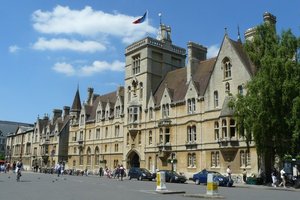
Balliol College, OxfordBalliol College Oxford 2 Dervoguilla of Galloway (d.1290), Lady of Balliol, John de Balliol (d.1268), Lord of (inter alia) Bywell and Barnard Castle and of Bailleul en Vimeu (Picardy), Founder of the College (c.1263)
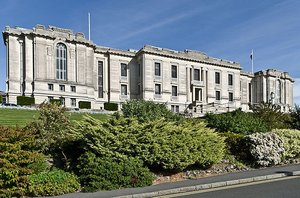
Llyfrgell Genedlaethol Cymru / The National Library of Wales, AberystwythLlyfrgell Genedlaethol Cymru / The National Library of Wales Aberystwyth 2 Pont Aberglaslyn, Pont y Gyfyng
Herbert Art Gallery - Museum, CoventryHerbert Art Gallery - Museum Coventry 1 June Morning, Kenilworth Castle, Warwickshire
Nottingham Castle Museum And Art Gallery, NottinghamNottingham Castle Museum And Art Gallery Nottingham 1 Norway

Edward Price aastak aegades: originaalteos, mis määratleb iga ajastu

Teosed aastakate kaupa

Vali vuosakülg, et näha selle ajastu definieerivat originaalteost.

Sammlajate küsimused Edward Price maalide kohta

Millise teosega on Edward Price kõige kuulsam?Paljasta vastus

Dervoguilla of Galloway (d.1290), Lady of Balliol (1670), Balliol College, Oxford. Järgnevad John de Balliol (d.1268), Lord of (inter alia) Bywell and Barnard Castle and of Bailleul en Vimeu (Picardy), Founder of the College (c.1263) (1670) ja Sheffield and the Valley of the Don (1863).

Kui palju maali Edward Price jäeti?Paljasta vastus

Meie kataloogist leiate 7 teost kunstnikult Edward Price, mis on pärinevad ajastust 1863 kuni 1881.

Mitteks muuseumides rihangavad Edward Price meistriteosed?Paljasta vastus

Peamiselt Balliol College (Oxford), Llyfrgell Genedlaethol Cymru / The National Library of Wales (Aberystwyth) ja Herbert Art Gallery - Museum (Coventry) muuseumites. Ülalpool olevate muuseumite tabelis on nendest kõik loetletud.

Millah aastades maalas Edward Price oma kuulsamaid teoseid?Paljasta vastus

Ajal 1860s: 2 7 sellel lehel olevat teost on sellel perioodil loodud, sellest Sheffield and the Valley of the Don.

Mis on Edward Price esimene ja viimane kuuls fama originaalteos?Paljasta vastus

Sellel lehel on kõige vanem teos Sheffield and the Valley of the Don (1863) ja kõige värskeim Norway (1881).

Milliseid teemasid Edward Price kõige sagedamini valis?Paljasta vastus

Trees (4), Landscape (3) ja Castle (2), kogu selle lehekülje 7 teose kohta.

Millist tehnikat kasutas Edward Price kõige rohkem?Paljasta vastus

Oil On Canvas, 4 teoseks 7 töödelt sellel lehel.

Millised Edward Price teosed on Balliol College näituses?Paljasta vastus

Dervoguilla of Galloway (d.1290), Lady of Balliol ja John de Balliol (d.1268), Lord of (inter alia) Bywell and Barnard Castle and of Bailleul en Vimeu (Picardy), Founder of the College (c.1263): Balliol College, Oxford säilitab 2 selle lehel olevat teost.

Edward Price: elu ja looming

A Vision of Coastal England: The Life and Legacy of Edward Price

Edward Price (1800–1885) remains a luminous figure in the annals of British Romantic landscape painting, an artist whose brush captured the very soul of the Victorian era’s fascination with the untamed natural world. Born at the dawn of the nineteenth century, Price’s life unfolded during a period of profound transformation in England, where the industrial revolution began to reshape the landscape, yet the romantic spirit sought refuge in the enduring majesty of the coast. His artistic journey was deeply rooted in an intellectual and classical foundation; having received his early education at prestigious institutions such as Rugby School, Eton College, and Christ’s Hospital, he developed a refined sensibility that would later inform the poetic depth of his work. This academic rigor culminated at Oxford University, where his immersion in the classics and Greek mythology provided him with a philosophical lens through which to view the drama of the physical world.

The Atmospheric Mastery of the Galloway Coast

The heart of Price’s oeuvre lies in his profound connection to the rugged shores of Galloway. To Price, this region was not merely a subject but a profound source of spiritual and aesthetic inspiration. He possessed an uncanny ability to translate the turbulent energy of the sea and the stoic permanence of coastal cliffs onto canvas. His technique was a masterful blend of meticulous observation and expressive freedom, characterized by a textured application of paint that gave his landscapes a palpable sense of life. By skillfully employing chiarosc de Monte—the dramatic interplay between light and shadow—he could evoke the heavy, salt-laden atmosphere of a gathering storm or the fleeting, golden tranquility of a summer dusk. His works, such as the celebrated “The Cliffs of Galloway” and “Sunset Over Galloway,” serve as windows into a world where the elements are in constant, beautiful conflict.

Artistic Lineage and Historical Significance

Price did not paint in a vacuum; his vision was deeply shaped by the giants of British landscape painting who preceded him. He drew significant inspiration from the atmospheric innovations of J.M.W. Turner and the grounded, pastoral realism of John Constable. From Turner, he inherited a fascination with the sublime power of light and weather; from Constable, he learned the importance of capturing the specific, localized character of the English terrain. This synthesis allowed him to create works that were both emotionally resonant and technically sophisticated, bridging the gap between pure romanticism and a more nuanced realism. Today, the significance of Edward Price’s contribution to art history is found in his ability to document a vanishing sense of coastal solitude. His paintings are more than mere depictions of scenery; they are emotional records of an era that viewed nature as a powerful, divine force. Through his sweeping vistas and evocative seascapes, Price ensured that the rugged beauty of the British coastline would be preserved with a level of light and movement that continues to captivate collectors and art historians alike. His legacy remains etched in the luminous palettes and dramatic textures that define the very essence of the Romantic landscape tradition.