


1


Uuendatud november 2026 · järjestatud meie populaarsusindeksi järgi (otsingud, külastused ja tellimused igale teosele) · 6 teost Claudi Lorenzale meie kataloogis
Lühidalt
Kõigist Claudi Lorenzale jäetud originaalteostest on kõige kuulsam Self-portrait (1843), mis kuulub Museu Nacional d'Art de Catalunya kogele linnas Barcelona. Järgnevad sellest Origin of the Barcelona county coat (1843) ja Posthumous Portrait of Pròsper de Bofarull i Mascaró (1850). Meie kataloogist löytyb 6 teost kunstnikult Claudi Lorenzale; galeriist on säilitatud 6 maailmas kõige imetlustunud teost, millest iga on esitatud koos kuupäeva, museumi ja oma luguga.


Muuseum, milles on kõige rohkem sellel lehel esitatud maaleid.
| Muuseumid | Linn | Claudi Lorenzale teosid | Selle nimekirja maalid |
|---|---|---|---|
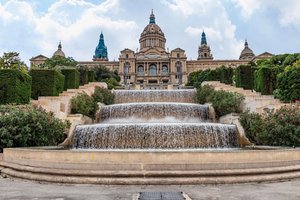 Museu Nacional d'Art de Catalunya |
Barcelona | 2 | Self-portrait, Portrait of the Painter's Wife and Children |
Vali vuosakülg, et näha selle ajastu definieerivat originaalteost.
Self-portrait (1843), Museu Nacional d'Art de Catalunya, Barcelona. Järgnevad Origin of the Barcelona county coat (1843) ja Posthumous Portrait of Pròsper de Bofarull i Mascaró (1850).
27 aastat vanus: teos Self-portrait on pärinev aastast 1843 ning Claudi Lorenzale sündis aastal 1816.
Meie kataloogist leiate 6 teost kunstnikult Claudi Lorenzale, mis on pärinevad ajastust 1843 kuni 1889.
Peamiselt Museu Nacional d'Art de Catalunya (Barcelona) muuseumites. Ülalpool olevate muuseumite tabelis on nendest kõik loetletud.
Ajal 1840s: 2 6 sellel lehel olevat teost on sellel perioodil loodud, მათart közül Self-portrait.
Sellel lehel on kõige vanem teos Self-portrait (1843) ja kõige värskeim Otger Cataló (1889).
Self-portrait ja Portrait of the Painter's Wife and Children: Museu Nacional d'Art de Catalunya, Barcelona säilitab 2 selle lehel olevat teost.
In the vibrant tapestry of nineteenth-century Spanish art, few figures embody the pursuit of spiritual and historical purity as profoundly as Claudi Lorenzale. Born in Barcelona in 1814 to an Italian father, Lorenzale’s early life was marked by a precocious talent that led him from the streets of Catalonia to the prestigious studios of Rome. His journey began in Murcia, where, at just twelve years old, he first grasped the transformative power of the brush. This early spark ignited a lifelong devotion to an aesthetic that sought to bypass the fleeting trends of his era in favor of something more eternal and profound.
Lorenzale’s artistic identity was irrevocably shaped by his encounter with the German Nazarene movement. While studying in Rome at the Accademia di San Luca, he fell under the spell of Friedrich Overbeck, a master whose commitment to the clarity and moral weight of Medieval and early Renaissance art provided Lorenzale with a new creative compass. This influence instilled in him a reverence for artistic purity, leading him to reject the superficiality of contemporary styles in favor of compositions that resonated with historical gravity and religious sincerity. His work became a bridge between the classical traditions of the past and the burgeoning nationalistic sentiments of his homeland.
Upon returning to Barcelona in 1844, Lorenzale did not merely practice art; he sought to cultivate it within the very fabric of Catalan society. His career was defined by a dual commitment to painting and teaching, a passion that saw him rise through the ranks of the Escola de la Llotja. From his early triumphs as an award-winning student to his eventual tenure as Director of the academy, Lorenzale became a cornerstone of Spanish art education. He possessed a rare ability to transmit not just technique, but a philosophy of art that valued historical truth and emotional resonance.
The impact of his mentorship cannot be overstated, as he nurtured a generation of painters who would go on to define the next era of Spanish art. His academy became a sanctuary for those seeking a deeper connection to their roots, fostering an environment where history and art were inextricably linked. Some of his most illustrious students included:
Lorenzale’s oeuvre remains a testament to his dedication to recovering and celebrating the history of the Catalan region. His paintings often functioned as visual chronicles, imbued with a sense of local pride and a meticulous attention to detail that honored the legends and landscapes of his people. Through his work, the Nazarene ideals of clarity, line, and moral purpose were translated into a uniquely Spanish vernacular, making him a pivotal figure in the movement to reclaim a distinct cultural identity.
Though he passed away in Barcelona in 1889, the echoes of his influence remain palpable in the halls of museums like the Museu Nacional d'Art de Catalunya. His legacy is not found merely in the pigments on canvas, but in the enduring spirit of artistic integrity he championed—a belief that art should serve as a mirror to both the soul and the history of a nation. In every stroke of his brush, one finds the quiet strength of a man who looked backward to the masters in order to move his era forward.