

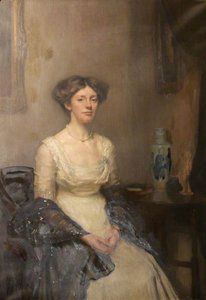
1


Uuendatud november 2026 · järjestatud meie populaarsusindeksi järgi (otsingud, külastused ja tellimused igale teosele) · 35 teost Arnold Mason meie kataloogis
Lühidalt
Thomas William Dampier Bide (1844–1916) (1909) on Arnold Mason maalide kõige silmapaistvam teos; originaal kuulub museumi Museum of South Somerset, Yeovil. Pärast seda suunatakse pilk John Parkinson (1947) ja Olive Mary Wolryche Whitmore (1879–1951), Mrs Eustace Scott Hamilton Russell (1900) suunas. Meie kataloogis olevatest Arnold Mason 35 teosest on need 34 kõige kuulsumat, millist igaüks on esitatud koos aasta, muuseumi ja põhjusega, miks teos on püsiv.

The John Parkinson painting by Arnold Mason is a stunning oil on canvas artwork that showcases the artist's exceptional skill in capturing the essence of his subject. Created in 1947, this painting measures 210 x 124 cm and is currently located at the Gravesham Borough Council in Gravesend, United Kingdom. The Artist and His Work Arnold Mason was a talented artist known for his attention to detail and ability to…


 Girl with a Hand Mirror1929
12
 Job Nixon (1891–1938)1932
13
 Portrait of a Woman1931 · The Resource Centre
14
 Red Ships at La Rochelle, France1930 · Alfred East Art Gallery
15
 Seated Nude1937
16
 Portrait of a Young Woman1934
17
 Alderman W. E. Thomas, Mayor of Gravesend (1921 1922)1941 · Gravesham Borough Council
18
 Elinor Glyn, née Sutherland1942
19
 Lady Eleanor Joan Clara Nathan (1892–1972)1948 · Guildhall Art Gallery
20
 Robert Palmer, VC1948 · Gravesham Borough Council
21Alderman J. Tennant1947 · The Hepworth Wakefield
22
 Gerald Harry Beloe, Master (1922), Treasurer (1932–1944)1944 · Merchants Hall
23
 Sir Henry Upcher (1870–1954), Chairman of Norfolk County Council (1941–1950)1950
24
 Brown Study1949
25
 Llanbedr, near Conway
26
 Miss ColeSalford Museum - Art Gallery
27
 Indian GirlAlfred East Art Gallery
28
 Port Scene
29
 Flower Piece
30
 River Scene
31
 The HousekeeperSalford Museum - Art Gallery
32
 BargesThe Brewhouse Arts Centre
33
 River Scene with a Bridge
34
 The Reverend Canon Frederick Llewellyn Hughes, CB, CBE, MC, TD, MA, KHC, Chaplain General to the King (1944–1951)
Neli teemat, mis esinevad neis originaalkindel kõige sagedamini, ning iga teema parim näide.
Kümne 8 muuseumi kollektsioonid, mis sisaldavad kõige rohkem sellel lehel esitatud teoseid.
| Muuseum | Linn | Arnold Mason teosed | Selle nimekirja maalid |
|---|---|---|---|
 Museum of South Somerset |
Yeovil | 3 | Thomas William Dampier Bide (1844–1916), Mary Anne Whetham, née Dampier (b.1843), Elizabeth Dampier Bide (1838–1915) |
 Gravesham Borough Council |
Greenwich | 3 | John Parkinson, Alderman W. E. Thomas, Mayor of Gravesend (1921 1922), Robert Palmer, VC |
 Alfred East Art Gallery |
Kettering | 2 | Red Ships at La Rochelle, France, Indian Girl |
 Salford Museum - Art Gallery |
Greater Manchester | 2 | Miss Cole, The Housekeeper |
 The Resource Centre |
Newark | 1 | Portrait of a Woman |
 Guildhall Art Gallery |
London | 1 | Lady Eleanor Joan Clara Nathan (1892–1972) |
 The Hepworth Wakefield |
Wakefield | 1 | Alderman J. Tennant |
 Merchants Hall |
Bristol | 1 | Gerald Harry Beloe, Master (1922), Treasurer (1932–1944) |
Vali vuosakülg, et näha selle ajastu definieerivat originaalteost.

The John Parkinson painting by Arnold Mason is a stunning oil on canvas artwork that showcases the artist's exceptional skill in capturing the essence of his subject. Created in 1947, this painting measures 210 x 124 cm and is currently located at the Gravesham Borough Council in Gravesend, United Kingdom. The Artist and His Work Arnold Mason was a talented artist known for his attention to detail and ability to…

Thomas William Dampier Bide (1844–1916) (1909), Museum of South Somerset, Yeovil. Järgnevad John Parkinson (1947) ja Olive Mary Wolryche Whitmore (1879–1951), Mrs Eustace Scott Hamilton Russell (1900).
24 aastat vanus: teos Thomas William Dampier Bide (1844–1916) on pärinev aastast 1909 ning Arnold Mason sündis aastal 1885.
Thomas William Dampier Bide (1844–1916), John Parkinson, Olive Mary Wolryche Whitmore (1879–1951), Mrs Eustace Scott Hamilton Russell, Head of a Girl, Ibiza, Balearics, Lord Granville West (1904–1984), Head of a Child, Mary Anne Whetham, née Dampier (b.1843), Elizabeth Dampier Bide (1838–1915) ja Quai Du Port, Martigues, France. Ülemine reiting näitab iga teose puhul aastat ja muuseumi.
Meie kataloogist leiate 35 teost kunstnikult Arnold Mason, mis on pärinevad ajastust 1900 kuni 1950.
Peamiselt Museum of South Somerset (Yeovil), Gravesham Borough Council (Greenwich) ja Alfred East Art Gallery (Kettering) muuseumites. Ülalpool olevate muuseumite tabelis on nendest kõik loetletud.
Ajal 1940s: 8 34 sellel lehel olevat teost on sellel perioodil loodud, sellest John Parkinson.
Sellel lehel on kõige vanem teos Olive Mary Wolryche Whitmore (1879–1951), Mrs Eustace Scott Hamilton Russell (1900) ja kõige värskeim Sir Henry Upcher (1870–1954), Chairman of Norfolk County Council (1941–1950) (1950).
Portrait (2) ja Formal (2), kogu selle lehekülje 34 teose kohta.
Thomas William Dampier Bide (1844–1916), Mary Anne Whetham, née Dampier (b.1843) ja Elizabeth Dampier Bide (1838–1915): Museum of South Somerset, Yeovil säilitab 3 selle lehel olevat teost.