Arnold Houbraken portree

21 kulubumatamatumat Arnold Houbraken maalist, millist on vaid üks

Uuendatud november 2026 · järjestatud meie populaarsusindeksi järgi (otsingud, külastused ja tellimused igale teosele) · 23 teost Arnold Houbraken meie kataloogis

Lühidalt

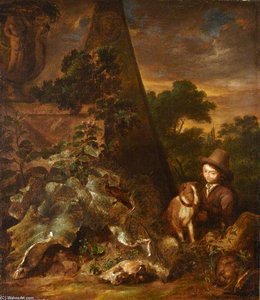
Portrait of Maarten Arendsz. de Heer (1690) on Arnold Houbraken maalide kõige silmapaistvam teos; originaal kuulub museumi Museum Boijmans Van Beuningen, Rotterdam. Pärast seda suunatakse pilk The Wedding of Alexander and Roxana (?) (1680) ja Landscape with Sportsman (1670) suunas. Meie kataloogis olevatest Arnold Houbraken 23 teosest on need 21 kõige kuulsumat, millist igaüks on esitatud koos aasta, muuseumi ja põhjusega, miks teos on püsiv.

1660 – 1719, Dordrecht Baroque Enamama teoseid: Statens Museum For Kunst

Arnold Houbraken top 10 maalist galeriist vaatenurgast

1
Portrait of Maarten Arendsz. de Heer (1690) autor Arnold Houbraken

Portrait of Maarten Arendsz. de Heer

1690 · Oil On Panel · Museum Boijmans Van Beuningen, Rotterdam

The face of Maarten Arendsz. de Heer emerges from a void of deep, indeterminate darkness. He is captured in an oval frame, a quiet bust-length study that pulls the viewer into an intimate, eye-level encounter. A single light source from the upper left carves his features out of the gloom, casting soft, heavy shadows across the right side of his face. This directional light gives his visage a sculptural volume,…

2
The Wedding of Alexander and Roxana (?) (1680) autor Arnold Houbraken

The Wedding of Alexander and Roxana (?)

1680 · Oil On Canvas · Statens Museum For Kunst, Kooberemaa

The composition centers on a ritualistic hand-holding between a seated woman, Roxana, and a man clad in classical armor, Alexander. Their interaction is framed by a dramatic Baroque arrangement, where light emerges from the upper left to illuminate the primary figures against a backdrop of deep shadow. To the left, a winged figure hovers, introducing an allegorical dimension to the historical scene. The setting is defined by classical architectural elements,…

Arnold Houbraken kuulsad maalid, numbrid 11 kuni 21

Teemad, mis püüdisid Arnold Houbraken pilma

Neli teemat, mis esinevad neis originaalkindel kõige sagedamini, ning iga teema parim näide.

Muuseumid, kus on säilitatud Arnold Houbraken originaalteosed

Kümne 8 muuseumi kollektsioonid, mis sisaldavad kõige rohkem sellel lehel esitatud teoseid.

Muuseumid Linn Arnold Houbraken teosid Selle nimekirja maalid
Statens Museum For Kunst, KooberemaaStatens Museum For Kunst Kooberemaa 2 The Wedding of Alexander and Roxana (?), Christ before Pilate
Dordrechts Museum, DordrechtDordrechts Museum Dordrecht 2 Portrait of a little girl, Pallas Athene Visiting Apollo on the Parnassus
Rijksmuseum, AmsterdamRijksmuseum Amsterdam 2 Romulus and Remus discovered by the Herdsman Faustulus, Sacrifice of Iphigenia, Arnold Houbraken, 1690 - 1700
Museum Boijmans Van Beuningen, RotterdamMuseum Boijmans Van Beuningen Rotterdam 1 Portrait of Maarten Arendsz. de Heer
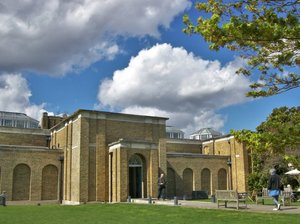
Dulwichi Pildigalerii, LondonDulwichi Pildigalerii London 1 Landscape with Sportsman
Städel Museum, FrankfurtStädel Museum Frankfurt 1 Portrait of a Man (Rudolf van Loen?)
Rijksmuseum Twenthe, EnschedeRijksmuseum Twenthe Enschede 1 The sacrifice of Iphigenia
Dallas Museum of Art, DallasDallas Museum of Art Dallas 1 St. Jerome

Arnold Houbraken aastakatega: iga aastakannaga üks unikaalne originaal

Teosed aastakate kaupa

Vali vuosakülg, et näha selle ajastu definieerivat originaalteost.

Arnold Houbraken maalid: küsimused galeriile

Mis on Arnold Houbraken kõige kuulsam teos?Paljasta vastus

Portrait of Maarten Arendsz. de Heer (1690), Museum Boijmans Van Beuningen, Rotterdam. Järgnevad The Wedding of Alexander and Roxana (?) (1680) ja Landscape with Sportsman (1670).

Mis vanuses luunud Arnold Houbraken teos Portrait of Maarten Arendsz. de Heer?Paljasta vastus

30 aastat vanus: teos Portrait of Maarten Arendsz. de Heer on pärinev aastast 1690 ning Arnold Houbraken sündis aastal 1660.

Millised on Arnold Houbraken kümneks kuulsumat maalatist?Paljasta vastus

Portrait of Maarten Arendsz. de Heer, The Wedding of Alexander and Roxana (?), Landscape with Sportsman, Holy Family, Matthijs Beelaerts (1669-1743), Portrait of a Woman, Portrait of a little girl, Christ before Pilate, Portrait of a Man (Rudolf van Loen?) ja The sacrifice of Iphigenia. Ülemine reiting näitab iga teose puhul aastat ja muuseumi.

Kui palju teoseid kunstniku Arnold Houbraken kohta on teada?Paljasta vastus

Meie kataloogist leiate 23 teost kunstnikult Arnold Houbraken, mis on pärinevad ajastust 1670 kuni 1714.

Kust saab näha kõige kuulsamaid Arnold Houbraken originaalteoseid?Paljasta vastus

Peamiselt Statens Museum For Kunst (Kooberemaa), Dordrechts Museum (Dordrecht) ja Rijksmuseum (Amsterdam) muuseumites. Ülalpool olevate muuseumite tabelis on nendest kõik loetletud.

Mille perioodi jooksul lõi Arnold Houbraken oma tuntumad maalid?Paljasta vastus

Ajal 1680s: 4 21 sellel lehel olevat teost on sellel perioodil loodud, მათart közül The Wedding of Alexander and Roxana (?).

Milline kuuls Arnold Houbraken maal on kõige varasem ja milline kõige hiljema?Paljasta vastus

Sellel lehel on kõige vanem teos Landscape with Sportsman (1670) ja kõige värskeim The sacrifice of Iphigenia (1714).

Millist teemasid Arnold Houbraken eelistas?Paljasta vastus

Man (4), Brown tones (2) ja Woman (2), kogu selle lehekülje 21 teose kohta.

Mida Arnold Houbraken kõige rohkem kasutas oma maalide nimiseks?Paljasta vastus

Oil, 2 teoseks 21 töödelt sellel lehel.

Millisse toomangu kuulub Arnold Houbraken teos?Paljasta vastus

Baroque, seda lähtudes selle lehe originaalteostest.

Mida Arnold Houbraken originaalte ma näen Statens Museum For Kunst muuseumis?Paljasta vastus

The Wedding of Alexander and Roxana (?) ja Christ before Pilate: Statens Museum For Kunst, Kooberemaa säilitab 2 selle lehel olevat teost.

Arnold Houbraken: kunstniku portree

The Chronicler of the Golden Age

Arnold Houbraken stands as a singular figure in the annals of Dutch art history, recognized primarily for his monumental biographical work, Het Groot Theater der Nederlandsche Schilders—a comprehensive chronicle that cemented his place as arguably the most influential artist biographer of his era. Born in Dordrecht in 1660, Houbraken’s early life was marked by practical training rather than formal artistic education; he initially apprenticed himself to Johannes de Haan, mastering the craft of engraving alongside a foundational understanding of artistic technique. This formative experience instilled in him a meticulous attention to detail and an unwavering dedication to preserving the legacy of Dutch painters during the turbulent Baroque period.

His subsequent studies with Willem van Drielenburch and Jacob Leveck further honed his skills, exposing him to diverse artistic styles and fostering collaborations that would enrich his oeuvre. Notably, Houbraken’s association with Samuel van Hoogstraten proved particularly transformative, introducing him to the principles of disegno—the Italian concept of drawing as a basis for painting—which profoundly impacted his approach to composition and rendering. This intellectual engagement extended beyond mere artistic technique; Houbraken possessed an astute mind capable of analyzing artistic trends and distilling their essence into accessible narratives.

A Versatile Hand and the Art of Narrative

Houbraken’s artistic output encompassed a rich variety of genres, ranging from mythological and religious paintings to portraits capturing the grandeur of aristocratic patrons and landscapes imbued with atmospheric realism. He achieved considerable renown for his depictions of biblical scenes, demonstrating an exceptional command of chiarosc Century and conveying profound emotional depth through dramatic light and shadow. His ability to navigate between the rigid requirements of portraiture and the fluid storytelling of mythological tableaux allowed him to maintain a presence in the shifting artistic landscape of the late seventeenth century.

Beyond his paintings, Houbraken’s intellectual curiosity led him to experiment with different forms of artistic instruction. His first attempt at an instructive manual for artists was his emblem book, Inhoud van 't Sieraad der Afbeelding, which served as a guide to possible painting themes. This endeavor highlights his role not just as a creator of images, but as a scholar of the visual language itself, seeking to codify the very essence of what made Dutch art so compelling to the world.

The Legacy of the Great Theatre

While his paintings remain significant, Houbraken’s true immortality lies in his literary contributions. His magnum opus, The Great Theatre of Dutch Painters, published between 1718 and 1721, remains a vital resource for art historians today. Through this work, he provided a window into the lives, personalities, and techniques of the masters of the Dutch Golden Age, ensuring that their achievements would not fade into the obscurity of time. In many instances, his engravings of these artists serve as the only surviving likenesses of certain painters, making him an indispensable custodian of visual memory.

The impact of his work extended far beyond his own lifetime, influencing subsequent generations of historians and engravers. His son, Jacobus Houbraken, continued this tradition of excellence, assisting with the final proofs of his father's manuscript and carving out a distinguished career as an engraver in his own right. Through his tireless documentation, Arnold Houbraken did more than just paint the world around him; he built a lasting monument to the brilliance of the Dutch masters, ensuring that the Golden Age would shine brightly for centuries to come.