A Unique Vision: The Art of Andreas Brachmann
Andreas Brachmann, a German artist born in Munich in 1961, presents a fascinating duality – a life deeply rooted in the scientific world alongside a compelling artistic practice. While widely recognized as a leading geneticist specializing in microbial functional genomics at Ludwig Maximilian University of Munich, Brachmann’s creative output, particularly his striking ‘
Coat with Shirt and Pleated Trousers’ series, has garnered increasing attention within
contemporary art circles. This intersection of disciplines is not merely biographical curiosity; it subtly informs his artistic approach, revealing a meticulous observation of form, structure, and the inherent patterns found in both the natural world and human expression. His research, focused on unraveling the complexities of microorganisms through high-throughput sequencing technology, speaks to a profound interest in systems, organization, and the hidden layers beneath visible surfaces – themes that resonate powerfully within his artwork. Brachmann’s dedication extends beyond academia; he is a highly cited author with over 4,000 citations, demonstrating a commitment to rigorous analysis and insightful discovery that translates into the thoughtful construction of his visual narratives.
The ‘Coat with Shirt and Pleated Trousers’ Series: A Study in Form
Brachmann's most celebrated work centers around the recurring motif of a coat paired with a shirt and pleated trousers. These are not portraits in the traditional sense, but rather explorations of attire as
symbolic representation. The series isn’t about depicting individuals; it is an investigation into the language of clothing – how garments convey status, identity, and even psychological states. Each piece possesses a remarkable stillness, almost photographic in its precision, yet imbued with a painterly quality that elevates them beyond mere documentation.
The coats themselves are often rendered with a subdued palette, creating a sense of quiet contemplation. The choice of pleated trousers is particularly noteworthy; the sharp lines and structured folds introduce an element of formality and control, contrasting subtly with the more fluid forms of the shirt. This interplay between rigidity and softness suggests a complex inner life beneath a composed exterior.
Influences and Artistic Development
Pinpointing direct artistic influences on Brachmann proves challenging, perhaps due to the unique nature of his background. However, one can discern echoes of
Realism, particularly in the meticulous attention to detail and objective rendering of form. The work also shares affinities with contemporary portraiture that eschews traditional notions of likeness in favor of psychological insight. It’s plausible that Brachmann's scientific training fostered a preference for clarity, precision, and an analytical approach to visual representation. His background in genetics may have encouraged him to see patterns and structures within the seemingly mundane – the folds of fabric mirroring cellular arrangements, perhaps? The development of his style appears to be driven by a desire to distill essence rather than replicate reality, focusing on the symbolic weight of
everyday objects and their capacity to evoke emotion and narrative.
Themes and Historical Significance
The thematic depth of Brachmann’s work lies in its exploration of identity, social constructs, and the
human condition. The ‘
Coat with Shirt and Pleated Trousers’ series can be interpreted as a commentary on societal expectations, the pressures of conformity, and the masks we wear to navigate the world.
- The garments themselves become metaphors for roles assumed and identities constructed.
- The stillness of the compositions invites viewers to contemplate the inner lives of those represented – or rather, implied.
- His work subtly questions the relationship between appearance and reality, prompting a deeper examination of self-perception and social judgment.
While still emerging as a prominent figure in the art world, Brachmann’s unique perspective—bridging the gap between scientific inquiry and artistic expression—offers a fresh and compelling voice. His work stands as a testament to the power of observation, the beauty of form, and the enduring relevance of exploring the
human condition through unconventional means. The historical significance of his contribution may lie in challenging traditional boundaries between disciplines and demonstrating how seemingly disparate fields can enrich and inform one another.


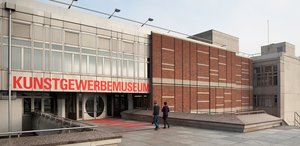 Kunstgewerbemuseum
