Alfio Giuffrida portree

Alfio Giuffrida maalid: 36 kuulsumat teost galeriin läbi

Uuendatud november 2026 · järjestatud meie populaarsusindeksi järgi (otsingud, külastused ja tellimused igale teosele) · 36 teost Alfio Giuffrida meie kataloogis

Lühidalt

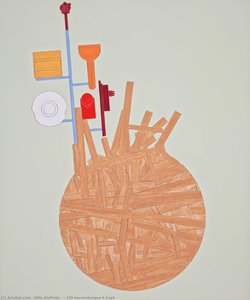
Galleriile on Alfio Giuffrida kõige kuulsam teos URBAN SCREENS Exp43 (2017). Überwindungen A Exp3 (2018) ja Natura Exp24 (2018) täidavad kolmikut, mille iga silm tunnistab. Kunstnii Alfio Giuffrida 36 teose põhjal esitleb galeriis allpool 36 kõige kuulsumat, kus iga originaal on märgitud aastaga, muuseumiga ja kirjeldatud, mis teeb selle unikaalseks.

Conceptual art Enamama teoseid: Statens Museum For Kunst

Galeria 10 parimat Alfio Giuffrida maali

Alfio Giuffrida maalid, järjestus 11 kuni 36

Teemad, mis püüdisid Alfio Giuffrida pilma

Neli teemat, mis esinevad neis originaalkindel kõige sagedamini, ning iga teema parim näide.

Muuseumid, kus on säilitatud Alfio Giuffrida originaalteosed

Muuseum, milles on kõige rohkem sellel lehel esitatud maaleid.

Muuseumid Linn Alfio Giuffrida teosid Selle nimekirja maalid
Statens Museum For Kunst, KooberemaaStatens Museum For Kunst Kooberemaa 1 TORE Exp1

Alfio Giuffrida, iga aasta esindavad teosed

Alfio Giuffrida originaalteosed sellel lehel on pärinevad 2 aastast, 2017 kuni 2018 ning galeriis on esitatud iga perioodi ku名umad teosed.

Alfio Giuffrida maalid: galerii vastused

Milline Alfio Giuffrida maal on kõige kuulsam?Paljasta vastus

URBAN SCREENS Exp43 (2017). Järgnevad Überwindungen A Exp3 (2018) ja Natura Exp24 (2018).

Millised on Alfio Giuffrida top 10 maali?Paljasta vastus

URBAN SCREENS Exp43, Überwindungen A Exp3, Natura Exp24, Exponate Exp15, Eingangstore Exp7, Eingangstore Exp1, Eingangstore Exp4, Exponate Exp9, URBAN SCREENS Exp45 ja Exponate Exp11. Ülemine reiting näitab iga teose puhul aastat ja muuseumi.

Kui palju teoseid Alfio Giuffrida lõi?Paljasta vastus

Meie kataloogist leiate 36 teost kunstnikult Alfio Giuffrida, mis on pärinevad ajastust 2017 kuni 2018.

Kust leiad Alfio Giuffrida kõige kuulsamad originaalteosed?Paljasta vastus

Peamiselt Statens Museum For Kunst (Kooberemaa) muuseumites. Ülalpool olevate muuseumite tabelis on nendest kõik loetletud.

Millal lõi Alfio Giuffrida oma kuulsamad maalid?Paljasta vastus

Ajal 2017: 21 36 sellel lehel olevat teost on sellel perioodil loodud, მათart közül URBAN SCREENS Exp43.

Millised on Alfio Giuffrida varased ja hilised kuulsad teosed?Paljasta vastus

Sellel lehel on kõige vanem teos URBAN SCREENS Exp43 (2017) ja kõige värskeim Überwindungen A Exp3 (2018).

Millist teemat Alfio Giuffrida kõige rohkem käsitledas?Paljasta vastus

Geometric shapes (2) ja Abstract composition (2), kogu selle lehekülje 36 teose kohta.

Millise suunaga on Alfio Giuffrida seotud?Paljasta vastus

Conceptual art, seda lähtudes selle lehe originaalteostest.

Alfio Giuffrida: kunstnik

A Sculptor of Systems: The World of Alfio Giuffrida

Alfio Giuffrida, born in Italy in 1953, is an artist whose work defies easy categorization. He’s simultaneously a sculptor, installation artist, painter, and set designer—a polymath who explores the boundaries between art, design, and everyday life with a unique blend of Pop Art sensibilities and conceptual rigor. Giuffrida's journey began with a return to non-figurative representation in 1975, marked by his participation in the X Rome Quadriennale. This early foray into abstract forms laid the groundwork for a career dedicated to dissecting and reassembling the visual language of modernity. For much of the 1970s and 80s, he worked as a freelance painter and set designer in Rome, honing his skills in spatial composition and color theory before relocating to Cologne in 1986—a pivotal move that would significantly influence his artistic trajectory.

The A.G. Sinnwerke® Project: Art as Production

The founding of the fictitious factory A.G. Sinnwerke® in 2003 represents a turning point in Giuffrida’s oeuvre. This self-created entity wasn't merely a branding exercise; it was a deliberate exploration of art’s relationship to production, consumption, and authorship. Initially focused on CDs, CD-Sets, and “Selbstbau-Sets” (Do-It-Yourself Kits), A.G. Sinnwerke® challenged the traditional notion of the artist as sole creator. The factory offered components—Ovali, Kugeln, Irrigatoren, Mona Lisa sets—packaged in blister packs, inviting viewers to actively participate in the creation process. This wasn’t about mass production for its own sake; it was a conceptual gesture questioning the value and meaning of art objects in a consumer-driven society. The adjustable sculptures that followed, presented as models in corset form, further emphasized this theme—the idea of structure, support, and the potential for individual interpretation. Parallel to these object cycles, Giuffrida continued painting, extending the factory’s visual vocabulary onto canvas with works like Irrigatoren-Sätze, CD-Homes, and Kathedralen. He essentially provided the raw materials, allowing buyers to construct their own unique images—a radical act of decentralizing artistic control.

Stage Design & Spatial Narratives

Giuffrida’s work as a set designer, spanning from 1995 to 2003 and beyond, is inextricably linked to his sculptural practice. His collaborations with opera houses and theaters—including Oper der Stadt Köln, Schlosserei Schauspiel Köln, Internationales Tanzfestival Wien, Tiroler Landestheater Innsbruck, and Deutsche Oper am Rhein—allowed him to translate his spatial concepts into immersive environments. Productions like *Notebook*, *Die Verlobung in St. Domingo*, *Goya-Danzas negras*, and *Caravaggio* demonstrate a keen understanding of how form, color, and light can shape narrative and evoke emotion. These stage designs weren’t simply backdrops; they were extensions of Giuffrida's sculptural language—complex arrangements that challenged conventional perspectives and invited viewers to question the boundaries between reality and illusion. The influence of his painting is also visible in these works, with vibrant color palettes and dynamic compositions creating a visually arresting experience.

Exhibitions & Critical Reception

Throughout his career, Giuffrida’s work has been showcased in numerous exhibitions across Germany and beyond. Early shows at Bahnwärterhaus Villa Merkel – Galerie der Stadt Esslingen (1989) established his presence within the contemporary art scene. Later exhibitions at institutions like Suermondt-Ludwig-Museum Aachen (2001), Stadtmuseum Siegburg (2001), Mannheimer Kunstverein (2004), and Märkisches Museum Witten (2006) solidified his reputation as a thought-provoking and innovative artist. His exhibitions often featured a combination of sculptures, paintings, and installations, creating a holistic experience that highlighted the interconnectedness of his various artistic pursuits. While Giuffrida’s work doesn't adhere to any single stylistic movement, it resonates with Pop Art’s embrace of consumer culture, Minimalism’s emphasis on form and structure, and Conceptual art’s questioning of traditional artistic values.

Legacy & Historical Significance

Alfio Giuffrida stands as a significant figure in contemporary Italian sculpture, not for adhering to established norms but for actively dismantling them. His A.G. Sinnwerke® project remains a compelling example of art’s potential to critique and subvert the systems that govern its own creation and reception. By blurring the lines between artist, producer, and consumer, Giuffrida challenges us to reconsider our understanding of authorship, originality, and value. His work is a testament to the power of artistic experimentation—a continuous exploration of form, space, and the complex relationship between art and life. He doesn’t offer easy answers but instead invites viewers to engage in a dialogue with his creations, prompting them to question their own perceptions and assumptions about the world around them. Giuffrida's influence can be seen in contemporary artists who explore similar themes of production, consumption, and participation—artists who recognize that art is not merely an object but a dynamic process.