


1


Uuendatud november 2026 · järjestatud meie populaarsusindeksi järgi (otsingud, külastused ja tellimused igale teosele) · 7 teost Albert Edward Harris meie kataloogis
Lühidalt
Lieutenant Colonel Franklin Marston Leslie (1919) on Albert Edward Harris maalide kõige silmapaistvam teos; originaal kuulub museumi British Library, London. Pärast seda suunatakse pilk David Watkin Jones, Dafydd Morganwg (1832–1905) (1890) ja Colonel Bendyshe Walton, CIE (1913) suunas. Meie kataloogis olevatest Albert Edward Harris 7 teosest on need 7 kõige kuulsumat, millist igaüks on esitatud koos aasta, muuseumi ja põhjusega, miks teos on püsiv.


Muuseum, milles on kõige rohkem sellel lehel esitatud maaleid.
| Muuseumid | Linn | Albert Edward Harris teosid | Selle nimekirja maalid |
|---|---|---|---|
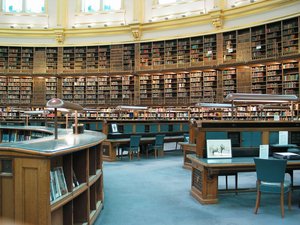 British Library |
London | 4 | Lieutenant Colonel Franklin Marston Leslie, Colonel Bendyshe Walton, CIE, Colonel Joseph Binning |
Pikk karjäär 30 aastat, aastast 1890 aastani 1919: Albert Edward Harris kõige kuulsamad originaalteosed, esitatud aastaaeglaadul.
Vali aasta, et näha originaale.
Lieutenant Colonel Franklin Marston Leslie (1919), British Library, London. Järgnevad David Watkin Jones, Dafydd Morganwg (1832–1905) (1890) ja Colonel Bendyshe Walton, CIE (1913).
Meie kataloogist leiate 7 teost kunstnikult Albert Edward Harris, mis on pärinevad ajastust 1890 kuni 1919.
Peamiselt British Library (London) muuseumites. Ülalpool olevate muuseumite tabelis on nendest kõik loetletud.
Ajal 1913: 3 7 sellel lehel olevat teost on sellel perioodil loodud, მათart közül Colonel Bendyshe Walton, CIE.
Sellel lehel on kõige vanem teos David Watkin Jones, Dafydd Morganwg (1832–1905) (1890) ja kõige värskeim Lieutenant Colonel Franklin Marston Leslie (1919).
Lieutenant Colonel Franklin Marston Leslie, Colonel Bendyshe Walton, CIE ja Colonel Joseph Binning: British Library, London säilitab 4 selle lehel olevat teost.
In the quiet, mist-shrouded landscapes of early twentieth-century Newfoundland, a unique artistic voice emerged from the intersection of industrial precision and romantic vision. Albert Edward Harris, an artist whose soul was as much tied to the rugged terrain of the North Atlantic as it was to the disciplined mind of an engineer, left behind a body of work that captures a vanishing era. Born in England around 1870, Harris carried with him the structured sensibilities of his formal training, yet his true passion lay in the evocative power of the natural world and the dignified presence of the human subject.
His journey was one of profound geographical and professional transformation. Emigrating to Newfoundland in 1907, Harris did not merely arrive as a visitor but became an integral part of the region's burgeoning industrial fabric. As an engineer, he navigated the complexities of the pulp and paper industry, eventually rising to the esteemed position of Managing Director of the Anglo-Newfoundland Development Company. This dual identity—the pragmatic architect of industry and the sensitive observer of beauty—imbued his art with a rare depth. His technical mastery allowed him to render the textures of military regalia and the structural majesty of landscapes with an exacting, realistic hand, while his artistic spirit sought the ephemeral glow of a sunset or the solemnity of a portrait.
The works of Harris are often characterized by their profound connection to the Newfoundland landscape. His paintings serve as visual chronicles of a territory defined by its raw, untamed beauty. Whether capturing the serene light over Sunset near Caerphally or the sweeping vistas of the Atlantic coast, his brushwork conveys a deep reverence for the environment. This was not merely topographical documentation; it was an emotional engagement with the land. His ability to manipulate light and shadow brought a dramatic, almost cinematic quality to his oil paintings, making the rugged terrain feel both intimate and monumental.
Beyond the landscape, Harris demonstrated a remarkable talent for portraiture, particularly in capturing the dignity of those within the British colonial and military spheres. His portraits, such as the 1919 depiction of Lieutenant Colonel Franklin Marston Leslie, are masterclasses in character study. In these works, he utilized his understanding of form and texture to highlight the weight of responsibility and the prestige of office, often focusing on the intricate details of military attire and the commanding presence of his subjects. This skill in portraiture allowed him to bridge the gap between the personal and the historical, immortalizing the faces of an era.
Harris’s contribution to the arts extended far beyond the canvas; he was a foundational pillar of the Newfoundland artistic community. In 1925, alongside Fanny McNeil, he co-founded The Newfoundland Society of Art. This institution was vital in fostering a local creative ecosystem, organizing exhibitions that brought both local talent and international works to the forefront of the colony's cultural life. Through this endeavor, Harris helped establish a sense of artistic identity for a region that was often viewed through a purely industrial or colonial lens.
His later years were spent in the picturesque village of Brigus, residing in Kent Cottage—a home famously once occupied by the American artist Rockwell Kent. It was here, amidst the salt air and coastal beauty, that Harris continued his creative pursuits until his passing on October 24, 1933. Today, his legacy is preserved in prestigious collections such as The Rooms Provincial Art Gallery in St. John's. To look upon a Harris painting is to witness the harmonious marriage of an engineer's precision and an artist's passion, a testament to a man who saw the profound beauty hidden within both the machine and the wild.
