Alfred Joseph Casson portree

13 kulubumatamatum Alfred Joseph Casson maali, galeriiselektsioon

Uuendatud november 2026 · järjestatud meie populaarsusindeksi järgi (otsingud, külastused ja tellimused igale teosele) · 14 teost Alfred Joseph Casson meie kataloogis

Lühidalt

Kõigist Alfred Joseph Casson jäetud originaalteostest on kõige kuulsam White Pine (1957), mis kuulub McMichael Canadian Art Collection kogele linnas Vaughan. Järgnevad sellest Twilight near Britt (1960) ja Church and Graveyard (1933). Meie kataloogist löytyb 14 teost kunstnikult Alfred Joseph Casson; galeriist on säilitatud 13 maailmas kõige imetlustunud teost, millest iga on esitatud koos kuupäeva, museumi ja oma luguga.

1898 – 1992, Toronto Canadian realism Enamama teoseid: McMichael Canadian Art Collection

Alfred Joseph Casson top 10 maalist: galeriis valitud teosed

4
Shore Pattern (1960) autor Alfred Joseph Casson

Shore Pattern

1960 · Oil · McMichael Canadian Art Collection, Vaughan

In the quietude of Shore Pattern, we are invited into a sanctuary of light and stillness, where the boundary between the forest and the water dissolves into a rhythmic dance of nature. Painted in 1960 by the esteemed Canadian master Alfred Joseph Casson, this work serves as a profound meditation on the tranquility of the landscape. The composition draws the eye through a lush, verdant corridor of tall trees that…
5
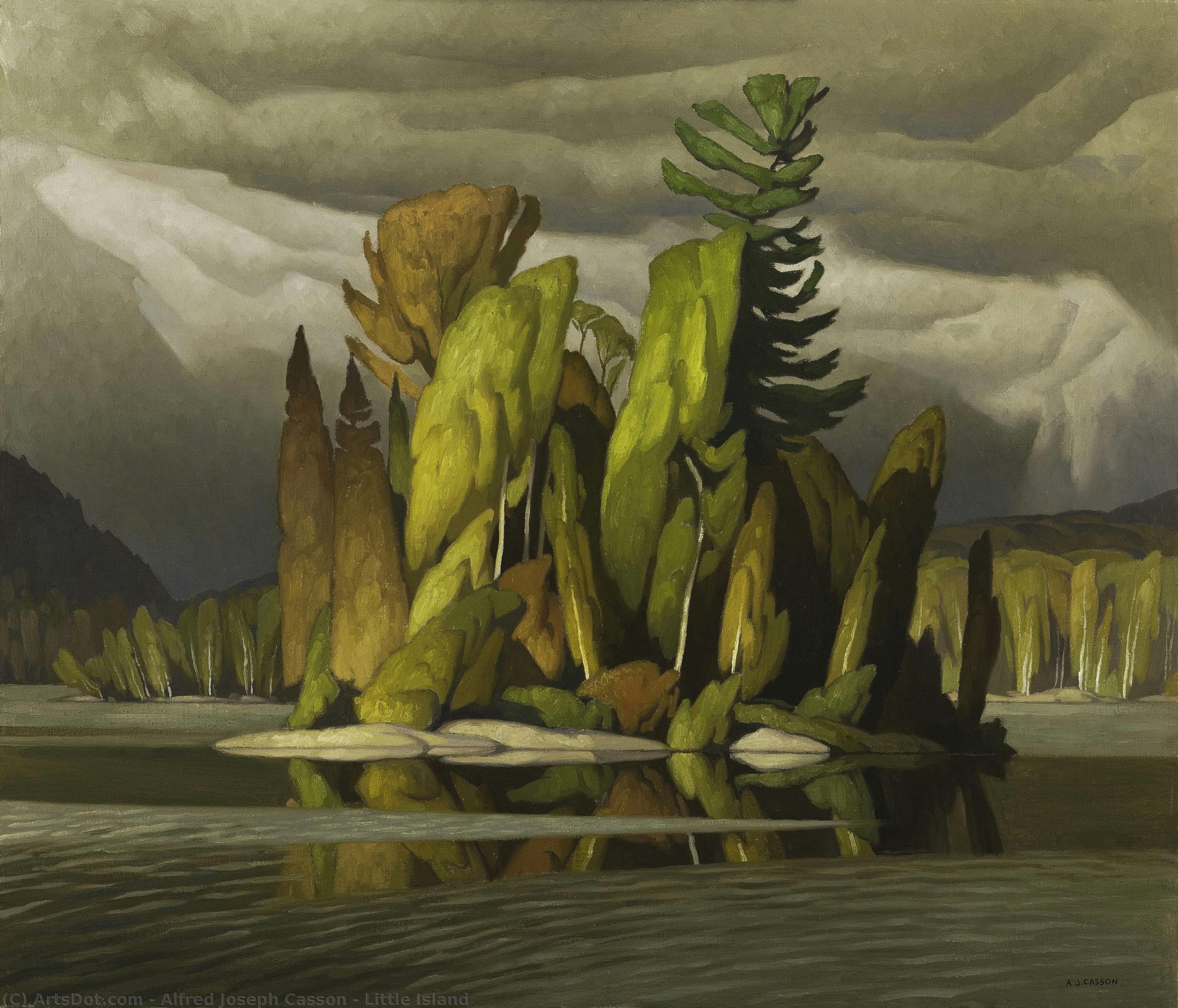
Little Island (1965) autor Alfred Joseph Casson

Little Island

1965 · Oil · McMichael Canadian Art Collection, Vaughan

In the quietude of Little Island, created in 1965 by the esteemed Canadian master Alfred Joseph Casson, we find ourselves transported to a moment of profound stillness. The painting serves as a window into a secluded world, where a solitary patch of earth rests peacefully amidst the gentle ripples of a lake or river. This is not merely a depiction of geography, but an invitation to pause and breathe alongside…

Kunstianikut Alfred Joseph Casson nimekiri jätkub, 11 kuni 13

Teemad, mis püüdisid Alfred Joseph Casson pilma

Neli teemat, mis esinevad neis originaalkindel kõige sagedamini, ning iga teema parim näide.

Muuseumid, kus on säilitatud Alfred Joseph Casson originaalteosed

Kümne 3 muuseumi kollektsioonid, mis sisaldavad kõige rohkem sellel lehel esitatud teoseid.

Muuseumid Linn Alfred Joseph Casson teosid Selle nimekirja maalid
McMichael Canadian Art Collection, VaughanMcMichael Canadian Art Collection Vaughan 8 White Pine, Church and Graveyard, Shore Pattern
Kanada Rahvusgalerii, OttawaKanada Rahvusgalerii Ottawa 3 Twilight near Britt, Clearing, Summer Landscape
The Robert McLaughlin Gallery, OshawaThe Robert McLaughlin Gallery Oshawa 1 Old House - Parry Sound

Alfred Joseph Casson aastak aegades: originaalteos, mis määratleb iga ajastu

Teosed aastakate kaupa

Vali vuosakülg, et näha selle ajastu definieerivat originaalteost.

Sammlajate küsimused Alfred Joseph Casson maalide kohta

Millise teosega on Alfred Joseph Casson kõige kuulsam?Paljasta vastus

White Pine (1957), McMichael Canadian Art Collection, Vaughan. Järgnevad Twilight near Britt (1960) ja Church and Graveyard (1933).

Kui vana oli Alfred Joseph Casson, kui teos White Pine loodi?Paljasta vastus

59 aastat vanus: teos White Pine on pärinev aastast 1957 ning Alfred Joseph Casson sündis aastal 1898.

Millised on kümne kõige kuulsama Alfred Joseph Casson maalid?Paljasta vastus

White Pine, Twilight near Britt, Church and Graveyard, Shore Pattern, Little Island, Clearing, Summer Landscape, Old House - Parry Sound, In The Village of Markham ja Tom Thomson. Ülemine reiting näitab iga teose puhul aastat ja muuseumi.

Kui palju maali Alfred Joseph Casson jäeti?Paljasta vastus

Meie kataloogist leiate 14 teost kunstnikult Alfred Joseph Casson, mis on pärinevad ajastust 1923 kuni 1965.

Mitteks muuseumides rihangavad Alfred Joseph Casson meistriteosed?Paljasta vastus

Peamiselt McMichael Canadian Art Collection (Vaughan), Kanada Rahvusgalerii (Ottawa) ja The Robert McLaughlin Gallery (Oshawa) muuseumites. Ülalpool olevate muuseumite tabelis on nendest kõik loetletud.

Millah aastades maalas Alfred Joseph Casson oma kuulsamaid teoseid?Paljasta vastus

Ajal 1960s: 4 13 sellel lehel olevat teost on sellel perioodil loodud, მათart közül Twilight near Britt.

Mis on Alfred Joseph Casson esimene ja viimane kuuls fama originaalteos?Paljasta vastus

Sellel lehel on kõige vanem teos Clearing (1923) ja kõige värskeim Little Island (1965).

Milliseid teemasid Alfred Joseph Casson kõige sagedamini valis?Paljasta vastus

Landscape (5), Trees (4) ja Water (3), kogu selle lehekülje 13 teose kohta.

Millist tehnikat kasutas Alfred Joseph Casson kõige rohkem?Paljasta vastus

Oil, 6 teoseks 13 töödelt sellel lehel.

Minge pihta kunstisuunasse, kuhu Alfred Joseph Casson kuulub?Paljasta vastus

Canadian realism, seda lähtudes selle lehe originaalteostest.

Millised Alfred Joseph Casson teosed on McMichael Canadian Art Collection näituses?Paljasta vastus

White Pine, Church and Graveyard ja Shore Pattern: McMichael Canadian Art Collection, Vaughan säilitab 8 selle lehel olevat teost.

Alfred Joseph Casson: elu ja looming

A Life Rooted in the Canadian Landscape

Alfred Joseph Casson, a name synonymous with Canada’s artistic identity, was born in Toronto on May 17, 1898. His journey began not within the hallowed halls of an art academy, but amidst the practical demands of apprenticeship at a Hamilton lithography company following early studies at Hamilton Technical School. This formative period instilled in him a meticulous attention to detail and a deep understanding of visual processes – skills that would later prove invaluable as he translated his vision of the Canadian landscape onto canvas. Even these early experiences were nurtured by formal instruction; private lessons with Harry Britton introduced young Casson to both oil and watercolour techniques, igniting a lifelong passion for capturing the nuances of light and colour. A move back to Toronto in 1916 allowed him to further hone his skills at Central Technical School and the Ontario College of Art, setting the stage for a career that would profoundly shape Canadian art.

Joining the Chorus: The Group of Seven

The year 1926 marked a pivotal moment in Casson’s artistic trajectory. He received an invitation from Franklin Carmichael to join the esteemed Group of Seven, stepping into the role previously held by Frank Johnston. This wasn't merely acceptance into a collective; it was an embrace by a group actively forging a distinctly Canadian visual language. The Group of Seven sought to move beyond European conventions and depict the raw beauty and untamed spirit of their homeland. Casson’s contribution lay in his unique perspective, often focusing on the more settled regions of southern Ontario – picturesque villages, rolling farmlands, and tranquil forests. While others explored the dramatic grandeur of northern landscapes, Casson found poetry in the everyday scenes of rural life, imbuing them with a quiet dignity and subtle emotional resonance. His style, characterized by clear colours and carefully constructed compositions, offered a counterpoint to the bolder, more expressive brushwork of some of his colleagues, yet remained undeniably part of the Group’s unified vision.

Beyond the Seven: Expanding Artistic Horizons

Casson's commitment to fostering Canadian art extended beyond his involvement with the Group of Seven. In 1933, he co-founded the Canadian Group of Painters, an organization intended to provide a broader platform for artists working in various styles and mediums. This demonstrated a desire not only to promote his own work but also to nurture a thriving artistic community across the nation. Throughout his career, Casson balanced commercial work – notably as Art Director at Sampson-Matthews Ltd. for nearly two decades – with his personal artistic pursuits. He skillfully navigated these dual roles, using his position in the commercial world to support and promote Canadian art while simultaneously dedicating himself to painting full-time after his retirement in 1957. This dedication allowed him to fully immerse himself in capturing the landscapes that had captivated him since childhood.

A Lasting Legacy: Recognition and Influence

Alfred Joseph Casson’s impact on Canadian art is undeniable. His paintings, celebrated for their serene beauty and evocative depictions of Ontario's countryside, are held in prominent collections such as the McMichael Canadian Art Collection. He received numerous accolades throughout his life, including full membership in the Royal Canadian Academy of Arts, the Order of Canada, and honorary degrees from universities recognizing his significant contributions to the nation’s cultural heritage. The record-breaking sale of “Street in Glen Williams” for $542,800 in 2010 stands as a testament to the enduring appeal and increasing value of his work. Casson's legacy isn’t simply about the paintings he created; it’s about his role in defining what Canadian art could be – bold, independent, and deeply rooted in the unique character of the land. He passed away on February 20, 1992, leaving behind a body of work that continues to inspire artists and captivate audiences with its timeless beauty.