Introduction
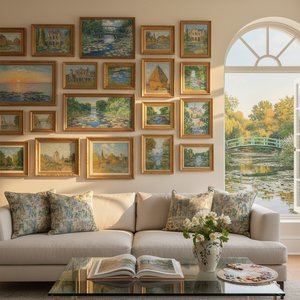
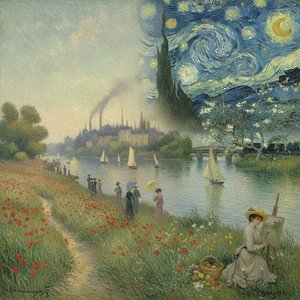
Close your eyes for a moment and imagine the world not as a collection of hard edges and static objects, but as a shimmering dance of light, a fleeting whisper of color caught in the breeze. This is the soul of the Impressionist landscape—a revolution that began not with a manifesto, but with a desire to capture the ephemeral beauty of a single, passing second.
In the late 19th century, a group of visionaries—rebels like Monet, Renoir, and Pissarro —stepped out of the dim, controlled confines of the studio and into the vibrant, unpredictable light of the outdoors. They abandoned the somber, academic shadows of the past to embrace en plein air painting, seeking to translate the sensory experience of nature onto canvas. They did not merely paint trees or water; they painted the way sunlight filters through a willow leaf, the way mist clings to a river at dawn, and the rhythmic pulse of a garden in full bloom.
\These masterpieces remain profoundly meaningful to us today because they speak a universal language of emotion and presence. In our modern, often hurried world, these paintings invite us to slow down, to breathe, and to notice the subtle magic in the mundane. They remind us that beauty is found in the transient—in the way a sunset dissolves into twilight or how shadows turn violet under a summer sun.
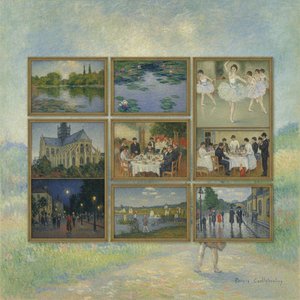
As we wander through this curated selection, we will revisit ten definitive works that shaped the very essence of the movement. Each painting serves as a window into a world where color breathes and light lives, guiding you through the brushstrokes that forever changed how we perceive the earth beneath our feet and the sky above our heads.
Rocks at Fontainebleau - Paul Cézanne
 Rocks at Fontainebleau - Paul Cézanne
In Rocks at Fontainebleau , Paul Cézanne orchestrates a breathtaking dialogue between shadow and sun, where light does not merely illuminate the landscape but sculpts it. The way a warm, golden glow radiates from a central boulder, piercing through the cool, somber tones of the forest floor, is nothing short of transformative. This masterful command of chiaroscuro—the interplay of deep purples and earthy browns against sudden, luminous patches—is precisely what secured this work's place among the top 10 masterpieces that defined the Impressionistic landscape movement . It captures a moment where the ephemeral light of the forest meets the eternal weight of stone.
Cézanne’s ability to find structure within the dappled shadows offers a profound sensory experience; one can almost feel the rugged, weathered texture of the granite under the soft canopy. When brought into a modern home as a hand-painted oil reproduction , this sophisticated use of light and shadow adds an incomparable layer of depth and quiet luxury. The painting acts as a window into a tranquil, architectural world, inviting a sense of contemplative stillness to any contemporary wall.
House of the Customs Officer, Varengeville - Claude Monet
 House of the Customs Officer, Varengeville - Claude Monet
To encounter Claude Monet’s House of the Customs Officer, Varengeville is to step into a soft, salt-misted dream of the Normandy coast. Painted during his profound explorations of the Étretat cliffs, this masterpiece does not merely depict a landscape; it captures the very breath of the Atlantic. Monet uses a rhythmic, pyramidal composition to anchor our gaze upon the weathered hilltop cabin, while below, the sea unfolds in shimmering layers of cerulean and emerald.
The magic lies in his impasto technique—those visible, dancing brushstrokes that transform sunlight into texture. You can almost feel the ruggedness of the cliffs and the cool spray of the waves through his vibrant, light-drenched palette. Owning this piece from our collection isn’t simply a purchase; it is an inheritance of the Impressionist spirit. It is a lineage of taste that brings the luminous soul of Varengeville directly to your walls, allowing you to live within a fleeting moment of eternal beauty.
Path in the park - vincent willem van gogh
 Path in the park - vincent willem van gogh
In the pantheon of the Impressionistic landscape movement, Vincent van Gogh’s 1888 masterpiece, Path in the Park , stands as a profound testament to the soul's search for serenity. Occupying a vital place in our selection of the top ten masterpieces, this work transcends mere scenery; it captures the very breath of Arles. While the Impressionists sought to capture the fleeting dance of light, Van Gogh used the Place Lamartine as a canvas for emotional depth, utilizing thick, rhythmic impasto to turn a sun-drenched stroll into a spiritual experience.
The painting invites us to witness a moment where humanity and nature exist in quiet harmony—a horse resting near the path, figures drifting through emerald shadows, and the vibrant, textured canopy of trees. It reminds us that beauty is often found in the stillness between life's storms. For the discerning collector, bringing this work into a modern home offers more than decor; it introduces a timeless conversation about peace and perception, allowing the luminous, sun-soaked energy of Provence to breathe life into any curated space.
The green vineyard - vincent willem van gogh
 The green vineyard - vincent willem van gogh
To stand before The Green Vineyard is to witness the very moment where nature meets the soul. In this 1888 masterpiece, Vincent van Gogh does not merely paint a landscape; he captures a pulse. While many Impressionistic landscapes focus on the fleeting dance of light, Van Gogh uses the vineyard as a stage for human endurance and vibrant vitality. The canvas breathes with an almost tactile energy, where thick, rhythmic impasto strokes transform a lush field into a living, breathing entity.
The palette is a symphony of verdant hues—deep emeralds and bright limes—interrupted by the rhythmic presence of workers tending to the earth. There is a profound, moving connection here between the labor of the hands and the brilliance of the sun. In our modern, often disconnected world, this painting remains a poignant cultural touchstone, reminding us of our ancestral bond to the soil and the beauty found in dedicated toil. It stands as a cornerstone of the movement, proving that a landscape can be much more than a view; it can be an emotional sanctuary.
Le parc de l - vincent willem van gogh
 Le parc de l - vincent willem van gogh
In Vincent van Gogh’s Le parc de l’asile Saint-Rémy , a deep, melancholic violet permeates the sky, setting a mood of profound introspection and quiet resilience. This masterpiece stands among the top 10 landscapes of the movement because it transcends mere scenery; through his signature thick impasto brushstrokes, Van Gogh uses a palette of emerald greens, ochre reds, and bruised blues to map the topography of his own soul during his convalescence at the Saint-Rémy asylum. The way the light catches the textured ridges of paint creates a rhythmic, pulsing energy that feels alive.
For the modern collector, integrating such a work into a living space offers an opportunity to anchor a room with emotional depth. The painting’s interplay of lush vegetation and somber sky can serve as a focal point for a dining room designed around organic textures and moody, atmospheric lighting. By echoing these deep tones in your decor, you invite the transformative power of nature and the enduring beauty of the Post-Impressionist spirit into your home, creating a sanctuary of light and reflection.
Snow at Argenteuil (Neige à Argenteuil) - Claude Monet
 Snow at Argenteuil (Neige à Argenteuil) - Claude Monet
In the quietude of a frozen landscape, Claude Monet captures something far more profound than a mere seasonal change; he captures the very breath of nature held in suspense. Snow at Argenteuil stands as a breathtaking testament to the Impressionist master's ability to translate the ephemeral into the eternal. As one of the most significant works in our journey through the top 10 masterpieces of the movement, it exemplifies the revolutionary use of light and color that redefined landscape painting forever.
The magic lies in Monet’s subtle palette; while draped in white, a closer look reveals vibrant strokes of blue, soft yellow, and even a striking crimson bush that breaks the monochromatic spell. This interplay of light-catching pigments allows sunlight to dance upon frozen surfaces, creating a shimmering brilliance through textured impasto brushwork. For the modern collector, this painting offers a serene, calming focal point, bringing a sense of tranquil, wintry peace and sophisticated luminosity to any contemporary interior space.
Étretat, mer agitée, 1883 - Claude Monet
 Étretat, mer agitée, 1883 - Claude Monet
In Étretat, mer agitée, 1883 , Claude Monet does not merely paint a coastline; he captures the very heartbeat of a storm. This masterpiece stands as a cornerstone in our selection of the top 10 masterpieces that defined the Impressionistic landscape art movement because it transcends mere observation to achieve pure emotional resonance. Through thick, rhythmic impasto and a daring palette of deep violets and frothing whites, Monet distills the ephemeral struggle between the sea and the cliffs of Normandy.
The painting’s brilliance lies in its sensory depth—the salt spray feels almost tangible through his expressive brushstrokes. For the modern collector, this work offers more than historical significance; it brings a dramatic, atmospheric energy to a contemporary interior. The movement's signature interplay of light and shadow provides a sophisticated focal point, perfect for creating a space of contemplative depth. Much like the fluid textures found in high-end textile design, Monet’s turbulent waves invite a sense of organic motion into the home, reminding us of the enduring beauty found within nature's most restless moments.
Orchard in Blossom (Apricot Trees) - vincent willem van gogh
 Orchard in Blossom (Apricot Trees) - vincent willem van gogh
In the sun-drenched landscapes of Arles, 1888, Vincent van Gogh captured a moment of profound renewal that continues to captivate the modern soul. Orchard in Blossom (Apricot Trees) stands as a cornerstone in our selection of the top 10 masterpieces that defined the Impressionistic landscape movement, representing the very heartbeat of Post-Impressionist vitality. This work is far more than a botanical study; it is a visceral celebration of life’s persistent rhythm, where the skeletal branches are suddenly cloaked in delicate white and pale pink blossoms.
Van Gogh’s mastery of the impasto technique allows the blossoms to physically emerge from the canvas, creating a tactile experience that mimics the lushness of a real orchard. The rhythmic dance of light through the trees invites us to reflect on the ephemeral nature of beauty and the enduring hope found in every spring. For the discerning collector, bringing this piece into a modern home creates a timeless conversation between history and decor, infusing a space with the luminous, optimistic energy of a Mediterranean morning.
Untitled (D2X2MZ) - Pierre-Auguste Renoir
 Untitled (D2X2MZ) - Pierre-Auguste Renoir
Imagine standing in a sun-drenched garden where the air feels warm and the light dances rhythmically across every leaf. This is the sensory embrace of Untitled (D2X2MZ) by Pierre-Auguste Renoir , a masterpiece that captures the very heartbeat of the Impressionistic landscape movement. Painted in 1905, this work represents a pinnacle of Renoir’s ability to dissolve solid forms into pure, luminous emotion.
The scene unfolds with a breathtaking harmony between nature and human presence; sturdy, mature trees frame a tranquil vista, their foliage rendered in dappled strokes of emerald and gold. Renoir’s signature technique—the soft, broken brushwork—allows sunlight to filter through the canopy, casting shimmering highlights that seem to pulse with life. There is no harsh line here, only the gentle suggestion of architecture nestled amongst the greenery. This painting earns its place among the top ten because it transcends mere scenery; it is a study in peace. To bring such a work into your home is to invite a permanent sense of serenity and a timeless, glowing light that continues to transform modern spaces into sanctuaries of contemplation.
Landscape - Paul Cézanne
 Landscape - Paul Cézanne
To gaze upon Landscape by Paul Cézanne is to step into a world where the fleeting light of Provence meets an eternal, structural truth. In this 1890 masterpiece, the soft rhythms of a hillside village—populated by wandering figures and drifting birds—are captured not as mere passing shadows, but as a profound architecture of color. Cézanne’s genius lies in his rebellion against the ephemeral; he moved beyond the shimmering surface of Impressionism to find the geometric soul of nature, using deliberate, textured brushstrokes that transform trees and dwellings into enduring forms.
This work earns its place among the top masterpieces of the movement by bridging the gap between the sensory beauty of Impressionism and the structural revolution of Cubism. It is a painting that demands presence. At OriginalUniqueArt.com, we believe such profound history should not be confined to museum walls. By bringing a hand-painted oil reproduction of this Provençal dream into your home, you are doing more than decorating; you are anchoring your personal sanctuary with a piece of art history that offers stability, grace, and an everlasting sense of peace.
Conclusion
As the light fades on our journey through these sun-drenched meadows and mist-covered waters, we realize that the Impressionist landscape is far more than a mere chapter in an art history textbook. These works are living, breathing presences that refuse to be confined to the gilded frames of museums. They exist in the way a soft morning light hits a breakfast nook, in the quiet nostalgia of a summer afternoon, and in the very way we seek to capture fleeting moments of beauty within our own homes. To live with these paintings is to invite a continuous dialogue between the soul and the natural world, a gentle reminder that even the most transient shimmer on a lily pond can become an eternal sanctuary for the heart.
These masterpieces continue to shape our modern interiors, offering more than just decoration; they offer atmosphere, emotion, and a sense of profound peace. Whether it is the rhythmic brushstrokes of a Van Gogh sky or the delicate, luminous haze of a Monet garden, these works bridge the gap between the historical past and our contemporary lives, echoing the timeless human desire to find wonder in the everyday. We invite you to continue this sensory exploration and find a piece of this enduring light for your own walls by wandering through our full collection . May these colors always remind you that beauty, much like the impressionist brushstroke, is found in the most delicate and fleeting of moments.