The Foundations: Alberti and Renaissance Architectural Theory
 Leon Battista Alberti
Leon Battista Alberti (1404-1472): Renaissance polymath! Architect, writer, mathematician & humanist. Explore his groundbreaking designs like Palazzo Rucellai & Tempio Malatestiano and theories on perspective.
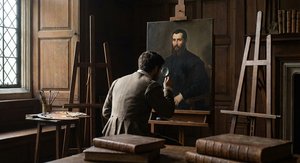
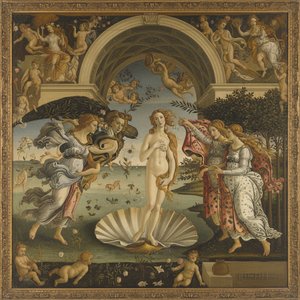
The story of architecture’s presence in art is inextricably linked to the intellectual currents of the Renaissance, a period that witnessed not merely a revival of classical forms but a profound re-evaluation of space, proportion, and humanism. At its heart lies the figure of Leon Battista Alberti, a true polymath – architect, writer, mathematician, and humanist – whose treatise De re aedificatoria (On the Art of Building) codified principles that would dominate architectural thought for centuries. Before Alberti, architecture was largely considered a practical craft; he elevated it to the status of a liberal art, grounded in theoretical understanding and mathematical precision. His emphasis wasn’t simply on *how* to build, but *why*, connecting architectural design to notions of civic virtue, harmony, and beauty. This shift is crucial because it established architecture not just as a physical structure, but as an idea worthy of artistic representation – a concept ripe for exploration by painters and draftsmen.
Alberti’s own designs, such as the Palazzo Rucellai in Florence and the Tempio Malatestiano in Rimini, weren't merely buildings; they were statements of philosophical intent. The façade of the Rucellai Palace, with its carefully modulated pilasters and entablature, embodies his belief in proportion and order. The Tempio Malatestiano, a reimagining of a Gothic church as a classical temple, demonstrates his ambition to synthesize ancient forms with contemporary needs. These structures became subjects for artists seeking to understand and disseminate these new architectural ideals, marking the beginning of architecture’s enduring presence within the broader landscape of art.
From Sketch to Symbolism: Leonardo da Vinci’s Architectural Studies
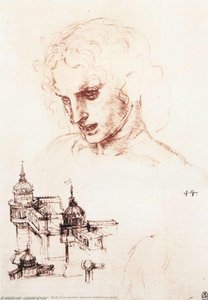 Study of an apostle's head and architectural study
Leonardo da Vinci's 'Study of an Apostle’s Head' & Architectural Study: A chalk drawing revealing Renaissance genius, architectural insight, and the Last Supper's preparation. Explore a masterpiece!
Leonardo da Vinci, a name synonymous with Renaissance genius, approached architecture not as a primary vocation but as an integral component of his wider scientific and artistic investigations. His surviving architectural drawings, though often fragmentary or unrealized projects, offer invaluable insight into the mind of a master grappling with spatial problems and visual representation. The “Study of an Apostle’s Head and Architectural Study” exemplifies this beautifully. It isn't simply a depiction of a head; it is interwoven with meticulous sketches of architectural elements – arches, vaults, and columns – suggesting a simultaneous exploration of human form and the structures that contain it.
This drawing reveals Leonardo’s deep understanding of perspective, crucial for creating convincing illusions of depth on a two-dimensional surface. More importantly, it hints at his preparatory work for *The Last Supper*, where architectural space serves not merely as a backdrop but as an active participant in the narrative drama. The precise rendering of the room's structure underscores the importance of order and proportion in conveying meaning – a direct inheritance from Alberti’s theoretical framework. Leonardo’s sketches weren’t just about building; they were about understanding how architecture could shape perception, evoke emotion, and enhance storytelling.
Dutch Masters & Interiority: Pieter Saenredam and the Precision of Light
 Pieter Jansz. Saenredam
Discover Pieter Saenredam (1597-1665), Dutch Master of church interiors & architectural painting. Explore his detailed perspective, serene light, and iconic scenes of Dutch Golden Age churches.
While the Italian Renaissance focused on grand architectural statements and theoretical ideals, Dutch Golden Age painting took a different approach. Pieter Jansz. Saenredam specialized in meticulously detailed depictions of church interiors, transforming seemingly mundane spaces into objects of profound beauty and spiritual contemplation. Unlike earlier representations that often emphasized narrative or symbolic elements, Saenredam’s paintings are characterized by their unwavering focus on architectural accuracy and the subtle effects of light.
His work is remarkable for its precise perspective – achieved through careful measurement and observation – and his ability to capture the serene atmosphere of Dutch Protestant churches. Saenredam wasn't interested in embellishment or dramatic flourishes; he sought to convey the inherent dignity and order of these spaces, emphasizing their geometric clarity and the play of light on their surfaces. Paintings like the St. Bavo Church in Haarlem are not merely records of architectural features but meditations on space, silence, and the power of visual perception. He elevated the everyday architecture of his time to a level of artistic significance previously reserved for more monumental subjects.
19th-Century Visions: Architecture as Historical Reconstruction – The Chantilly Project
 Project for the big castle of Chantilly
1848 drawing of Château de Chantilly by Eugène Louis Lami. Detailed architectural sketch in monochrome, showcasing classical design & precision draughtsmanship. A rare glimpse into French 19th-century art.
The 19th century witnessed a renewed interest in historical styles, fueled by Romanticism and a growing sense of national identity. This fascination with the past often manifested in ambitious architectural reconstructions and detailed documentation projects. Eugène Louis Lami’s “Project for the big castle of Chantilly” provides a compelling example of this trend. This drawing isn't a depiction of an existing structure but a meticulously rendered vision of how the Château de Chantilly might have appeared during its medieval heyday.
Lami’s sketch showcases classical design and precision draughtsmanship, revealing a deep understanding of architectural history and construction techniques. It represents a desire to recapture a lost grandeur, to visualize and celebrate a romanticized past. The detail in the drawing – from the intricate carvings to the carefully rendered stonework – speaks to the 19th-century fascination with historical authenticity. This project wasn’t simply about recreating a building; it was about constructing a narrative of national identity through architectural representation, offering a glimpse into French history and artistic sensibilities.
Beyond Representation: Pascal Xavier Coste and the Documentation of Global Styles
 Pascal Xavier Coste
Pascal Xavier Coste (1787-1879) was a French architect renowned for his detailed drawings of Egyptian & Persian architecture. Explore his influential work, travels, and contributions to 19th-century architectural studies. Key works include the Bourse
Pascal Xavier Coste represents a fascinating intersection between architecture, art, and travel. A French architect renowned for his detailed drawings of Egyptian and Persian architecture, Coste’s work played a crucial role in disseminating knowledge about non-Western architectural styles to a European audience. His travels throughout the Middle East and North Africa provided him with firsthand experience of these cultures, which he meticulously documented through his sketches and watercolors.
Coste's drawings weren’t merely aesthetic exercises; they were scholarly investigations, aimed at understanding the principles underlying these diverse architectural traditions. His work contributed significantly to 19th-century architectural studies, influencing designers and artists seeking new sources of inspiration. The Bourse in Lyon, though a European structure, reflects Coste's exposure to global styles, demonstrating his ability to synthesize different cultural influences into a cohesive design. He moved beyond simple representation, using art as a tool for cross-cultural understanding and the exploration of architectural diversity.
The Evolving Meaning of Architectural Space in Art: A Contemporary Perspective
From Alberti’s theoretical foundations to Coste’s global explorations, the relationship between architecture and art has continually evolved. Today, artists continue to engage with architectural space in innovative ways, challenging traditional notions of form, function, and meaning. Contemporary works often explore the psychological impact of architecture, its role in shaping social interactions, and its potential for both utopia and dystopia.
The enduring legacy of this artistic dialogue lies in its ability to reveal the deeper cultural, political, and emotional dimensions of the built environment. Whether through meticulous reconstructions, abstract interpretations, or critical examinations of urban landscapes, artists continue to demonstrate the power of architecture as a subject worthy of profound aesthetic and intellectual exploration. At OriginalUniqueArt.com, we celebrate this rich history by offering high-quality reproductions of masterpieces that capture the beauty and complexity of architectural representation – allowing you to bring these iconic visions into your own space.