The Genesis of Likeness: Portraiture in Antiquity & the Early Renaissance
Renaissance art (1350 – 1620) is the painting, sculpture, and decorative arts of the period of European history known as the Renaissance, which emerged as a distinct style in Italy in about AD 1400, in parallel with developments which occurred in phi...
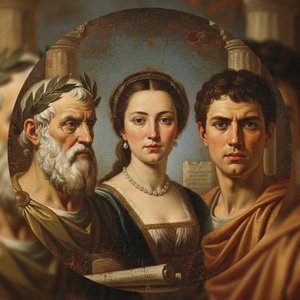
The human desire to capture likeness—to preserve a memory, assert power, or simply contemplate existence—is ancient. While rudimentary forms existed in antiquity, portraiture as we recognize it began to coalesce during the Renaissance, building upon foundations laid by Roman sculpture and funerary art. The Romans, masters of realism, created busts that weren’t merely representations but attempts at psychological insight, conveying status and civic virtue. However, these were often posthumous celebrations. It was in the Early Renaissance, particularly within the Flemish tradition, that portraiture truly began to blossom as a means of depicting the *living* individual. Artists like Jan van Eyck, with his groundbreaking oil techniques, moved beyond stylized representation towards an astonishing level of detail and naturalism. His Man in a Turban, for example, isn’t just a depiction of a wealthy merchant; it's a study in character, the subject’s gaze meeting ours across centuries, imbued with a quiet dignity.
Renaissance Individualism: The Rise of Secular Portraiture & Psychological Depth
 Man in a Turban
The shift from medieval collectivism to Renaissance humanism profoundly impacted portraiture. No longer solely reserved for religious figures or royalty, individuals—merchants, scholars, and patrons—began commissioning portraits as affirmations of their own worth and achievements. This burgeoning secular demand fueled innovation in technique and style. Artists moved beyond simply recording physical features; they sought to capture the sitter’s personality, intellect, and social standing. The development of oil painting was crucial here, allowing for subtle gradations of light and shadow, creating a sense of volume and realism previously unattainable with tempera or fresco. Consider Hans Memling’s Untitled (5048), a depiction of St. Mark; while religious in subject matter, the meticulous detail—the folds of his robe, the texture of his skin—demonstrates a commitment to lifelike representation that reflects this growing emphasis on individual observation and artistic skill. This wasn’t merely about *seeing* accurately but about *understanding* the person before you.
Symbolism & Status: Decoding the Language of Renaissance Portraits
 The Enduring Gaze: A Historical & Artistic Exploration of Portraiture Across Movements
Explore the rich history of portraiture with OriginalUniqueArt.com! Discover iconic masterpieces, influential artists & movements. Expert analysis for collectors and enthusiasts. Find your perfect artwork today.
Renaissance portraits were rarely straightforward depictions; they were laden with symbolism, communicating wealth, education, piety, and social aspirations. Clothing, jewelry, and even posture conveyed specific messages to a discerning audience. A red robe might signify nobility, while a book indicated learning or religious devotion. The inclusion of certain objects—a musical instrument, a globe, a favorite pet—revealed aspects of the sitter’s character and interests. Backgrounds were equally significant; landscapes often alluded to the family estate or conveyed moral virtues. Artists meticulously crafted these visual narratives, understanding that their patrons weren't simply seeking a likeness but a carefully constructed image designed to project a specific identity. The hands, for example, were frequently depicted with deliberate care—a gesture of piety, authority, or generosity.
Northern Realism vs. Italian Idealization: Divergent Approaches to Portraiture
While the Renaissance witnessed a flourishing of portraiture across Europe, distinct regional styles emerged. The Northern Renaissance, exemplified by artists like van Eyck and Rogier van der Weyden, prioritized meticulous realism and detailed observation. Their portraits often possessed an almost photographic quality, capturing every wrinkle, blemish, and strand of hair. In contrast, Italian Renaissance portraiture tended towards idealization, emphasizing classical beauty and harmony. Artists like Botticelli, while masterful in their own right, often softened features and employed elegant compositions to create a more flattering—and sometimes idealized—representation of the sitter. This difference wasn’t simply aesthetic; it reflected broader cultural values. The North emphasized empirical observation and individual character, while Italy prioritized classical ideals and artistic refinement.
Beyond Representation: Self-Portraiture as Artistic Exploration and Identity Formation
Self-portraiture, or Autoportraiture is the field of art theory and history that studies the history, means of production, circulation, reception, forms, and meanings of self-portraits. Emerging in Antiquity and becoming popular from the Renaissance ...
The Renaissance also saw a rise in self-portraiture, driven by the humanist emphasis on individuality and the artist’s own status. Artists began to depict themselves not merely as craftsmen but as intellectuals and creative geniuses. Albrecht Dürer's numerous self-portraits are prime examples of this trend; they weren’t simply records of his appearance but explorations of identity, ambition, and artistic skill. This practice allowed artists to experiment with technique, study their own features, and assert their individuality in a world that often valued anonymity. Maurice Quentin de la Tour's Preparation to the Portrait of Mrs. Rougeau, while technically a portrait of a patron, also reveals much about the artist’s process and self-awareness—a captivating allegory that hints at the complexities of artistic creation and representation. The very act of looking inward became a subject worthy of artistic investigation.
The Enduring Legacy: How Renaissance Portraiture Shaped Modern Art
The innovations in technique, symbolism, and psychological depth pioneered during the Renaissance continue to influence portraiture today. From the subtle gradations of light and shadow to the careful attention to detail, artists throughout history have drawn inspiration from the masters of this period. The emphasis on capturing individual character—the sitter’s personality, intellect, and social standing—remains a central goal of portraiture. Moreover, the Renaissance exploration of self-portraiture paved the way for modern explorations of identity and self-expression. The legacy of artists like van Eyck, Memling, and Dürer is not merely one of technical skill but of a profound understanding of the human condition—a gaze that continues to resonate across centuries. At OriginalUniqueArt.com, we are dedicated to making these masterpieces accessible, allowing you to experience the enduring power of Renaissance portraiture in your own home.