Introduction
To embark on a journey through the '04-Renaissance' is to step into a world reborn – a period where humanity rediscovered its voice, its beauty, and its boundless potential. This wasn’t merely an artistic shift; it was a cultural earthquake that reshaped our understanding of existence itself.
Emerging from the shadows of the Middle Ages in the early 15th century, Florence, Italy became the epicenter of this extraordinary movement. A renewed interest in classical antiquity – the art, philosophy, and literature of ancient Greece and Rome – fueled a thirst for knowledge and innovation. Wealthy patrons like the Medici family championed artists, fostering an environment where creativity flourished. The invention of linear perspective revolutionized painting, allowing for unprecedented realism and depth. Suddenly, canvases weren't just surfaces; they were windows into another world.
But beyond technical brilliance, these artworks captured something profoundly human: a celebration of the individual, a fascination with anatomy, and an exploration of emotion that resonated deeply within society. They moved away from purely religious iconography to embrace portraiture, mythology, and scenes of everyday life – reflecting a growing secular worldview.
Centuries later, these masterpieces continue to captivate us not just for their aesthetic splendor, but for the stories they tell, the questions they pose, and the enduring power of the human spirit they embody. They remind us of our capacity for greatness, our vulnerability, and the timeless search for meaning.
Over the following pages, we will explore ten exceptional works that define this pivotal era – paintings that not only shaped art history but continue to inspire awe and wonder in all who encounter them. Prepare to be transported back in time, to witness the birth of a new age and the enduring legacy of the '04-Renaissance'.
Mona Lisa (La Gioconda) - Leonardo da Vinci
 Mona Lisa (La Gioconda) - Leonardo da Vinci
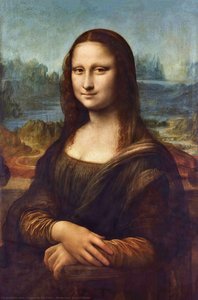
A silence hangs around her, a gentle mystery woven into the very fabric of time – Leonardo da Vinci’s Mona Lisa (La Gioconda) is more than a painting; it's an echo of the Renaissance spirit.
Immortalized as one of the Top 10 Masterpieces Defining the '04-Renaissance' Art Period, this 1519 portrait transcends mere representation. Da Vinci captured Lisa Gherardini not just in likeness, but in a profound psychological depth previously unseen. The revolutionary sfumato technique – layers of translucent glaze blurring lines and softening forms – creates an ethereal quality, lending her smile its enduring ambiguity.
Observe the half-length composition, subtly turned towards us, inviting intimacy. Note how the muted, earthy tones and delicate modeling of light evoke a sense of calm and timelessness. The winding paths and distant mountains in the background aren’t merely scenery; they hint at the complexities of life itself.
Today, La Gioconda continues to inspire. Its harmonious balance of form and emotion brings a touch of Renaissance sophistication to modern interiors, reminding us of the power of observation, the beauty of subtlety, and the enduring allure of the human spirit. This is not simply an artwork to be viewed, but a world to be entered – a testament to Da Vinci’s genius and the lasting legacy of the Italian Renaissance.
The Birth Of Venus - Sandro Botticelli
 The Birth Of Venus - Sandro Botticelli
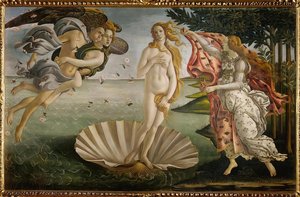
From a pearlescent shell, a goddess emerges – Sandro Botticelli’s The Birth of Venus (c. 1485) is not merely a depiction of myth, but a hymn to beauty and rebirth that defines the Italian Renaissance.
Among the Top 10 Masterpieces Defining the '04-Renaissance' Art Period, this work stands apart for its ethereal grace and profound symbolism. Botticelli’s Venus isn’t simply beautiful; she embodies Neoplatonic ideals of divine love and spiritual awakening. Observe her delicate form, subtly turned towards us, a testament to the era’s renewed fascination with classical antiquity.
The painting's soft palette – pale flesh tones contrasted with cool blues and greens – evokes a sense of calm and serenity. Note the elegant linearity of the figures, their flowing garments propelled by Zephyrus and Chloris, and the Hora awaiting with her richly adorned mantle. These details aren’t merely decorative; they represent the journey from marine origins to earthly integration.
Today, The Birth of Venus continues to inspire a sense of harmony and sophistication in contemporary living spaces. Its timeless beauty reminds us of the power of art to elevate the spirit and celebrate the enduring allure of the human form – a true masterpiece for generations to come.
Portrait of Giovanni Arnolfini and his Wife - Jan van Eyck
 Portrait of Giovanni Arnolfini and his Wife - Jan van Eyck
Bathed in a soft, northern light, Jan van Eyck’s Portrait of Giovanni Arnolfini and his Wife (1434) is more than a painting; it's an intimate glimpse into the heart of 15th-century life.
Among the Top 10 Masterpieces Defining the '04-Renaissance' Art Period, this work stands as a testament to Van Eyck’s revolutionary use of oil paint and his unparalleled attention to detail. Observe how light seems to emanate from within the scene, illuminating the textures of velvet, fur, and silk with breathtaking realism – a technique that redefined representation.
The painting is richly layered with symbolism, inviting contemplation beyond its surface beauty. The small dog symbolizes fidelity, while oranges represent wealth and fertility. And then there’s the convex mirror, reflecting not only the couple but also two witnesses and scenes from the Passion of Christ – a subtle link between earthly love and divine devotion.
Today, The Arnolfini Portrait continues to inspire a sense of quiet dignity and refined elegance in contemporary interiors. Its harmonious palette and meticulous detail evoke a timeless quality, reminding us of the power of art to capture not just likenesses, but the very essence of an era – a true masterpiece for generations to come.
Creation of Adam - Michelangelo Buonarroti
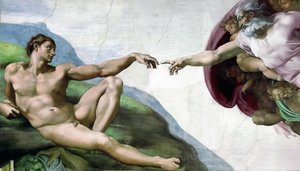 Creation of Adam - Michelangelo Buonarroti
Unveiled within the Sistine Chapel’s vast expanse, Michelangelo’s Creation of Adam is not merely a fresco; it's an encounter with the divine – a testament to human potential and the very spark of life.
Among the Top 10 Masterpieces Defining the '04-Renaissance' Art Period, this work stands as a pinnacle of artistic achievement. Observe how Michelangelo’s mastery of *fresco* technique brings breathtaking vibrancy and luminosity to the scene, despite the immense technical challenges involved. The composition embodies Renaissance ideals: classical beauty, anatomical accuracy, and dramatic storytelling.
The near-touching fingers – arguably the most potent symbol in Western art – represent the transmission of life itself. Adam’s relaxed pose suggests unrealized potential awaiting activation, while God's outstretched hand embodies divine grace. This isn’t simply a biblical illustration; it’s a profound meditation on our relationship with the creator.
Today, The Creation of Adam continues to inspire a sense of awe and wonder in contemporary spaces. Its harmonious balance and refined elegance evoke a timeless quality, reminding us of the power of art to elevate the spirit – a true masterpiece for generations to come.
The Last Supper - Leonardo da Vinci
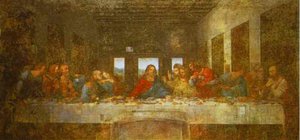 The Last Supper - Leonardo da Vinci
Within the refectory walls of Santa Maria delle Grazie, Leonardo da Vinci’s The Last Supper (c. 1495-1498) unfolds – a defining moment in Renaissance art and a profound exploration of human emotion.
Among the Top 10 Masterpieces Defining the '04-Renaissance' Art Period, this work stands as a testament to Da Vinci’s innovative spirit. Observe how he employs one-point linear perspective to draw our gaze directly to Jesus, while grouping the apostles in dynamic triads that reveal their individual reactions to his shocking announcement.
The painting isn’t merely a depiction of a biblical event; it's a masterful study of psychological tension and symbolic meaning. Every gesture, every expression, speaks volumes – from Judas’s recoiling isolation to Jesus’s calm center amidst the storm. The muted earth tones and dramatic lighting evoke a sense of solemnity and contemplation.
Today, The Last Supper continues to inspire a sense of refined elegance in contemporary interiors. Its harmonious composition and timeless themes resonate with those seeking a touch of Renaissance sophistication – a true masterpiece for generations to come.
The School of Athens (detail 1) (Stanza della Segnatura) - Raphael
 The School of Athens (detail 1) (Stanza della Segnatura) - Raphael
Within the grand Stanza della Segnatura, a world of thought unfolds – Raphael’s detail from “The School of Athens” is more than just a fresco; it's a visual celebration of human intellect and the pursuit of knowledge.
Among the Top 10 Masterpieces Defining the '04-Renaissance' Art Period, this work embodies the High Renaissance’s reverence for classical learning. Observe Plato and Aristotle, their gestures embodying two distinct yet complementary approaches to understanding reality – abstract thought versus empirical observation.
Raphael’s masterful technique, including subtle *sfumato*, creates an atmospheric depth and softens the contours of figures and architecture. The muted, earthy color palette—punctuated by Plato’s vibrant robe—enhances the sense of timelessness and intellectual gravitas. This isn't merely a depiction of ancient thinkers; it’s a harmonious representation of two essential paths to truth.
Today, this detail continues to inspire a sense of calm contemplation in contemporary spaces. Its balanced composition and refined elegance evoke a timeless quality – a true masterpiece for generations to come.
The Lamentation over the Dead Christ - Andrea Mantegna
 The Lamentation over the Dead Christ - Andrea Mantegna
A profound stillness emanates from Andrea Mantegna’s The Lamentation over the Dead Christ (c. 1480) – a Renaissance masterpiece that transcends religious depiction to become a universal exploration of grief and vulnerability.
Among the Top 10 Masterpieces Defining the '04-Renaissance' Art Period, this work stands as a testament to Mantegna’s innovative use of perspective and striking anatomical accuracy. Observe how he draws us into the scene with an almost unsettling intimacy, placing us at Christ’s feet.
The muted palette of browns and ochres emphasizes the physicality of death, while subtle highlights reveal the contours of Christ’s body and Mary’s anguished face. This isn't merely a depiction of sorrow; it’s an invitation to contemplate the weight of sacrifice and the universality of loss.
Today, The Lamentation continues to inspire quiet contemplation in contemporary spaces. Its timeless elegance evokes a sense of profound humanity – a true masterpiece for generations to come.
The Blue Boy (Jonathan Buttall) - Thomas Gainsborough
 The Blue Boy (Jonathan Buttall) - Thomas Gainsborough
Bathed in a captivating cerulean hue, Thomas Gainsborough’s The Blue Boy (c. 1770) is more than just a portrait; it's an enduring symbol of youth, elegance, and aristocratic life.
Among the Top 10 Masterpieces Defining the '04-Renaissance' Art Period, this work stands as a testament to Gainsborough’s masterful technique and his ability to capture mood and character. Observe how he eschews harsh lines for soft transitions, creating an atmospheric quality that envelops the figure.
The vibrant blue of the boy’s attire – a bold artistic statement in its time – is just one layer of meaning within this evocative painting. The slightly averted gaze and hand-on-hip pose suggest a complex inner life, while the distant ruins hint at mortality and the passage of time.
Today, The Blue Boy continues to inspire a sense of refined elegance in contemporary interiors. Its harmonious composition and timeless themes evoke a feeling of quiet contemplation – a true masterpiece for generations to come.
Double Portrait of Jean de Dinteville and Georges de Selve (also known as The Ambassadors) - Hans Holbein the Younger
 Double Portrait of Jean de Dinteville and Georges de Selve (also known as The Ambassadors) - Hans Holbein the Younger
Imagine stepping into a room filled with quiet power – that is the sensation evoked by Hans Holbein the Younger’s Double Portrait of Jean de Dinteville and Georges de Selve (1533). Among the Top 10 Masterpieces Defining the '04-Renaissance' Art Period, this work transcends portraiture to become a captivating statement on knowledge, religion, and mortality.
Holbein’s meticulous technique is breathtaking. Observe the luxurious textures of silk and fur, the gleaming surfaces of scientific instruments – each object rendered with astonishing realism. The composition is densely packed with symbolism, inviting ongoing interpretation. A lute with a broken string hints at discord, while an anamorphic skull stretches across the lower portion of the painting—a *memento mori* visible only from a specific angle.
The vibrant colors and dramatic lighting create a sense of depth and intrigue. Today, The Ambassadors continues to inspire contemplation in contemporary spaces. Its harmonious composition and timeless themes evoke a feeling of quiet authority – a true masterpiece for generations to come.
Ambassadors - Hans Holbein the Younger
 Ambassadors - Hans Holbein the Younger
A silence hangs within Hans Holbein the Younger’s Ambassadors (1533), a stillness that belies the turbulent world it depicts. Among the Top 10 Masterpieces Defining the '04-Renaissance' Art Period, this painting stands as a testament to the era’s intellectual fervor and underlying anxieties.
Observe the meticulous detail – from the luxurious textures of silk and fur to the gleaming surfaces of scientific instruments. Holbein doesn’t merely *represent* these objects; he breathes life into them, each one laden with symbolic weight. A lute with a broken string hints at discord, while an anamorphic skull stretches across the foreground—a stark reminder of mortality visible only from a specific angle.
The rich greens and deep reds create a sense of depth and intrigue, inviting contemplation on power, knowledge, and the fleeting nature of earthly glory. Today, Ambassadors continues to inspire a feeling of quiet authority in contemporary spaces – a true masterpiece for generations to come.
Conclusion
As we conclude our journey through these ten defining masterpieces of the '04-Renaissance' Art Period, it’s important to remember that each canvas holds more than just pigment and oil. Within every brushstroke lies a conversation—a timeless exchange between artist and admirer, spanning centuries.
These artworks are not simply historic treasures; they are living presences, capable of moving hearts, shaping interiors, and inspiring creativity today. They remind us of our shared humanity – the enduring power of love, loss, faith, and the relentless pursuit of beauty.
To experience the full breadth of this remarkable era, we invite you to explore our full collection . Perhaps within those galleries, you’ll discover a new connection—a silent dialogue with an artist from another time, and a reflection of your own soul.