Decoding Abstraction: Beyond Representation – Finding Meaning in Form, Color, and Texture
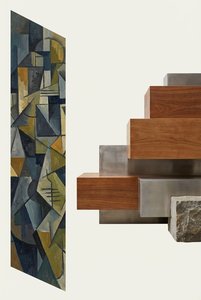
The contemporary art landscape often presents itself as a challenging terrain—a realm seemingly divorced from the familiar comforts of recognizable imagery. Yet, within this abstraction lies not emptiness, but a rich tapestry woven with emotion, history, and intellectual engagement. To approach abstract works solely as aesthetic objects is to miss their profound potential; they are vessels waiting to be unlocked, narratives yearning for interpretation. The shift away from representational art wasn’t merely a stylistic whim, but a fundamental questioning of perception itself—a desire to move beyond *what* is depicted and delve into *how* it is experienced. Consider the work of Jasper Johns in the 1960s, particularly ‘Grey Numbers’. At first glance, it appears as a dense composition of fragmented faces rendered in muted blues and greys. But closer examination reveals layers of meaning—a subtle commentary on language, memory, and the unsettling nature of modernity. The power resides not in identifying a specific subject, but in feeling the weight of its ambiguity, the echo of cubist forms colliding with expressionistic brushwork.
This departure from traditional representation wasn’t born in isolation. Artists like Georges Seurat, with his revolutionary Pointillist technique exemplified by ‘Modelo de frente’, laid crucial groundwork. Seurat didn't aim to replicate reality; he sought to understand the science of color and perception, creating a unique visual experience through meticulously placed dots that blend optically in the viewer’s eye. This focus on the mechanics of seeing—the very act of interpretation—became central to the abstract aesthetic. The early pioneers weren’t rejecting form altogether; they were redefining it, stripping away narrative constraints to reveal the underlying structure of vision.
The Emotional Palette: How Color Theory Shapes Perception and Narrative in Abstract Art
Color is arguably the most potent tool in an abstract artist's arsenal. It possesses a unique ability to evoke specific emotions, create spatial illusions, and establish a distinct visual language. The choice of color isn’t arbitrary; it’s often deeply rooted in psychological associations and artistic intention. Warm hues—reds, oranges, yellows—tend to convey energy, passion, and excitement, while cool tones—blues, greens, purples—evoke calmness, serenity, and introspection. However, these are not rigid rules. A predominantly blue painting might feel unsettling if the shades are dark and somber, or invigorating if they’re vibrant and saturated.
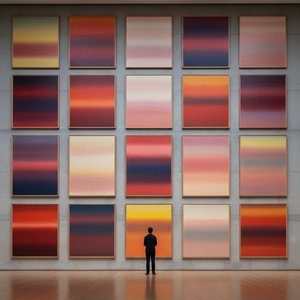
John Hoyland, a leading British abstract painter celebrated for his lyrical abstraction, masterfully demonstrates this power. His canvases often feature dynamic combinations of contrasting hues, creating a sense of movement and vitality that transcends mere decoration. Similarly, Odili Donald Odita's large-scale works explore the sociopolitical implications of color, using vibrant palettes to raise questions about race, identity, and historical context. The application of color is equally crucial—techniques like glazing create depth and luminosity, while impasto adds texture and physicality. Consider the Color Field painters, who embraced large areas of flat, solid color as a means of emphasizing the materiality of paint itself, freeing it from representational constraints.
Surface & Depth: Exploring the Role of Texture in Engaging with Abstract Compositions
Texture often goes unnoticed in discussions of abstract art, yet it plays a vital role in engaging the viewer’s senses beyond sight. It adds depth, physicality, and complexity to an abstract composition, inviting tactile exploration—even if only through the eyes. The surface of an abstract painting is rarely uniform; artists employ a variety of techniques to create texture, from smooth, polished surfaces to rough, impastoed layers. These textures can evoke different sensations – warmth, coolness, roughness, smoothness – and contribute significantly to the overall emotional impact.
Jacob Kainen, a pivotal figure in American Color Field painting and Abstract Expressionism, deliberately explored texture as he transitioned from Social Realism to vibrant abstraction. His layering and brushwork created dynamic surfaces that became integral parts of his compositions. Clyfford Still’s jagged flashes of color and heavy surface contrast evoke a sense of primordial energy, reminiscent of geological formations or turbulent landscapes. Texture can also be introduced through collage—incorporating different materials into the painting's surface—or by using unconventional tools and techniques, pushing the boundaries of traditional painting.
Historical Currents: Understanding the Contextual Roots of Contemporary Abstraction
Abstract art didn’t emerge in a vacuum. It was profoundly shaped by the social, political, and artistic movements of its time. The rise of modernism challenged traditional notions of beauty and representation, while the trauma of World War II fueled a desire for new forms of expression that could capture the anxieties and uncertainties of the era. Abstract Expressionism, born in post-war America, was a direct response to these forces—a search for authentic emotion through spontaneous gesture and large fields of color.
The movement wasn’t solely about emotional release; it also reflected a broader intellectual climate influenced by Surrealism's emphasis on subconscious creation and European modernism’s formal experimentation. Artists like Mark Rothko, while refusing to be categorized, were deeply concerned with expressing “basic human emotions” through color and form. Color Field painting emerged as a reaction against the gestural intensity of Abstract Expressionism, seeking meditative spaces through large areas of flat color. Recognizing these historical lineages provides valuable context for understanding the work’s evolution and significance.
Building Your Vision: A Collector’s Guide to Navigating the World of Abstract Art
Building a successful collection begins with defining your own taste and preferences. What styles, colors, and techniques resonate most strongly with you? Once you have a clear sense of your aesthetic, research artists who align with your vision. Consider their trajectory—their early works, mature style, and current direction. Look for consistency in their work and evidence of artistic growth. The provenance of the artwork – its history of ownership and exhibition – is also crucial; a well-documented provenance adds value and authenticity.
Diversification is key when it comes to investment. Don’t limit yourself to a single artist or style. Explore different movements, techniques, and mediums to create a balanced and dynamic collection. Don't hesitate to seek expert advice from art consultants or galleries—they can provide valuable insights into the market and help you identify promising artists.
Investing in Emotion: Assessing Value and Potential in the Contemporary Market
While aesthetic appreciation should be paramount, understanding the financial aspects of collecting is also important. The value of an abstract artwork isn’t solely determined by its size or complexity; it's influenced by factors such as the artist’s reputation, exhibition history, critical acclaim, and market demand. Research auction records and gallery prices to get a sense of comparable works. Consider the long-term potential of the artist—are they gaining recognition? Are their works being included in major museum collections? A strong curatorial vision – selecting artworks that reflect your personal taste and align with broader art historical trends – is essential for building a collection that appreciates over time.
Ultimately, collecting abstract art is a journey of discovery. It’s about more than just acquiring objects; it's about engaging with ideas, emotions, and the enduring power of human creativity. At OriginalUniqueArt.com, we offer a curated selection of museum-quality reproductions and original works, allowing you to explore this fascinating world and build a collection that reflects your unique vision.