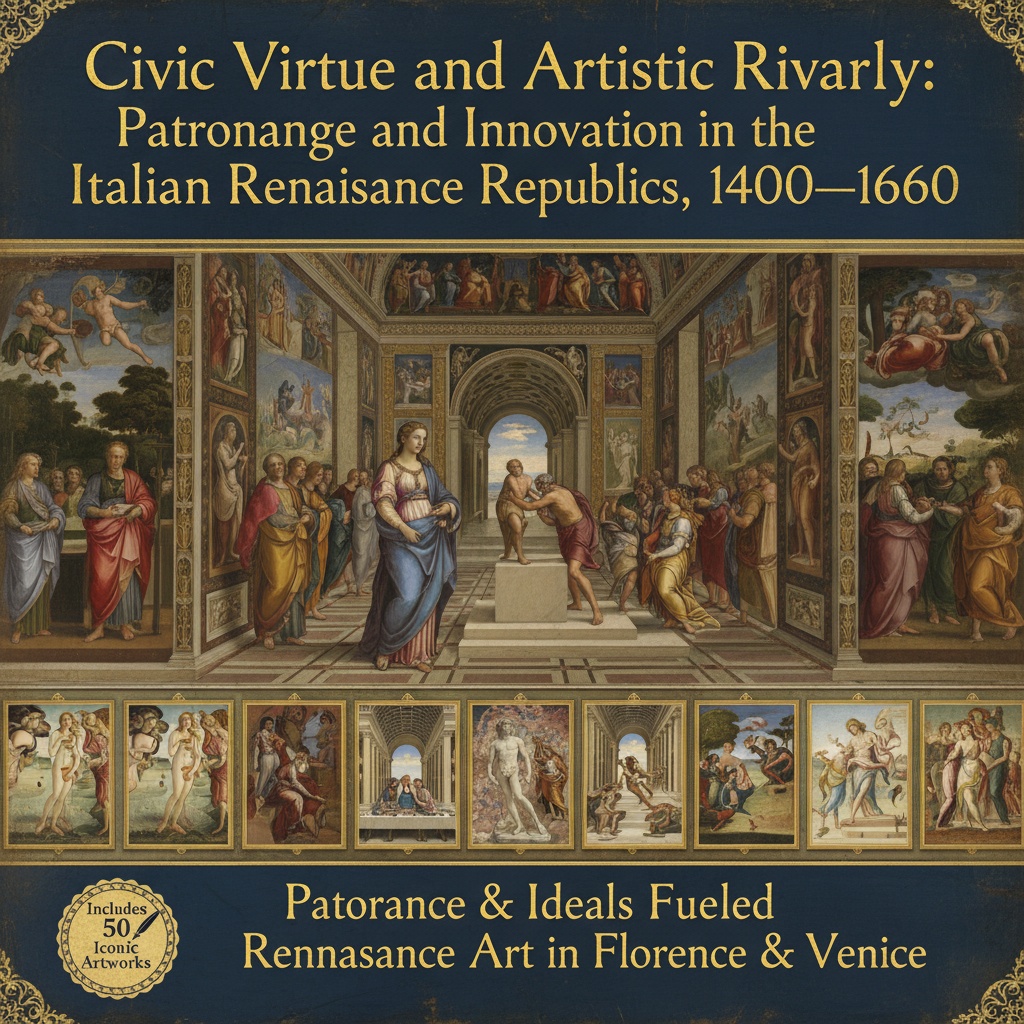
The Rise of Competitive Patronage: How Wealth Fueled Renaissance Art
Before the modern age, the notion of the artist as a solitary genius toiling for pure creative expression was largely absent. Instead, artistic creation flourished within a complex ecosystem of power, wealth, and social ambition. The Italian Renaissance—a period spanning roughly 1400 to 1600—offers a particularly compelling illustration of this dynamic. It wasn’t simply an outpouring of talent; it was a direct consequence of the competitive patronage system that thrived in the independent city-states dotting the peninsula. Imagine Florence, Venice, or Rome not as unified nations, but as vibrant hubs of commerce and political intrigue, each vying for dominance. Within these republics, merchants, bankers, and governing families understood that commissioning art wasn’t merely about acquiring beautiful objects; it was a strategic investment in prestige, legitimacy, and the very fabric of their public image.
The scale of this patronage was often breathtaking. Families like the Medici in Florence didn't simply commission paintings or sculptures—they funded entire architectural projects, transforming the cityscape into a testament to their power and taste. This wasn’t altruism; it was a calculated move to solidify their position within Florentine society. The Palazzo Medici-Riccardi, for example, served as both a family residence and a showcase for their vast collection of art, subtly communicating their wealth, discernment, and cultural sophistication. Other powerful families followed suit, creating a competitive environment where artists were constantly challenged to push the boundaries of technique and innovation in order to secure commissions. The desire to outdo one’s rivals fueled an unprecedented period of artistic experimentation.
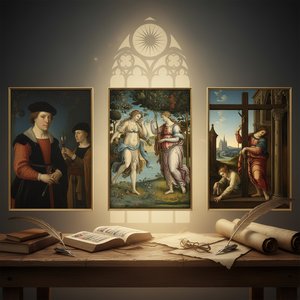
This competition extended beyond mere aesthetics. Patrons often dictated subject matter, ensuring that artworks reflected their values and political agendas. Religious imagery was frequently employed to demonstrate piety and garner divine favor, while portraits served as a means of celebrating the virtues and accomplishments of prominent citizens. The very act of commissioning art became intertwined with civic duty—a way for wealthy families to contribute to the cultural flourishing of their city-states.
City-States & Artistic Identity: Florence, Venice, and Beyond
The Italian city-states were numerous political and independent territorial entities that existed in the Italian Peninsula from antiquity to the formation of the Kingdom of Italy in the late 19th century. The ancient Italian city-states were Etruscan...
To understand Renaissance art fully, one must appreciate the distinct character of each Italian city-state. While interconnected through trade networks and shared cultural traditions, these republics were far from homogenous. Florence, with its emphasis on linear perspective and classical forms, developed a distinctly intellectual and humanist aesthetic. Artists like Donatello and Botticelli sought to emulate the beauty and harmony of ancient Greece and Rome, creating works that celebrated human reason and potential. Venice, however, forged a different path. Its unique geographical location—a maritime republic built upon trade with the East—exposed artists to new pigments, materials, and artistic influences.
Venetian painters such as Titian, Tintoretto, and Veronese were renowned for their mastery of colorism – a focus on rich, vibrant hues and atmospheric effects. Their works often depicted scenes of mythology, allegory, and everyday life, reflecting the city’s cosmopolitan culture and mercantile spirit. The patronage system in Venice was also more diverse than in Florence, with wealthy merchants, guilds, and religious confraternities all commissioning art. This resulted in a broader range of subject matter and stylistic approaches.
Even smaller cities like Siena developed unique artistic traditions. Domenico di Bartolo, for example, ran a successful workshop producing numerous altarpieces and frescoes that reflected the city’s devout religious beliefs and distinctive Gothic style. The Archivio di Stato in Siena holds invaluable documents detailing the organization of these workshops, offering a glimpse into the practical realities of Renaissance art production.
Humanism's Influence: Reclaiming Antiquity and Celebrating the Individual
Humanism is a philosophical stance that emphasizes the individual and social potential, and agency of human beings, whom it considers the starting point for serious moral and philosophical inquiry. The meaning of the term "humanism" has changed accor...
Underlying much of the artistic innovation of the Italian Renaissance was the philosophical movement known as Humanism. Emerging in the 14th century, Humanism represented a shift away from medieval scholasticism towards a renewed interest in classical antiquity—the art, literature, and philosophy of ancient Greece and Rome. This wasn’t simply about copying ancient forms; it was about rediscovering a worldview that emphasized human potential and agency.
Renaissance artists were inspired by classical models, seeking to emulate their beauty, harmony, and realism. This led to innovations in anatomy, perspective, and composition. The study of classical texts also fueled new intellectual pursuits, influencing artistic themes and iconography. However, Humanism wasn’t solely focused on the past; it also celebrated the achievements of contemporary individuals. Portraits became increasingly popular as a means of commemorating important events and celebrating family ties. Mythological subjects were reinterpreted through a humanist lens, focusing on human emotions and narratives rather than purely religious symbolism.
The emphasis shifted from divine contemplation to earthly experience, reflecting a growing belief in the power of human reason and observation. This is beautifully exemplified in Leonardo da Vinci’s work, where scientific inquiry and artistic expression were inextricably linked.
Portraits as Statements: Power, Virtue, and Social Standing in Renaissance Imagery
The rise of portraiture during the Italian Renaissance was a direct consequence of humanist ideals and the desire for self-representation. Unlike medieval portraits, which often focused on religious or symbolic attributes, Renaissance portraits emphasized individual likeness and psychological realism. Artists such as Raphael, Titian, and Leonardo da Vinci were renowned for their ability to capture the personality and inner life of their subjects.
Portraits also served as a powerful means of projecting social status and wealth. The clothing, jewelry, and settings depicted in portraits conveyed information about the sitter’s position in society. Commissioning a portrait was often an expensive undertaking, reserved for the elite. However, even less affluent individuals could commission smaller-scale portraits to commemorate important events or celebrate family ties.
The gaze of the sitter, their posture, and the objects surrounding them were all carefully chosen to communicate specific messages about their character and accomplishments. A portrait wasn’t simply a likeness; it was a carefully constructed statement of identity and social standing.
Workshops of Masters: Collaboration and the Production of Art
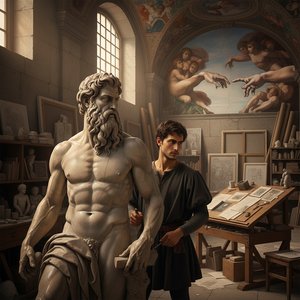
It's crucial to dispel the romantic notion of the solitary Renaissance artist working in isolation. The vast majority of artworks were produced within workshops – *botteghe* – employing assistants who helped with various tasks, such as preparing canvases, grinding pigments, and painting backgrounds. The master artist would typically oversee the entire process, providing guidance and executing key elements of the composition.
This collaborative system allowed artists to fulfill large commissions efficiently and maintain a consistent style. Workshops also served as centers for artistic training, where young apprentices learned the skills of the trade. Domenico di Bartolo’s workshop in Siena is a prime example of this model, producing numerous altarpieces and frescoes with the help of his assistants.
The organization of these workshops was often complex, involving a hierarchy of skill levels and responsibilities. The master artist would typically handle the most important commissions and oversee the training of apprentices, while assistants were responsible for more routine tasks. This system ensured that artworks met high standards of quality and consistency.
Beyond Painting: Sculpture, Architecture, and the Total Work of Art
While painting often receives the most attention, sculpture and architecture played equally important roles in shaping the artistic landscape of the Italian Renaissance. Artists such as Donatello and Michelangelo revolutionized sculpture, drawing inspiration from classical models and pushing the boundaries of anatomical realism. Architectural projects, funded by wealthy patrons, transformed cityscapes into testaments to their power and taste.
The concept of the “total work of art” – *Gesamtkunstwerk* – emerged during this period, encompassing all aspects of artistic creation—painting, sculpture, architecture, music, and even literature. The Medici villas in Tuscany, for example, were designed as integrated environments that combined architectural beauty with stunning frescoes, sculptures, and gardens.
Ultimately, the Italian Renaissance was a testament to the power of human creativity, fueled by competitive patronage, humanist ideals, and a desire to reclaim the cultural heritage of antiquity. The artworks produced during this period continue to inspire and captivate audiences today, offering a glimpse into a world where art wasn’t simply about aesthetics—it was about power, prestige, and the very fabric of society.
Explore these masterpieces and more at OriginalUniqueArt.com, where you can discover hand-painted reproductions and museum-quality prints to bring the beauty of the Renaissance into your own home.