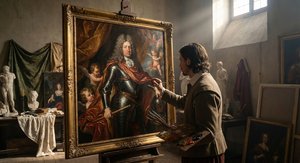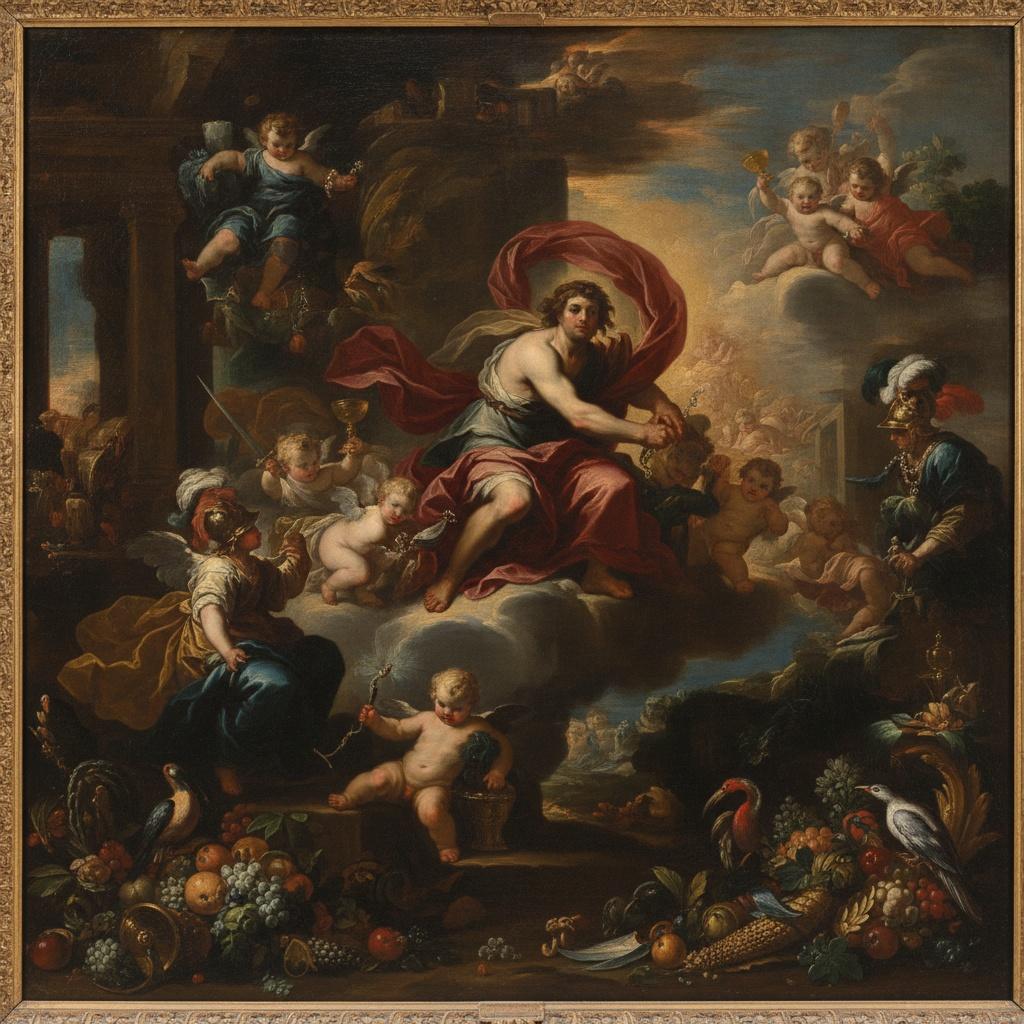
The Baroque Revolution: From Renaissance Balance to Emotional Intensity
 The Visceral Stage: Exploring Dramatic Narratives & Emotional Intensity in Baroque Art
The Baroque Embrace of Emotion: A Shift from Renaissance Rationality Wikipedia: Baroque painting Baroque painting is the painting associated with the Baroque cultural movement. The movement is often identified with Absolutism, the Counter Reformation...
For centuries, the art world was governed by a pursuit of idealized beauty—a harmonious, static perfection rooted in the classical principles of the Renaissance. This era celebrated reason, proportion, and an almost mathematical clarity that invited intellectual contemplation but often maintained a respectful distance from the viewer. However, as the seventeenth century dawned, a seismic shift occurred. The arrival of the Baroque movement was not merely a stylistic evolution; it was an artistic earthquake that shattered the restraint of its predecessors.
Emerging from profound religious and political upheavals, particularly the Counter-Reformation, this new aesthetic demanded attention. It moved away from the calm, symmetrical compositions favored by masters like Raphael, opting instead for a visceral response to the human condition. The Baroque era embraced movement, dynamic diagonals, and a theatricality that sought to stir the very soul of the observer. It was no longer enough for art to be beautiful; it had to be felt. This period transformed the canvas into a stage where figures were caught in moments of profound psychological or spiritual crisis, replacing intellectual detachment with an immediate, overwhelming emotional impact.
Chiaroscuro & Drama: Mastering the Language of Light and Shadow
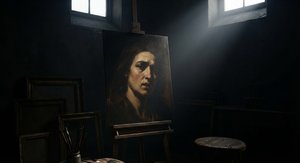 Chiaroscuro & Emotional Resonance: Exploring Dramatic Light in Western Painting
The Renaissance Roots of Chiaroscuro: From Drawing to Painting Wikipedia: Chiaroscuro In art, chiaroscuro (English: kee-AR-ə-SKOOR-oh, -SKURE-, Italian: [ˌkjaroˈskuːro]; lit. 'light-dark') is the use of strong contrasts between light and dark, usual...
At the heart of this dramatic revolution lies one of the most mesmerizing technical innovations in art history: chiaroscuro. Derived from the Italian words for light and dark, this technique utilizes strong, bold contrasts to sculpt forms and breathe life into compositions. In the hands of Flemish masters, chiaroscuro became a language of its own, a way to direct the eye through a labyrinth of shadow toward moments of sudden, luminous revelation.
This interplay between light and dark does more than just create three-dimensional depth; it creates atmosphere. When we observe the way light strikes a subject's face or catches the edge of a silken sleeve, we are witnessing tenebrism—a heightened form of chiaroscuro where darkness becomes a dominant, enveloping force. This technique allows artists to manipulate the viewer's focus, creating a sense of mystery and tension. The shadows are not merely empty spaces but are heavy with potential, while the light serves as a spotlight, highlighting the textures of skin, fabric, and emotion, ensuring that every brushstroke contributes to a larger, more dramatic narrative.
Rubens and Van Dyck: The Titans of Flemish Grandeur
 The Straw Hat
A Portrait Steeped in Baroque Drama: Examining Rubens’ “The Straw Hat” “The Straw Hat,” painted by Sir Peter Paul Rubens in 1625, transcends mere visual representation; it embodies the very spirit of the Baroque era—a period defined by opulent grande...
Within the vibrant heart of Flanders, certain names rose to legendary status, defining the very essence of the Baroque spirit. Sir Peter Paul Rubens stands as perhaps the most influential figure of this era, a painter whose work embodies opulent grandeur and rhythmic energy. In masterpieces such as The Straw Hat, Rubens demonstrates an unparalleled ability to blend serenity with a turbulent, atmospheric backdrop. His brushwork is often loose and expressive, prioritizing the conveyance of vitality and movement over mere anatomical perfection. To gaze upon a Rubens is to experience a sensory deluge, where color and composition dance in a state of eternal motion.
Complementing the muscular energy of Rubens was the sophisticated grace of Sir Anthony van Dyck. If Rubens provided the drama, Van Dyck provided the elegance. His portraits, such as the Portrait of Sir Thomas Chaloner, are breathtaking testaments to his ability to capture not just a physical likeness, but the very soul of the aristocracy. Van Dyck mastered the art of presence, using subtle light and meticulous attention to texture—the crispness of lace against the somber weight of velvet—to whisper of status, intellect, and refined taste. Together, these titans established Antwerp as the cultural capital of Europe, creating a legacy of prestige that continues to captivate collectors today.
Opulent Details: Texture, Symbolism, and the Art of Presence
 Portrait of Sir Thomas Chaloner
A Masterpiece of Baroque Elegance In the grand tapestry of the seventeenth century, few names resonate with as much grace and sophistication as Sir Anthony van Dyck . His Portrait of Sir Thomas Chaloner , painted in 1620, stands as a breathtaking tes...
The Flemish Baroque is a period defined by its obsession with the tangible. There is a profound tactile quality to these works; one can almost feel the weight of the heavy brocades, the coolness of pearls, and the delicate fragility of lace. This meticulous attention to detail serves a purpose far beyond mere decoration. In the Baroque tradition, every element of a composition was often imbued with deep symbolic meaning. A musical instrument held gently in a portrait might symbolize harmony or the fleeting nature of life, while the specific arrangement of flowers could speak to themes of mortality and rebirth.
This era excelled at what we might call the art of presence—the ability to make a subject feel undeniably real and immediate. Through the masterful manipulation of light on various surfaces, artists created a visual rhythm that guides the eye across the canvas. The contrast between deep, light-absorbing blacks and luminous, reflective whites creates a sense of structural integrity within the painting. This richness of detail ensures that the viewer remains engaged, discovering new layers of meaning and texture with every subsequent glance, much like exploring a beautifully crafted tapestry.
Architectural Echoes: Bringing Baroque Scale to Modern Interiors
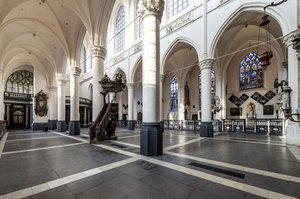 Sint-Jacobskerk
Sint-Jacobskerk: Antwerp’s Baroque Masterpiece – A Symphony of Faith and Art Sint-Jacobskerk, nestled in the heart of Antwerp’s historic center, stands as an unparalleled example of architectural fusion—a Gothic cathedral magnificently transformed by...
The spirit of the Flemish Baroque extends far beyond the frame of a painting; it is an aesthetic of scale and transformation. This is most evident in the architectural marvels of the period, such as Antwerp’s Sint-Jacobskerk. Here, we see the magnificent fusion of Gothic foundations with exuberant Baroque embellishments. The soaring arches and ribbed vaults provide a solemn framework that is then electrified by gilded decorations, opulent frescoes, and monumental altarpieces. This architectural philosophy—using art to bridge the gap between the earthly and the divine—remains one of the most powerful legacies of the era.
For the modern collector, this sense of drama can be translated into contemporary living spaces through the thoughtful use of large-scale works and multi-panel compositions. The trend of splitting a single, grand image across three, four, or even five panels allows for a breathtaking architectural impact on wide walls or staircases. By integrating these elements of light, shadow, and movement, one can recreate the theatricality of a seventeenth-century palace within a modern context, turning a room into a sanctuary of historical depth and visual splendor.