Early Life & Artistic Beginnings: From Boston Businessman to Aspiring Painter
 Wikipedia: Alfred Thompson Bricher
Alfred Thompson Bricher (April 10, 1837 – September 30, 1908) was an American painter associated with White Mountain art and the Hudson River School. == Life and work == Bricher was born in Portsmouth, New Hampshire. He was educated in an academy ...
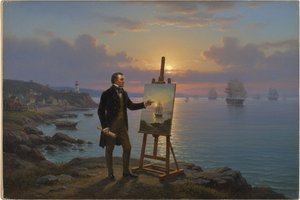
Alfred Thompson Bricher’s journey to becoming a celebrated landscape painter was not one of immediate artistic calling, but rather a gradual unfolding of passion alongside the demands of practical life. Born in Portsmouth, New Hampshire, in 1837, Bricher initially followed a conventional path, establishing himself as a businessman in Boston. However, even amidst commerce, a deep-seated fascination with the natural world persisted. He diligently pursued studies at the Lowell Institute during his free time, laying the groundwork for a future dedicated to capturing the beauty he observed. This early dedication wasn’t merely academic; it was fueled by an intrinsic desire to translate the subtleties of light and form onto canvas. His formal training expanded through mentorship with prominent figures like Albert Bierstadt and William Morris Hunt, each contributing uniquely to his developing skillset. It was after 1858 that Bricher decisively committed himself to art as a profession, opening a studio in Boston where he began to cultivate a reputation for evocative landscape studies.
The Hudson River School Influence: Romanticism and Landscape Studies
The Hudson River School was a mid-19th-century American art movement embodied by a group of landscape painters whose aesthetic vision was influenced by Romanticism. Early on, the paintings typically depicted the Hudson River Valley and the surroundi...
Bricher’s artistic development unfolded within the vibrant context of the Hudson River School, a mid-19th century American art movement deeply rooted in Romantic ideals. This wasn't simply an adoption of style; it was an embrace of a philosophy that celebrated the grandeur and sublimity of the American landscape. Early works by Hudson River School painters often focused on the majestic vistas of the Hudson River Valley, but the scope broadened to encompass the Catskill Mountains, the Adirondacks, and eventually, regions beyond. Bricher absorbed this ethos, initially focusing on detailed depictions of nature that echoed the meticulous realism championed by artists like Thomas Cole. However, he soon began to distinguish himself through a growing interest in atmospheric effects – the delicate interplay of light, shadow, and color that imbued his scenes with a unique sense of tranquility and emotional resonance. The school’s emphasis on discovery, exploration, and settlement resonated deeply with Bricher, informing his choice of subject matter and approach.
Mastering Luminism: Bricher’s Signature Style of Light and Atmosphere
Luminism may refer to Luminism (American art style), a current in North American painting Light art Luminism (Impressionism), a neo-impressionist style in painting
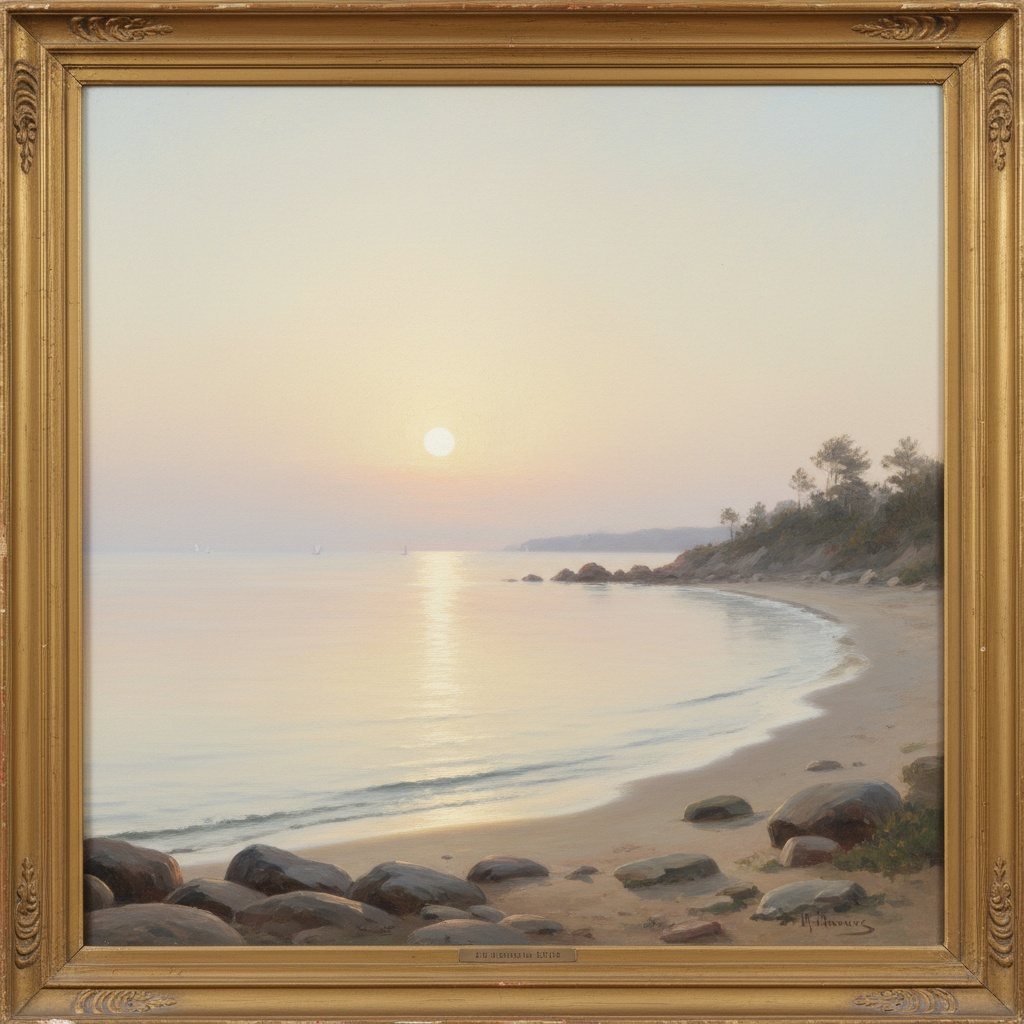
While firmly rooted in the Hudson River School tradition, Alfred Thompson Bricher carved out a distinctive niche for himself through his mastery of Luminism. This subtle yet powerful style, characterized by its emphasis on luminous effects and atmospheric perspective, became the hallmark of his work. Unlike the dramatic narratives often found in earlier Romantic paintings, Luminist works prioritize stillness and contemplation. Bricher excelled at capturing the ephemeral qualities of light – how it reflected off water surfaces, diffused through coastal mists, or illuminated distant shores. He achieved this not through bold brushwork or vibrant color palettes, but rather through a meticulous layering of tones and an almost invisible application of paint. This technique created a sense of depth and realism that drew viewers into the scene, inviting them to experience the tranquility and beauty of the natural world firsthand. His preference for watercolors in the 1870s further enhanced his ability to capture these delicate nuances.
Maritime Scenes & Coastal Vistas: A Focus on New England Shores
 Oyster Boats
Explore Alfred Thompson Bricher’s ‘Oyster Boats,’ a stunning 1884 oil painting of maritime life. Admire its realism, atmospheric brushwork & tranquil scene – a classic Hudson River School piece.
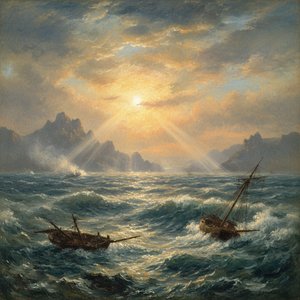
By the 1870s, Bricher’s artistic focus shifted decisively towards maritime themes, specifically the captivating coastal scenery of New England. He became particularly drawn to the rugged beauty of Maine, spending summers in Grand Manan where he produced some of his most celebrated works, such as “Morning at Grand Manan” (1878). These paintings weren't merely depictions of boats and waves; they were evocative studies of light, atmosphere, and the enduring power of the sea. He captured the essence of coastal life – the quiet dignity of oyster boats, the dramatic cliffs overlooking crashing waves, and the subtle shifts in color as sunlight danced across the water. Bricher’s attention to detail was remarkable, accurately portraying the vessels, rigging, and textures of the marine environment. This dedication to realism, combined with his Luminist sensibility, created scenes that were both visually stunning and emotionally resonant.
Rediscovery & Legacy: Bricher's Place in 19th-Century American Art
Despite achieving considerable success during his lifetime – including election as an Associate member of the National Academy of Design in 1879 – Bricher’s reputation waned with the rise of Modern Art. The landscapes and Luminist style that had once captivated audiences fell out of favor, overshadowed by new artistic movements. However, over time, a renewed appreciation for his work emerged. By the 1980s, Bricher began to be recognized as one of the nineteenth century’s greatest maritime painters, lauded for his masterful watercolor techniques and ability to capture the subtle beauty of coastal scenes. This rediscovery highlighted his unique contribution to American art – a self-taught Luminist who explored the effects of light with unparalleled sensitivity and skill. His paintings offer a glimpse into a bygone era, capturing the tranquility and majesty of the New England coastline.
Key Works & Lasting Appeal: Exploring ‘Otter Cliffs’ and ‘Oyster Boats’
Two works exemplify Bricher's artistic prowess and enduring appeal: “Otter Cliffs, Mount Desert Island, Maine” and “Oyster Boats.” “Otter Cliffs” is a quintessential example of his Luminist style, capturing the dramatic coastline in a Romantic masterpiece. The painting showcases crashing waves, moody skies, and a sublime sense of atmosphere – a testament to his ability to convey the power and beauty of nature. Similarly, “Oyster Boats” (1884) offers a stunning depiction of maritime life, admired for its realism, atmospheric brushwork, and tranquil scene. Both paintings demonstrate Bricher’s meticulous attention to detail, his mastery of light and shadow, and his ability to evoke a sense of peace and contemplation. These works, along with many others, continue to captivate audiences today, offering a timeless glimpse into the beauty of the American landscape and the enduring power of Luminist art. OriginalUniqueArt.com offers high-quality reproductions of Bricher’s masterpieces, allowing you to experience the tranquility and beauty of his work in your own home.