Eelvaade
 Saada
Saada Jaga
Jaga
 Teave teose kohta
 Juhend

 Laadi alla
 Sarnased teosed
 Röntgenuuring
 Slaidietendus
 Q&A
Q&A Statistika
Marriage
 Oil On Canvas
- WallArt
- Rococo
 1735
1735- Early Modern
 62.0 x 75.0 cm
 Loe lähemalt
Giclée / Kunstiprint
Muuseumikvaliteediga giclée- või kangasprint kiire tootmisega ja paindlikud viimistlusvõimalused. ( Osta käsitsi maalatud teos Lülita digitaalse pildi juurde)




P118B €10

P118H €10

P118W €10

P438Z €10

P508JH €12

P508YH €12

P805H €10

P805Z €10

P919BZ €10

P919G €10

P919XJ €10

P959ZH €10

P968JZ €12

W106C €8

W218G €10

W218JH €8

W218Y €10

W307PJ €10

W316G €10

W316PJ €8

W316Y €10

W398PJ €8

W4111J €10

W500HY €15

W500JH €15

W692G €12

W849H €8

W940BG €15

W953PJ €8




Vali meie eelmääratud suurused, mis vastavad teose algupärastele proportsioonidele.

Sisestage vajalik laius ja kõrgus, et see sobiks teie raamile või seinale. Trükki saab ainult lõigata, seda ei saa kunagi pildist suuremaks teha, seega ka erineva mustega suurus kaotab osa pildist. Enne trükkimist saadame teile kinnitamiseks digitaalse näidisprojektsiooni. Sellel lehel näidatud pilt ei kujuta reaalset lõiget — seda näitab ainult näidisprojektsioon.
Ülemaailmne tarne () 2 nädala jooksul, tavalise 4/5 nädala asemel. (28 oktoober)

Tasuta ekspresssaatmine üle maailma

Kõrgekvaliteediline lina-kangas

Täielik transpordikindlustus

Tollimaksude tagastamise garantii

Värvitoime täpsuse garantii

100 päeva tagastusõigus (ainult valmistusdefektide korral)

100% raha tagasi garantii

Hulgusoodustus
 Klaasivalik on saadaval ainult kuni 110 cm suuruses teostes

Marriage
Giclée / Kunstiprint
Reproduktsiooni suurus
-


Koguhind
€ 71
A Tender Moment in Georgian England
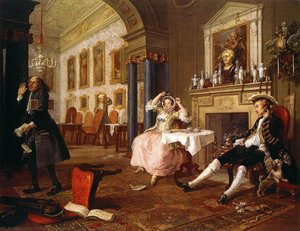
In the quiet, flickering light of an eighteenth-century church vestry, William Hogarth captures a scene that transcends mere documentation to become a profound meditation on life’s beginnings. His 1735 masterpiece, often titled Marriage, presents us with an intimate glimpse into the social and religious rituals of Georgian England. While the title may suggest a union of two souls, the canvas breathes with the energy of a different milestone: the presentation of a newborn child. Within this crowded, dynamic composition, we find ourselves amidst the soft rustle of fine fabrics and the hushed tones of a community gathered for a christening or baptism. A clergyman, focused intently on his sacred text, anchors the spiritual gravity of the moment, while a woman reaches out to receive a swaddled infant—a gesture of such tenderness that it pierces through the historical distance to touch the modern viewer.
Hogarth, a master of what he termed modern moral subjects, avoids the purely decorative trappings of the Rococo style to instead offer a meticulously realized window into human character. The painting is a bustling tapestry of social interaction; onlookers lean in with varying degrees of curiosity, devotion, or casual interest, creating a sense of layered narrative that rewards repeated viewing. For the collector or the lover of fine art, this work offers more than just a beautiful image; it provides a complex psychological landscape where every overlapping figure and subtle glance contributes to a larger story of community and continuity.
Mastery of Light and Texture
The technical brilliance of Marriage lies in Hogarth’s ability to transform oil on canvas into a tactile experience. The artist employs rich, layered brushstrokes that lend a palpable weight to the scene, particularly evident in the heavy drapery and the intricate textures of eighteenth-century attire. There is a magnificent sense of depth achieved not through rigid linear perspective, but through the masterful overlapping of bodies and the varying degrees of detail applied to each figure. This technique creates a sense of "organized chaos" that perfectly mirrors the lively atmosphere of a crowded chapel.
Lighting plays a pivotal role in establishing the painting's evocative mood. Rather than harsh, dramatic contrasts, Hogarth utilizes a diffused, warm glow that seems to emanate from within the room itself. This soft illumination avoids stark shadows, instead bathing the figures in a gentle light that emphasizes the organic shapes and flowing lines of the composition. For an interior designer, this quality makes the piece exceptionally versatile; its warm palette and subdued lighting can anchor a room with a sense of historical prestige and quiet elegance, providing a focal point that feels both substantial and inviting.
A Legacy of Observation and Emotion
Beyond its aesthetic splendor, the painting serves as a vital historical document. Hogarth was a pioneer who sought to elevate the depiction of everyday life to the level of high art, moving away from the idealized portraits favored by the aristocracy toward a more honest, observational realism. In this work, we see the seeds of his later, more famous satirical series, yet here, the tone remains one of reverence and communal intimacy. The symbolism is subtle but deeply felt: the clergyman represents the continuity of faith, the swaddled baby embodies the promise of new life, and the surrounding architecture suggests the enduring strength of social institutions.
To possess a reproduction of this work is to invite a piece of British art history into one's personal space. It evokes an emotional response that is simultaneously nostalgic and deeply human. Whether viewed as a study in Georgian social customs or as a breathtaking example of Hogarth’s technical prowess, Marriage remains a captivating testament to the beauty found in life's most sacred transitions. It is an ideal acquisition for those who seek art that speaks of heritage, warmth, and the timeless complexity of the human experience.
Korduvad küsimused
Millises ajast loodi teos „Marriage“, autor William Hogarth?
Teos „Marriage“, autor William Hogarth pärineb Early Modern ajast. See ajastu annab teosele ajaloolise konteksti.
Kui palju inimesi vaatab teost "Marriage"?
Teose „Marriage“, autor William Hogarth statistika on saadaval teose lehel Statistika: teose kuukaudsed külastused, kunstniku teoste külastused ning viimaste külastajate riikide ja keelte jaotus.
Kust saan osta teose „Marriage“, autor William Hogarth trükki?
Teose „Marriage“, autor William Hogarth trüket saate tellida otse selle Kvaliteetne kunstutrüki print lehelt: kunstiprint puuvillalõikel kangas või arhiveeritaval kangaspaberil.
Kunstniku elulugu
Londoni elu tintides ja värvides: William Hogarthi maailm
William Hogarth, kes sündis 1697. aastal 18. sajandi Londoni puldavas südames, oli olnud palju enamat kui lihtsalt kunstnik; ta oli visuaalne ajaloolane, inimliku looduse terav vaatleja ja oma ajastu ühiskondlike voogude satiiriline kommentator. Tema elu lugu on lahutusmatult seotud Inglismaa lõimuga suurepärase transformatsiooni perioodil – selle kasvavate ambitsioonide, peitliste ärevuste ja igasuguse hiiliva ebaauskusega, mis leidsid kõigi nende jõukase väljenduse tema hämmastavalt detailsetes ja sageli teravates teostes. Kui ta oli vaevaastunud latini kooli õpetaja poeg, siis Hogarthi varased kogemused sisaldasid temas nii armastus õppimise vastu kui ka teravat teadlikkust sotsiaalsetest ebavõrdsustest – see alus tõususki tema kunstilise visiooni kujundamiseks. Algul oli ta õppinud graveerija juures, kuid demonstreeris kiiresti talenti, mis ulatus kaugele puhtast tehnilisest oskusest; tal oli loomulik võime märkida inimkäitumise nüansse ja tõlkida need kaasahaaravaks visuaalseks narratiiviks. Kuid ta ei suutnud piirata end traditsimoonse graveerimise raamides, otsides oma kasvavale loovusele ekspressiivsemat väljundit. See juhtis teda nii St Martin’s Lane Academiale kui ka Sir James Thornhilli õppetööle, kus ta täisas oma oskusi maalias ja kompositsioonis, imeldes mõjutusi, mis hiljem tema unikaalset stiili määrasid.Kaasaegsete moraalsete teemade sünnik Hogarthi tõeline innovatsioon ei olnud pelgalt selles, *mida* ta maalis, vaid *kuidas*. Ta tõi vastu maailma, mida nimetas „kaasaegseteks moraalseteks teemade sarjadeks“ – piltide kordade, mis olid loodud jutustama lugu, sageli tugeva satiilse teravusega. Need ei olnud üksildased portreid või maastikud; need olid visuaalsed romaanid, mis avanesid vaataja silme ees, pakkudes teravat kommentaari ajastikus ühiskonnale. 1742. aastal loodud A Harlot's Progress (Lootuse kadutus) on ehk tema kuulsaim näide. See kuuest maalist koosnevas sarjas jälgib hoolikalt Mary tragöödia – noore naise, kes saabus Londoni täis lootust, kuid lõpuks allujub linnaelu kiusatustele ja ohtudele. Iga stseen on kujundatud ääretult detailsetult, täidetud sümbolitega, mis paljastajavad teda ümbritsevat moraalset lagunemist. Sarnaselt sellele jutustab 1733. aastal alustatud A Rake's Progress (Lõbusmehe kadutus) Tom Rakewelli hoolimatut langust – mehe, kes pillerdab oma pärandi kumalatust mängu, debaušis ja lõpuks madnessuses. Need ei olnud pelgalt hoiatused; need olid kangevaatluslikud portreetsid ühiskonnast, kes võitles klasside, moraalist ja sotsiaalse liikuvuse probleemidega. Hogarthi genius peitus tema võimes tõsta igapäevased stseenid – Londoni puldavad tänavad, rikkate luksuslikud siseõued, vaestade rängad elud – kunstiteosteks, mis kõlastasid oma publikut sügavalt. Ta ei kartnud kujundada elu karmid reaalsused, esitades need naudingi ja patoosiga segatud viisil, mis sundis vaatajatele seisata silm saamatu tõdigusega nii endaga kui ka oma ühiskonnaga.
Tehnika ja mõjud: stiilide sünd Hogarthi kunstiline stiil oli mitmekoloogiliste mõjudude unikaalne amalgami. Ta austas suuresti hollandi žanripittide, nagu Pieter de Hoochi, realismit ja narratiivset detailset kuju, mis on nähtav tema hoolikas siseõude ja igapäevase elu kujundamises. Ka Prantsimaas loodud satiilised joonised mängisid rolli tema sotsiaalse kommentaari lähenemise vormimisel. Kuid Hogarth ei imiteerinud neid allikaid lihtsalt; ta sünteetiseeris need midagi täiesti uut ja selgelt oma kätte. Tema tehnikat iseloomustas meistraline jooneline ja varjundite kasutamine, mis on eriti ilmne tema graveerides. Ta kasutas eripärast ristivarjunduste tehnikat (cross-hatching), mis lõi sügavust ja tekstuuri, tuues oma stseenid elavaks üllastava selgusega. Tal oli ka erakordne silm kompositsioonile, korraldades kadrame sees figure ja objekte nii, et luua dünaamilisi ja kaasahaaravaid lugusid. Lisaks visuaalsele kunstile oli Hogarthit mõjutanud kirjandus, eriti Jonathan Swifti ja Henry Fieldingi teosed, kelle satiiriline vaim juhendas tema enda sotsiaalseid tähelepanuid. Ta uskois, et kunst ei tohiks olla pelgalt ilus, vaid peab ka teenima moraalset eesmärgi, väljakutses vaatajatele seisata silm oma ja ühiskonna ebamugavatele tõetustele. Ta püüdis hoida peeglit looduse ees, peegeldades nii selle ilu kui ka kolelust kangevaatlusliku aususega.
Pärand ja igav mõju
William Hogarthi mõju ulatub kaugele 18. sajandi kunsti piiridest. Tema töö sai tohutut populaarsust tänu tema maalistide põhjal loodud jooniste massprodutsioonile, muutes tema satiilised kommentaarid kunagi rohkem kättesaadavaks kui hiç varem. Teda peetakse laialt poliitilise karikatuuride ja trummikomiksite eeltulevaks, laidades aluse visuaalse lugujutamisele populaarkultuuris. Kunstnikud nagu James Gillray ja George Cruikshank olid otseselt tema stiilist mõjutatud, kandudes edasi tema sotsiaalse satiiri traditsiooni. Isegi kuulus esseist Charles Lamb tunnistas Hogarthi kujundite narratiivset jõudu, märkides kuulsa sõnadega, et need olid „nagu raamatud, mida on lugeda, rather than mereley looked at (lihtsalt vaadata“.- Hogarth lõi selgelt briti kunstiline identiteet.
- Tema töö pakub vääramatut ülevaadet 18. sajandi Inglismaa ühiskonnale.
- Ta mõjutas kunstnike ja satiirikute põlvkonnasid.

William Hogarth
1697 - 1764 , Ühendunud kuningriik
Lühikest infot
- Artistic Movement Or Style: Satire, Realism
- Artists Who Influenced This Artist:
- Pieter de Hooch
- Jonathan Swift
- Date Of Birth: 1697
- Date Of Death: 1764
- Full Name: William Hogarth
- Nationality: Briti
- Notable Artworks:
- A Harlot's Progress
- A Rake's Progress
- Place Of Birth: London, UK
Sarnased artiklid

Maurice Quentin de La Tour: Light, Shadow & the Rococo Portrait
Explore the captivating world of Maurice Quentin de La Tour, a master of Rococo portraiture. Discover his innovative pastel techniques, intimate depictions of French aristocracy, and lasting artistic legacy. Learn more at OriginalUniqueArt.

William Hogarth: Satire, Social Commentary & the Birth of Modern British Art
Explore the satirical world of William Hogarth, pioneering British painter & engraver. Discover his iconic works like *A Rake's Progress* and insightful social commentary on 18th-century London life.
18th Century Masters: 10 Artworks That Define an Era | OriginalUniqueArt
Journey through 18th century art! Explore 10 iconic paintings – from Rococo elegance to Neoclassical grandeur. Discover Fragonard, David & more. Find museum-quality reproductions and elevate your home decor on OriginalUniqueArt.com.

RoKokoo: 10 Meisterteost, Mis Määritsesid Kunstisuundi | OriginalUniqueArt
Sukeldu RoKokoo maailma! Avasta 10 meistriteost, mis defineerisid kunstisuunda – prantsuse kunstnikud, kuldsed toonid ja luksuslik interjöör. Tutvu lugudega legendaarsete teoste taga & leia inspiratsiooni OriginalUniqueArt.com-ilt!

The Rococo Aesthetic: Opulence, Rebellion & the Pursuit of Pleasure in 18th-Century Art
Explore the opulent world of Rococo art! Discover its origins, key artists like Watteau & Boucher, and lasting influence on design. Expert insights for collectors & enthusiasts.