Pop Art · 1955
Collection (Robert Rauschenberg, 1955)
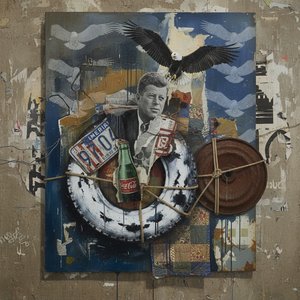
Robert Rauschenberg (1925–2008) on loonud teose Collection. See on pärinev 1955 aastast. See kuulub Pop Art suuntrime. Teos on valmistatud materjalist Mixed Media. Teos asub San Francisco Museum of Modern Art kogamuses San Francisco, USA. Mõõdud on 203 × 243 cm.
- 1955
- Mixed Media
- 203 × 243 cm
- San Francisco Museum of Modern Art

 Eelvaade

 Käsitsi maalatud õlimaalatsioon
 Saada
 Jaga
 Teave teose kohta


 Laadi alla
 Sarnased teosed
 Röntgenuuring
 Slaidietendus
 KÜSIMUSED JA VASTUSID

 Statistika
Collection lühidalt
- Pealkiri
- Collection
- Kunstnik
- Robert Rauschenberg (1925–2008)
- Kunstnik on sündinud
- Port Arthur, Ameerika Ühendriigid
- Kuupäev
- 1955
- Tehnika
- Mixed Media
- Mõõtmed
- 203 × 243 cm
- Kus seda näeb
- San Francisco Museum of Modern Art, San Francisco, USA
- Suunad
- Pop Art
- Aeglkond
- Modern
- Teema
- combine painting, collage, fabric, wood scraps, color field, everyday objects
Mida Collection kujutab?
A Symphony of Chaos and Color: Rediscovering Rauschenberg’s “Collection”
In the mid-1950s, the art world was gripped by the intense, often brooding emotionalism of Abstract Expressionism. Yet, amidst this era of heavy shadows and singular gestures, Robert Rauschenberg emerged with a vision that refused to be contained by the edges of a traditional canvas. His 1955 masterpiece, “Collection,” serves as a breathtaking manifesto of this new era—a work that does not merely sit upon a wall but breathes with the vibrant, messy, and beautiful energy of life itself. To encounter this piece is to witness a pivotal moment in American art history, where the boundaries between the high art of the gallery and the raw textures of the street began to dissolve into something entirely new.
The visual impact of “Collection” is immediate and overwhelming. Spanning an impressive 203 x 243 cm, the work presents a kaleidoscopic tapestry that defies monochromatic simplicity. Instead of the somber tones favored by his contemporaries, Rauschenberg orchestrates a brilliant dialogue between deep reds, sunny yellows, calming blues, and fiery oranges. This is not a painting of static shapes, but a dynamic landscape of layered complexity. As your eyes wander across the surface, you encounter an asymmetrical dance of elements: fragments of weathered wood scraps juxtaposed against unexpected textures, and even the subtle, haunting presence of a mirror positioned off-center, which invites the viewer to physically enter the artwork’s space.
The Alchemy of the Combine: Technique and Texture
At the heart of this work lies Rauschenberg’s revolutionary “Combine” technique, a method that fundamentally redefined what a painting could be. He moved beyond the brush to embrace the world around him, seamlessly blending traditional painting with the tactile reality of collage. Through the use of silkscreen printing alongside meticulously applied fabric and found objects, he achieved a textural richness that is almost sculptural in nature. This hybrid approach allows light to play differently across the canvas, catching on raised surfaces and receding into deep, shadowed crevices.
For the discerning collector or interior designer, this piece offers an unparalleled depth of character. The way the artwork incorporates various shades—from verdant greens to stark whites—creates a sense of movement that changes depending on the lighting of a room. It is a work that demands attention, providing a sophisticated focal point that bridges the gap between modern abstraction and contemporary installation art. The inclusion of diverse shapes, including a delicate bird figure that drifts through the composition, adds a layer of narrative intrigue, making every viewing a new discovery.
A Legacy of Freedom and Artistic Rebellion
To understand “Collection” is to understand the spirit of rebellion that defined Rauschenberg’s career. Born in the oil fields of Texas, his life was one of transition and movement, a nomadic sensibility that allowed him to see beauty in the discarded and the everyday. By integrating found objects into his work, he sought to liberate painting from the rigid confines of form and content, mirroring the broader cultural shifts of a post-war America seeking new modes of expression. He rejected the perceived heaviness of the New York School in favor of a more democratic, inclusive aesthetic.
Ultimately, “Collection” is an invitation to embrace complexity. It symbolizes the beauty found in the collision of disparate parts—the way chaos can be orchestrated into harmony. For those seeking to bring a sense of historical significance and avant-garde energy into a curated space, a high-quality reproduction of this work offers more than just decoration; it offers a piece of the revolution. It is a profound statement of artistic freedom that continues to inspire awe, reminding us that art is not just something to be looked at, but something to be lived within.
Kumba muuseumis asub teos Collection?
San Francisco Museum of Modern Art
San Francisco, USA
Institutsiooni algus ja ajalugu San Francisco Museum of Modern Art loodi aastal 1935. Juhi Grace L. McCann Morley eestjuhis asus institutsioon algselt nimega San Francisco Museum of Art.


Collection kõrge resolutsiooniga pildid

Protected by copyright: these files are for personal reference, not a licence to republish.
Robert Rauschenberg, Collection (1955), San Francisco Museum of Modern Art.
Küsimused teemal Collection – vastused
Kust saan näha originaalteost „Collection“, autor Robert Rauschenberg?
Teos „Collection“, autor Robert Rauschenberg on näitustel San Francisco Museum of Modern Art, San Francisco, USA. Muuseumi keterangane viitab originaalteosele, mitte reproduktsioonidele.
Mis aastal loodi teos „Collection“, autor Robert Rauschenberg?
Teos "Collection" on pärit aastast 1955. See ajastu aitab mõista teost Robert Rauschenberg karjääri ja selle ajastu kontekstis.
Millest on teos "Collection" valmistatud?
Teose „Collection“, autor Robert Rauschenberg materjal on Mixed Media. Reproduktsioonide eesmärk on jälitada selle tehnika välimust.
Mis on teose „Collection“, autor Robert Rauschenberg tegelik suurus?
Teose "Collection" originaalmõõdud on 203 x 243 cm. Algdimensioonid on kasulik viide reproduktsiooni suuruse valimisel.
Mille kohta teos "Collection" on?
Teemad, mis teoses „Collection“, autor Robert Rauschenberg esinevad, hõlmavad combine painting, collage, fabric, wood scraps, color field, everyday objects, abstract forms. Koos need kokkuvõtavad teose sisu.
Kas teos "Collection" on ilma autoriõigusteta?
Autoriõiguse teave teose „Collection“, autor Robert Rauschenberg kohta: teos kuulub luba ala on endiselt autoriõiguse all under kaitse. See määrab, kas kujundist on lubatud vabadelt reproduktsioone teha.
Kes on teose "Collection" looja?
Teose "Collection" looja on Robert Rauschenberg. Teos on kataloogitud nime Robert Rauschenberg all.
Millissele kunstisuunale kuulub teos „Collection“, autor Robert Rauschenberg?
Teosest „Collection“, autor Robert Rauschenberg tuntud kunstisuuna on Pop Art. See klassifikatsioon aitab teost paigutada sarnaste kunstnike ja teoste hulka.
Millissele perioodile Robert Rauschenberg karjäärist kuulub teos "Collection"?
Teos "Collection" kuulub Robert Rauschenberg loomingulise karjääri perioodi Combine Era. See klassifikatsioon seostab teose kunstniku loovliku arenguga.
Kunstnikust, Robert Rauschenberg

1925–2008, Ameerika Ühendriigid
Robert Rauschenberg
Elu algus ja kunstiline ärkamine Robert Rauschenberg, sündinud Milton Ernest Rauschenbergina 1925. aastal Texase osariigis Port Arthuris õlirikkas maastikus, oli kunstnik, kelle olemasolu ise kajastas dünaamilist energiat ja transformatiivset vaimu, mille ta kunstimaailma tõi. Tema lapsepõlv ei olnud ühe koha poolest määratud; isa amet nõudis nomadielustiuti, rännates mitmekesistes piirkondades, mis pehmelt öeldes andsid talle vastuvõtlikkuse erinevatele visuaalsetele stiimulitele ja valmisoleku muutusi omaks võtta. See varajane kokkupuude kasvatas tundlikkust Ameerika elu tekstuuride ja rütmidega – alavoolu, mis sügavalt kujundas tema kunstilisi uurimusi.
Teel Robert Rauschenberg kohta Robert Rauschenberg silmapaistvad teosed
Ka Robert Rauschenberg teosed
 Pärand1963
 Signs1970
 Barge1963
 Odalisk1958
Essee teemadel Collection
 Robert Rauschenberg: Bridging Painting & Life – A Comprehensive Exploration of Combines, Silkscreens, and the Erasure of BoundariesExplore the revolutionary art of Robert Rauschenberg – Combines, silkscreens & more. Discover his impact on Pop Art, investment potential &…
 Mastering Art Collecting: A Professional Guide to Acquiring Museum-Quality Famous ReproductionsMaster the art of collecting with our expert guide to museum-quality oil reproductions. Learn to distinguish hand-painted masterpieces from…
 Beyond the Subject: The Raw Power of Abstract Expressionism | A Definitive Guide for the Modern CollectorExplore the visceral power of Abstract Expressionism. From the New York School to action painting, discover how to collect high-impact, han…