High Renaissance · 1518
Jacob's Dream (Raffael, 1518)
Raffael (1483–1520) on loonud teose Jacob's Dream. See on pärinev 1518 aastast. See kuulub High Renaissance suuntrime. Teos on valmistatud materjalist Fresco.
- 1518
- Fresco

 Käsitsi maalatud õlimaalatsioon
 Saada
 Jaga
 Teave teose kohta


 Laadi alla
 Sarnased teosed
 Slaidietendus
 KÜSIMUSED JA VASTUSID

 Statistika
Jacob's Dream lühidalt
- Pealkiri
- Jacob's Dream
- Kunstnik
- Raffael (1483–1520)
- Kunstnik on sündinud
- Urbino, Itaalia
- Kuupäev
- 1518
- Tehnika
- Fresco
- Suunad
- High Renaissance
- Aeglkond
- Renaissance
- Teema
- biblical narrative, dream imagery, religious symbolism, angel ascension, italian renaissance, jacob's vision
Mida Jacob's Dream kujutab?
A Vision of Divine Ascent: The Celestial Majesty of Raphael’s Jacob’s Dream
In the heart of the High Renaissance, amidst the intellectual fervor of Rome, Raphael Sanzio captured a moment of profound spiritual transcendence in his 1518 masterpiece, Jacob’s Dream. Originally conceived for the prestigious Loggia of the Palazzo Nuovo under the patronage of Pope Leo X, this fresco is far more than a mere biblical illustration; it is a breathtaking window into the divine. The scene breathes with the life of Genesis, depicting the patriarch Jacob as he rests upon a stone altar, caught in the liminal space between sleep and revelation. As he lies in contemplative repose, his eyes are drawn upward to witness a celestial procession: angels ascending and descending a heavenly ladder, bridging the gap between the earthly realm and the infinite heavens.
Raphael’s technical mastery is on full display through his sophisticated use of sfumato and linear perspective, techniques that lend the composition an almost palpable atmospheric depth. By subtly blurring edges and layering pigments with remarkable luminosity, he creates an illusionistic space that pulls the viewer into the dreamscape. The movement within the painting is masterfully orchestrated; the dynamic upward trajectory of the angels creates a sense of rhythmic energy, while the presence of birds circling above Jacob’s head serves as a poignant metaphor for divine messengers. Every brushstroke contributes to a sense of weightlessness and grace, making the ethereal quality of the dream feel strikingly real.
Symbolism and the Humanist Spirit
Beyond its visual splendor, Jacob’s Dream is a profound meditation on the human condition and our yearning for spiritual enlightenment. The stone altar upon which Jacob rests serves as a symbol of humility and groundedness, representing the physical world from which all spiritual aspiration begins. The ascending angels embody the movement of grace—the soul's upward climb toward God. This interplay between the heavy, terrestrial elements and the light, celestial figures reflects the core tenets of Renaissance humanism: the belief that through intellect, faith, and beauty, humanity can reach toward the divine. For the discerning collector or interior designer, this piece offers a sophisticated narrative of hope, aspiration, and the eternal search for meaning.
The emotional impact of the work lies in its ability to evoke both awe and tranquility. There is a quietude in Jacob’s slumber that invites introspection, yet the vibrant colors and intricate details of the heavenly figures stir the imagination. It is an artwork that commands presence in any space, offering a focal point of intellectual depth and aesthetic elegance. Whether viewed as a historical relic of the papal court or as a timeless symbol of spiritual journeying, Raphael’s vision remains an enduring testament to the power of art to capture the intangible essence of the soul.
Jacob's Dream kõrge resolutsiooniga pildid

Avalik omanik: kunstnik suri aastal 1520.
Teised laiused, uueste lõikud ja alluding →Raffael, Jacob's Dream (1518). Avalik omaniklik õigus
Küsimused teemal Jacob's Dream – vastused
Millal loodi teos "Jacob's Dream"?
Teos "Jacob's Dream" on pärit aastast 1518. See ajastu aitab mõista teost Raffael karjääri ja selle ajastu kontekstis.
Millises materjalis on teos „Jacob's Dream“, autor Raffael valmistatud?
Teose „Jacob's Dream“, autor Raffael materjal on Fresco. Reproduktsioonide eesmärk on jälitada selle tehnika välimust.
Millised teemad teoses „Jacob's Dream“, autor Raffael esile tõelve?
Teemad, mis teoses „Jacob's Dream“, autor Raffael esinevad, hõlmavad biblical narrative, dream imagery, religious symbolism, angel ascension, italian renaissance, jacob's vision, classical composition. Koos need kokkuvõtavad teose sisu.
Kas teos „Jacob's Dream“, autor Raffael kuulub avalikku omandisse?
Autoriõiguse teave teose „Jacob's Dream“, autor Raffael kohta: teos kuulub luba ala avalikus õiguses – selle autoriõigud onหมดunud. See määrab, kas kujundist on lubatud vabadelt reproduktsioone teha.
Millisele kunstnikule on teos "Jacob's Dream" atribuutseeritud?
Teose "Jacob's Dream" autoriks on mõeldud Raffael.
Millissele stiilile kuulub "Jacob's Dream"?
Teosest „Jacob's Dream“, autor Raffael tuntud kunstisuuna on High Renaissance. See klassifikatsioon aitab teost paigutada sarnaste kunstnike ja teoste hulka.
Millissele perioodile Raffael karjäärist kuulub teos "Jacob's Dream"?
Teos "Jacob's Dream" esindab kunstniku Raffael loovperioodi Mature Period.
Mis vanuses loos Raffael teose "Jacob's Dream"?
Raffael oli 35 aastane, kui ta teosest "Jacob's Dream" aastal 1518 lõi. Vanus on arvutatud kunstniku sünnaaasta põhjal, 1483.
Mis selgitab teose „Jacob's Dream“, autor Raffael autoriõiguste olukorda?
Raffael teos "Jacob's Dream" on avalikus õiguses – selle autoriõigud onหมดunud. Autoriõiguse kaitseajad arvutatakse alates kunstniku surmaõigustest ning Raffael suri aastal 1520.
Kunstnikust, Raffael

1483–1520, Itaalia
Raffael
Urbino Renessanssi Sünd: Rafaeli Varase Elu ja Moodustumine Raffaello Sanzio da Urbino, maailmale tuntud kui Raphael, tekkis märkimisväärselt viljakas kultuurikeskkonnas. 1483. aastal sündinud Urbino müüride sees, keskijääma Itaalias asuva väikese, kuid intellektuaalselt elava linna-riigi seinte vahel, olid tema varased aastad läbi imbunud atmosfäärist, mis väärtustas nii kunstilisi oskusi kui humanistlikku õpetust. Tema isa, Giovanni Santi, ei olnud pelgalt Duke Federico da Montefeltro poolt teenitud maalija – ta oli mees, kes osales sügavalt renessanssiaegsete mõttevoolude seas, luuletaja, kes kroonikas hertsogi elu ja püüdis aktiivselt leida uuenduslikke kunstilisi ideid kogu Itaaliast ja mujalt.
Ka Raffael teosed
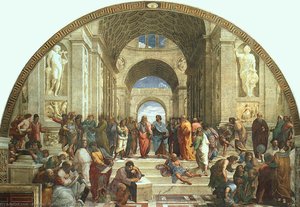 Atene kool1511
 Siistine Madonna1513
 Transfiguratsioon1520
 Neitsi Maarja abiellumine1504
Essee teemadel Jacob's Dream
 Masterpieces of Perfection: The Top 25 Greatest Artworks by RaphaelImmerse yourself in the grace of the High Renaissance. Explore 25 iconic masterpieces by Raphael, from divine Madonnas to legendary frescoe…
 High Renaissance vs. Mannerism: Harmony and the Shift to TensionMaster the shift from Renaissance harmony to Mannerist tension with our expert art analysis. Discover the evolution of Italian masterpieces…
 25 Masterpieces by Duccio di Buoninsegna: The Dawn of Sienese ArtJourney through the divine beauty of Duccio di Buoninsegna’s greatest works. From the Sienese School to Byzantine elegance, explore 25 time…