

 Eelvaade
 Saada
Saada Jaga
Jaga
 Teave teose kohta

 Laadi alla
 Sarnased teosed
 Röntgenuuring
 Slaidietendus
Basleri portreeet


 Loe lähemalt
Giclée / Kunstiprint
Muuseumikvaliteediga giclée- või kangasprint kiire tootmisega ja paindlikud viimistlusvõimalused. ( Osta käsitsi maalitud maal Osta pilt)




P118B $10

P118H $10

P118W $10

P438Z $10

P508JH $12

P508YH $12

P805H $10

P805Z $10

P919BZ $10

P919G $10

P919XJ $10

P959ZH $10

P968JZ $12

W106C $8

W218G $10

W218JH $8

W218Y $10

W307PJ $10

W316G $10

W316PJ $8

W316Y $10

W398PJ $8

W4111J $10

W500HY $15

W500JH $15

W692G $12

W849H $8

W940BG $15

W953PJ $8




Vali meie eelmääratud suurused, mis vastavad teose algupärastele proportsioonidele.

Saate sisestada oma mõõdud, et need sobiks konkreetse raami või ruumi sisse. Kui valitud suurus ei vasta originaalteose proportsioonidele, lõigame teose ära või laiendame pilti peegeldatud või ühtlase servaga. Enne tootmisprotsessi algust saadetakse Teie kinnitamiseks digitaalne näidis.
Palun märka, et ekraanil kuvatav eelvaade ei kajasta tegelikku lõigamist või laiendamist. Ainult näidis kujutab täpselt lõplikku kompositsiooni.
Kuigi erimõõdu on saadaval, soovitame originaaproportsioonide säilitamiseks valida mõõt ette määratud nimekirjast.
Ülemaailmne tarne () 2 nädala jooksul, tavalise 4/5 nädala asemel. (3 september)

Tasuta ekspresssaatmine üle maailma

Kõrgekvaliteediline linakangas

Täielik transpordikindlustus

Tollimaksude tagastamise garantii

Värvitoime täpsuse garantii

60-päevane tagastusõig: ainult tootmisdefektide korral

100% raha tagasi garantii

Hulgusoodustus
 Klaasivalik on saadaval ainult suuruses kuni 110 cm

Basleri portreeet
Giclée / Kunstiprint
Reproduktsiooni suurus
-


Kogusumma
$ 80
A Window into Parisian Soul: Exploring Henri Lebasque’s “Portrait of Basler”
The artwork "Portrait of Basler," executed by Henri Lebasque in 1912, isn't merely a depiction of a man; it’s an encapsulation of the spirit of early 20th-century Paris – a city brimming with contradictions and striving for beauty amidst urban decay. Lebasque, a painter deeply rooted in Impressionism yet decisively pushing beyond its boundaries into Expressionism, captured this duality with remarkable sensitivity, resulting in a piece that resonates powerfully with viewers today. The photograph itself presents an arresting image: a starkly lit face dominates the canvas, positioned against a velvety black backdrop that amplifies the luminosity of Lebasque’s masterful brushwork.- Style and Technique: Lebasque's approach aligns squarely with Expressionism, prioritizing emotional intensity over photographic realism. He abandons meticulous detail in favor of bold, gestural strokes—impasto—that imbue the painting with palpable texture. This technique isn’t simply about applying paint thickly; it’s a deliberate choice to convey feeling directly onto the canvas, mirroring the turbulent inner landscape of the artist himself. Lebasque skillfully utilizes impasto – thick brushstrokes that create textural surface – elevating the artwork beyond mere visual representation and inviting viewers to experience its emotional depth.
- Historical Context: The painting emerged during a period of significant artistic ferment in France. Impressionism had begun its decline, paving the way for movements like Expressionism that sought to express subjective experience and psychological states. Lebasque’s work reflects this broader trend, responding to the anxieties and uncertainties of the era with unflinching honesty. He stands as a pivotal figure bridging the gap between Impressionistic idealism and the emotionally charged explorations of Expressionist artists.
- Interior Design Considerations: “Portrait of Basler” would lend itself beautifully to interior spaces seeking an element of understated elegance and emotional depth. Its muted palette—primarily shades of brown, gray, and black—harmonizes seamlessly with contemporary minimalist aesthetics while simultaneously evoking a sense of nostalgia for a bygone era. Imagine it adorning a hallway or sitting above a fireplace – its somber mood would create a contemplative atmosphere.
- Collector’s Appeal: For discerning collectors interested in capturing the essence of artistic innovation, Lebasque's “Portrait of Basler” represents more than just a visual masterpiece; it embodies the spirit of Expressionism—a movement that championed emotional truth and challenged conventional notions of beauty. Its enduring power lies in its ability to communicate profound feelings without resorting to explicit narrative.
Kunstniku elulugu
A Painter of Joy and Light: The Life and Art of Henri Lebasque
Henri Lebasque, a name perhaps less immediately recognized than some of his Post-Impressionist contemporaries, nevertheless occupies a significant place in the artistic landscape of early 20th-century France. Born in Champigné, Maine-et-Loire, in 1865, Lebasque’s journey toward becoming a celebrated painter was one marked by diligent study, evolving influences, and an unwavering commitment to capturing beauty in everyday life. His early education at the École régionale des beaux-arts d'Angers provided a foundational grounding, but it was his move to Paris in 1886 that truly ignited his artistic development. There, under the tutelage of Léon Bonnat and through assisting Ferdinand Humbert with decorative murals at the Panthéon, he honed his technical skills while immersing himself in the vibrant Parisian art scene. This period proved crucial, bringing him into contact with pivotal figures like Camille Pissarro and Auguste Renoir, whose emphasis on light and color would profoundly shape his aesthetic sensibilities.Embracing Intimacy: Influences and Artistic Development
Lebasque’s artistic trajectory wasn't solely defined by the established masters; it was equally influenced by a younger generation of artists pushing the boundaries of painting. His association with Les Nabis, particularly Édouard Vuillard and Pierre Bonnard, proved transformative. These Intimist painters prioritized domestic scenes and intimate moments, fostering in Lebasque a similar inclination toward capturing the quiet poetry of everyday existence. The Nabis’ emphasis on flattened forms, decorative patterns, and subtle color harmonies resonated deeply with his own artistic inclinations. Simultaneously, exposure to the theories of Georges Seurat and Paul Signac introduced him to the principles of Chromoluminarism – the scientific application of complementary colors to create luminous effects. This knowledge became a cornerstone of his technique, allowing him to imbue his canvases with an extraordinary vibrancy and sense of light. He wasn’t merely replicating what he saw; he was interpreting it through a lens of color and emotion, creating scenes that felt both familiar and dreamlike. Lebasque's artistic vision centered around portraying the serene beauty of domestic life and landscapes bathed in sunlight—themes that mirrored the sensibilities of Les Nabis and resonated with his own profound appreciation for visual harmony. His meticulous technique involved layering thin, translucent paint to achieve a luminous quality characteristic of Post-Impressionism, skillfully utilizing complementary color pairings to heighten visual impact while maintaining an overall sense of balance. Works like *Rest on the Banks of the Yaudet* exemplify this mastery, capturing the tranquility of nature with delicate brushstrokes and subtle tonal variations.A Palette of Serenity: Themes and Techniques
The hallmark of Lebasque's work lies in its tranquil atmosphere and harmonious palette—a deliberate departure from the dramatic narratives favored by earlier artistic movements. He sought inspiration in simple pleasures—family portraits, leisurely moments spent outdoors—translating these experiences onto canvas with remarkable sensitivity. His paintings eschewed grand historical pronouncements or theatrical displays of emotion; instead, they offered glimpses into intimate domesticity and the understated splendor of the natural world. Madame Lebasque and Her Daughters stands as a testament to his ability to convey tenderness and grace through masterful composition and luminous color—a hallmark of Lebasque’s distinctive style. His technique involved building up layers of thin, translucent paint – a method that allowed for subtle tonal shifts and maximized the impact of complementary color pairings. This approach resulted in canvases imbued with an ethereal glow, reflecting Lebasque's unwavering dedication to capturing light and color with unparalleled precision. He skillfully employed techniques honed during his formative years at the École régionale des beaux-arts d’Angers and further refined through collaborations with prominent artists like Camille Pissarro and Auguste Renoir—artists who championed a similar aesthetic philosophy centered on observation and emotional resonance.Legacy and Recognition: A Lasting Impression
Throughout his prolific career, Lebasque achieved considerable acclaim, participating in prestigious exhibitions such as the Salon d’Automne – which he helped establish alongside Henri Matisse – and the Salon des Indépendants. These venues provided a platform for showcasing his innovative approach to painting and solidified his reputation as a visionary artist ahead of his time. Furthermore, commissions from influential patrons—including decorative projects undertaken at the Champs-Élysées theatre and on transatlantic liners—demonstrated Lebasque’s versatility and cemented his place within the cultural landscape of Belle Époque Paris. His enduring artistic legacy is evidenced by the presence of numerous masterpieces in prominent museum collections across Europe – including the Musée d’Orsay in Paris, the Petit Palais in Geneva, and museums in Lille and Nantes – guaranteeing that Henri Lebasque's vision continues to inspire generations of artists and viewers alike.
Henri Lebasque
1865 - 1937 , Prantsuse
Lühikesed faktid
- Artistic Movement Or Style: Post-Impressionism
- Artists Who Influenced This Artist:
- Camille Pissarro
- Auguste Renoir
- Date Of Birth: September 25, 1865
- Date Of Death: August 7, 1937
- Full Name: Henri Lebasque
- Nationality: French
- Notable Artworks:
- La cigarette
- Una joven en el bosque
- Place Of Birth: Champigné, France
Seotud artiklid

Henri Matisse: 25 meistriteost värviküllase kunsti maailmast | OriginalUniqueArt
Avastage Henri Matisse 25 ikoonilist teost! Sukelduge värviküllase Fauvismi maailma, modernse kunsti ajaloosse ja inspireerige oma interjööri. Kvaliteetsed kunstireprodutsioonid OriginalUniqueArt.com-is. Avasta kogu kollektsioon online!

Henri Lebasque: A Study in Post-Impressionist Harmony & the Poetics of Everyday Life
Explore the serene Post-Impressionist world of Henri Lebasque. Discover his intimate domestic scenes, vibrant landscapes & connection to the Nabis group. Expert insights for collectors and art enthusiasts.
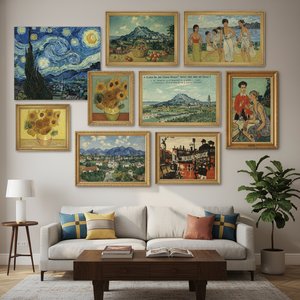
Postimpressionismi 10 Meisterteost: Kunsti ja Sisustamise Klassikat
Avasta postimpressionismi 10 legendaarset meistriteost! Van Gogh, Monet jt. värvilised teosed ja põnevad lood kunstnike saatest. Leia inspiratsiooni sisustamiseks ning kaunista oma kodu OriginalUniqueArt.comi originaalseid kunstireproduktsioonide abil. Uuri kollektsiooni!
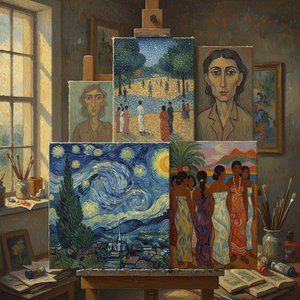
Beyond Impressionism: Exploring the Emotional Depth of Post-Impressionist Painting
Explore the profound emotional depth & innovative techniques of Post-Impressionism with OriginalUniqueArt. Discover Cézanne, Van Gogh, Gauguin & more – and their lasting impact on modern art.

Valguse ja värvi vahel: Impressionismi ja postimpressionismi nüansid kollektsionääri pilgu läbi
Sukeldu impressionismi ja postimpressionismi maailma ekspertide pilgu läbi. Avasta maalide nüansid, kunstnike stiilid ning investeerimisvõimalused kollektsionääri jaoks. OriginalUniqueArt – kvaliteet ja usaldus.


