






Mis on kuulsaim guašimaal?
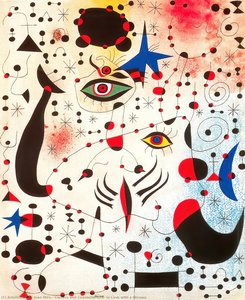
Meie reitingus on Ciphers and Constellations teos, autori Joan Miró (1940–1941), Art Institute of Chicago muuseumis, järgmised on The Ship teos, autori Salvador Dalí ja Ikaros teos, autori Henri Matisse.
Kuulsad maalid tehnika järgi
1855 – 1985
Meistrid, kelle juurde meie kunstnikud pöörduvad uuesti ja uuesti. Guasš on läbimatuks tehtud akvarell: see annab ühtlaase ja mati värvi, millega saab katta heledaid tone tumedatega. Siin on 24 sellist meistriteost koos autori, kuupäevaga ja muuseumiga, kus see säilib.
Meie kunstnikud pöörduvad korduvalt teoste Ciphers and Constellations teos, autori Joan Miró, The Ship teos, autori Salvador Dalí ja Ikaros teos, autori Henri Matisse poole. Siin on 24 suurepärast guašimaalid, koos autori, kuupäeva ja muuseumi märkega.

Nimekiri
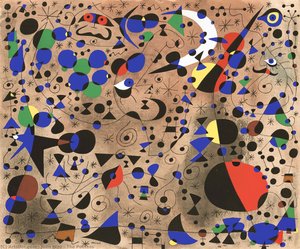
Joan MiróSurrealist Dream Paintings
Art Institute of Chicago1940–1941Oil46 × 38 cm
Part of his celebrated “Constellations” series, it transcends simple representation, inviting viewers into a world of symbolic forms and dreamlike associations. Following the turmoil of the Spanish Civil War, Miró retreated to a more introspective artistic path. Confined by circumstance, he turned inward, finding inspiration in the night sky and the realm of subconscious thought. The “Constellations” series – 23 works created between 1940 and 1941 – emerged from this period.

Salvador DalíSurrealist Dreamscape
Reynolds Morse Foundation1935Watercolor & gouache on paper29 × 35 cm
This unassuming canvas—measuring 29 x 35 cm—holds within it layers of symbolism and artistic innovation that continue to fascinate viewers today. At first glance, The Ship presents a solitary figure standing on a sandy shore, an intimate connection established between him and a draped form unmistakably resembling the hull of a ship.

Henri MatisseFauvism
Scottish National Gallery of Modern Art1944Guašš
Madalsates ja muutlikel aastal 1944, Teise maailma sõja globaalse varju all, saavutas Henri Matisse oma meistriteose Ikaros juures ekspressiivse lihtsuse harjunud tipu. Kui maailm tema ümber seisis ebaseeisvan ebakindla ees, pöördu Matisse sissepöördu, kasutades tehnikat, mida ta kuriooselt nimetas "lõikamisega joonistamiseks", et luua visuaalset keelt, mis räägib nii äärmasest haavatavuses kui ka vankumatus elujõus.

Pablo PicassoKubism
Privaatne kollektsioon1905Guašš paberil57 × 41 cm
See 1905. aastal loodud kunstiteos on klassifitseeritud ekspressionistlikuks teoseks. Need teosed esinevad koos teiste 1905. aasta teostega, nagu Kaks akrobaati koos koeraga ja La famille de saltimbanques, mis kuuluvad samasse ajastulises konteksti. Hiljem, aastal 1928, loodi teos Rannapallijad, mis esindab tema arengu teismist etapit.

Joan MiróSurrealism
Fundació Joan Miró, Barcelona1940Oil on canvas
Created about 1940, the piece explores the subject of poetry through a dreamlike lens. Early works like Self-Portrait (1917) precede the more complex, symbolic compositions of his mature period. Other works from this period, such as The Poetess, dated about 1940, reflect a continued interest in dreamlike landscapes and organic patterns.

1985Gouache on paper58 × 44 cm
The scene is set under a night sky, where the moon and stars watch over a traditional home. On the roof, two sisters lie together, their figures small against the vastness of the dark. There is a profound sense of peace in this depiction of Mexican- American life.

Marc ChagallKubistiline disain
MoMA - Museum of Modern Art, New York1917Guašš, akvarell39 × 50 cm
Maalitud aastal 1917, intensiivse kunstilise eksperimenteerimise perioodil – täpsemalt tema kubismi omakindimusajal – ületab see teos oma algse funktsiooni lavakanga rollist, muutudes võimsaks visuaalseks poemaks. Maal on kubismi meistraline näide, ehkki selgelt Chagalli omand stiilis. Pealkiri "Hommage to Gogol" asetab teose koheselt rikkalikku kirjanduslikku traditsiooni.
Leidke teosedpunane lillmaja

Paul KleeAbstraktne ekspressionism
Metropolitan Museum of Art, New York1938Oil55 × 36 cm
Created in 1938, Comedians' Handbill (55 x 36 cm) is a gouache painting held at The Metropolitan Museum of Art in New York City. Paul Klee's Comedians' Handbill is a remarkable example of abstract art that showcases the artist's unique style and vision.
Leidke teosedlihtsustatud vormidmängulisus

National Gallery of Ireland, Dublin1864Oil61 × 96 cm

Egon SchieleExpressionist Modernism
Leopold Museum, Viin1912Painting289 × 375 cm
Egon Schiele's "Nude with Blue Stockings, Bending Forward," painted in 1912, is not merely a depiction of the female form; it’s a raw and intensely personal exploration of mortality, fragility, and the unsettling beauty of human vulnerability. To understand “Nude with Blue Stockings,” it's crucial to consider the context of Schiele’s life.
Leidke teosedbendingblue stockings

Galerie Rosengart, Lucerne1916Gouache on paper33 × 41 cm
The Feast of the Tabernacles is a genre painting by the artist Marc Chagall. The piece is a gouache on paper that captures a specific communal gathering. Marc Chagall produced this work during a period of significant stylistic development.

The Museum of Modern Art, New YorkGouache découpée284 × 286 cm
Määrates muljetavdava 284 x 286 cm, mähib see gouache découpée meistriteos vaataja vibratste värvide ja dünaamiliste vormide maailma, tekitades troopilise soojust ja rahustava mõtteluse tunde. Pealkiri Souvenir d'Océanie (Mälestus Oceaniasest) viitab selle teose inspiratsioonile: Matisse'i mälestustele polünesia kunstist ja kultuurist.
Leidke teosedkastrebitud paberikollaažgeomeetrilised kujundid

Privaatne kollektsioon1940Guašš
It belongs to a larger body of work known as the Constellations series, which the artist developed during his time in France. The artwork is currently held in the collection of the Centre Pompidou in Paris. The Poetess is a cornerstone of the Surrealist Expressionism movement.

Marc ChagallNaive Art
Von der Heydt Museum, Wuppertal1949Gouache77 × 56 cm
The gaze meets Blue Landscape, a work where the boundaries between reality and a dreamlike vision begin to dissolve. Created by Marc Chagall in 1949, this piece exists as a profound meditation on memory and the enduring weight of human connection.

1940Gouache and oil wash on paper
Joan Miró, born in 1893 in Barcelona, Spain, developed a visual language that often merged elements of reality with fantastical imagery. In 1922, he produced The Farm, a work that anchors his evolving abstraction in the reality of the Catalan landscape.

Arshile GorkyAbstract Expressionism
1944Mixed media
Arshile Gorki, üks Ameerika modernismiga seotud silmapilkeid, pakkus oma loominguses sügavalt isiklikku ja emotsionaalset maailma. “One Year the Milkweed” ei pakuta vahetajale otseseid vastuseid, vaid kutsub ta ise otsima sisu. “One Year the Milkweed” on suurepärane valik nii kunstisõpradele kui ka interjööri disaineritele.
Leidke teosedgestural brushwork

Egon SchieleExpressionist Portraiture
Albertina, Viin1914Painting
The painting immediately commands attention through its arresting color palette: a vibrant, almost aggressive yellow dominates the vest, juxtaposed against the darker hues of Schiele's skin and the shadowy background. Born in 1890 in Tulln an der Donau, Austria (then part of the Austro-Hungarian Empire), he experienced a series of devastating losses early on.
Leidke teosedyellow vestpose

Paul KleeGeometric Abstraction
The Baltimore Museum of Art1937Drawing/painting
Created about 1937, Arabian Princess by Paul Klee presents a stylized and abstracted portrait of a face. In Arab Song, created in 1932, the canvas becomes a romantic interpretation of North Africa. Among the holdings is Arab Song, a work from about 1932.

Henri MatisseAbstraktne ekspressionism
Privaatne kollektsioon1952Guasš108 × 80 cm
Expressionism – Matisse deliberately eschewed academic conventions, favoring bold colors and simplified forms to convey feeling rather than precise observation. Like other masterpieces by Matisse – Vénus Gouache découpée wtngoa and Anfitrite – “The Flowing Hair” exemplifies his unwavering commitment to expressive color and simplified shapes.

René MagritteSurrealism
1966Painting
A single white bird cuts through a tranquil azure sky. The bird is rendered with meticulous detail, every feather a precise stroke of white against the vast, blue expanse. The work belongs to the 1950s, a decade marked by the quiet tension of a world seeking new meaning.

Salvador DalíSurrealism
Museum Boijmans van Beuningen1939Gouache, pastel & collage
The work captures the likeness of the child star Shirley Temple, a figure of immense popularity during the era. It exists as a specific intersection of celebrity and the subconscious. The surrealist imagination finds further expression in The Enigma of Hitler, a work that mirrors the unsettling logic of Dalí’s dreamscapes. Similarly, Landscape with Telephones on a Plate offers a glimpse into the same fractured reality. The distorted forms and psychological depth found here are echoed in the compositions of The Metamorphosis of Narcissus.

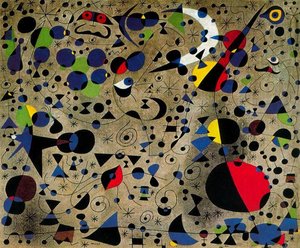
Perls Galleries, New York City1940Gouache on paper38 × 46 cm
Joan Miró’s The Nightingale's Song at Midnight and the Morning Rain stands as a testament to Surrealist artistry during World War II—a poignant reflection of both inner turmoil and external upheaval. This displacement profoundly impacted his creative output, fostering a preoccupation with themes of isolation and resilience.

Grigori Grigorievitš GagarinRomantic Realism
Art Palace of Georgia - Museum of Cultural History, Tbilisi1855Oil on canvas59 × 42 cm
Tema perekond oli tuntud vene aadli pere ning Grigori Ivanovi Gagarin oli Vene diplomaat Francessa ja hiljem Venemaa suursaadik Itaalias. Kuigi Grigori ei saanud ametlikku kunstiharidust, siis Grigori õppis privaatselt tuntud vene kunstniku Karl Briullovi juures. Tema kunstilist karjääri määrab tema assotsiatsioon suurte kirjanikega nende aegade kes olid Aleksander Puškin ja Mihhail Lermontov.

Emilio PettorutiCubism
Paint and possibly mixed media on paper
The subject matter focuses on this human connection, though the forms are rendered in a symbolic manner rather than through realistic representation. The figures are reduced to essential, simplified shapes that prioritize the essence of the movement over anatomical accuracy.
Kust neid näha saab
Privaatne kollektsioon
The Museum of Modern Art
Reynolds Morse Foundation
Scottish National Gallery of Modern Art
Fundació Joan Miró
Galerie Rosengart
Kunstnikud
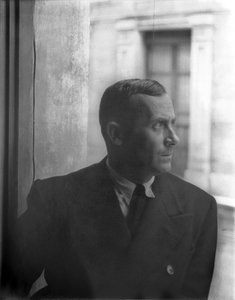
1893–1983 · Hispaania · 5
Prantsusmaa sunnitud eksil olevus kuni 1940. aasta jupp kuni sundis kunstniku tööd ja stiili järsku ning teravat muutust.
1. Ciphers and Constellations, 5. La Poetisa, 13. Luuletaja, 15. Figure at Night Guided by the Phosphorescent Tracks of Snails, 22. The Nightingale's Song at Midnight and the Morning Rain
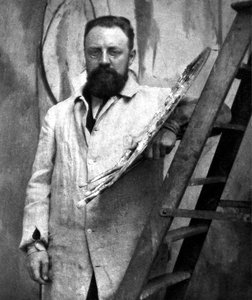
1869–1954 · Prantsusmaa · 3
Endine õigusluse töötaja ja kohtu administraator Henri Matisse alustas maaliuimismist 1889. aastal pärast vatsikipõriket.
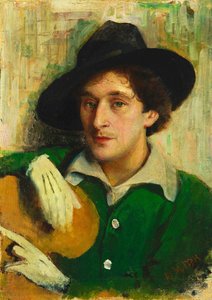
1887–1985 · Valgevene · 3
Pärast Saint-Peterburgis majanduslikult ellujäämiseks sõlmed ja reklaadid joonistanud kunstnik maalis hiljem lendavaid armastajad ja juudi folklööri kohti.
7. Hommage to Gogol, 11. The Feast of the Tabernacles, 14. Blue Landscape
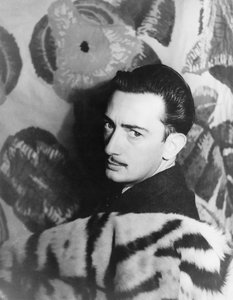
1904–1989 · Hispaania · 2
Sulevad taskukellad ja moonutatud anatomia defineerivad selle kunstniku teoseid, keda on tema elukahel luuditud üle 1500 maali.

1879–1940 · Šveits · 2
Natsirežiimi kõrdestatud Düsseldorfi kunstakadeemialt naasius kunstnik 1933. aastal oma kodukiiruse Berni.

1890–1918 · Austria · 2
Pärast 1912. aastal politsei poolt üle sada joonistust konfiskeerimist ja 21-päevast vangistust loosutas kunstnik seeria maale oma vangikellast.
10. Nude with Blue Stockings, 17. Self-Portrait in Yellow Vest

1881–1973 · Hispaania · 1
13-aastaseliseks jõududes sooritasi kunstnik Barcelona vastuvõitlused ühes nädalas, ületades oma õpetajate ootused.
Küsimused ja vastused
Meie reitingus on Ciphers and Constellations teos, autori Joan Miró (1940–1941), Art Institute of Chicago muuseumis, järgmised on The Ship teos, autori Salvador Dalí ja Ikaros teos, autori Henri Matisse.
Joan Miró (5), Henri Matisse (3) ja Marc Chagall (3) 24 teose kogumust.
Privaatne kollektsioon peetis 3 24 nimekirjas olevat teost, teised Art Institute of Chicago (1), Reynolds Morse Foundation (1) ja Scottish National Gallery of Modern Art (1).
Aastast 1855 (Caucasian Soldier teos, autori Grigori Grigorievitš Gagarin) aastasse 1985 (Camas para Sueños teos, autori Carmen Lomas Garza).
1772 teoseid; sellel lehel on esitatud 24 kõige kuulsamat nendeis, 13 kunstniku
New York, kus on 3 24-st; ning Viin (2), Barcelona (1) ja Dublin (1).
Meie edukaustamine põhineb Wikipedia andmetel, meie toimetajate poolselt kunstnikule ja teosele antud käsitsi määratud kohal samt igakuuse külastuste arvul.