Post-Impressionism
After Work (Edward William Stott)
Edward William Stott (1859–1918) on loonud teose After Work. See kuulub Post-Impressionism suuntrime. See on valmistatud materjalist Oil On Canvas.
- Oil On Canvas

 Eelvaade

 Käsitsi maalatud õlimaalatsioon
 Saada
 Jaga
 Teosest infokaart


 Laadi alla
 Sarnased teosed
 Röntgenuuring
 Slaidietendus
 KÜSIMUSED JA VASTUSID

 Statistika
After Work lühidalt
- Pealkiri
- After Work
- Kunstnik
- Edward William Stott (1859–1918)
- Kunstniku sünnukoht
- Rochdale, Ühendkuningriik
- Materjalid
- Oil On Canvas
- Liikumine
- Post-Impressionism
- Aeglkond
- 19th Century
- Teema
- landscape, solitude, travel, rural, dusk, horseback
Mida After Work kujutab?
Identification of After Work by Edward William Stott
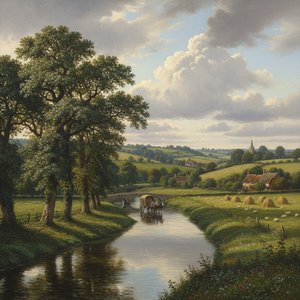
In this work, titled After Work, we encounter a quiet moment of transition captured by the English painter Edward William Stott. Born in 1859, Stott developed a sensibility deeply rooted in the nuances of the natural world, a focus that remains central to this piece. The painting presents a solitary figure on horseback navigating a desolate landscape, a scene that reflects the artist's lifelong interest in the rhythms of rural life and the changing qualities of light.
Edward William Stott, who lived until 1918, possessed a specific ability to render the atmosphere of the English countryside. In After Work, this is expressed through a somber, melancholic mood, established by an overcast sky and a palette of earthy browns and muted yellows. The composition relies on strong horizontal lines—the rider's back, the terrain, and the distant horizon—to create a sense of vastness and isolation within the frame.
The subject matter centers on a lone traveler in a rugged environment, suggesting themes of solitude and resilience. There is a palpable sense of the weight of the day's labor, as the figure moves through a landscape where the background recedes into a hazy darkness. It is a study of a quiet, singular moment caught between the physical reality of the terrain and the emotional stillness of the evening.
The Composition and Visual Elements
The composition is defined by a series of heavy horizontal lines. The horse’s back, the uneven ground, and the distant horizon all pull the eye across the canvas, emphasizing a sense of vastness and isolation. This structural choice anchors the solitary figure on horseback as they traverse a desolate landscape. The subject is a lone traveler moving through a rugged environment, a figure that seems small against the weight of the terrain.
The color palette is restrained, relying primarily on earthy browns and muted yellows. These tones contribute to a somber mood, mirroring the quietude of the scene. Lighting is diffused and flat, lacking any strong highlights that might disrupt the stillness. Instead, the light settles softly over the landscape, allowing the forms to emerge through subtle shifts in tone rather than sharp contrast. In the distance, the background recedes into a hazy darkness, creating a sense of depth that feels both immense and impenetrable.
Technique and Artistic Style
The work is executed in oil on canvas, a choice that allows for the heavy, moisture-laden texture characteristic of the artist's approach to the landscape. There is a palpable sense of weight in the application of the paint. Thick brushstrokes define the terrain and the figure, suggesting a painterly technique that prioritizes the physical presence of the medium. This tactile quality gives the organic shapes of the horse and rider a tangible, grounded reality.
The style leans toward realism, yet it is handled with an expressive brushstroke technique that avoids clinical precision. Lines are loose and expressive, defining the forms of the traveler and the rugged environment without relying on sharp or rigid edges. This softness allows the subject to merge subtly with the atmosphere of the desolate landscape. The shapes remain largely organic, rendered with a visible texture that emphasizes the raw, unpolished nature of the scene.
After Work kõrge resolutsiooniga pildid
Edward William Stott, After Work. Avalik omaniklik õigus
Küsimused teemal After Work – vastused
Millises materjalis on teos „After Work“, autor Edward William Stott valmistatud?
Teos "After Work" on valmistatud tehnika Oil On Canvas.
Millised teemad teoses „After Work“, autor Edward William Stott esile tõelve?
Teemad, mis teoses „After Work“, autor Edward William Stott esinevad, hõlmavad landscape, solitude, travel, rural, dusk, horseback, melancholy, vastness. Koos need kokkuvõtavad teose sisu.
Kas teos „After Work“, autor Edward William Stott kuulub avalikku omandisse?
Teos „After Work“, autor Edward William Stott on lubaõiguslikult avalik && copyright on aegunud. See staatus reguleerib teose pildi reprodüseerimise võimalusi.
Millisele kunstnikule on teos "After Work" atribuutseeritud?
Teose "After Work" looja on Edward William Stott. Teos on kataloogitud nime Edward William Stott all.
Millissele stiilile kuulub "After Work"?
"After Work" on Post-Impressionism suunaga teos. See suundumine viitab kunstilisele traditsioonile, millega teos on seotud.
Millist etap Edward William Stott loomingus teos "After Work" esindab?
Edward William Stott loomingus kuulub teos "After Work" perioodi Late Victorian. See etap aitab seda võrdida kunstniku teiste töödega.
Miks on teose "After Work" autoriõiguste staatus selline, nagu see on?
„After Work“, autor Edward William Stott on avalik && copyright on aegunud. Tegijakeskuse kaitse kestus arvatakse kunstniku surmaajaest, mis toimus aastal 1918.
Kust koht teoses "After Work" on Edward William Stott loomingus?
Edward William Stott loomingus on teos "After Work", mis kuulub Post-Impressionism stiili ja kordub teemad nagu sussex colony's artistic hub, domestic scenes, fading light focus, bastien-lepage, impressionism, linnell, palmer – english tradition.
Kas teos "After Work" on tüüpiline sellele, mida Edward William Stott tavaliselt lõi?
Edward William Stott dokumenteeritud teemade — sussex colony's artistic hub, domestic scenes, fading light focus, bastien-lepage, impressionism, linnell, palmer – english tradition — seas paneb teos "After Work" erilist tähelepanu teemadel landscape, solitude, travel, rural, dusk, horseback, melancholy, vastness.
Kunstnik Edward William Stott kohta

1859–1918, Ühendkuningriik
Edward William Stott
Inglise maastiku atmosfääriline hing Edward William Stott on Briti kunsti kangaal endiselt lummav tegelane – maalari, kelle töö hingab hilisviktorianaaja vaikse ja melankolia täis iluga. Sündides 1855. aastal Lancashire'i Rochdale'i tööstusliku rasketuse keskel, olid Stotti kunstiline tundlikkus ja maitse kaugemal oma sünnipaikas valgusest ja raudast. Selle asemel otsis ta sügavat sidet loodusega, leidides lõpuks oma vaimse ja loovuse kodu Sussexi maapiirkonna kumerikes ja rahustavates maastikes.
Teel Edward William Stott kohta Edward William Stott silmapaistvad teosed
Ka Edward William Stott teosed
 Black And White Cat
 The Labourer's Cottage
 Hagar And Ishmael Beside A Well In The Desert
 Ploughing
Teemad teemal After Work
 19th Century Masterpieces: 10 Paintings That Defined an Era | OriginalUniqueArtJourney through 19th century art with OriginalUniqueArt! Explore 10 iconic paintings – from Monet & Renoir to Courbet – and discover the st…
 John Constable: Nature, Light & the Romantic Vision of Rural EnglandExplore the life & art of John Constable, the Romantic painter who revolutionized landscape with emotive scenes of rural England. Discover …
 American artworks of the 1850s1850s American landscapes by Asher Brown Durand and John Frederick Kensett showcase the era's beauty. View the full collection at OriginalU…