Impressionism · 1874
Boating (Édouard Manet, 1874)
Édouard Manet (1832–1883) on loonud teose Boating. See on pärinev 1874 aastast. See kuulub Impressionism suuntrime. See on valmistatud materjalist Oil On Canvas. Mõõtmed on 97 × 130 cm.
- 1874
- Oil On Canvas
- 97 × 130 cm

 Eelvaade

 Käsitsi maalatud õlimaalatsioon
 Saada
 Jaga
 Teosest infokaart


 Laadi alla
 Sarnased teosed
 Röntgenuuring
 Slaidietendus
 KÜSIMUSED JA VASTUSID

 Statistika
Boating lühidalt
- Pealkiri
- Boating
- Kunstnik
- Édouard Manet (1832–1883)
- Kunstniku sünnukoht
- Pariis, Prantsusmaa
- Kuupäev
- 1874
- Materjalid
- Oil On Canvas
- Mõõtmed
- 97 × 130 cm
- Liikumine
- Impressionism
- Aeglkond
- 19th Century
- Teema
- boating, summer, manet, seine river, leisure, couple
Mida Boating kujutab?
Boating: A Glimpse of Parisian Leisure in Manet’s Impressionistic Vision
Édouard Manet's *Boating*, painted in 1874, isn’t merely a depiction of a summer afternoon on the Seine; it’s a carefully constructed tableau that encapsulates the burgeoning spirit of modern life and marks a pivotal moment in the transition from academic art to Impressionism. Often considered Manet’s first truly Impressionist work – though he resisted the label himself – *Boating* invites us into a fleeting, sun-drenched scene of leisure, capturing not just the visual elements but also the atmosphere and emotional resonance of a Parisian summer. The painting immediately draws the eye with its vibrant palette: deep blues and greens dominate the water and sky, contrasted by the warm yellows and whites of the sailboat and the figures within. This deliberate use of color, applied in loose, broken brushstrokes – a hallmark of Impressionism – creates an immediate sense of movement and light, as if we too are caught in the gentle rocking of the boat. The subject matter itself is deceptively simple: a man and woman enjoying a leisurely sail. However, Manet imbues this commonplace scene with a subtle complexity. The identity of the figures remains somewhat enigmatic; art historians often suggest that the man is Rodolphe Leenhoff, Manet’s brother-in-law, while the woman's face is less defined, adding to the painting’s sense of intimacy and mystery. They are positioned in a way that invites observation, their gazes meeting ours across the canvas – a bold departure from the traditional, static poses found in earlier academic paintings. The inclusion of other figures in the background – likely passengers or crew members – further enriches the scene, hinting at a larger social context without disrupting the primary focus on the couple. This layering of detail is characteristic of Manet’s approach, blending observation with artistic interpretation.The Painting's Significance and Historical Context
*Boating*'s significance extends beyond its aesthetic qualities; it represents a crucial shift in artistic priorities. In the mid-19th century, painting was largely dominated by the Salon, an official exhibition controlled by the Académie des Beaux-Arts. Artists were expected to adhere to strict rules of composition, subject matter, and technique – primarily historical or mythological scenes rendered with meticulous detail and idealized forms. Manet, however, challenged these conventions. He began to depict modern life—the everyday activities and people of Paris—with a frankness that shocked many viewers. *Boating* exemplifies this shift, capturing a slice of bourgeois leisure in a way that was both contemporary and subtly subversive. The painting was exhibited at the 1879 Salon, a venue where Manet often showcased his work alongside other Impressionists, signaling his alignment with this emerging artistic movement. The year 1874 was particularly significant for Paris. The city was experiencing rapid industrialization and urbanization, leading to new forms of leisure and social interaction. Boating on the Seine became increasingly popular among the upper classes, offering a respite from the hustle and bustle of urban life. Manet’s painting captures this trend perfectly, presenting a romanticized vision of Parisian summer days. Interestingly, *Boating* was created during a period when Manet was living in Gennevilliers, a suburb of Paris, allowing him to observe and paint scenes directly from his surroundings. This proximity to the subject matter undoubtedly contributed to the painting’s sense of immediacy and authenticity.Artistic Style and Technique: A Bridge Between Realism and Impressionism
Manet's technique in *Boating* is a fascinating blend of realism and Impressionist innovation. While he retains a degree of meticulousness in his rendering of details – particularly the sailboat and the figures’ clothing – he employs loose, visible brushstrokes that capture the fleeting effects of light and atmosphere. This approach, influenced by his time spent painting alongside Claude Monet, departs significantly from the smooth, polished surfaces favored by academic painters. The use of broken color—applying small dabs of paint side-by-side rather than blending them together—creates a shimmering effect, particularly noticeable in the water and sky. Mary Mathews Gedo, a former clinical psychologist turned art historian, aptly described *Boating* as “quintessentially Monet-esque,” highlighting Manet’s adoption of Impressionist techniques while retaining his own distinct artistic voice. The painting's composition is also noteworthy; it utilizes a slightly elevated viewpoint, placing the viewer in an almost voyeuristic position, observing the couple from a distance. This perspective adds to the sense of intimacy and immediacy, drawing us into the scene as if we are witnesses to a private moment.Symbolism and Emotional Impact
Beyond its technical merits, *Boating* is rich in symbolism. The sailboat itself represents freedom, adventure, and escape – themes that resonated deeply with the burgeoning middle class of 19th-century Paris. The couple’s relaxed posture and shared gaze suggest a sense of connection and contentment. The inclusion of the birds soaring above the boat adds to the painting's feeling of lightness and joy. Even seemingly minor details, such as the woman’s tall hat with its blue stripe, contribute to the overall impression of elegance and sophistication. Ultimately, *Boating* is more than just a depiction of a summer sail; it’s an exploration of human connection, leisure, and the changing landscape of Parisian society. It's a testament to Manet's ability to capture not only the visual appearance of a scene but also its emotional essence – a quality that continues to resonate with viewers today. For those seeking a deeper understanding of this pivotal work, reproductions are available on OriginalUniqueArt.com, offering an opportunity to experience the beauty and complexity of *Boating* firsthand.Boating kõrge resolutsiooniga pildid

Édouard Manet, Boating (1874). Avalik omaniklik õigus
Küsimused teemal Boating – vastused
Millal loodi teos "Boating"?
Teos „Boating“, autor Édouard Manet loodi aastal 1874.
Millist tehnikat teose „Boating“, autor Édouard Manet valmistamisel kasutati?
Teos "Boating" on valmistatud tehnika Oil On Canvas.
Mis on originaalteose "Boating" mõõdud?
Originaalteose „Boating“, autor Édouard Manet mõõdud on 97 x 130 cm.
Mida „Boating“, autor Édouard Manet kujutab?
Teose "Boating" teemad on boating, summer, manet, seine river, leisure, couple, impressionism.
Kas teose „Boating“, autor Édouard Manet pilt on vabalt reproduseeritav?
Tegijateõiguse osas on teos "Boating" kuuluv klassifikatsiooni alla: avalik && copyright on aegunud.
Millisele kunstnikule on teos "Boating" atribuutseeritud?
Teose "Boating" looja on Édouard Manet. Teos on kataloogitud nime Édouard Manet all.
Millissele kunstisuunale kuulub teos „Boating“, autor Édouard Manet?
Teos „Boating“, autor Édouard Manet kuulub Impressionism suunasse. See suund annab teosele stilistilise konteksti.
Kuhu Édouard Manet loomingulisse perioodi kuulub teos "Boating"?
Teos "Boating" esindab kunstniku Édouard Manet loovperioodi Mature Period.
Kui vana oli Édouard Manet, kui ta loositud teose "Boating" aastal 1874?
Kui teos "Boating" loodi aastal 1874, oli Édouard Manet (sündinud aastal 1832) 42 aastane.
Kunstnik Édouard Manet kohta
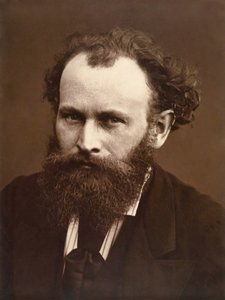
1832–1883, Prantsusmaa
Édouard Manet
Varane elu, pere ja õppimisaastad Édouard Manet sündis Pariisis 23. jaanuaril 1832. Ta kasvas üles jõukasus, olles tema isa, kes istus Prantsuse õiguskogus, vanim poeg. Tema isa oli oma pojale plaaninud täiesti teisi tulevikku – tee, mis viis läbi mereväe või õigusteaduse, sobides nii suurepäraselt nende sotsiaalselt prestiižsese seisule.
Ka Édouard Manet teosed
 Piknik rohus1863
 Olümpia1863
 Baar Folies-Bergère'is1882
 Pürgipiparmu1866

Teemad teemal Boating
 Boats on Canvas: 10 Masterpieces of Maritime Art for Your Home DecorSail away with 10 iconic boat paintings! Explore masterpieces by Monet, Van Gogh & Turner. Discover the stories behind these timeless seasc…
 Impresionismi 10 Meisterteost: Kunsti Ajaloos Muutnud Maalid | OriginalUniqueArtAvastage 10 impressionismi suurmeisterteost! Claude Monet, Renoir ja teised kunstnikud muutsid maalikunsti. Loe nende lugusid ja leia täius…
 Édouard Manet: Pioneering Modernism & Challenging Artistic ConventionsExplore the life & art of Édouard Manet, a pivotal figure bridging Realism and Impressionism. Discover his revolutionary techniques, contro…