Aztec Empire
Flute (Azteekide Impearium)
Azteekide Impearium (1300–1521) on loonud teose Flute. See kuulub Aztec Empire suuntrime. Teos on valmistatud materjalist Acrylic On Canvas. Teos asub Metropolitan Museum of Art kogamuses New York, USA.
- Acrylic On Canvas
- Metropolitan Museum of Art, New York

 Eelvaade

 Käsitsi maalatud õlimaalatsioon
 Saada
 Jaga
 Juhend


 Laadi alla
 Sarnased teosed
 Röntgenuuring
 Slaidietendus
 KÜSIMUSED JA VASTUSID

 Statistika
Flute: põhitooded
- Pealkiri
- Flute
- Kunstnik
- Azteekide Impearium (1300–1521)
- Kunstnik on sündinud
- Tenochtitlan, Meksiko
- Tehnika
- Acrylic On Canvas
- Kus seda näeb
- Metropolitan Museum of Art, New York, USA
- Suunad
- Aztec Empire
- Teema
- flute, aztec, ancient, culture, symbolism, mesoamerica
Mida Flute kujutab?
The Echoing Voice of Stone: An Exploration of the Aztec Flute
Within the vast tapestry of Aztec artistry lies a deceptively simple instrument – the flute, often referred to as *uilacapitztli* (meaning “flute-head”). More than just a musical device, this clay vessel, meticulously crafted and imbued with symbolic resonance, offers a poignant window into the spiritual beliefs, artistic traditions, and cultural values of one of Mesoamerica’s most sophisticated civilizations. Recovered from archaeological sites across Mexico, these flutes – often adorned with depictions of animals, deities, or geometric patterns – are not merely relics of the past; they are tangible echoes of a vibrant society that flourished for centuries before succumbing to Spanish conquest.
The creation of an *uilacapitztli* was a deliberate and carefully considered process. Typically fashioned from unfired clay, these flutes were meticulously shaped by hand, reflecting a remarkable level of skill and artistry. The most common form is a cylindrical vessel with a distinctive bird-shaped head – the ‘head’ representing the feathered serpent Quetzalcoatl, a central deity associated with music, knowledge, and creation. Smaller versions, often resembling frogs or turtles, were also produced, suggesting their use in children's toys or as ritual objects for specific ceremonies. The intricate carvings that adorn these flutes – stylized representations of jaguars, serpents, birds, and geometric designs – are not merely decorative; they carry profound symbolic meaning, reflecting the Aztec worldview and their connection to the natural world.
A Symphony of Symbolism
The symbolism embedded within each *uilacapitztli* is a rich testament to Aztec cosmology. The bird-shaped head, prominently featured on many instruments, directly references Quetzalcoatl, whose association with music and the wind suggests a connection between sound, spirituality, and communication with the divine. Animal motifs – particularly jaguars and serpents – were frequently linked to powerful deities and represented concepts such as strength, fertility, and transformation. Geometric patterns, often repeating spirals or zigzags, may have symbolized cycles of time, cosmic order, or the interconnectedness of all things. The choice of animal or symbol likely depended on the specific purpose for which the flute was intended – whether for ceremonial use, entertainment, or even as a gift.
Furthermore, the clay itself held significance. Clay was considered a sacred material, representing earth and fertility—a fundamental element in Aztec beliefs. The act of shaping the clay into an instrument was therefore imbued with ritualistic importance, transforming a mundane substance into a conduit for spiritual expression. It’s believed that these flutes were not simply played; they were *sung* – their sounds carefully controlled to evoke specific emotions and connect with the spirit world.
A Legacy in Sound and Form
The *uilacapitztli* stands as a powerful reminder of the Aztec Empire’s artistic sophistication and its deep connection to spirituality. While much remains unknown about the precise melodies produced by these instruments, their enduring presence speaks volumes about the importance of music within Aztec society. These flutes were not merely objects; they were vessels for storytelling, ritual performance, and spiritual communion.
Today, high-quality reproductions of these ancient instruments are available, offering a unique opportunity to experience the beauty and artistry of Aztec craftsmanship. When selecting a reproduction, consider the materials used – authentic clay or durable ceramics that capture the texture and feel of the original. The level of detail in the carvings will also reflect the quality of the piece, ensuring it accurately represents the intricate symbolism of the ancient *uilacapitztli*. Owning such a reproduction is not simply acquiring an artifact; it’s embracing a tangible link to a remarkable civilization and allowing its resonant voice to echo through time.
Kumba muuseumis asub teos Flute?
Metropolitan Museum of Art
New York, USA
Metropolitan Museum of Art päritolu ja ajalugu Metropolitan Museum of Art sai alguse visioonis, mida jagas grupp ettevõtjaid, finantsierimeid ning juhtkavad kunstnikud ja mõtlejad. Pärast asutamist 1870. aastal otsis institutsioon püsivat kodu oma üha suurendale koguvedele.


Flute kõrgel resolutsioonil

Avalik omanik: kunstnik suri aastal 1521.
Veel erinevaid mõõdu, u recorte ja allviiteid →Azteekide Impearium, Flute, Metropolitan Museum of Art. Avalik omaniklik õigus
Digitaalne ekspert kontrollib värve vastavust originaalteosele ja retusseerib faili, püsides truulena kunstniku pintlapidele.
Osta kõrge resolutsiooniga piltKüsimused teemal Flute
Kust teose „Flute“, autor Azteekide Impearium külastajad pärit on?
Teose "Flute" jaoks on olemas Statistika leht. See kajastab teose ja kunstniku teiste teoste kuutlikke külastusi riigi ja keele järgi lahutatud statistikaga.
Millisele kunstnikule on teos "Flute" atribuutseeritud?
Teose "Flute" autoriks on mõeldud Azteekide Impearium.
Mis on Azteekide Impearium pseudonüümid või alternatiivsed nimed?
Kunstnik Azteekide Impearium on tuntud ka nimeel Teotihuacan-Vaheajastiku Kunst.
Millist atmosfääri toob „Flute“, autor Azteekide Impearium sisekujundusse?
Olles meeleoluult Calm, sobib teos "Flute" suurepäraselt ruumiks Living Room.
Millist trükkimisi ja suunast on teosele „Flute“, autor Azteekide Impearium soovitatav kasutada?
Teose "Flute" puhul on soovitatav trükiformaat Medium suurusega ja Landscape suunaga.
Mis selgitab teose „Flute“, autor Azteekide Impearium autoriõiguste olukorda?
„Flute“, autor Azteekide Impearium on avalikus õiguses – selle autoriõigud onหมดunud. Tegijakeskuse kaitse kestus arvatakse kunstniku surmaajaest, mis toimus aastal 1521.
Kuhu kohta „Flute“, autor Azteekide Impearium reproduktsioon peaks rikutud?
Teose „Flute“, autor Azteekide Impearium Landscape formaat on soovitatav kasutada ruumis Living Room. Formaat ja ruum aitavad koos otsustada reproduktsiooni paigutamise kohta.
Kas Metropolitan Museum of Art kogumuses olevat teost „Flute“, autor Azteekide Impearium on lubatud seaduslikult reproduktsiooniga?
Originaalteos "Flute" asub Metropolitan Museum of Art kogumuses ning teos on avalikus õiguses – selle autoriõigud onหมดunud.
Millist värvigamma teos "Flute" kasutab?
Teose "Flute" värvid moodustavad Pastels paleti. See klassifikatsioon kirjeldab domineerivaid värvigruppe.
Kunstnikust, Azteekide Impearium

1300–1521, Meksiko
Azteekide Impearium
Kivastuskivade: Azteklasteemi kunst ja päranduse uurimine Nimi "Aztek" – tüvest Nahuatl sõnast *ātl-ce-tlācati–tlān*, mis tähendab "palju vorme inimesi" – kutsub mõtteile hiiglaslikku, keerulist impeeriumi, mis domineeris Mesoamerikas ihedal sadade. Aztekid olid aga rohkem kui vaid sõdamehed ja võitjad; nad olid sügavalt kunstlikud inimesed, kes neil elukorras ilusat käsitsi teostatust, alates monumentaalset arhitektuurist kuni delikaatseni tuulikostotööst, pühaid rituaale ploonika esemetele. Nende kunst ei olnud lihtsalt dekoratiivne; see oli elav keele, mis edastas usundusnaineit, poliitilist võimu, ajaloolisi narratiive ja sotsiaalset hierarhia ühiskonnas, mis oli nii tihedalt struktureeritud kui ka hädavajalikult uuenduslik. Sünnud saades 14.
Teel Azteekide Impearium kohta Azteekide Impearium silmapaistvad teosed
Ka Azteekide Impearium teosed
 Mosaic of a Double-headed Serpent1521
 Head from a Figure, Xochipilli Macuilxochitl1521
 Figure1521
 Serpent Labret with Articulated Tongue

Essee teemadel Flute
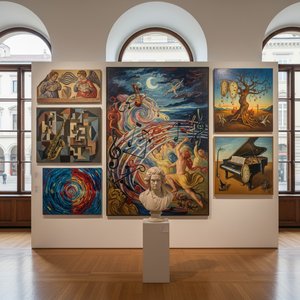 Harmonies on Canvas: Exploring the Visual Representation of Music in Art HistoryExplore the fascinating history of music's visual representation in art! From ancient symbolism to modern abstraction, discover how artists…
 Feathered Visions: A Historical & Artistic Exploration of Birds in PaintingExplore the rich history of birds in painting! Discover symbolism, artistic movements & master artists like Audubon. High-quality reproduct…
 25 Must-See Masterpieces at The Met: A Journey Through Art HistoryExplore 25 iconic treasures from The Met, from Pollock to Rembrandt. Discover museum-quality art on OriginalUniqueArt.com.